
Latest Version
September 27, 2026
Solid Games
Puzzle
iOS
0
Report a Problem
More About :game
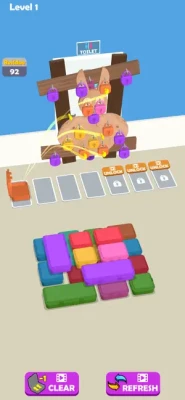
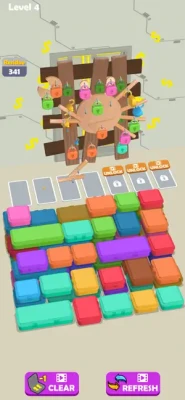
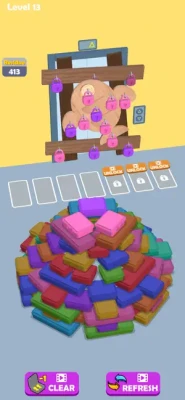
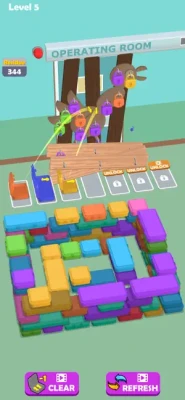
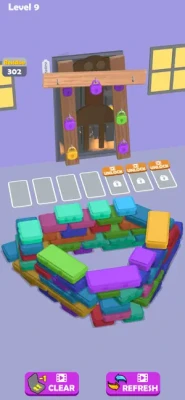
Color Lock 3D is an ultra-casual puzzle game built around colored locks, matching keys, and stacked boxes.
The objective is to unlock the vault by finding the keys hidden inside corresponding colored boxes. Because the boxes are stacked together and the available space is limited, solving a level requires more than simply matching colors. You need to plan the sequence of your moves so that you do not create an awkward arrangement that prevents you from reaching the keys you need.
The App Store categorizes Color Lock 3D as a Puzzle game and describes its gameplay as a test of color-matching skills and logical thinking.
How to Play Color Lock 3D
The basic gameplay loop is simple:
- Examine the locks on the vault.
- Identify the colors you need.
- Study the boxes and their positions.
- Look for the keys hidden inside matching boxes.
- Decide which box should be opened first.
- Move boxes carefully within the available space.
- Collect the required keys.
- Match the keys with the appropriate locks.
- Continue until the vault is completely unlocked.
The difficult part is not understanding the objective. It is determining the correct order of actions.
Color Lock 3D Gameplay Features
Color Matching Puzzles
Color is the central clue in Color Lock 3D. Locks and keys have corresponding colors, so recognizing the right match is essential.
Do not focus only on the key you currently need. Look at the entire puzzle and consider how opening one box could affect access to other boxes.
Stacked Boxes
The keys are placed inside colored boxes that are stacked together. This creates a spatial puzzle because the box you need may not always be immediately accessible.
Limited Space
Space management is one of the main challenges.
Opening or transferring a box can change the arrangement of the puzzle, so an apparently harmless move may make the next step more difficult.
Vault Unlocking
The ultimate objective is to match the necessary keys with the locks securing the vault.
Every successful match brings you closer to clearing the puzzle.
Increasing Puzzle Challenge
As the puzzle structure becomes more complicated, players need to pay more attention to the order of their moves rather than relying on simple color recognition.
Complete Color Lock 3D Strategy Guide
1. Study the Entire Puzzle Before Moving
The most useful habit is to look before you tap.
Before opening a box, inspect:
- The visible colors
- The position of each box
- The locks you need to open
- Potentially accessible keys
- Available space
- Boxes that may be blocking others
Taking a few seconds to understand the arrangement can prevent unnecessary moves.
2. Identify Your Most Important Color
Start by determining which lock or key combination is most important at the beginning of the puzzle.
If a particular colored key is hidden behind several boxes, gaining access to it may be more important than immediately collecting an easily accessible key.
Think about accessibility, not just color.
3. Match Keys Carefully
When you find a key, verify its color before planning the next move.
A useful mental checklist is:
Key color → matching lock → route to key → space after the move
This prevents you from concentrating on the match while ignoring the positioning problem.
4. Plan Around the Available Space
The limited-space mechanic is one of the most important parts of the game.
Before moving a box, ask:
"Where will this box go, and will I still have enough room for the next move?"
A move can be technically possible while still being strategically inconvenient.
5. Do Not Open Boxes Randomly
Random moves can quickly create a messy arrangement.
Instead, try to establish a sequence:
Open → access key → create space → match lock → continue
If you cannot see a useful reason for opening a particular box, consider leaving it alone until you understand its role.
6. Remove Important Blockers
Sometimes the box you need is not the box you should move first.
Look for a blocking box that prevents access to a more important key.
Removing that blocker may unlock several possible moves at once.
This is particularly useful when multiple boxes are packed closely together.
7. Think Two Moves Ahead
You do not necessarily need to solve the whole puzzle immediately.
Instead, predict the next two or three actions.
For example:
Move Box A → reveal Key B → free space → match Lock B
If a move does not produce a useful follow-up, reconsider it before committing.
8. Preserve Flexibility
A good puzzle move should give you more options, not fewer.
When two moves appear possible, consider which one leaves more open space and more accessible boxes.
Keeping several possible routes available makes complicated puzzles easier to recover from.
Advanced Color Lock 3D Tips
Think in Sequences, Not Individual Moves
One of the biggest differences between an easy solution and a difficult one is planning the sequence.
Instead of asking:
"What can I open?"
ask:
"What should I open first so that the next move becomes easier?"
That small change in thinking can make crowded puzzles much easier.
Prioritize Access Over Immediate Rewards
A visible key may be tempting because it appears easy to collect.
However, another key might be more strategically important because it requires several moves to reach.
When deciding what to do next, consider the entire puzzle rather than simply choosing the easiest available action.
Use Color as Your First Filter
When the board contains many objects, color provides a quick way to organize the information.
First identify the required lock colors.
Then locate the corresponding boxes.
Finally, determine how to reach the required keys without wasting valuable space.
Watch the Box Arrangement
Because boxes are stacked, their physical positions matter.
A key may technically be nearby but inaccessible because another box is in the way.
Before making a move, consider what will happen to the surrounding boxes as well.
Avoid Creating Dead Ends
A poor move can leave you with fewer useful options.
Whenever possible, make moves that:
- Open new areas
- Reveal useful keys
- Create additional space
- Keep other boxes accessible
- Move you closer to several potential solutions
Color Lock 3D Tips for Beginners
If you're new to the game, start with these rules:
Look Before You Tap
Study the complete arrangement before making your first move.
Follow the Colors
Identify the required lock colors and locate their corresponding keys.
Watch Your Space
Remember that the game specifically uses limited space as part of its puzzle challenge.
Move Blockers First
If an important key is hidden behind another box, determine whether that box needs to move first.
Plan Ahead
Try to predict at least your next two moves.
Keep Your Options Open
Avoid moves that unnecessarily restrict the remaining space.
How to Solve Hard Color Lock 3D Levels
When a level becomes difficult, use this process.
Step 1: Identify the Locks
Look at the vault and determine which colors you need.
Step 2: Find the Matching Boxes
Locate the boxes containing the relevant colored keys.
Step 3: Trace the Access Route
Determine which boxes are blocking your path.
Step 4: Find the Best Opening Move
Choose a move that creates access while preserving useful space.
Step 5: Predict the Result
Before committing, imagine how the box arrangement will change.
Step 6: Collect the Key
Once the route is clear, obtain the matching key.
Step 7: Unlock the Corresponding Lock
Use the key to remove that part of the vault's security.
Step 8: Reassess
Do not blindly repeat your original plan. Look at the new board state and identify the next priority.
Common Color Lock 3D Mistakes
Opening Boxes Without a Plan
The game rewards logical sequencing, so opening boxes randomly can make the puzzle harder.
Focusing on Only One Key
A key may be important, but accessing it can affect the rest of the puzzle.
Always consider how your move changes the board.
Ignoring Space
Limited space is part of the challenge.
Do not treat every empty area as permanently available.
Choosing the Easiest Move Instead of the Best Move
The easiest move is not necessarily the most useful move.
Sometimes the correct solution requires preparing the board first.
Forgetting the Lock
Finding a key is only part of the objective. Keep track of which lock the key is intended to open.
Color Lock 3D Puzzle-Solving Method
A reliable approach is to divide every level into four stages:
Stage 1 — Observe
Understand the box layout and lock colors.
Stage 2 — Organize
Determine which keys are accessible and which are blocked.
Stage 3 — Execute
Move boxes in an order that preserves space and opens useful routes.
Stage 4 — Unlock
Match the collected keys with their corresponding locks and continue until the vault is cleared.
This method keeps the puzzle manageable even when the arrangement becomes crowded.
Color Lock 3D Game Information
| Information | Details |
|---|---|
| Game | Color Lock 3D |
| Developer | Solid Games |
| Genre | Puzzle |
| Gameplay | Color Matching / Logic Puzzle |
| Platforms | iPhone, iPad |
| iOS Requirement | iOS 13.0 or later |
| iPadOS Requirement | iPadOS 13.0 or later |
| Age Rating | 4+ |
| Size | 160.2 MB |
| Price | Free |
| In-App Purchases | Yes |
| Languages | English + 13 more |
| Seller | Solid Games LIMITED |
The current U.S. App Store listing identifies Color Lock 3D as a free Puzzle game for iPhone and iPad. It requires iOS 13.0 or later and is rated 4+. The listing also shows 14 supported languages in total and optional in-app purchases.
Color Lock 3D Ratings
The U.S. App Store currently shows 4.8 out of 5 stars from 149 ratings.
Ratings can change as more players review the game, so the displayed figure should be treated as a current snapshot rather than a permanent score.
Color Lock 3D Updates
The App Store version history shows updates focused on gameplay and technical improvements.
The listing records changes including:
- Adjustments to level difficulty
- Changes to the box transfer method
- Unity and SDK updates
- Vibration plugin updates
The displayed version history includes version 0.4.0, dated November 11, 2025.
Because puzzle difficulty and mechanics can be adjusted through updates, the exact experience may change between game versions.
Color Lock 3D Pros and Cons
Pros
- Simple color-matching concept
- Easy-to-understand objective
- Combines color recognition with spatial reasoning
- Limited-space mechanic adds strategic depth
- Short puzzle sessions
- Colorful presentation
- Suitable for casual puzzle players
Things to Keep in Mind
- Some puzzles require careful move ordering.
- Limited space can make seemingly simple moves more complicated.
- The game contains optional in-app purchases.
- Gameplay mechanics and level difficulty may change through updates.
Frequently Asked Questions
What is Color Lock 3D?
Color Lock 3D is a casual puzzle game in which players find keys inside colored boxes and use matching keys to unlock a vault.
How does Color Lock 3D work?
The game revolves around opening and transferring colored boxes, finding corresponding keys, and using them to unlock matching colored locks.
What makes Color Lock 3D challenging?
The boxes are stacked together and space is limited, so the order of your actions matters.
Is Color Lock 3D a puzzle game?
Yes. Apple categorizes Color Lock 3D as a Puzzle game.
Is Color Lock 3D free?
Yes. The App Store lists the game as free with optional in-app purchases.
Can I play Color Lock 3D on iPhone?
Yes. The game supports iPhone and requires iOS 13.0 or later.
Can I play Color Lock 3D on iPad?
Yes. Color Lock 3D is designed for iPad and requires iPadOS 13.0 or later.
What is the best strategy for Color Lock 3D?
Study the entire board before moving anything. Identify the lock colors, find the corresponding keys, remove important blockers, and preserve enough space for your next moves.
How do I solve difficult Color Lock 3D puzzles?
Look several moves ahead rather than opening boxes randomly. Prioritize access to important keys, keep the available space flexible, and reconsider the board after every major move.
Final Thoughts
Color Lock 3D takes a straightforward color-matching idea and adds a spatial-planning challenge through stacked boxes and limited room. The objective is simple, but successful solutions depend on making the right move at the right time.
The most useful strategy is to slow down and study the complete puzzle before tapping. Identify the colors you need, locate the corresponding keys, find the boxes blocking your route, and plan a sequence that keeps enough space available.
Once you start thinking about access, order, color matching, and space management together, the puzzles become much easier to approach.
For players who enjoy color matching games, logic puzzles, box puzzles, brain teasers, and casual mobile games, Color Lock 3D offers a simple concept with room for increasingly thoughtful puzzle solving.
Rate the Game
User Reviews







Popular Games



















 Android
 iOS
iOS Windows
 Xbox
Xbox