
Latest Version
September 26, 2026
Ivy
Puzzle
0
com.lyoomatch.woodpuzzle.woodenblockpuzzlegame.brick
Report a Problem
More About :game
The basic rules are easy to understand, but getting consistently high scores requires careful planning. Because the blocks cannot be rotated, every piece needs to be placed with its original shape in mind. A move that looks useful immediately can create a difficult board position a few turns later.
The current Google Play listing features three main ways to play: Classic Mode, Travel Adventure, and Daily Training. It also highlights combo-based scoring, offline play, wooden visuals, relaxing sound effects, and a leaderboard for competitive players.
What Is Ivy Wood Block?
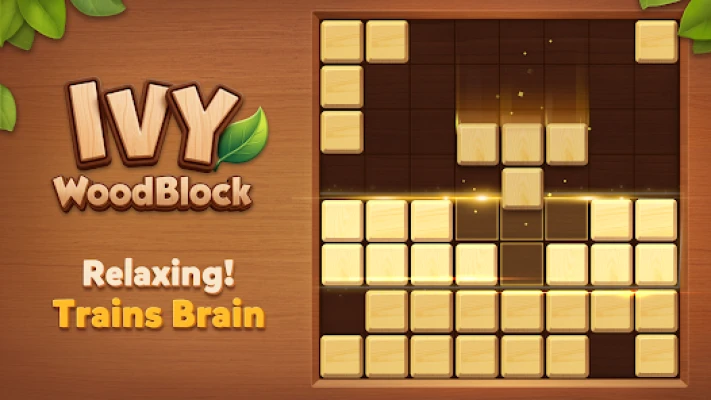
Ivy Wood Block is a classic block puzzle game with a cozy wooden presentation and an emphasis on spatial planning.
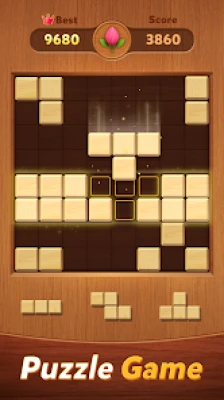
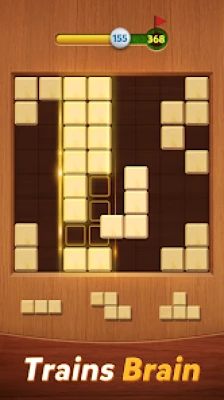
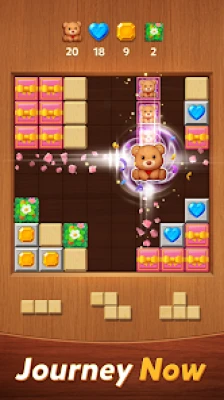
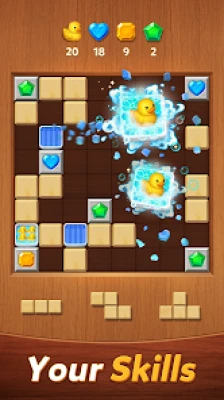
Instead of matching colored pieces, you receive different block shapes and must fit them onto the 8×8 board. Whenever you complete an entire row or column, those blocks disappear and the empty spaces become available again.
The challenge comes from managing limited space while preparing for future pieces.
The game is suitable for short casual sessions, but its scoring system also gives experienced players a reason to keep improving their personal best.
Ivy Wood Block Gameplay
The basic gameplay is simple:
- Look at the available blocks.
- Examine the empty spaces on the 8×8 board.
- Drag a block onto a suitable position.
- Complete a row or column.
- Clear the completed line.
- Use the new space to accommodate future pieces.
- Build consecutive clears for larger bonuses.
- Continue until no available block can be placed.
The most important skill is not simply clearing lines. It is managing the board so that you always have somewhere useful to place the next difficult shape.
Main Features
8×8 Block Puzzle Board
The game uses a classic 8×8 grid. This relatively compact board means every placement matters.
Leaving small isolated spaces can eventually make the board difficult to use, especially when a large 3×3 block appears.
Classic Mode
Classic Mode focuses on endless score improvement.
Your objective is to place blocks efficiently, clear rows and columns, build combos, and survive as long as possible while pushing your high score higher. Google Play describes the mode as a way to test spatial awareness and compete for high scores.
Travel Adventure
Travel Adventure adds a progression-based puzzle experience.
Instead of playing only for an endless score, you complete themed puzzle levels and unlock new visual destinations and scenes for the game's Gallery of Wonders.
Daily Training
Daily Training provides fresh challenges designed for shorter practice sessions.
It is useful for players who want to improve their block-placement skills without committing to a long Classic Mode run.
Multi-Clear Combos
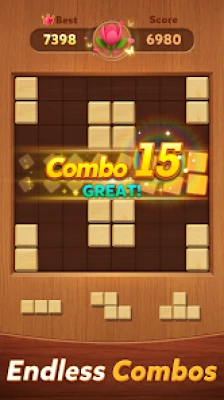
Ivy Wood Block includes an Epic Combo System built around consecutive or simultaneous line clears.
Clearing several lines efficiently can generate bonus points and help keep the board under control.
Offline Gameplay
The current Google Play listing describes Ivy Wood Block as fully playable offline, making it suitable for travel, commuting, or short breaks without an internet connection.
Wooden Visual Style
The game uses wooden textures, a minimalist interface, smooth animations, and relaxing ASMR-style sound effects to create a calm puzzle atmosphere.
Full Ivy Wood Block Strategy Guide
1. Keep the Center Open
One of the most important strategies is to avoid filling the middle of the board unnecessarily.
A large open central area gives you more flexibility when awkward shapes appear.
If you fill the center too early, you may be forced to place future blocks around the edges with very few options remaining.
General rule: preserve flexible space for as long as possible.
2. Think About the Next Three Blocks
Do not judge a move based only on the block currently selected.
Look at all available pieces before placing anything.
If you see a large 3×3 block among the upcoming pieces, start protecting a suitable open area for it.
This is particularly important because the game's own Google Play tips specifically warn players to save space for difficult 3×3 blocks.
3. Remember That Blocks Cannot Rotate
This is one of the most important rules in Ivy Wood Block.
A shape must be placed in its supplied orientation.
That means you cannot rely on rotating a difficult piece to make it fit later.
Before placing a block, examine:
- Its width
- Its height
- Its empty spaces
- The corners it can occupy
- Whether it can contribute to a future line clear
Planning around the fixed orientation will greatly improve your survival time.
4. Clear Multiple Lines Together
A single line clear gives you more room.
A simultaneous multi-line clear can give you much more.
Whenever possible, arrange blocks so that one placement completes two or more lines.
This is particularly important when chasing high scores because the game's combo system rewards efficient clearing.
5. Avoid Creating Tiny Holes
Small isolated gaps can become surprisingly dangerous.
For example, leaving a single empty square surrounded by blocks may make it impossible to fill later because none of your available pieces fit into the remaining space.
Try to create large, connected areas instead of scattered holes.
6. Use the Corners for Awkward Shapes
Complex pieces can sometimes be placed more safely near the edges or corners.
This can protect the center and leave a flexible area available for larger blocks.
However, do not fill every corner automatically. Think about the shapes you currently have before committing to a position.
7. Do Not Clear a Line Just Because You Can
This is an important advanced technique.
A line clear is normally good, but sometimes the position created afterward can be worse.
Before completing a row or column, ask:
What will the board look like after this line disappears?
If the clear creates a useful open area, it is probably valuable.
If it leaves isolated gaps or removes a useful structure, another placement may be better.
8. Build Around Your Largest Piece
Look at the biggest available block first.
If you have a 3×3 square, long horizontal piece, or another large shape, identify possible locations for it before placing smaller pieces.
Small pieces are usually easier to fit later.
Large pieces are the ones that can suddenly become impossible to place.
9. Use Small Blocks to Prepare the Board
Small shapes can be extremely useful for filling awkward gaps and setting up future clears.
Instead of immediately using them wherever they fit, consider whether they can complete a line or prepare a double-clear.
10. Protect Your Flexible Spaces
Not all empty squares have equal value.
A large rectangular empty region can accommodate many different shapes.
A narrow empty corridor may only accept a few.
Therefore, preserving flexible empty space is more important than simply maximizing the number of empty squares.
11. Watch the Board Height
If blocks accumulate across most of the board, your available choices become increasingly limited.
Do not allow several areas to become permanently high unless you have a reliable plan for clearing them.
Work toward keeping the board relatively balanced.
12. Create Combos
The game's Multi-Clear system rewards consecutive or simultaneous clears.
A strong sequence might look like:
Place block → clear line → use resulting space → clear another line → continue streak
Rather than clearing one line and then rebuilding the board from scratch, try to maintain a rhythm of efficient clears.
13. Think About Space, Not Just Points
A high-scoring move is not always the best survival move.
Sometimes a lower-value placement creates much more useful space.
When playing Classic Mode, staying alive long enough to produce many future clears can be more important than maximizing one individual move.
14. Avoid Filling One Side Too Quickly
Building an extremely tall wall on one side can leave you with awkward pieces that cannot be placed.
Try to maintain a reasonably balanced board unless a particular move clearly creates a large clearing opportunity.
15. Save Space for Long Pieces
Long horizontal or vertical shapes can be difficult to place once the board becomes crowded.
When you see one coming, look for a suitable open line before using your smaller blocks.
This is especially important if the long piece could complete an existing row or column.
How to Get High Scores in Ivy Wood Block
High scores are primarily about board management.
Use these principles:
Keep the Board Open
The more flexible space you preserve, the more future pieces you can accommodate.
Plan Before Every Placement
Do not drag the first block into the first available space.
Build Multi-Clears
Try to complete multiple rows or columns with one placement.
Maintain Combos
Consecutive clears can produce bonus points and help you clear the board more efficiently.
Protect Against the 3×3 Block
Always consider whether enough open space remains for a 3×3 piece.
Avoid Dead Corners
Do not create small unusable holes unless they are part of a deliberate clearing plan.
Ivy Wood Block Combo Strategy
Combos are one of the most important scoring mechanics.
Instead of thinking:
“Can I clear one line?”
think:
“Can I make this placement clear several lines or set up my next clear?”
For example:
- Place a block that completes one row.
- The cleared space creates room for another shape.
- Place the next piece to complete a second line.
- Continue the sequence.
- Build a multi-clear streak.
The game's description specifically encourages players to aim for simultaneous clears and use streaks to increase their bonus points.
Best Strategy for 3×3 Blocks
The 3×3 block is one of the pieces that can create serious problems on a crowded board.
A useful strategy is to maintain at least one large open area where it can be placed.
Do not assume you will be able to create the space later.
The board can change quickly after each placement.
3×3 Rule
If a 3×3 block is available, protect a 3×3 space before making unnecessary placements.
This simple habit can prevent many failed runs.
Classic Mode Strategy
Classic Mode is where long-term board management matters most.
Early Game
Focus on creating a clean and flexible board.
Do not worry about maximizing every single clear.
Middle Game
Start planning several moves ahead.
Protect space for difficult shapes and look for multi-line opportunities.
Late Game
Every square becomes important.
Prioritize moves that create large amounts of usable space and avoid isolated holes.
At this stage, survival and flexibility are often more important than a single large score opportunity.
Travel Adventure Strategy
Travel Adventure uses themed puzzle levels rather than only endless Classic Mode scoring.
For these levels, concentrate on the specific objective.
Do not automatically use your Classic Mode strategy if the level requires a particular arrangement or goal.
Before each move:
- Identify the objective.
- Check the available pieces.
- Find the easiest route toward the goal.
- Preserve space for difficult shapes.
- Avoid unnecessary placements.
- Complete the level efficiently.
Travel Adventure also provides visual progression through its themed destinations and Gallery of Wonders.
Daily Training Strategy
Daily Training is a useful place to practice without focusing exclusively on your lifetime high score.
Use these sessions to practice:
- Planning several moves ahead
- Managing corners
- Protecting central space
- Creating multi-line clears
- Handling large pieces
- Avoiding isolated gaps
The skills learned during Daily Training can transfer directly to Classic Mode.
Common Ivy Wood Block Mistakes
Mistake 1: Filling the Board Too Quickly
Placing blocks wherever they fit can create a crowded and inflexible board.
Better approach: think about future pieces before committing.
Mistake 2: Ignoring Large Pieces
A small block can usually fit somewhere.
A 3×3 or long piece may not.
Better approach: plan around the largest difficult piece first.
Mistake 3: Creating Single-Square Holes
These spaces can become impossible to fill.
Better approach: keep empty areas connected whenever possible.
Mistake 4: Chasing Every Immediate Clear
A line clear is not automatically the best move.
Better approach: consider the resulting board position.
Mistake 5: Ignoring Combos
Clearing one line at a time can waste opportunities for larger bonuses.
Better approach: look for simultaneous and consecutive clears.
Beginner Tips
If you are new to Ivy Wood Block:
- Keep the center relatively open.
- Do not rotate pieces because the game does not allow it.
- Look at all available blocks before moving.
- Protect space for 3×3 pieces.
- Avoid creating tiny isolated holes.
- Use corners for shapes that are difficult to place elsewhere.
- Look for double-line clears.
- Think about your next move before completing the current one.
- Practice with Daily Training.
- Use Classic Mode to work on your personal best.
Advanced High-Score Techniques
The Flexibility Principle
A board with fewer empty spaces can sometimes be stronger than a board with more empty spaces if those spaces are arranged in useful shapes.
For example, a large 4×4 open area gives you many placement possibilities.
Four isolated single squares may give you almost none.
The Largest-Piece Principle
Always know where your most difficult available piece can go.
If you cannot find a reasonable position for it, reconsider your current move.
The Cascade Principle
When a line disappears, the board becomes more flexible.
Use that new space to prepare another clear.
The goal is to turn individual moves into a sequence.
The Survival Principle
A high score usually comes from maintaining a playable board for a long time.
Do not sacrifice board flexibility just to gain a few extra points on one move.
Is Ivy Wood Block Easy to Play?
Yes. The controls are simple: drag and drop wooden blocks onto the grid.
However, the fixed block orientations and limited 8×8 space make the game increasingly strategic as you pursue higher scores.
Google Play describes the game as easy to pick up while offering deeper strategic layers for experienced puzzle players.
Can You Play Ivy Wood Block Offline?
Yes. The current Google Play listing states that Ivy Wood Block is fully playable offline.
That makes it suitable for commuting, travelling, waiting rooms, or short breaks without an active internet connection.
Does Ivy Wood Block Have Different Modes?
Yes. The current listing highlights:
- Classic Mode — score-focused endless block puzzle gameplay
- Travel Adventure — themed puzzle progression and unlockable visuals
- Daily Training — fresh daily puzzle practice
Does Ivy Wood Block Have a Leaderboard?
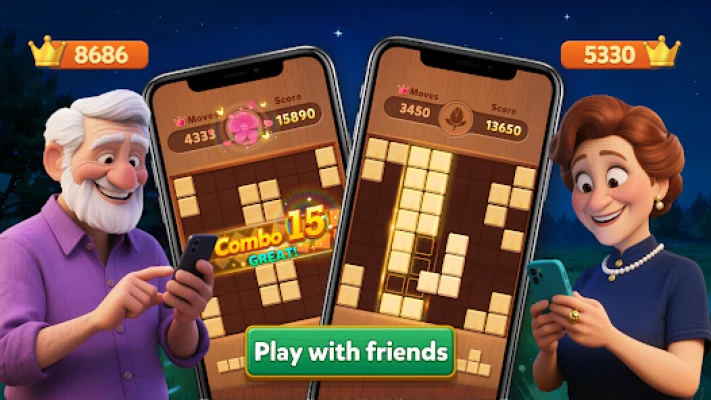
Yes. Classic Mode includes competitive scoring, and the Google Play listing references a leaderboard for players who want to improve their rankings.
Does Ivy Wood Block Have Ads?
Yes. Google Play currently labels the game as containing ads and offering in-app purchases.
Player reviews also include complaints about advertising interruptions, while other reviews describe the puzzle gameplay positively. These comments represent individual player experiences rather than a universal experience for every player.
Ivy Wood Block Rating and Player Response
At the time of checking, Google Play displays a 4.8-star rating and roughly 25,000 reviews, along with 1M+ downloads. These figures can change as new ratings and downloads are recorded.
Recent reviews show that players particularly discuss the game's multiple modes and puzzle mechanics, while some users have raised concerns about advertisements and competitive ranking behavior.
Ivy Wood Block Pros and Things to Consider
Pros
- Simple drag-and-drop controls
- Classic 8×8 block puzzle gameplay
- Three distinct gameplay modes
- Travel Adventure progression
- Daily Training
- Combo and multi-clear scoring
- Relaxing wooden presentation
- Offline gameplay
- Leaderboard competition
- Suitable for short sessions
- Easy to learn but increasingly strategic
Things to Consider
- Blocks cannot be rotated.
- Large shapes can become difficult to place on crowded boards.
- High scores require careful planning rather than random placement.
- The game contains advertisements.
- In-app purchases are available.
Ivy Wood Block FAQ
What is Ivy Wood Block?
Ivy Wood Block is a wooden block puzzle game based on an 8×8 grid. Players drag and drop blocks to complete and clear rows and columns.
How do you play Ivy Wood Block?
Place the available wooden blocks onto the 8×8 board and complete rows or columns to clear them. The goal is to manage the available space and continue placing pieces without reaching a position where no piece fits.
Can blocks be rotated?
No. The game's Google Play description specifically advises players to remember that blocks cannot rotate.
What is the best way to get a high score?
Keep the center flexible, protect space for large pieces, avoid isolated gaps, plan several moves ahead, and create simultaneous or consecutive line clears whenever possible.
What is Classic Mode?
Classic Mode is the score-focused mode where players test their spatial planning and try to achieve high scores and climb the leaderboard.
What is Travel Adventure?
Travel Adventure is a themed progression mode where players solve puzzle levels and unlock new visual destinations and scenes.
What is Daily Training?
Daily Training provides fresh puzzle challenges for practicing block-placement and planning skills.
Can I play Ivy Wood Block without Wi-Fi?
Yes. Google Play currently describes the game as fully playable offline.
Does Ivy Wood Block have combos?
Yes. The game features an Epic Combo System that rewards multi-clears and chain reactions with bonus scoring.
Is Ivy Wood Block free?
The game is available as a free-to-play title on Google Play, with advertisements and optional in-app purchases.
Is Ivy Wood Block available on Windows?
Google Play currently lists the game as available on Android and Windows through its supported platform offering.
Final Ivy Wood Block Tips
The secret to Ivy Wood Block is not placing blocks as quickly as possible. It is protecting your future options.
Keep the center open, avoid creating unusable gaps, plan around large pieces, and remember that the blocks cannot be rotated. When possible, build toward simultaneous clears and maintain combo streaks rather than settling for isolated line clears.
Most importantly, always look at the pieces you have before making your next move. A few seconds of planning can be the difference between a short run and a new high score.
Rate the Game
User Reviews







Popular Games



















 Android
 iOS
iOS Windows
 Xbox
Xbox