
Latest Version
September 27, 2026
Yso Corp
Simulation
iOS
0
Report a Problem
More About :game
The game combines cooking, restaurant management, customization, staff management, upgrades, and delivery into one progression system. You can experiment with recipes, set prices, arrange your pizzeria, unlock better kitchen equipment, hire chefs and servers, and eventually expand into takeout and delivery services.
The goal is straightforward: build an efficient pizza restaurant that can keep customers happy while generating enough money and resources to continue expanding.
What Is My Pizza Town Story?
My Pizza Town Story is a simulation game developed by Yso Corp. The App Store lists it as a Simulation game and currently shows it as free with optional in-app purchases.
The game is available for iPhone and iPad, with the current App Store listing requiring iOS 14.0 or later. Google Play also lists the game for Android and Windows.
At its heart, the game asks you to manage a growing pizza business. You are responsible for preparing food, serving customers, improving the kitchen, managing employees, and expanding the services offered by your restaurant.
My Pizza Town Story Gameplay
The gameplay revolves around a simple restaurant-management loop:
Take Orders → Prepare Pizza → Serve Customers → Earn Money → Upgrade → Expand
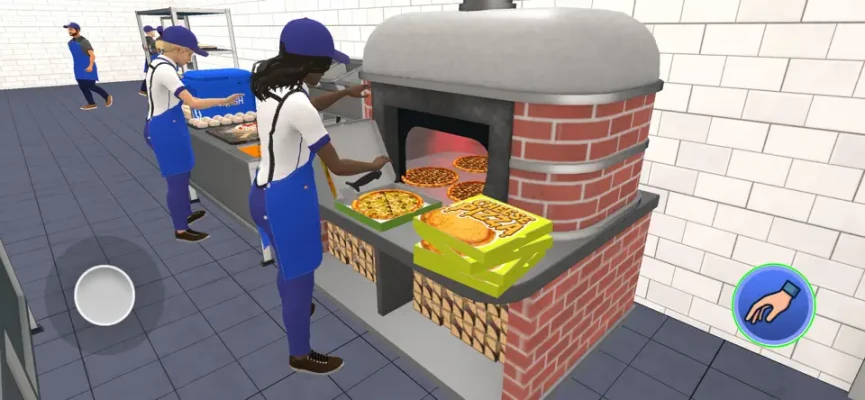
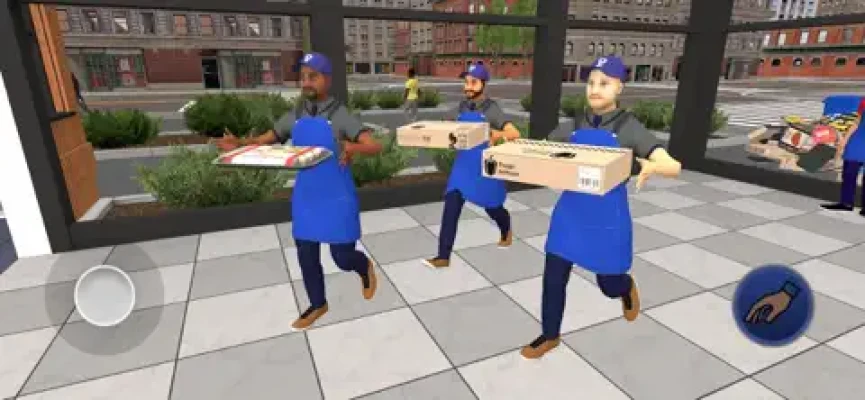
At first, you handle much of the work yourself. As your pizzeria develops, you can unlock additional ovens and tools, hire chefs and servers, and introduce takeout and delivery options.
This creates a gradual sense of progression. Instead of building the complete restaurant immediately, you improve individual parts of the business until your small pizza shop becomes a much more active operation.
How to Play My Pizza Town Story
When starting the game, concentrate on learning the basic restaurant workflow.
Take customer orders and prepare the requested pizzas carefully. Pay attention to the ingredients required for each order and avoid wasting supplies.
Once your restaurant starts generating money, use your earnings to improve the parts of the business that are slowing you down.
A good basic progression cycle is:
- Take orders.
- Prepare the required pizzas.
- Serve customers.
- Keep ingredients and supplies available.
- Upgrade the kitchen.
- Hire additional staff when appropriate.
- Improve the restaurant layout.
- Expand into takeout and delivery.
My Pizza Town Story Strategy Guide
1. Keep the Kitchen Moving
A busy pizza restaurant depends on a smooth workflow.
If customers are waiting while you're still preparing orders, look for the part of the kitchen causing the delay.
It could be:
- Pizza preparation
- Cooking
- Ingredient preparation
- Serving
- Cleaning
- Restocking
Once you identify the bottleneck, focus your next improvement there.
2. Upgrade the Kitchen Before Decorating Too Much
Designing the pizzeria is part of the fun, but functional upgrades can have a bigger impact on progression.
The official description specifically mentions unlocking ovens, tools, and upgrades to speed up the kitchen.
When choosing between a purely decorative improvement and an upgrade that makes the restaurant work faster, consider your current business needs first.
A faster kitchen means you can potentially handle more orders and keep customers moving through the restaurant.
3. Hire Staff When They Solve a Problem
Chefs and servers are useful because they allow you to divide the restaurant's workload.
However, hiring staff simply because you can afford them isn't always the best approach.
Think about what is slowing your restaurant down.
If food preparation is taking too long, a chef may be more useful.
If customers are waiting to receive their completed orders, additional serving assistance may be more valuable.
The official game description confirms that chefs and servers can be hired to keep lines moving and customers satisfied.
4. Keep Ingredients Available
A restaurant cannot serve customers if the required ingredients aren't available.
Make resource management part of your normal routine.
Before a busy period, check your supplies and make sure you have enough of the ingredients used most frequently.
Running out of a common ingredient at the wrong moment can interrupt the entire restaurant workflow.
5. Experiment With Recipes
Recipe experimentation is one of the game's core restaurant-management features.
Don't think only about making one pizza repeatedly.
Experiment with different combinations and learn which recipes fit your restaurant's current operation.
The App Store listing specifically highlights experimenting with recipes and using fresh ingredients.
6. Use Pricing Carefully
My Pizza Town Story allows you to set prices.
That gives you another management decision beyond cooking.
Avoid thinking about price only in terms of making the biggest amount of money from each individual pizza.
A successful restaurant needs a balance between revenue and customer demand.
Use pricing as part of your overall business strategy rather than treating it as a simple maximum-profit button.
7. Improve Your Restaurant Layout
Restaurant layout isn't just about making the pizzeria look attractive.
A well-organized layout can also make your operation easier to manage.
Try to keep related areas together where possible.
For example:
Ingredients → Preparation → Oven → Serving
A logical arrangement makes it easier to understand your workflow and can make the restaurant feel much less cluttered as you unlock additional equipment.
The game allows players to design their own pizzeria layout, so take advantage of that customization.
Best My Pizza Town Story Tips
Tip 1: Identify Your Biggest Bottleneck
Don't upgrade randomly. Find whatever is slowing your restaurant down and improve it first.
Tip 2: Keep Popular Ingredients Stocked
Running out of frequently used supplies can cause unnecessary delays.
Tip 3: Upgrade Kitchen Equipment
Better ovens and tools can improve the speed of your operation.
Tip 4: Hire Staff Strategically
Hire chefs and servers when they can solve a specific workload problem.
Tip 5: Keep the Layout Organized
A tidy restaurant makes it easier to manage your cooking and serving workflow.
Tip 6: Don't Ignore Pricing
Your menu prices are part of your restaurant strategy, so experiment instead of automatically choosing the highest possible price.
Tip 7: Expand Services Gradually
Takeout and delivery can expand your restaurant business, but make sure your core operation can handle additional demand first.
Tip 8: Save Resources for Important Upgrades
Instead of spending every resource immediately, consider saving for an upgrade that can make a substantial difference to your restaurant.
Pizza Preparation Guide
Pizza preparation is at the center of My Pizza Town Story.
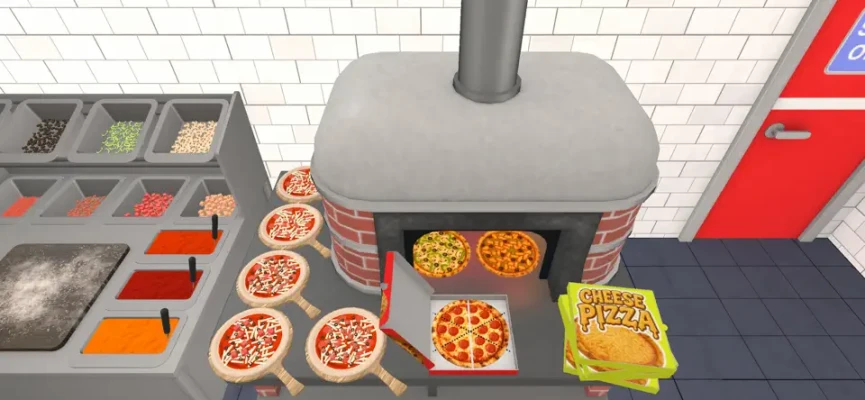
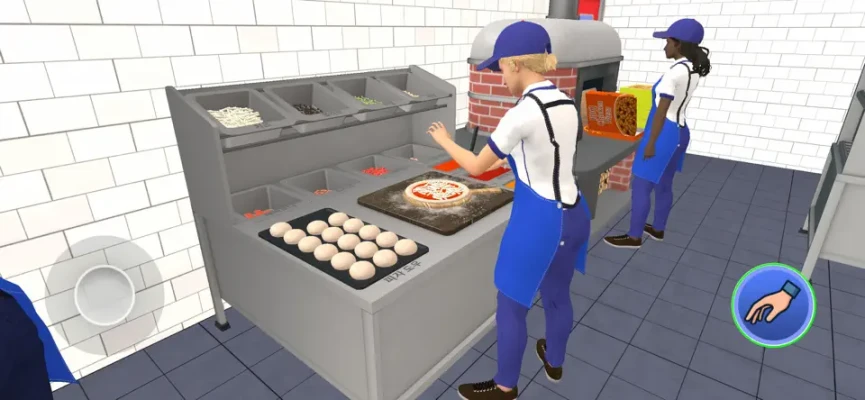
The basic process involves taking an order, preparing the dough, adding the requested toppings, cooking the pizza, and getting it to the customer.
Accuracy matters.
Before preparing a pizza, check the customer's order rather than relying on memory.
As your restaurant becomes busier, small mistakes can create a chain reaction:
Wrong order → wasted ingredients → additional preparation → longer customer wait
Careful preparation helps keep the restaurant running smoothly.
Restaurant Workflow Strategy
A useful way to think about your restaurant is as a production line.
Stage 1: Orders
Customers tell you what they want.
Stage 2: Preparation
Gather the necessary ingredients and prepare the pizza.
Stage 3: Cooking
Use your available ovens and kitchen equipment.
Stage 4: Serving
Deliver completed orders to customers.
Stage 5: Revenue
Successful orders generate money that can be reinvested into the restaurant.
The more efficiently these five stages operate, the easier it becomes to expand.
How to Make Your Pizza Restaurant More Efficient
Efficiency becomes increasingly important as the restaurant grows.
Try to minimize unnecessary movement and keep frequently used equipment accessible.
You should also consider the number of tasks you are personally handling.
If you are constantly switching between cooking, serving, restocking, and other activities, that is a sign that your restaurant may benefit from additional staff or better equipment.
The goal isn't to do every task yourself.
The goal is to create a restaurant that continues working efficiently as demand increases.
Chef Strategy
Chefs can reduce the amount of cooking work you need to handle personally.
When deciding whether to hire or improve staff, consider how much time the employee saves you.
A useful question is:
What task am I spending the most time doing right now?
If cooking dominates your workload, prioritize kitchen assistance.
This approach is more efficient than hiring staff without considering the actual needs of your restaurant.
Server Strategy
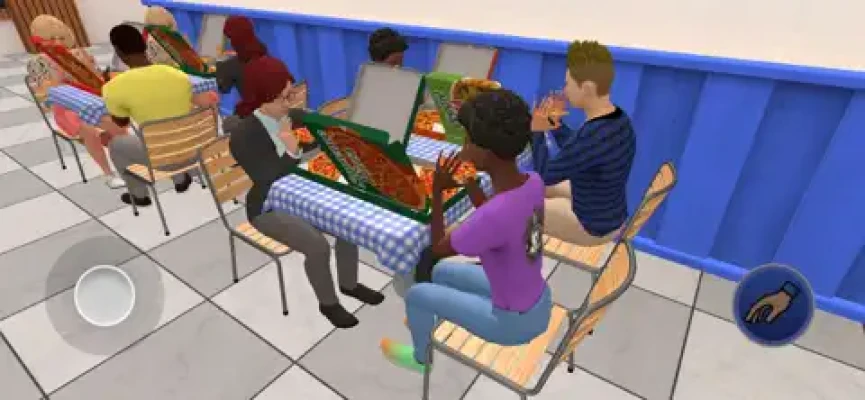
Servers help keep customers moving through the restaurant.
If prepared food is waiting while customers are still waiting to be served, the problem may not be your kitchen.
It may be the serving process.
Watch the restaurant and identify where customers are spending the most time.
Then improve that part of the operation.
Takeout and Delivery
My Pizza Town Story allows you to add takeout and delivery options as the restaurant expands.
These features introduce another layer to the restaurant business.
Instead of relying exclusively on customers inside your pizzeria, you can serve additional orders through other channels.
However, additional demand also means additional workload.
Before expanding your services, make sure your kitchen has enough capacity to handle the extra activity.
Restaurant Layout Guide
A good pizzeria layout should be practical as well as attractive.
Consider organizing your restaurant into zones:
Kitchen Zone
- Ovens
- Preparation areas
- Ingredients
- Cooking tools
Service Zone
- Completed orders
- Customer-facing areas
- Serving stations
Storage Zone
- Ingredients
- Supplies
- Stock
The game gives you freedom to design your pizzeria layout, so experiment until you find an arrangement that feels efficient.
Money Management
Money is one of the most important resources in a restaurant simulation.
Instead of spending your earnings immediately, divide your spending into priorities.
High Priority
- Kitchen improvements
- Equipment upgrades
- Staff that solve current bottlenecks
- Improvements that increase restaurant efficiency
Medium Priority
- Additional services
- Capacity improvements
- Layout improvements that improve workflow
Lower Priority
- Purely cosmetic changes when your restaurant still has major operational weaknesses
This doesn't mean decoration is unimportant. It simply means that functional improvements can help your business grow faster.
Energy Management
The current App Store listing includes several energy-related purchases, indicating that energy is part of the game's progression and monetization system.
Because of this, avoid wasting energy on unnecessary actions when you could use it for meaningful restaurant progress.
If you're playing without purchasing additional energy, plan your actions carefully and prioritize tasks that directly contribute to your current objective.
How to Progress Faster
The fastest way to improve your restaurant isn't necessarily to buy everything as soon as it becomes available.
Instead:
1. Find the bottleneck.
What is slowing down your restaurant?
2. Upgrade that area.
Improve the kitchen, staff, supplies, or workflow responsible for the problem.
3. Increase capacity.
Once the restaurant operates smoothly, prepare it for additional customers.
4. Expand.
Introduce additional services such as takeout and delivery when your restaurant can handle them.
5. Repeat.
Continue improving the weakest part of the business.
Common My Pizza Town Story Mistakes
Spending Too Much on Decoration
A beautiful restaurant is fun, but expensive decoration won't fix an inefficient kitchen.
Hiring Staff Without a Plan
Staff should solve a workload problem rather than simply increase your employee count.
Ignoring Supplies
A shortage of ingredients can bring an otherwise efficient restaurant to a halt.
Setting Prices Without Watching the Business
Pricing should be considered alongside customer demand and your restaurant's overall operation.
Expanding Too Quickly
Adding new services before your kitchen is ready can create additional pressure.
Keeping a Poor Layout
As you unlock more equipment, reorganize the restaurant instead of allowing the kitchen to become increasingly cluttered.
My Pizza Town Story Features
Build a Pizza Restaurant
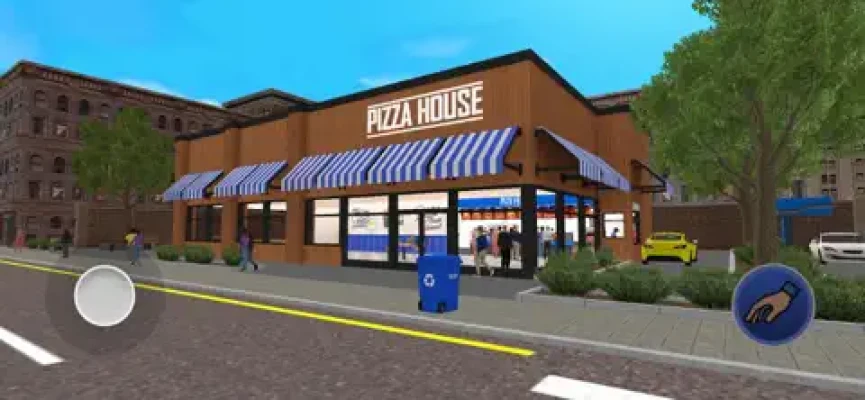
Start with a small pizza shop and gradually turn it into a larger pizzeria.
Prepare Fresh Pizzas
Take orders, prepare dough, add toppings, and serve customers.
Experiment With Recipes
Try different pizza recipes and ingredients as you develop your menu.
Set Your Prices
Pricing gives the restaurant a business-management element beyond simple cooking.
Customize Your Pizzeria
Design and arrange the layout of your restaurant.
Upgrade Kitchen Equipment
Unlock ovens, tools, and improvements designed to make the kitchen more efficient.
Hire Chefs and Servers
Build a team that helps keep food preparation and customer service moving.
Add Takeout and Delivery
Expand your business beyond traditional dine-in customers.
My Pizza Town Story Game Information
Game: My Pizza Town Story
Developer: Yso Corp
Genre: Simulation
Platforms: iPhone, iPad, Android, Windows
Price: Free with in-app purchases
Age Rating: 4+ on the U.S. App Store
iOS Requirement: iOS 14.0 or later
App Size: 440.5 MB on the current U.S. App Store listing
Languages: English plus 13 additional languages
Current App Store Version: 1.0.12
Latest listed App Store update: December 17, 2025
In-App Purchases: Includes Remove Ads, energy packs, money packs, Starter Pack, and Special Pack options.
Google Play currently lists the Android version with 100K+ downloads, a 3.5-star rating from more than 300 reviews, and availability on Android and Windows.
My Pizza Town Story Ratings and Player Feedback
The U.S. App Store currently shows 4.2 out of 5 from 6 ratings. Because the number of ratings is small, this score can change significantly as more players review the game.
Google Play currently shows 3.5 stars from 306 reviews and more than 100K downloads. Player comments include praise for the restaurant gameplay, while some reviews mention concerns about advertising, energy costs, storage capacity, and carrying supplies.
This difference between storefront ratings is worth keeping in mind when evaluating player reception.
My Pizza Town Story Pros and Cons
Pros
- Fun pizza restaurant concept
- Cooking and restaurant management
- Recipe experimentation
- Customizable pizzeria layout
- Kitchen upgrades
- Chefs and servers
- Takeout and delivery
- Simple progression system
- Free to download
Cons
- Energy can limit certain activities
- Advertising is part of the free version
- Some players have criticized the amount of advertising
- Some player feedback mentions limited storage space
- The App Store currently has a small number of ratings
- Larger restaurants can require more careful organization.
Is My Pizza Town Story a Cooking Game?
Yes, but it is more accurately described as a restaurant simulation game with cooking mechanics.
You prepare pizzas and manage recipes, but you're also responsible for pricing, restaurant layout, staff, kitchen upgrades, takeout, and delivery.
Is My Pizza Town Story Free?
Yes. The game is free to download but contains advertising and optional in-app purchases. The U.S. App Store currently lists purchases including Remove Ads, energy packs, money packs, a Starter Pack, and a Special Pack.
Can You Hire Workers in My Pizza Town Story?
Yes. The game allows you to hire chefs and servers to help keep the kitchen and customer service running smoothly.
Can You Customize the Pizza Restaurant?
Yes. My Pizza Town Story allows players to design the layout of their pizzeria and arrange their restaurant as it expands.
Does My Pizza Town Story Have Delivery?
Yes. Takeout and delivery are among the features available as you develop the restaurant.
Is My Pizza Town Story Available on Android?
Yes. Google Play currently lists the game for Android and Windows and reports more than 100,000 downloads.
My Pizza Town Story Beginner Strategy
If you're just starting, don't worry about making the restaurant perfect immediately.
Concentrate on building a reliable workflow.
First: Learn the order and pizza preparation process.
Second: Keep commonly needed ingredients available.
Third: Improve the kitchen when cooking becomes a bottleneck.
Fourth: Hire staff when you need help with specific tasks.
Fifth: Organize the restaurant as you unlock more equipment.
Sixth: Expand into takeout and delivery once your main operation is ready.
This gives you a stable foundation for later restaurant growth.
Advanced Restaurant Strategy
Once your pizzeria becomes busy, stop thinking of each order as an individual task.
Think about the restaurant as a complete system.
You want ingredients to reach preparation quickly, pizzas to move efficiently to the ovens, completed orders to reach customers without unnecessary delay, and staff to handle repetitive tasks whenever possible.
The most efficient restaurant is not necessarily the one with the most equipment.
It's the one where every part of the operation works together.
Final Thoughts
My Pizza Town Story turns the familiar idea of running a pizza restaurant into a hands-on simulation experience. You start with a small operation and gradually develop it by preparing pizzas, experimenting with recipes, setting prices, improving equipment, hiring employees, and expanding your services.
The most useful strategy is to focus on efficiency before expansion. Keep your kitchen organized, maintain enough supplies, upgrade the areas causing the biggest delays, and hire staff when they solve a genuine workload problem.
Once the core restaurant is running smoothly, takeout and delivery can become natural next steps in expanding the business.
If you enjoy cooking games, restaurant management, pizza games, business simulation, and customization, My Pizza Town Story offers a straightforward progression loop built around one goal: turning a small pizza shop into a thriving pizzeria.
Rate the Game
User Reviews













Popular Games



















 Android
 iOS
iOS Windows
 Xbox
Xbox