
Latest Version
September 24, 2026
Matthew Jones
Simulation
iOS
0
Report a Problem
More About :game
The core experience revolves around timing, body positioning, momentum and understanding the game's physics. You can perform flips, grab bars, release at different moments, regrab during movement, use trampolines and experiment with twists.
The game's current version adds replay clips, adjustable twist speed and improved mid-twist regrabs, making it easier to experiment with advanced movements and review previous attempts.
What Is NoomiClone?
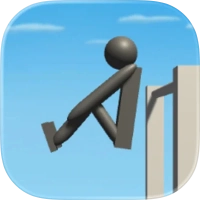
NoomiClone is a casual sports and physics simulation game created by Matthew Jones. The App Store describes it as a physics-based bar simulator designed for gymnastics and freerunning moves, with the game built in Unity.
Unlike traditional level-based gymnastics games, NoomiClone is built around freedom of movement. Players can experiment with different combinations of jumps, flips, grabs, releases, twists and landings.
That freedom is one of the game's defining characteristics. App Store reviewers have specifically praised the ability to experiment with movement instead of simply completing predetermined trick sequences.
NoomiClone Key Features
Physics-Based Flipping
The game's physics system is the foundation of the experience. Your movements affect your momentum, rotation and ability to grab or land successfully.
This means timing is more important than simply pressing buttons quickly.
Bar Gameplay
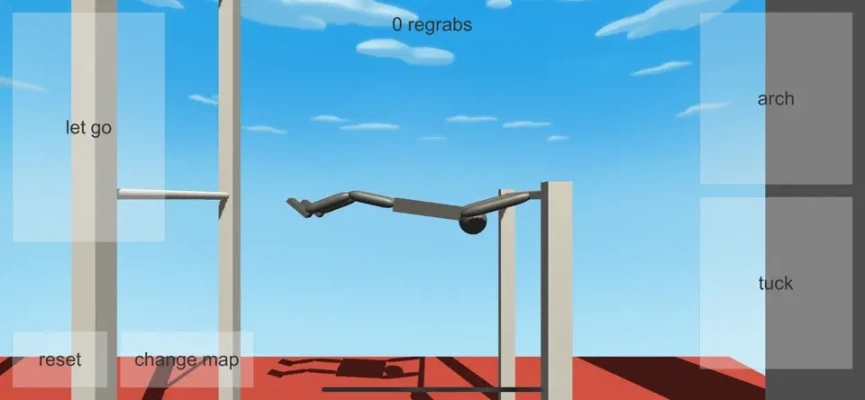
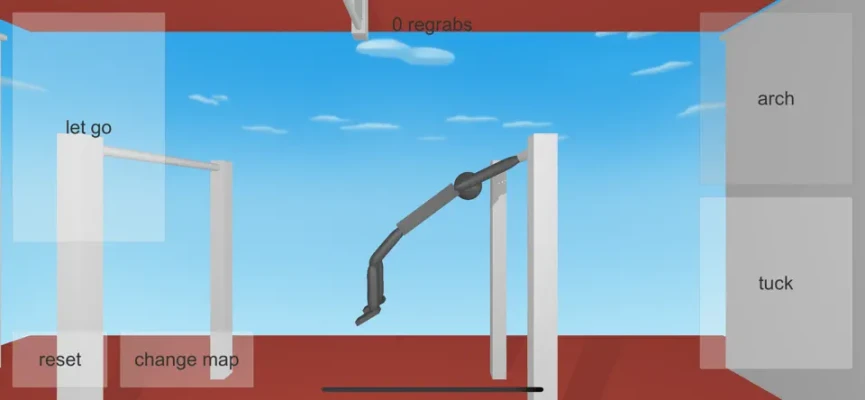
Bars are central to NoomiClone. You can grab, release, swing and regrab while controlling the character's movement.
Learning when to release is just as important as learning when to grab.
Gymnastics and Freerunning
The game combines ideas from gymnastics and freerunning, allowing you to create sequences involving:
- Flips
- Swings
- Regrabs
- Twists
- Tumbling
- Jumps
- Trampoline launches
- Landings
- Momentum-based combinations
Twists
Version 2.0 introduced twist controls that allow Noomi to rotate in mid-air. Version 2.1 subsequently added Slow, Regular and Fast Twist Speed settings. The latest update also improved mid-twist regrabs, allowing the character to catch a bar without waiting for the twist to finish.
Replay Clips
Version 2.0 introduced replays, while version 2.1 expanded the system so every attempt can be saved as an individual clip. You can move through recent attempts and review your runs.
This is particularly useful for learning difficult tricks because you can analyze exactly when a movement went wrong.
Slow Motion
Slow Motion is currently available to everyone according to the version 2.0 update notes. It is especially useful for learning complicated releases, twists and regrabs.
Multiple Maps
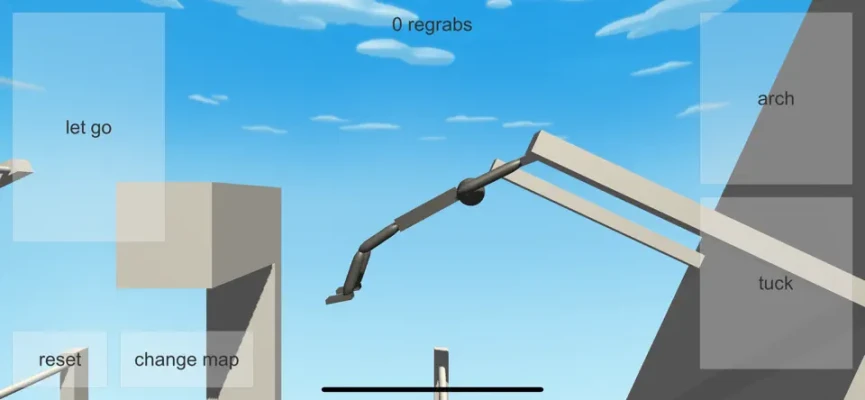
NoomiClone has received numerous maps over its development, including bar maps, tumbling maps, trampoline environments and specialized areas such as Ladders, Spikes and Precisions.
NoomiClone Gameplay Guide
1. Learn the Controls Before Attempting Tricks
The biggest mistake new players can make is trying to perform complicated combinations immediately.
Start by understanding what each control does.
Practice:
- Basic movement.
- Jumping or squatting.
- Grabbing a bar.
- Releasing from a bar.
- Controlling a flip.
- Regrabbing.
- Landing safely.
- Adding twists.
Once each movement feels predictable, start combining them.
2. Understand Momentum
Momentum is one of the most important concepts in NoomiClone.
A successful trick isn't just about pressing the correct button. Your character's current movement determines what happens next.
For example, releasing too early can produce a weak rotation, while releasing too late may send you beyond the desired landing point.
Think about every movement as a chain:
Swing → Release → Rotation → Reorientation → Grab/Land
If one part of the chain is mistimed, the entire sequence can fail.
3. Master the Basic Swing
Before attempting complicated flips, learn how the character behaves while hanging from a bar.
Watch how the body moves as momentum builds.
Try:
- Small swings
- Larger swings
- Controlled releases
- Different release points
- Regrabs after a swing
The objective isn't to perform an impressive trick immediately. It is to understand how momentum develops.
4. Learn When to Release
The release point determines much of what happens afterward.
A useful practice method is to perform the same swing several times and release at slightly different moments.
Compare the results.
You'll begin to recognize the difference between:
- Early release
- Balanced release
- Late release
Once you can predict the result, advanced tricks become considerably easier.
5. Practice Regrabs
Regrabs are one of the most useful advanced skills in NoomiClone.
A successful regrab allows you to continue a sequence instead of ending the movement.
Start with simple movements:
Swing → Release → Regrab
Then progress toward:
Swing → Flip → Regrab
After that, experiment with:
Swing → Twist → Flip → Regrab
The latest version specifically improves mid-twist regrabs, making this type of experimentation more forgiving than before.
6. Use Twists Carefully
Twists add another layer to aerial control.
The current game offers three twist-speed settings:
- Slow
- Regular
- Fast
If you're learning twists for the first time, start with the slower setting. This gives you more time to understand how the character rotates.
Once the movement becomes familiar, increase the speed.
7. Combine Flips and Twists
After learning each movement separately, combine them.
A basic progression is:
Beginner
Jump → Flip → Land
Intermediate
Swing → Release → Flip → Regrab
Advanced
Swing → Release → Flip → Twist → Regrab
Experimental
Swing → Release → Multiple rotations → Twist → Regrab → Continue
The goal isn't simply to make the longest possible sequence. The goal is to understand which movements can flow naturally into each other.
8. Use Slow Motion for Difficult Tricks
Slow Motion is one of the most useful learning tools in NoomiClone.
Use it when:
- A regrab keeps failing
- You don't understand a release point
- Your twist finishes too early
- You land incorrectly
- You cannot determine why a trick fails
Rather than repeatedly attempting the same trick at full speed, slow the action down and identify the exact moment where the movement changes.
NoomiClone Bar Strategy
Bars are ideal for learning momentum.
Build Momentum Gradually
Don't immediately attempt maximum swings.
Start small and gradually increase the movement.
Watch the Character's Body
The character's body position provides useful feedback about the current rotation.
Release With a Purpose
Don't release simply because you're moving quickly.
Ask:
Where do I want the character to be after the release?
Then work backward to determine the appropriate release timing.
Regrab Instead of Resetting
Once you become comfortable with regrabs, you can extend sequences considerably without touching the ground.
NoomiClone Tumbling Guide
Tumbling provides a different challenge because you have less dependence on a bar.
Focus on:
- Takeoff timing
- Rotation speed
- Body orientation
- Landing position
- Maintaining momentum
The version history notes that Noomi now handles on tumbling maps similarly to Bar maps, while earlier updates introduced additional tumbling environments and realistic gravity options.
When practicing tumbling, concentrate on landing consistently before trying to maximize the number of rotations.
Trampoline Strategy
Trampolines can dramatically increase your aerial momentum.
The best way to learn them is to treat the bounce as the beginning of a trick rather than the trick itself.
A useful sequence is:
Bounce → Stabilize → Rotate → Reorient → Land
Once you understand the timing, experiment with twists and flips.
The game's version history also notes that trampolines were rebuilt so that bounces preserve flips and twists more consistently.
NoomiClone Map Strategy
Different maps encourage different styles of play.
Bar Maps
Focus on swinging, releasing and regrabbing.
Tumbling Maps
Concentrate on aerial rotation and controlled landings.
Trampoline Maps
Use the bounce to build aerial momentum.
Ladders
Use the environment to experiment with different movement patterns and transitions.
Spikes
Precision becomes particularly important because careless movement can quickly end a sequence.
Precisions
Practice controlled movement rather than simply maximizing rotation.
The game's update history confirms the addition of these specialized maps over time.
Best Way to Practice NoomiClone
Use a structured practice routine.
Step 1: Choose One Movement
For example, practice a basic flip.
Step 2: Repeat It
Perform the same movement several times.
Step 3: Identify the Failure
Determine whether the problem is timing, rotation or positioning.
Step 4: Use Slow Motion
Watch the critical moment carefully.
Step 5: Record the Attempt
Use the replay feature to review the run.
Step 6: Change One Variable
Adjust only the release timing or rotation speed.
Step 7: Repeat
Once the movement becomes consistent, introduce another trick.
This method is much more effective than randomly changing multiple controls at once.
Replay Clip Strategy
The replay system is more than a way to watch successful tricks.
Use it as a training tool.
After a failed attempt, look for:
- The exact release moment
- Body orientation
- Rotation speed
- Bar position
- Regrab timing
- Landing angle
Then compare a successful attempt with a failed one.
The latest version saves every attempt as its own replay clip, making it easier to compare recent runs.
NoomiClone Advanced Trick Guide
Once basic movements become consistent, start experimenting with combinations.
Flip to Regrab
- Build momentum.
- Release the bar.
- Start the flip.
- Track the bar's position.
- Reorient the body.
- Regrab.
Twist During a Flip
- Build momentum.
- Release.
- Begin the flip.
- Activate the twist.
- Control the rotation.
- Prepare for the regrab or landing.
Reverse a Twist
The current twist system allows you to tap the opposite direction to reverse the twist. Holding both directions can maintain the character's angle.
This gives advanced players considerably more control over aerial orientation.
Tips and Tricks for NoomiClone
Tip 1: Don't Rush
Physics games reward control more than button mashing.
Tip 2: Learn One Trick at a Time
Mastering a basic flip makes advanced combinations much easier.
Tip 3: Use Slow Motion
Slow Motion is particularly valuable when learning precise regrabs.
Tip 4: Watch Your Release Point
A small timing difference can completely change the trajectory.
Tip 5: Start With Slow Twist Speed
Once you understand the rotation, move to Regular or Fast.
Tip 6: Use Replays After Difficult Attempts
The replay system can reveal mistakes that are difficult to notice during live gameplay.
Tip 7: Practice Recovery
Not every imperfect movement needs to become a failed run. Learn how to recover with another grab or controlled landing.
Tip 8: Experiment
NoomiClone's physics system is designed around experimentation. Try different combinations rather than limiting yourself to one trick sequence.
Tip 9: Focus on Consistency
Performing a trick once is exciting. Performing it repeatedly means you've actually learned it.
Tip 10: Create Your Own Lines
Instead of treating the map as a fixed obstacle course, think of it as a playground for creating movement combinations.
NoomiClone Difficulty
NoomiClone is easy to understand but can become surprisingly demanding.
The basic controls are simple, but advanced movement requires:
- Timing
- Spatial awareness
- Momentum control
- Rotation management
- Regrab precision
- Landing control
- Understanding of the physics system
This creates a game where the difficulty comes less from traditional enemies or levels and more from mastering the movement system.
Honest Feedback
One of NoomiClone's biggest strengths is its freedom. App Store reviewers have repeatedly highlighted the game's open-ended movement system and the satisfaction of controlling individual body movements rather than simply selecting predetermined tricks.
The game's simplicity is also part of its appeal. Some reviewers specifically praised its straightforward presentation and the ability to experiment without excessive complexity.
The recent updates significantly expand the experience. Version 2.0 added twists, replay functionality, free Slow Motion, improved trampoline physics and additional customization, while version 2.1 added replay clips, adjustable twist speeds and improved mid-twist regrabs.
The main thing to understand is that NoomiClone is much more of a physics playground and movement simulator than a conventional progression-heavy sports game. Players who enjoy experimenting with flips, gymnastics and freerunning can spend considerable time mastering individual movements, while players looking for a conventional campaign may find the open-ended structure different from a typical mobile sports game.
NoomiClone Pros and Cons
Pros
- Physics-focused gameplay
- Strong freedom of movement
- Gymnastics and freerunning mechanics
- Bar and tumbling gameplay
- Flips and twists
- Regrabs
- Trampoline mechanics
- Slow Motion
- Replay clips
- Multiple maps
- Customization and Noomi skins
- Adjustable twist speed
- Regular physics and performance improvements
Cons
- The open-ended structure may not appeal to players seeking traditional levels
- Advanced movements require practice
- Physics-based controls can initially feel difficult
- The experience is primarily focused on experimentation rather than a conventional story or campaign
NoomiClone Game Information
Game: NoomiClone
Subtitle: Flipping Simulator
Developer: Matthew Jones
Genre: Casual / Sports
Price: Free with in-app purchases
Latest Version: 2.1.0
Latest Update: September 5, 2026
Size: 119.9 MB
Age Rating: 4+
Language: English
Platforms: iPhone, iPad, iPod touch and Apple Vision
Minimum iOS: iOS 15.0 or later
Minimum iPadOS: iPadOS 15.0 or later
In-App Purchases: Yes
The current App Store listing shows 231 ratings with a 4.2/5 rating in the U.S. store.
NoomiClone Version 2.1.0
The September 5, 2026 update introduced several notable improvements:
- Replay clips for individual attempts
- Twist Speed settings
- Slow, Regular and Fast twist options
- Improved mid-twist regrabs
- Additional fixes and polish
These additions make version 2.1.0 particularly useful for players interested in practicing and reviewing advanced movement combinations.
Frequently Asked Questions
What is NoomiClone?
NoomiClone is a physics-based flipping simulator focused on gymnastics and freerunning movements.
Is NoomiClone free?
Yes. The App Store lists the game as free with optional in-app purchases.
Can you do flips in NoomiClone?
Yes. Flips are one of the game's central movement mechanics.
Can you perform twists?
Yes. Twists were introduced in version 2.0, and version 2.1 added adjustable twist speeds.
Does NoomiClone have replays?
Yes. The game now saves individual attempts as replay clips, allowing players to review recent runs.
Does NoomiClone have slow motion?
Yes. Slow Motion became available to everyone in version 2.0.
Can you use trampolines?
Yes. NoomiClone includes trampoline-based gameplay, with the physics updated in version 2.0 to preserve flips and twists during bounces.
What is the best way to learn NoomiClone?
Start with basic swings and flips, learn release timing, practice regrabs, then introduce twists and more complicated combinations.
Is NoomiClone a parkour game?
It has strong freerunning and parkour-style movement elements, but its primary description presents it as a physics-based bar simulation for gymnastics and freerunning.
What makes NoomiClone different?
Its emphasis on physics and freedom allows players to experiment with movement rather than simply following predetermined trick combinations.
Final Thoughts
NoomiClone is best approached as a physics playground for gymnastics, flipping and freerunning. Its appeal comes from the freedom to experiment rather than simply completing a fixed list of tricks.
Start with basic swings and flips, learn how momentum works, practice controlled releases and gradually add regrabs and twists. Use Slow Motion and the new replay clips to study difficult movements instead of repeatedly guessing at the timing.
Once the fundamentals become natural, NoomiClone becomes much more interesting: the same map can become a place to practice a single flip, build a long bar combination, experiment with twists or create an entirely new movement line.
Rate the Game
User Reviews






Popular Games















 Android
 iOS
iOS Windows
 Xbox
Xbox