

Latest Version
September 25, 2026
MoonDrip FZ-LLC
Simulation
iOS
0
Report a Problem
More About :game
The gameplay mixes hands-on construction tasks with vehicle driving, resource management, crew progression, and idle income. You can use tools such as a hammer, axe, and pickaxe before progressing toward more powerful equipment, while trailers and vehicles help move materials around the growing town.
What Is Break & Build Simulator?
Break & Build Simulator puts you in charge of a growing construction company. Instead of simply watching a business generate money, you participate directly in the work.
A typical project can involve several stages:
Demolish → Clear → Gather → Transport → Build → Earn → Upgrade → Expand
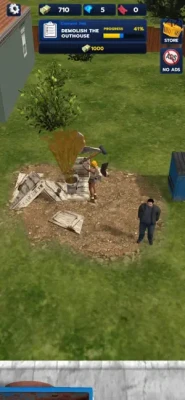
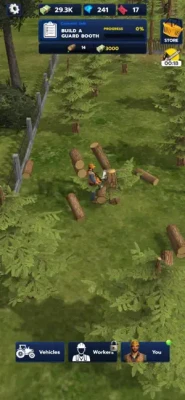
You may begin by destroying an old structure and cleaning up the area. From there, you can gather wood by chopping trees, mine stone from rocks, load materials for transportation, and deliver the required resources to a construction site.
As the company develops, larger contracts become available, better equipment can be unlocked, vehicles can be improved, and additional crew members can help you handle bigger workloads.
Main Gameplay Features
Demolition Jobs
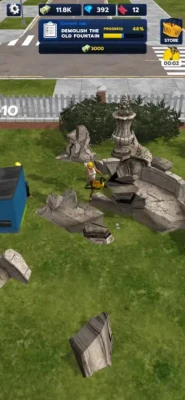
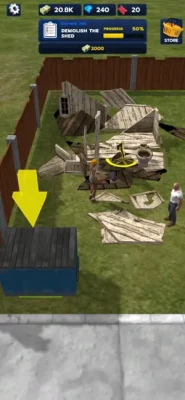
Demolition is one of the game's core activities. Take contracts that require old structures or objects to be removed, then clean the area so it can be used for something new.
The important part is not simply destroying everything you see. Efficient demolition should leave you with a clean work area and a clear path toward the next stage of the project.
Resource Gathering
Construction requires materials, so gathering is an important part of progression.
Depending on the project, you can:
- Chop trees for wood
- Break rocks for stone
- Collect construction materials
- Carry resources using your backpack
- Load materials onto a trailer
- Deliver resources to construction locations
The App Store description specifically identifies wood and stone gathering as part of the gameplay loop.
Construction Projects
Once the necessary materials arrive at a construction site, you can begin rebuilding.
Projects can involve transforming previously neglected locations into useful structures and helping citizens complete their requests.
Construction therefore becomes the payoff for the earlier demolition, gathering, and transportation work.
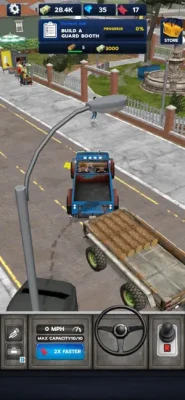
Vehicle and Trailer Driving
Transportation becomes increasingly important as projects grow.
You can:
- Buy vehicles
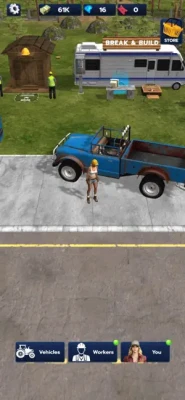
- Attach trailers
- Load construction materials
- Drive cargo around town
- Deliver resources to the correct location
- Upgrade your transportation capabilities
Trailer management is particularly important because transporting materials efficiently can reduce unnecessary trips.
Business Expansion
Your company begins small and gradually becomes more capable.
Money earned from completed jobs can be used to improve:
- Tools
- Vehicles
- Equipment
- Workforce
- Overall business capacity
Larger projects can then become accessible as your operation grows.
Crew Management
You eventually do not have to complete every task alone.
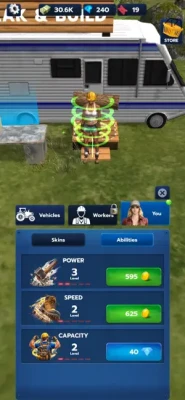
The game allows you to hire assistants who can accompany you to construction sites and help with the workload. This becomes increasingly useful when projects become larger and require more activity.
Idle Earnings
Break & Build Simulator combines active arcade gameplay with idle progression.
That means your progression is not limited to manually completing every task. The business can also develop an income stream as you expand your operation.
Tools and Equipment
The equipment progression gives the game a satisfying sense of growth.
You start with relatively simple tools such as:
Hammer
Useful for early demolition and construction-related work.
Axe
Used for chopping trees and collecting wood.
Pickaxe
Used to break rocks and gather stone.
Chainsaw
A more powerful piece of equipment that becomes available as your company progresses.
Electric Demolition Hammer
Designed for more demanding demolition work.
The game's progression is built around unlocking better tools that can open up new jobs and additional ways to earn money.
Complete Break & Build Simulator Strategy Guide
1. Learn the Full Job Cycle
The most important thing for new players is understanding that jobs are connected.
A construction contract may require you to first clear an area, then gather materials, transport those materials, and finally complete construction.
Think of each project as a chain rather than a collection of unrelated tasks.
Demolition → Cleanup → Materials → Delivery → Construction → Payment
Understanding this loop makes your progression much easier.
2. Do Not Rush Into Large Projects
When a larger contract becomes available, it can be tempting to immediately accept it.
However, larger projects can require more resources and transportation.
Before committing, make sure your:
- Tools are sufficiently upgraded
- Vehicle is ready
- Trailer is available
- Material requirements are manageable
- Current income can support the project
Growing steadily is often more efficient than constantly taking on work that overwhelms your current equipment.
3. Upgrade Tools That Save Time
Better equipment is valuable because it can make repetitive jobs faster.
If you regularly spend a large amount of time chopping, mining, or demolishing, upgrading the corresponding equipment can improve your overall work rate.
A good progression principle is:
Upgrade the equipment you use most frequently first.
There is little benefit in heavily upgrading equipment that you rarely use while your primary tool remains inefficient.
4. Treat Materials as a Logistics Problem
One of the easiest mistakes is gathering materials without thinking about transportation.
Before collecting a large amount of wood or stone, consider:
- Where the material needs to go
- How much can be transported
- Whether the trailer is ready
- Whether another trip can be combined with the current one
Efficient transportation can save significant time over multiple contracts.
5. Make Trailer Trips Count
When transporting resources, avoid unnecessary empty journeys.
If you are already driving toward a construction area, plan the delivery around your next task whenever possible.
A simple routine is:
Gather → Load → Drive → Deliver → Start the next nearby task
Instead of:
Gather → Drive → Return → Gather again → Drive again
Good route planning becomes increasingly valuable as projects get larger.
6. Keep Your Work Area Organized
After demolition, make sure the site is properly cleared before moving on.
A messy construction site can interrupt the flow of a project and make it harder to determine what still needs to be completed.
Think of cleanup as part of the job rather than an unnecessary extra step.
7. Prioritize Profitable Progression
Not every available task has the same value for your company.
When choosing what to do next, consider:
- The payment
- The required materials
- Travel distance
- Equipment requirements
- Time required
- Whether completing it unlocks something useful
A contract that pays slightly less but takes much less time may be more efficient than a difficult job with a larger headline reward.
8. Upgrade Transportation as Your Company Grows
Your vehicle becomes increasingly important once material requirements increase.
A stronger transportation setup allows you to move more resources and handle larger construction projects more comfortably.
If you find yourself repeatedly making trips just to transport materials, it may be time to prioritize vehicle or trailer progression.
9. Use Your Crew Efficiently
Hiring assistants becomes more valuable when your projects become more demanding.
Instead of thinking of crew members simply as another upgrade, think of them as a way to increase the amount of work your company can handle.
The ideal progression is to build a system where:
You manage the business → Your equipment handles heavier work → Your crew supports larger projects.
10. Take Advantage of Idle Progression
The game combines active work with idle earnings.
This means you should not focus exclusively on the immediate cash reward from your current task.
Long-term upgrades can increase your company's earning potential, allowing future projects to become easier to fund.
Use active gameplay to accelerate progression while allowing the business side of the game to contribute to your overall growth.
Early-Game Tips
If you are just starting Break & Build Simulator, follow this progression:
Step 1
Complete the introductory demolition work.
Step 2
Learn how site cleanup works.
Step 3
Gather wood and stone when required.
Step 4
Practice carrying and loading materials.
Step 5
Learn the trailer system.
Step 6
Complete your first construction projects.
Step 7
Invest earnings into useful equipment.
Step 8
Accept progressively larger contracts.
Step 9
Expand your vehicle and tool capabilities.
Step 10
Hire assistance when the workload becomes larger.
This approach gives you a natural progression from a small construction operation into a larger company.
Mid-Game Strategy
Once your business starts expanding, efficiency becomes more important than simply completing tasks.
Focus on three things:
Equipment
Use better tools to reduce the amount of time spent on repetitive work.
Transportation
Improve your ability to move resources around town.
Workforce
Use assistants to increase your capacity on larger projects.
At this stage, avoid spending all of your earnings on upgrades without considering what they actually improve.
A useful question before every purchase is:
"Will this upgrade help me complete my next several jobs faster or unlock more profitable work?"
How to Make Money Faster
There is no single trick that replaces normal progression, but you can improve your earnings by making each work cycle more efficient.
Combine Tasks
Try to gather resources in batches instead of constantly switching between different activities.
Reduce Travel
Transportation time can become a hidden cost. Plan deliveries carefully.
Upgrade Frequently Used Tools
The equipment you use repeatedly provides the most practical benefit from upgrades.
Complete Contracts
Contracts are the foundation of your construction business and provide the money needed for expansion.
Build Long-Term Income
Because the game includes idle earnings, business growth can contribute to your income beyond your manually completed tasks.
Best Way to Approach Demolition
Demolition is more than simply smashing objects.
A good demolition routine is:
Identify the target → Remove the structure → Clear debris → Check the site → Move to the next requirement
Do not immediately leave after destroying the main object. Make sure the site is ready for whatever construction or development comes next.
Best Way to Gather Resources
Resource gathering becomes easier when you treat it as preparation for a specific contract.
Before gathering:
- Check what the project needs
- Identify the required resource
- Prepare transportation
- Gather enough material
- Load it efficiently
- Deliver it directly
This prevents unnecessary resource collection and repeated trips.
Best Vehicle Strategy
Vehicles are not just transportation tools. They are part of your construction business.
When choosing how to invest in transportation, consider:
- Cargo requirements
- Trailer availability
- Distance between work areas
- Frequency of material deliveries
- Future project size
As your business grows, efficient transportation becomes increasingly important.
Construction Business Progression
The overall progression can be understood as four stages.
Stage 1 — Small Operator
You have basic tools and simple contracts.
Stage 2 — Growing Contractor
You begin handling more materials and larger projects.
Stage 3 — Established Company
Better tools, vehicles, trailers, and assistants become increasingly important.
Stage 4 — Expanding Construction Business
You can handle larger contracts while combining active work, crew assistance, transportation, and idle income.
The objective is to turn a small operation into a company capable of managing increasingly ambitious construction projects.
Missions, Tasks and Rewards
The current App Store version includes new tasks with rewards, new missions, achievements, and leaderboards. The version history also notes improved controls and says more missions are coming.
This makes it worth checking the available task and mission systems regularly rather than focusing exclusively on ordinary construction jobs.
Achievements and Leaderboards
Break & Build Simulator supports Game Center features, including achievements and leaderboards.
For achievement-focused players, this adds another reason to explore different parts of the game instead of following only the fastest business progression route.
Controls and Gameplay Feel
The game is designed around straightforward arcade interaction rather than attempting to reproduce every detail of professional construction work.
The result is a lighter construction simulator where the player can move between demolition, resource collection, driving, delivery, and building without becoming buried in complicated management systems.
The App Store version history currently notes improved controls.
Break & Build Simulator Tips for Beginners
- Complete early contracts before chasing large projects.
- Upgrade tools that you use most often.
- Gather resources with a specific project in mind.
- Avoid unnecessary vehicle trips.
- Use trailers efficiently.
- Keep construction sites clear.
- Invest in transportation as material requirements grow.
- Hire assistants when the workload increases.
- Use idle earnings as part of your long-term progression.
- Check missions and rewards regularly.
- Save enough money for important upgrades instead of spending everything immediately.
- Think about the complete job cycle rather than individual tasks.
Pros and Cons
Pros
- Combines demolition and construction gameplay.
- Resource gathering gives projects more depth.
- Vehicle and trailer transportation adds a logistics element.
- Business progression creates a clear sense of growth.
- Crew members add another layer of progression.
- Active gameplay is combined with idle earnings.
- Includes achievements and leaderboards.
- Suitable for players who enjoy casual construction and simulation games.
Cons
- Repetitive resource gathering may not appeal to every player.
- Larger projects can involve several similar work cycles.
- Players looking for a highly realistic construction simulator may prefer a more detailed simulation experience.
- The game currently has a relatively new content base, with the developer indicating that more missions are coming.
Is Break & Build Simulator Worth Playing?
If you enjoy construction simulator games, demolition games, resource management, vehicle driving, idle business games, and casual arcade simulations, Break & Build Simulator offers an interesting combination of these mechanics.
Its main appeal is the complete progression loop. You are not restricted to one activity: you can demolish an old structure, gather materials, transport them with a trailer, construct something new, earn money, improve your equipment, hire help, and eventually take on larger contracts.
That combination gives the game a satisfying "start small and build up" structure.
Game Information
| Information | Details |
|---|---|
| Game | Break & Build Simulator |
| Developer | MoonDrip FZ-LLC |
| Genre | Simulation |
| Platform | iPhone, iPad |
| Age Rating | 13+ |
| Price | Free with in-app purchases |
| Size | 340.6 MB |
| Language | English |
| Required iOS | iOS 15.0 or later |
| Required iPadOS | iPadOS 15.0 or later |
| Game Center | Yes |
| Achievements | Yes |
| Leaderboards | Yes |
| Gameplay | Demolition, construction, driving, gathering, business |
| Current Version | 1.01 |
The App Store listing identifies the game as a free simulation title with optional in-app purchases, 340.6 MB size, iOS 15+ compatibility, and Game Center support.
Frequently Asked Questions
What is Break & Build Simulator?
Break & Build Simulator is an arcade construction simulation game where players demolish structures, gather resources, transport materials, complete construction projects, upgrade equipment, hire crew members, and grow a construction company.
Can you demolish buildings in Break & Build Simulator?
Yes. Demolition is one of the central activities. Players take demolition jobs, remove old structures, and clear construction sites before rebuilding them.
Can you build structures?
Yes. After clearing locations and delivering required materials, players can complete construction projects and help develop the town.
Can you drive vehicles?
Yes. Vehicles and trailers are an important part of the game's transportation system. Players can load materials and deliver them to construction locations.
Can you upgrade equipment?
Yes. The game includes progression for tools, vehicles, and equipment.
Can you hire workers?
Yes. Players can hire assistants who help at construction sites as the business grows.
Does Break & Build Simulator have idle earnings?
Yes. The game combines hands-on arcade gameplay with idle progression and business income.
Does it have achievements?
Yes. The current listing includes achievements and leaderboards through Game Center.
Is Break & Build Simulator free?
The App Store lists it as free with optional in-app purchases.
What tools are available?
The game features tools including a hammer, axe, pickaxe, chainsaw, and electric demolition hammer as part of its progression system.
Final Strategy: Build Smarter, Not Just Bigger
The biggest lesson in Break & Build Simulator is that every part of the business is connected.
Demolition creates the workspace.
Resource gathering provides the materials.
Transportation moves those materials.
Construction turns them into new projects.
Contracts provide income.
Upgrades improve efficiency.
Crew members increase your capacity.
Idle earnings support long-term growth.
Once you understand this complete cycle, the game becomes much easier to manage. Instead of treating every job as a separate activity, build a smooth routine where your tools, vehicle, crew, and business upgrades all work together.
Start small, improve the equipment you actually use, minimize unnecessary travel, and gradually take on larger contracts. That is the most reliable way to turn a modest construction operation into a growing business.
Rate the Game
User Reviews













Popular Games


















 Android
 iOS
iOS Windows
 Xbox
Xbox