





Latest Version
September 28, 2026
UNICO STUDIO
Strategy
iOS
0
Report a Problem
More About :game
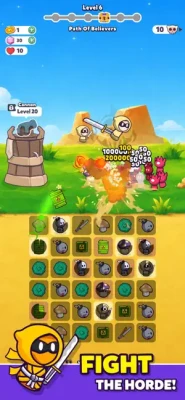
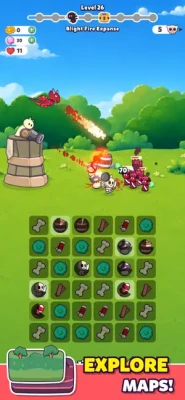
The game features six fighter classes, dragon companions, powerful boosters, wave cards, tower upgrades, boss encounters, competitive rankings, and roguelike-style progression. Battles can be prepared through the merge board and then watched as your fighters automatically take on incoming enemies.
What Is Match Fighters?
Match Fighters takes the familiar idea of matching and merging pieces and places it inside a battlefield strategy system. Instead of simply clearing a puzzle board, every successful merge contributes to the army you will take into the next battle.
You have a limited number of moves, so randomly combining pieces can leave you with a weak army. The better approach is to look ahead, organize the board, create stronger combinations, and think about what your team will need before starting the fight.
Once the preparation phase is finished, your fighters automatically engage enemy waves. This creates an interesting contrast between hands-on puzzle strategy and auto-battle combat.
Match Fighters Gameplay Features
Strategic Merge Gameplay
The central mechanic is the merge board. Matching fighter pieces can be combined to produce stronger units. The game supports matches of three, four, or five pieces, while special L-shaped and T-shaped combinations can unlock more powerful fighters.
Because moves are limited, the goal isn't simply to make the biggest match available. You need to consider board space, future combinations, fighter variety, and the enemies you expect to face.
Six Fighter Classes
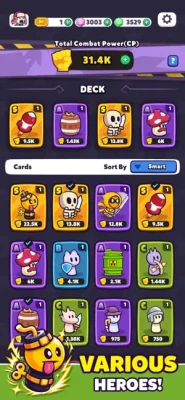
Match Fighters includes six distinct fighter classes:
- Footman – A balanced melee unit suitable for general combat.
- Warrior – A fast damage dealer focused on sword attacks.
- Tanky – A durable frontline fighter capable of pushing enemies back.
- Archer – A ranged attacker that can deal damage from a distance.
- Wizard – An area-damage specialist designed to hit groups of enemies.
- Bomber – An explosive fighter capable of wiping out clusters of enemies.
Each class serves a different purpose, so building an effective army means thinking about balance rather than relying on one type of fighter.
Dragon Pets
Dragon companions add another layer to your battlefield strategy.
Fire Dragon
The Fire Dragon attacks enemy groups with fireballs, making it useful when several enemies are packed together.
Poison Dragon
The Poison Dragon creates toxic areas that continue damaging enemies, making it useful for controlling sections of the battlefield.
Ice Dragon
The Ice Dragon can freeze and slow approaching enemies, giving your fighters more time to eliminate dangerous targets.
Choosing and upgrading the right dragon can complement your fighter lineup and help compensate for weaknesses in your army.
Tower Defense System
Your castle is more than a background structure. Tower upgrades can improve its defensive capabilities as your progression continues.
Higher tower levels can unlock features including:
- Automatic attacks
- Faster firing
- Area damage
- Knockback effects
A strong tower can provide valuable extra damage when enemy waves become difficult, so tower development should not be ignored while upgrading fighters.
Boosters
Match Fighters provides several boosters that can change the outcome of difficult encounters.
Turret
The Turret delivers heavy damage for a limited period. Save it for moments when a large or dangerous wave reaches your defenses.
Shield
The Shield provides an invincibility barrier for your fighters. It is especially useful when your frontline is under severe pressure.
Extra Move
An Extra Move gives you another opportunity to improve your merge board before the battle begins.
The important point is timing. Using a booster immediately may waste its potential when waiting a few seconds or one more enemy wave could produce a much greater benefit.
Wave Cards
Between waves, players can select upgrade cards that influence the direction of a run.
Examples include:
- Arrow Rain
- Ninja Assassin
- Snowball Slam
- Bomb Strike
These cards add a roguelike element because the upgrades and choices can change from one run to another.
Boss Battles
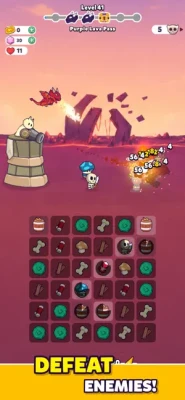
Boss encounters introduce additional pressure because ordinary wave-clearing tactics may not always be enough.
The game features different boss types, including:
- Ice Boss
- Fire Boss
- Forest Boss
Before a boss encounter, consider whether your army has enough sustained damage, crowd control, frontline durability, and ranged support.
Full Match Fighters Strategy Guide
1. Don't Waste Your Early Moves
The biggest beginner mistake is merging pieces immediately without considering the rest of the board.
Before making a move, look at all available matching pieces and identify which combinations can create the greatest improvement.
Try to think one or two moves ahead instead of reacting to every new piece.
2. Keep the Board Organized
Board space becomes increasingly important as your fighters become stronger.
Avoid creating unnecessary isolated pieces that block useful combinations. When possible, leave open spaces around important groups so that new pieces can be incorporated into future merges.
A clean board gives you more options.
3. Prioritize Larger Combinations
When the board allows it, larger matching combinations can produce stronger results.
However, don't automatically wait for a five-piece combination if doing so prevents you from creating a useful fighter now. The best move depends on the current board, available moves, and upcoming battle.
4. Build a Balanced Army
A team containing only melee fighters can struggle against certain situations, while an army focused entirely on ranged damage may have difficulty surviving pressure at the front.
Try to maintain a mixture of:
- Frontline durability
- Fast damage
- Ranged attacks
- Area damage
- Crowd control
- Explosive damage
The six fighter classes are designed around different battlefield roles, so use that variety to your advantage.
5. Protect Your Ranged Fighters
Archers and Wizards can provide valuable damage from behind the frontline.
If your durable fighters are removed too quickly, however, enemies can reach these vulnerable damage dealers.
When preparing your board, think about how the entire army will function rather than simply creating the strongest individual fighter.
6. Use Area Damage Against Groups
Wizards, Bombers, dragon abilities, and certain cards can be particularly valuable when enemies arrive in groups.
Don't waste powerful area attacks on a single weak enemy if a larger group is about to reach your defenses.
7. Use the Ice Dragon for Control
The Ice Dragon's freezing and slowing abilities can buy valuable time.
This can be particularly useful when enemy waves approach faster than your fighters can eliminate them. Slowing enemies gives ranged attackers additional opportunities to deal damage.
8. Save the Shield for Dangerous Moments
The Shield is most valuable when your army is genuinely threatened.
Using it during an easy wave may leave you without protection when a difficult wave or boss arrives.
Watch the battlefield and activate defensive tools when they can prevent meaningful damage.
9. Use the Turret During Heavy Pressure
The Turret has a limited active duration, so its effectiveness depends heavily on timing.
Activate it when multiple dangerous enemies are within range or when you need additional damage to finish a difficult wave.
10. Don't Ignore the Tower
It can be tempting to spend every resource improving fighters.
Remember that the tower can gain automatic attacks, rapid-fire capabilities, area damage, and knockback as it develops. A stronger tower gives your army another source of battlefield pressure.
11. Choose Wave Cards Around Your Current Army
Don't choose a card simply because it sounds powerful.
Look at what your army actually needs.
For example:
- A damage-focused card can help if enemies are surviving too long.
- A control effect can be useful when fast enemies reach your defenses.
- Area attacks become more valuable when waves contain many enemies.
- A card that complements your strongest fighter type may be more useful than a generic upgrade.
12. Adapt Your Strategy for Bosses
Boss fights should influence your preparation.
Before a major encounter, prioritize a stable army rather than spending all your moves chasing a perfect combination.
Make sure your fighters can survive long enough to deal their damage, and keep useful boosters available when possible.
13. Upgrade With a Long-Term Plan
Match Fighters includes progression across fighters, towers, pets, and cards.
Instead of spreading every upgrade evenly, identify the parts of your setup that consistently contribute to successful battles.
A strong core team combined with useful tower and pet upgrades can provide a more reliable foundation for future runs.
14. Learn From Failed Runs
Because the game incorporates random upgrades and changing challenges, not every run will develop the same way.
If you lose, consider what actually caused the defeat.
Was your army lacking damage?
Did your frontline collapse?
Were enemies reaching the tower too quickly?
Did you spend boosters too early?
Was your merge board too crowded?
Answering those questions is more useful than simply repeating the same strategy.
Beginner Tips for Match Fighters
If you're just starting, keep these rules in mind:
- Plan before merging.
- Don't waste limited moves.
- Keep your board organized.
- Build a balanced fighter lineup.
- Protect important ranged units.
- Save boosters for difficult moments.
- Choose wave cards based on your current weaknesses.
- Upgrade your tower as well as your fighters.
- Use dragon abilities strategically.
- Study why you lost before starting another run.
Best Way to Approach the Merge Board
A good merge board should give you options.
Instead of immediately combining every matching piece, look for chains of potential moves. Sometimes a smaller merge creates the space required for a much stronger combination later.
The ideal turn is not necessarily the move that creates the strongest fighter immediately. It can be the move that leaves the board in the best position for your next several moves.
That distinction becomes increasingly important as the difficulty increases.
Match Fighters Progression
Progression extends beyond simply making stronger fighters. Players can improve their fighters, tower, pets, and cards while facing increasingly challenging battles.
The game's roguelike structure also introduces changing upgrades and challenges, giving different runs room to develop in different ways.
Offline Play
The App Store listing describes Match Fighters as playable without an internet connection, although players should always check the current version and platform requirements because online-dependent features may behave differently.
Match Fighters on iPhone and iPad
The App Store lists Match Fighters as a free game with optional in-app purchases and support for iPhone and iPad. The current listing requires iOS 15.0 or later.
The game is also available on Android through Google Play, where it is listed as a strategy title from Unico Studio.
Match Fighters Ratings and Player Feedback
The US App Store listing currently shows a 4.8/5 rating from 129 ratings, while the game's Google Play listing has also accumulated substantial player feedback. Ratings can change as more players review the game.
Player feedback highlights the game's combination of merge mechanics and tower defense, while some recent reviews discuss advertising frequency and pacing. These comments represent individual player experiences rather than a universal description of the game.
Match Fighters Pros and Cons
Pros
- Merge puzzle and tower defense mechanics work together.
- Six different fighter classes provide strategic variety.
- Dragon companions add another progression layer.
- Wave cards create changing strategic possibilities.
- Boss battles provide additional challenges.
- Limited moves make board planning important.
- Auto-battle makes battles easy to follow.
- Tower upgrades provide another path for strengthening defenses.
Cons
- The limited-move system can make mistakes costly.
- Random upgrades can change the direction of a run.
- Players who prefer direct combat may prefer a more hands-on battle system.
- The game contains advertising and optional in-app purchases.
- Some player reviews have raised concerns about advertising and pacing.
Who Should Play Match Fighters?
Match Fighters is particularly suited to players who enjoy combining merge puzzles, match-style gameplay, tower defense, auto-battles, and strategic progression.
It is a good fit for players who like making decisions during a preparation phase and then watching those decisions play out during combat.
If you enjoy games where a single board move can affect an entire battle, the merge system provides plenty of opportunities to experiment.
Frequently Asked Questions
What is Match Fighters?
Match Fighters is a strategy game that combines merge puzzles with tower defense and auto-battle combat. Players merge fighter pieces, build an army, defend their tower, and fight enemy waves.
How do you play Match Fighters?
Drag matching fighter pieces together to merge them into stronger units. Use your limited moves carefully, start the battle, and let your fighters automatically fight incoming enemies. Between waves, choose upgrade cards to improve your strategy.
How many fighter classes are in Match Fighters?
The game features six fighter classes: Footman, Warrior, Tanky, Archer, Wizard, and Bomber.
Does Match Fighters have dragons?
Yes. Match Fighters includes Fire, Poison, and Ice dragon companions, each providing different battlefield effects.
Does Match Fighters have tower defense?
Yes. Tower defense is one of the game's central systems, with tower upgrades that can provide automatic attacks, faster firing, area damage, and knockback.
Does Match Fighters have boss battles?
Yes. The game includes boss encounters such as Ice, Fire, and Forest bosses.
Is Match Fighters free?
Match Fighters is listed as a free game with in-app purchases. The App Store listing also indicates that the game contains advertising.
Can you play Match Fighters offline?
The App Store listing states that the game supports offline play.
What is the best strategy in Match Fighters?
There is no single strategy that works in every situation. Focus on efficient merges, maintain a balanced army, preserve useful boosters, upgrade your tower, and select wave cards that address the weaknesses of your current lineup.
Final Thoughts
Match Fighters creates an unusual combination of merge puzzle strategy and tower defense combat. The important decisions happen before the battle: which pieces to merge, how to use limited moves, which fighters to develop, which upgrades to select, and when to save powerful abilities.
Its combination of fighter classes, dragons, tower upgrades, boosters, wave cards, boss battles, and changing runs gives players several different systems to learn.
For new players, the most important lesson is simple: don't treat the merge board as a basic matching puzzle. Treat every move as part of your battle plan.
Rate the Game
User Reviews







Popular Games
















 Android
 iOS
iOS Windows
 Xbox
Xbox