


Latest Version
September 24, 2026
Nintendo Co., Ltd.
Strategy
iOS
0
Report a Problem
More About :game
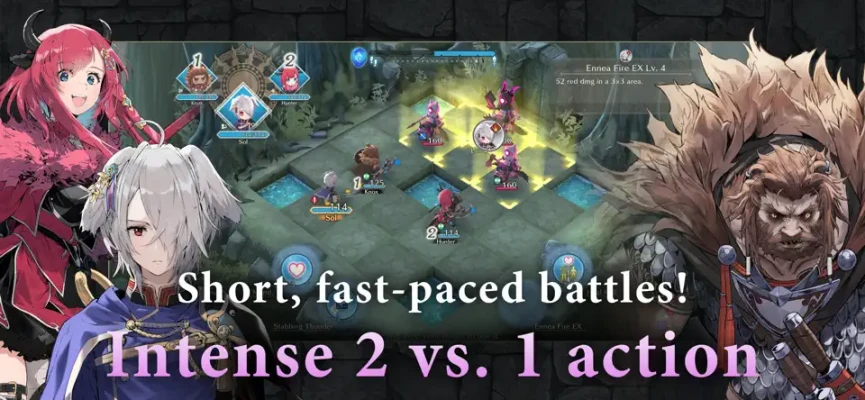
Unlike traditional turn-based Fire Emblem games, characters move automatically during combat while players direct attacks, recovery spells, buffs, debuffs, and movement abilities. The real challenge comes from doing two things at once: defeating monsters and watching the behavior of the other players to determine who is secretly serving the shadow.
Each match moves through the Sun Room and Moon Room. The first phase is a cooperative battle, while the second becomes a confrontation between the suspected traitor and the remaining players.
What Is Fire Emblem Shadows?
Fire Emblem Shadows takes the familiar Fire Emblem universe in a different direction. Instead of relying primarily on traditional grid-based, turn-based combat, it combines real-time action strategy, automatic character movement, multiplayer cooperation, and social deduction.
The story takes place in Ardeal, a continent divided between followers of the goddess of light and followers of the goddess of shadows. Characters can appear in human form but may transform into powerful beasts after submitting to the shadow.
The central mystery is simple:
Who is the traitor?
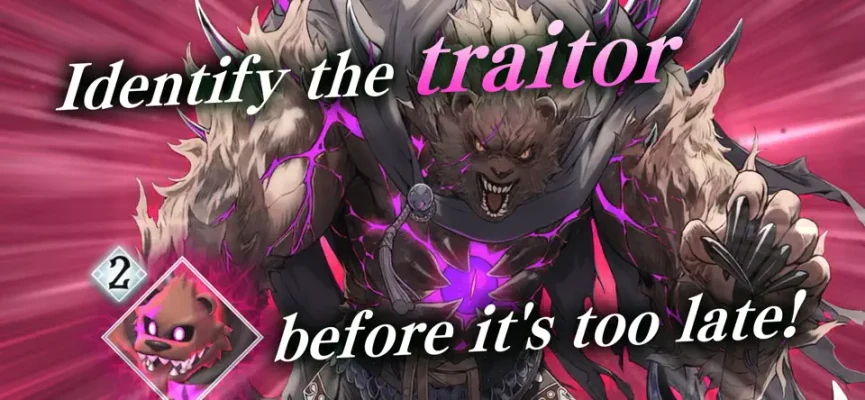
Three players initially appear to be fighting together, but one secretly works against the others. During the battle, everyone must pay attention to actions, positioning, spell usage, and suspicious behavior before the voting phase begins.
Fire Emblem Shadows Gameplay
The gameplay revolves around fast decisions rather than traditional turn-by-turn commands.
Your characters move on their own during combat, while you control important abilities and targets. You can use different types of skills, including:
- Offensive attacks
- Recovery spells
- Buffs
- Debuffs
- Movement abilities
- Character-specific abilities
This means that simply having powerful characters is not enough. You need to understand when to use each ability and where it will have the greatest impact.
A strong attack used too early can leave you without an answer when the enemy becomes dangerous. A recovery spell used at the wrong moment can also waste an opportunity to save a teammate.
The key is to watch the battlefield continuously.
Sun Room Explained
The Sun Room is the first major phase of a battle.
Three players cooperate against enemy monsters, but one of the three is secretly a shadow operative.
This creates two simultaneous objectives:
- Defeat the enemies.
- Determine which player is the traitor.
The second objective is just as important as the first.
A player who appears to be helping might intentionally waste an ability, attack an unusual target, interfere with another player's strategy, or behave differently from the expected pattern.
Do not accuse someone simply because they make one strange move. Look for repeated behavior.
Moon Room Explained
After the first phase concludes, the game moves into the Moon Room.
The hidden traitor is revealed and takes on their powerful beast form. The opposing sides then fight in a final confrontation.
Correctly identifying the traitor during the voting phase provides an advantage for the next battle.
The Moon Room therefore makes the earlier deduction phase extremely important. Every observation you make during the Sun Room can influence the final battle.
Nintendo describes the Moon Room as a climactic head-to-head confrontation where successful deduction or deception can change the outcome.
Best Fire Emblem Shadows Strategy
1. Watch Before You Accuse
One of the biggest mistakes new players can make is immediately deciding who the traitor is.
Instead, spend the opening portion of the battle watching how everyone behaves.
Ask yourself:
- Who attacks consistently?
- Who ignores dangerous enemies?
- Who uses healing at useful moments?
- Who wastes abilities?
- Who repeatedly interferes with another player?
- Who appears to be protecting an unusual target?
- Who changes behavior after the battle becomes difficult?
One suspicious move is not enough.
A pattern is much more meaningful.
2. Learn What Normal Cooperation Looks Like
You cannot identify unusual behavior until you understand normal behavior.
During your first matches, concentrate on learning how players generally use their skills.
Pay attention to:
- Attack timing
- Healing frequency
- Target selection
- Movement abilities
- Buff and debuff usage
- Reaction to dangerous enemies
Once you understand normal team behavior, unusual decisions become easier to recognize.
3. Do Not Waste Powerful Skills
Fire Emblem Shadows gives you several categories of abilities, and timing matters.
Avoid automatically using your strongest skill whenever it becomes available.
Instead, consider:
Is the enemy about to be defeated?
If yes, saving the ability may be better.
Is an ally about to fall?
A recovery ability may have greater value.
Is a dangerous enemy preparing an attack?
A debuff or disabling ability may prevent more damage than a simple offensive attack.
The best players use abilities according to the situation rather than following a fixed rotation.
4. Protect the Team's Momentum
Because battles are real-time, small mistakes can quickly become larger problems.
If one player becomes overwhelmed, the entire team can lose momentum.
When possible, prioritize threats that can quickly eliminate an ally.
A good general rule is:
Remove immediate threats before chasing minor targets.
This is especially important when the battlefield contains several enemies with different attack patterns.
How to Detect the Traitor
Social deduction is one of the most distinctive parts of Fire Emblem Shadows.
Instead of looking for a single obvious mistake, build a mental record of each player's behavior.
Look for these clues
Unnecessary damage
A player repeatedly attacking an inefficient target may be deliberately wasting time.
Poor ability timing
Using a valuable ability when there is little benefit can be suspicious if it happens repeatedly.
Suspicious positioning
Watch players who consistently position themselves where they can interfere with the group.
Ignoring teammates
If someone repeatedly allows allies to take unnecessary damage, remember it.
Inconsistent behavior
Perhaps the most useful clue is a sudden change in play style.
A player who behaves normally early in the battle but becomes strangely passive or aggressive later deserves closer attention.
Voting Strategy
When the voting phase begins, avoid voting purely based on emotion.
Instead, compare the evidence.
Ask:
- Who made the most unusual decisions?
- Were those decisions isolated mistakes or repeated?
- Did the player's actions help or hinder the team?
- Did their behavior change when the battle became difficult?
- Was there another player whose behavior was even more suspicious?
Do not assume that the loudest accusation is correct.
The goal is to identify the player whose overall behavior best matches the evidence.
Playing as the Shadow
Playing as the traitor requires a completely different mindset.
You do not necessarily want to look obviously harmful.
An obvious traitor is easy to identify.
Instead, the strongest deception comes from appearing useful while quietly creating problems.
Shadow strategy
Help occasionally
If you never help, other players can quickly become suspicious.
Avoid predictable sabotage
Repeating the same suspicious action makes your behavior easier to identify.
Choose believable mistakes
A poorly timed ability can look like an ordinary player error.
Pay attention to the group
If another player becomes suspicious of you, changing your behavior may be necessary.
Keep your actions consistent
The best deception is often subtle rather than dramatic.
The objective is not simply to cause damage. It is to create enough uncertainty that the other players cannot confidently identify you.
Playing as Light
When playing for the light, cooperation and observation become equally important.
Do not concentrate exclusively on defeating monsters.
You also need to gather information.
A useful approach is to mentally track each player's behavior.
For example:
Player A: consistently attacks the strongest enemy.
Player B: frequently heals teammates.
Player C: repeatedly uses abilities at strange moments.
If Player C continues behaving differently, the evidence against them becomes stronger.
This approach is much more reliable than choosing someone randomly.
Character Skills and Team Building
Fire Emblem Shadows allows characters to bring different abilities into battle.
Nintendo describes a system containing attacks, recovery spells, buffs, debuffs, and movement abilities.
A balanced team should ideally have access to several useful functions rather than relying exclusively on damage.
Damage
Useful for quickly eliminating dangerous enemies.
Recovery
Important when teammates begin taking heavy damage.
Buffs
Can increase the effectiveness of allies and improve the team's overall performance.
Debuffs
Useful for reducing enemy effectiveness and creating opportunities for your team.
Movement abilities
Can help characters reposition and respond to changing battlefield conditions.
When choosing characters, think about what the team needs, not just which character has the highest apparent power.
Fire Emblem Shadows Progression
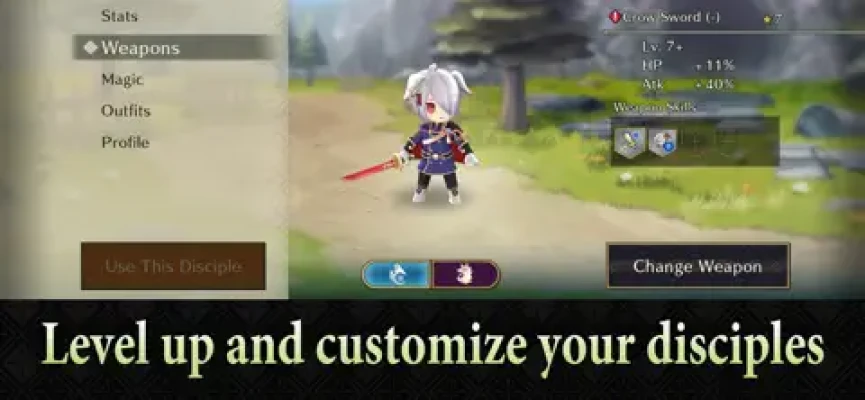
Character development is an important part of the long-term experience.
As you continue playing, you will become more familiar with characters, skills, and battle situations.
The game also features characters from across Fire Emblem history. Nintendo has continued adding characters and content, including characters associated with other Fire Emblem titles.
Recent updates have also expanded progression systems.
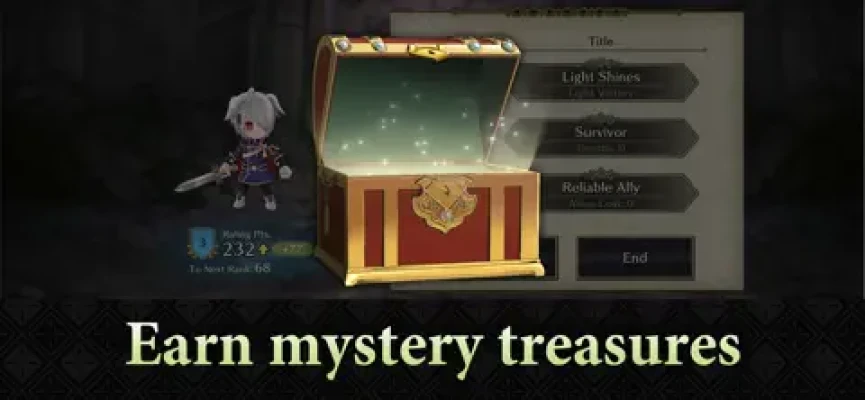
The August 2026 Version 1.11.0 update introduced Expeditions, allowing a random disciple from your team to go on a search mission and later return with items. Possible rewards include Disciple Souls, Disciple Medals, weapons, weapon skills, and Gold.
Expedition Tips
When expeditions are available, make a habit of checking them regularly.
Possible rewards include:
- Disciple Souls
- Disciple Medals
- ★8 weapons
- ★7 weapons
- ★5 weapons
- ★3 weapons
- Weapon skills
- Gold
Because expeditions can provide useful resources without requiring a full battle, they are worth incorporating into your regular routine.
Support Conversations
Fire Emblem Shadows also includes Support Conversations between characters.
These conversations provide additional character moments while offering rewards through the game's progression systems.
They are worth exploring if you are interested in the personalities and relationships between characters rather than focusing exclusively on combat. The feature was added in a previous major update.
Beginner Tips for Fire Emblem Shadows
Tip 1: Learn the battle system first
Do not worry about becoming an expert at deduction immediately. The introductory computer-controlled battles are designed to help players learn the mechanics.
Tip 2: Watch the whole battlefield
Your attention should not remain fixed on your own character.
Watch what everyone else is doing.
Tip 3: Save important abilities
A powerful ability can be much more valuable at the right moment.
Tip 4: Study player behavior
Social deduction is based on patterns.
Tip 5: Do not accuse too quickly
A genuine mistake can look suspicious.
Tip 6: Think about the next phase
The Sun Room is not the entire battle. Your decisions should prepare you for the Moon Room.
Tip 7: Experiment with different characters
Different abilities can change how you approach a battle.
Tip 8: Check new content
Nintendo continues to add characters, features, events, and other content to the game.
Advanced Strategy Guide
Control Information, Not Just Damage
The most important advanced skill is understanding that information has value.
If you know who is likely to be the traitor, your team can make better decisions.
But revealing your suspicion too early can also influence the traitor.
Sometimes it is better to continue observing until you have stronger evidence.
Compare Actions With Outcomes
Do not judge a player's decision solely by whether it looks strange.
Consider the result.
A player may use an unusual ability because they recognized a threat that you did not notice.
Instead of asking:
"Was that move strange?"
Ask:
"Did that move make sense given what was happening?"
This distinction can prevent many false accusations.
Track Ability Timing
Experienced players should pay attention not only to which skills are used but also when they are used.
A player who repeatedly uses valuable abilities when they have minimal impact may be acting suspiciously.
However, cooldowns, battlefield pressure, and player experience should also be considered before reaching a conclusion.
Common Mistakes
Using abilities randomly
Random ability use wastes opportunities.
Focusing only on combat
You may win the monster fight while losing the deduction battle.
Ignoring suspicious behavior
A strange action may be meaningful when combined with other clues.
Accusing based on one mistake
One bad decision does not automatically prove someone is the traitor.
Forgetting the Moon Room
The second phase can completely change the battle.
Playing predictably as the Shadow
Repeated patterns make deception easier to detect.
Fire Emblem Shadows Features
Key features include:
- Real-time strategic battles
- Multiplayer cooperation
- Social deduction
- Hidden traitor gameplay
- Sun Room and Moon Room phases
- Human and beast forms
- Attack and recovery abilities
- Buffs and debuffs
- Movement skills
- Support Conversations
- Fire Emblem characters
- Computer-controlled introductory battles
- Ongoing events and new content
- Expedition rewards
- Free-to-start gameplay with optional in-app purchases
The App Store lists Fire Emblem Shadows as a Strategy game for iPhone and iPad, developed by Nintendo, with a 13+ age rating and optional in-app purchases.
Is Fire Emblem Shadows Easy to Learn?
The basic controls are relatively straightforward because characters move automatically while players direct abilities.
The deeper challenge comes from understanding timing, teamwork, deduction, and deception.
New players should first learn how the battle abilities work before trying to analyze every player's behavior.
Once the basic combat system becomes familiar, the social deduction layer becomes much easier to appreciate.
Is Fire Emblem Shadows Multiplayer?
Yes. Multiplayer cooperation and competition are central to the game's design.
The Sun Room places three players together against monsters, while one player secretly works as the shadow operative. The subsequent voting and Moon Room phases turn that cooperative battle into a confrontation based on deduction and deception.
Fire Emblem Shadows Game Information
Game: Fire Emblem Shadows
Developer: Nintendo Co., Ltd.
Platform: iPhone and iPad
Genre: Strategy / Role Playing / Action Strategy
Mode: Multiplayer and competitive multiplayer
Price: Free to start
Purchases: Optional in-app purchases
Age Rating: 13+
Setting: Medieval fantasy
World: Ardeal
Main Gameplay: Real-time strategy and social deduction
Internet: Persistent internet connection required
Official App Store Size: About 300 MB, subject to updates and device configuration
Fire Emblem Shadows Honest Gameplay Assessment
Fire Emblem Shadows is best understood as a new interpretation of Fire Emblem rather than a traditional Fire Emblem strategy RPG.
Players expecting classic turn-based movement, grid positioning, and the traditional tactical structure may find the gameplay very different.
Its identity comes from the combination of automatic character movement, real-time skill management, multiplayer battles, and hidden-traitor deduction.
That combination makes observation just as important as combat.
The game is particularly suited to players who enjoy short multiplayer matches, tactical decision-making, character abilities, and social deduction.
Pros and Cons
Pros
- Unique Fire Emblem gameplay concept
- Real-time battles
- Social deduction adds another strategic layer
- Fast matches
- Familiar characters from the Fire Emblem universe
- Multiple character abilities
- Light and shadow perspectives
- Continuing updates and new content
- Support Conversations and additional progression features
Cons
- Gameplay is very different from traditional Fire Emblem
- Automatic character movement reduces direct battlefield control
- New players may need time to understand the deduction system
- Online multiplayer requires a persistent internet connection
- Optional purchases are present
Frequently Asked Questions
What is Fire Emblem Shadows?
Fire Emblem Shadows is a mobile strategy game from Nintendo that combines real-time combat with social deduction. Players fight monsters while trying to identify a hidden shadow traitor.
Is Fire Emblem Shadows free?
Yes. The game is free to start, with optional in-app purchases.
Is Fire Emblem Shadows multiplayer?
Yes. Multiplayer cooperation and competitive deduction are central parts of the game.
What is the Sun Room?
The Sun Room is the first battle phase, where three players appear to cooperate against monsters while one secretly serves as the traitor.
What is the Moon Room?
The Moon Room is the final battle phase. The revealed traitor takes beast form and fights against the opposing players.
How do you find the traitor?
Watch player behavior throughout the Sun Room. Look for repeated suspicious actions, unusual ability timing, poor target selection, and behavior that consistently harms the team.
Does Fire Emblem Shadows have characters from other Fire Emblem games?
Yes. Nintendo has added characters from across the Fire Emblem series, with additional characters and content arriving through updates and events.
Does Fire Emblem Shadows have automatic combat?
Characters move automatically during battles, while players control targeting and abilities such as attacks, healing, buffs, debuffs, and movement skills.
What are Expeditions?
Expeditions are a feature added in Version 1.11.0. A disciple can be sent on a search mission and return later with rewards such as Souls, Medals, weapons, skills, or Gold.
Final Strategy Checklist
Before entering a battle, remember:
Observe → Attack → Support → Analyze → Vote → Adapt
During the Sun Room:
- Watch every player's behavior.
- Use abilities at meaningful moments.
- Protect teammates.
- Track suspicious decisions.
- Avoid premature accusations.
During voting:
- Compare evidence.
- Look for behavioral patterns.
- Consider alternative explanations.
- Choose based on the complete battle rather than one mistake.
During the Moon Room:
- Adapt immediately to the revealed traitor.
- Focus on the most dangerous threats.
- Use recovery abilities carefully.
- Save important skills for decisive moments.
The biggest lesson in Fire Emblem Shadows is that winning is not only about having strong characters. You also need to understand the battlefield, manage abilities intelligently, and recognize when another player may not be fighting for the side they claim to support.
Rate the Game
User Reviews












Popular Games


















 Android
 iOS
iOS Windows
 Xbox
Xbox