




Latest Version
October 18, 2026
Chilly Room
Role Playing
iOS
0
Report a Problem
More About :game
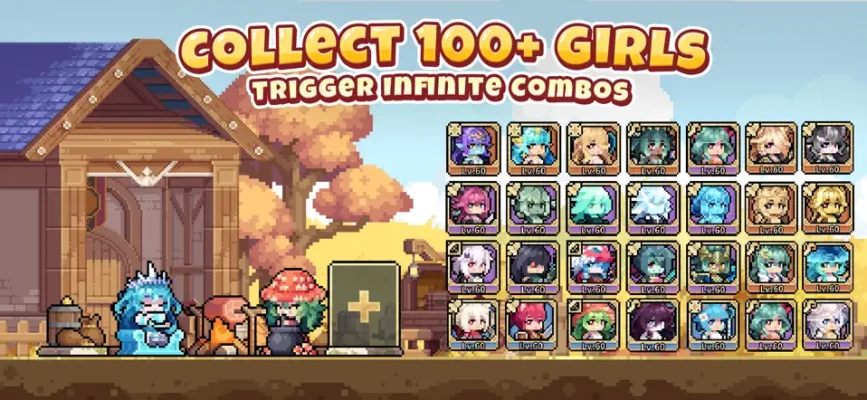
The game combines idle combat, character collection, equipment customization, and tactical team building. With more than 100 monster girls and over 1,000 unique gear pieces, there are plenty of ways to develop your squad and experiment with different strategies. Battles continue automatically, allowing you to make progress without constantly controlling every action.
Whether you enjoy collecting characters, optimizing equipment, or building a powerful fantasy team, Guild of Monster Girls offers a progression-focused RPG experience designed for convenient mobile play.
What Is Guild of Monster Girls?
Guild of Monster Girls is a fantasy idle RPG built around managing an adventurer's guild. Instead of controlling a single hero throughout every battle, you recruit a roster of characters and develop a team capable of handling increasingly difficult challenges.
Each monster girl brings her own abilities, combat role, and potential contribution to your formation. Choosing the right combination of characters is important because raw power alone does not always guarantee victory. Equipment, team synergy, and character development can make a significant difference when facing stronger enemies.
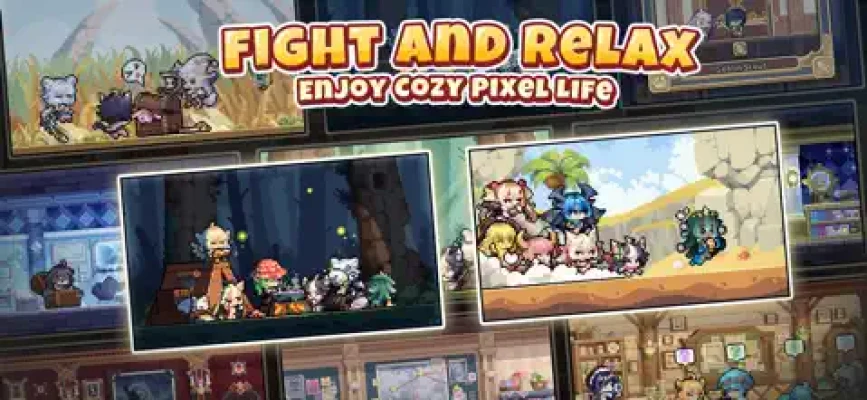
The pixel-art presentation gives the game a colorful fantasy atmosphere, while its automatic battle system makes routine progression less demanding. Players can spend more time improving their characters and planning their next upgrades instead of repeatedly managing basic combat actions.
Key Features of Guild of Monster Girls
1. Collect More Than 100 Monster Girls
Recruit a diverse collection of fantasy characters, including slimes, beast-themed girls, elves, mimics, and other unusual creatures. Each character offers a different combination of abilities and combat potential.
Building a strong roster is about more than collecting rare characters. You also need to understand how individual skills work together and which characters best support your preferred strategy.
2. Idle RPG Combat
Guild of Monster Girls features automatic battles that allow your squad to fight while you concentrate on other activities. This makes the game suitable for players who enjoy gradual progression without needing to remain actively involved in every encounter.
Your main responsibilities revolve around preparing the team, upgrading equipment, reviewing results, and deciding how to overcome tougher stages.
3. More Than 1,000 Gear Pieces
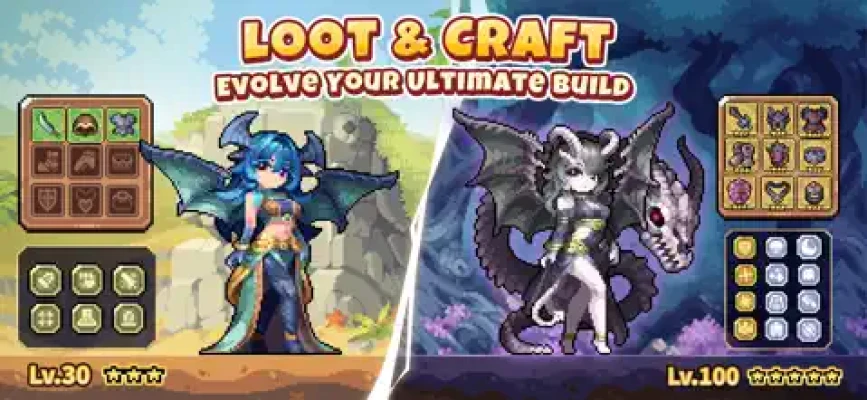
Equipment is a major part of character development. The game features a large selection of weapons, armor, and other gear that can improve combat performance and create specialized builds.
Finding the right equipment for each character can help you strengthen damage output, improve survivability, and take advantage of useful gear combinations.
4. Team Building and Character Synergy
A well-balanced team can perform better than a collection of individually powerful characters that do not complement one another.
Some characters focus on damage, while others provide healing, buffs, defensive effects, or special combat mechanics. Learning how these roles interact is essential for progressing through difficult encounters.
5. Fantasy Maps and Exploration
Explore different regions, collect equipment, and face increasingly demanding enemies. The game includes varied environments and progression challenges that reward players for improving their teams and adapting their equipment.
6. Character Development and Long-Term Progression
Recruitment, equipment upgrades, and team experimentation provide ongoing goals. As your roster grows, you can revisit earlier strategies, test new combinations, and prepare for more challenging content.
Gameplay Mechanics Explained
Character Recruitment
Recruitment allows you to expand your guild and discover new characters. Different rarities and abilities give you opportunities to develop specialized teams.
The game's official description states that the first 10-pull guarantees the Legendary character Holy Blade. This provides a useful starting point for building your initial roster.
Recruitment tips:
Review a character's skills before investing heavily in her development.
Save premium recruitment resources for opportunities that fit your team-building goals.
Check limited-time recruitment banners and event rewards.
Avoid assuming that rarity alone determines a character's usefulness.
Develop a core team before spreading resources across your entire collection.
Equipment and Gear Builds
Equipment is one of the most important systems in Guild of Monster Girls. With a large collection of gear pieces available, choosing the right setup can have a major effect on battle performance.
Different characters benefit from different combinations. A damage-focused character generally needs offensive improvements, while a support character may benefit more from equipment that strengthens her intended role.
How to improve your equipment strategy:
Identify the primary role of each character.
Examine the effects and attributes of available equipment.
Prioritize upgrades that improve the character's main purpose.
Test equipment combinations instead of judging individual items in isolation.
Replace weaker gear when you obtain a meaningful improvement.
Keep specialized equipment builds where they help you handle different encounters.
Auto-equip can be convenient when you are starting out, but manually reviewing equipment becomes increasingly valuable as your collection grows.
Automatic Combat
The idle battle system handles much of the moment-to-moment fighting. Your preparation determines how effectively your team performs when battles begin.
Before attempting a difficult stage, check whether your team has enough damage, appropriate defensive support, and useful skill interactions. If your squad repeatedly loses, changing its composition or equipment may be more effective than simply repeating the encounter.
Races, Talents, and Special Character Forms
The game has expanded its character-building systems through race-specific talents and special character variants. These mechanics add further options for developing teams.
When working with these systems, read the descriptions carefully. Bonuses that improve one character's damage, increase a defensive effect, or strengthen an entire team's performance can change which combinations are worth using.
Complete Strategy Guide for Guild of Monster Girls
1. Beginner's Guide: How to Start Strong
The opening stages are an opportunity to learn the game's systems and build a reliable foundation. You do not need a perfect roster immediately.
Step 1: Complete the early progression stages.
Advance through the available maps to unlock additional features, rewards, and opportunities to strengthen your guild.
Step 2: Build around your strongest useful characters.
Recruitment gives you access to different characters, but developing too many at once can spread your resources thin. Choose a small core team and improve it consistently.
Step 3: Equip every active team member.
Check the equipment slots of your main characters. Even basic gear can help establish a stronger starting setup.
Step 4: Collect idle rewards regularly.
Return to the game to claim available rewards, review new equipment, and make upgrades. The idle format is most useful when you maintain a consistent progression routine.
Step 5: Experiment when you get stuck.
A failed stage can reveal weaknesses in your formation. Try changing a character, adjusting equipment, or improving a specific role before spending large amounts of resources.
2. How to Build a Balanced Team
Strong team composition is one of the most important skills to develop.
A useful starting point is to consider four broad roles:
Damage dealers: Focus on eliminating enemies efficiently.
Defensive characters: Help your squad withstand incoming attacks.
Healers and supports: Restore health, provide buffs, or improve team performance.
Specialists: Offer crowd control, counters, debuffs, or other situational advantages.
These are strategic role categories rather than a mandatory formation. Your best lineup will depend on the characters you own and the challenge you are facing.
Team-building principles
Prioritize synergy. Characters that enhance one another can produce better results than unrelated units with high individual statistics.
Protect your damage dealers. A powerful attacker cannot contribute effectively if the team lacks enough protection or healing to keep the formation functioning.
Adapt to the enemy. If an encounter features dangerous multi-target attacks, consider defensive tools or healing. If the enemy is vulnerable to a particular effect, build around that advantage when possible.
Avoid changing everything at once. Test one or two adjustments so you can identify which changes actually improve your results.
3. Best Equipment Strategy for Faster Progress
Equipment optimization becomes more important as enemy difficulty increases.
Focus on useful upgrades
Do not upgrade an item simply because it has a higher rarity. Examine its attributes and special effects to determine whether they benefit the character using it.
Match gear to character roles
Offensive characters should prioritize improvements that increase their damage potential.
Defensive characters should emphasize the attributes that help them survive.
Healers and support characters should benefit from equipment that strengthens their specific abilities.
Counterattack or debuff-focused characters should use equipment that complements those mechanics when suitable options are available.
Look for complementary effects
Some gear combinations can be more valuable than individual upgrades because they support a consistent strategy. Pay attention to special effects, bonuses, and interactions instead of focusing exclusively on basic statistics.
Avoid wasting upgrade resources
Compare new gear against your existing setup before committing scarce materials. Concentrating resources on equipment that supports your main team is generally more efficient than upgrading every item you find.
4. How to Progress Through Difficult Maps
Map progression introduces stronger enemies and more demanding encounters. When your team stops advancing, use a structured approach.
Review the battle results. Determine whether your main problem is insufficient damage, poor survivability, or an ineffective team combination.
Check your equipment. Look for outdated items or opportunities to improve your main characters.
Upgrade your core roster. Concentrate on the characters who contribute most to your strategy.
Reconsider your formation. A different balance of damage, defense, and support may work better.
Use appropriate special effects. Slows, debuffs, healing, counters, or other available mechanics can be valuable against particular enemies.
Repeat the stage after meaningful changes. Compare the results rather than spending resources without a clear objective.
Patience is part of the game's progression loop. When a stage is too difficult, collecting additional rewards and strengthening your roster can be more effective than repeatedly attempting the same fight.
5. Understanding Skills and Combat Synergy
Character skills can create powerful interactions when combined thoughtfully.
For example, the official game description identifies Timeless Lord as a character who deals bonus damage to slowed enemies. A team capable of applying Slow can therefore help her make better use of that ability.
Other characters may reward different approaches, such as building up Thorns, improving allies through buffs, or dealing damage to several enemies at once.
To identify effective combinations:
Read both active and passive skill descriptions.
Check whether an ability depends on a particular status effect or attribute.
Identify characters who can establish the conditions another character needs.
Consider whether the combination is reliable throughout a battle.
Test the setup against different enemy types.
This approach helps you build around actual skill interactions instead of relying only on character rarity or displayed power.
6. How to Manage Recruitment Resources
Recruitment is exciting, but resource management can have a significant effect on long-term progress.
Recommended approach:
Use the initial recruitment guarantee as a foundation for your roster.
Learn which characters your current team needs before recruiting without a plan.
Save premium currency when a future banner offers a character that fits your strategy.
Complete available missions and events for additional rewards.
Check the terms of limited-time banners before committing resources.
Avoid spending simply because a banner is about to expire.
Free-to-play players can benefit from careful planning, although progression speed and access to specific characters may differ from accounts that make purchases.
7. Daily Progression Routine
A short, consistent routine can help you make progress without turning the game into a full-time commitment.
Collect available rewards
Claim idle earnings and any rewards available from completed activities.
Advance your main map
Attempt the next stage when your current team is strong enough to progress efficiently.
Review characters and gear
Check for useful equipment upgrades and improve your core team's weakest areas.
Complete missions and events
Prioritize rewards that help with recruitment, character development, and equipment progression.
8. Common Mistakes to Avoid
Spreading resources too thinly: Developing every character simultaneously can slow down your strongest team's progress.
Ignoring equipment effects: The right attributes and special effects can matter more than rarity alone.
Choosing characters only by rarity: Team synergy and individual abilities are important when building an effective formation.
Repeating difficult battles without adjustments: If you keep losing, identify the underlying weakness and make a targeted change.
Spending premium currency impulsively: Planning recruitment and purchases can help you get more value from limited resources.
Neglecting event rewards: Events may provide valuable characters, equipment, and other progression materials.
Overlooking skill descriptions: Small details about status effects, scaling, or conditional bonuses can reveal useful team combinations.
9. Is Guild of Monster Girls Free to Play?
Guild of Monster Girls is available as a free download with in-app purchases. Optional purchases include different currencies, subscriptions, and progression-related products.
Players can enjoy the recruitment, equipment, and idle RPG systems without treating purchases as a requirement for every decision. However, collecting a large roster and obtaining particular characters may take time, and paid options can affect progression convenience.
For a more economical experience, focus on available rewards, make deliberate recruitment decisions, and prioritize upgrades that improve your main team.
10. Graphics, Atmosphere, and Overall Experience
Guild of Monster Girls uses colorful pixel art to give its fantasy world a playful identity. Its character collection combines familiar fantasy themes with more unusual monster-inspired designs.
The overall atmosphere is lighter than that of a traditional dark fantasy RPG. Much of the experience revolves around watching your guild develop, discovering new characters, and gradually improving your combat setup.
The automatic battle system also makes the game accessible to players who prefer planning and progression over constant manual combat. However, those who want a highly action-focused RPG with precise real-time controls may find the idle format less engaging.
Pros and Cons
Pros
Large collection of more than 100 recruitable monster girls.
Extensive equipment selection with numerous build possibilities.
Automatic combat supports convenient, casual play.
Team composition and skill synergy provide strategic depth.
Pixel-art visuals create a distinctive fantasy atmosphere.
Character and gear progression provide long-term goals.
Cons
Developing a large roster can require considerable time and resources.
Recruitment outcomes may not always match your preferred team strategy.
Equipment optimization can become demanding as your inventory expands.
Automatic combat may feel less interactive to players who prefer direct control.
In-app purchases and premium currencies may appeal to some players more than others.
Frequently Asked Questions
What type of game is Guild of Monster Girls?
Guild of Monster Girls is a pixel-art idle role-playing game featuring character collection, automatic battles, equipment customization, and strategic team building.
Who developed Guild of Monster Girls?
The game was developed by ChillyRoom, the studio behind other mobile titles.
Can you play Guild of Monster Girls offline?
Offline functionality and the availability of specific features may depend on the current version. Check the game's requirements and test its behavior on your device before relying on offline progression.
How many characters are available?
The game's official description advertises more than 100 monster girls. The available roster can expand through updates and new character releases.
What is the best beginner character?
Holy Blade is a useful starting point because the game advertises a guaranteed Legendary Holy Blade in the first 10-pull. The best long-term team depends on your other characters, equipment, and preferred strategy.
How do you become stronger in Guild of Monster Girls?
Advance through maps, collect idle rewards, improve equipment, develop your core roster, and experiment with combinations that make effective use of character skills.
What is the best way to get better equipment?
Continue progressing through available maps and activities, collect gear rewards, and evaluate equipment based on the needs of your characters. Avoid investing heavily in items that offer little practical improvement.
Does Guild of Monster Girls have automatic battles?
Yes. Automatic combat is a central feature, allowing your characters to fight without requiring constant manual input.
Is Guild of Monster Girls suitable for casual players?
Yes. Its portrait-oriented interface, idle progression, and automatic battles make it suitable for players who want to check in periodically and improve their team over time.
Is Guild of Monster Girls pay to win?
The game includes optional in-app purchases and randomized recruitment systems. Whether these affect your enjoyment depends on your goals, patience, and willingness to spend. Careful resource management is useful if you prefer not to purchase extras.
Is Guild of Monster Girls available on iPhone and iPad?
Yes. The Apple App Store lists the game for iPhone and iPad, with iOS 12.0 or later and iPadOS compatibility requirements as listed for the app.
Final Verdict
Guild of Monster Girls is a good option for players who enjoy idle RPGs, fantasy character collecting, pixel-art visuals, and equipment-focused progression. Its biggest strength is the combination of a large character roster with gear customization and tactical team-building opportunities.
The most effective approach is to develop a dependable core team, understand how character skills interact, and spend equipment and recruitment resources carefully. Although automatic combat makes the game easy to check in on, building a stronger guild still rewards experimentation and thoughtful planning.
If you enjoy gradually improving a fantasy squad and discovering new character combinations, Guild of Monster Girls offers plenty of systems to explore at your own pace.
Rate the Game
User Reviews











Popular Games



















 Android
 iOS
iOS Windows
 Xbox
Xbox