








Latest Version
October 14, 2026
Noodlecake
Role Playing
iOS
0
Report a Problem
More About :game
About Yes, Your Grace 2: Snowfall
In Yes, Your Grace 2: Snowfall, being a king means much more than sitting on a throne and issuing commands. Your kingdom faces difficult circumstances, and the people who come to your court expect you to solve their problems. Some need urgent assistance, others offer useful information, and some bring complicated situations that could affect the kingdom in unexpected ways.
You must decide how to distribute your treasury, when to collect taxes, which laws to introduce, and which agents deserve your trust. Every decision involves competing priorities. Helping one person might leave fewer resources for another, while ignoring a seemingly minor request could have consequences later.
The game also places considerable importance on King Eryk's family. Royal responsibilities compete with personal relationships, making it difficult to separate the needs of the kingdom from the needs of the people closest to you.
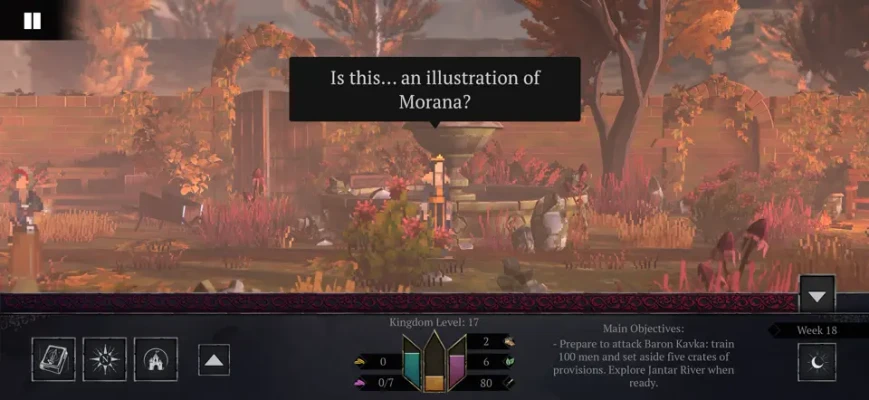
With its cinematic presentation, Slavic-inspired fantasy setting, branching character stories, and strategic management systems, Yes, Your Grace 2: Snowfall is especially appealing to players who enjoy narrative RPGs where decisions matter.
Game Information
Game Title: Yes, Your Grace 2: Snowfall
Genre: Role-Playing, Strategy, Kingdom Management, Simulation
Developer: Brave At Night
Mobile Publisher: Noodlecake Studios Inc.
Platforms: iPhone, iPad, and PC
Game Mode: Single-player
Setting: A medieval-inspired fantasy kingdom influenced by Slavic folklore
Main Character: King Eryk
Core Gameplay: Royal decision-making, resource management, court petitions, agent recruitment, family relationships, and political strategy
Business Model on iOS: Free beginning with a one-time in-app purchase to unlock the full game
Advertisements: No ads listed in the iOS store description
iOS Requirements: iOS 18.0 or later and an A12 Bionic chip or later
Age Rating: 13+
The mobile edition offers an opportunity to experience the kingdom's challenges on a compatible Apple device. Availability, pricing, supported languages, and device requirements can vary by region and may change with updates.
Story and Setting
The story follows King Eryk as he attempts to hold Davern together in the aftermath of the events surrounding the original Yes, Your Grace. The kingdom is not simply a backdrop for political decisions; it is a place filled with frightened villagers, ambitious nobles, complicated relationships, and people whose futures depend on the crown.
The Slavic folklore influence gives the world a distinctive atmosphere. Rather than presenting a straightforward tale of heroic victories, the game explores the uncomfortable responsibilities of leadership. A decision that appears compassionate in the moment may create financial difficulties, while a practical choice might damage the trust of someone who needs your support.
Family life provides another important part of the narrative. Your decisions affect how you balance royal obligations with the well-being of your loved ones. These personal stories help make the larger political struggles feel more immediate.
New players can follow the sequel without having played the first game, although familiarity with the original can provide additional context for the characters and the history of Davern.
Main Gameplay Features
1. Manage Your Kingdom
Your treasury and other resources are essential to keeping Davern functioning. You must decide how much you can afford to spend on immediate problems without leaving the kingdom vulnerable to future demands.
A strong ruler does not automatically approve every request. Instead, successful management requires understanding which problems are urgent, which solutions offer lasting benefits, and which expenses can safely wait.
2. Hear the Petitioners
People arrive at the throne seeking assistance, presenting opportunities, or explaining problems that may affect the kingdom. Each request forces you to weigh its importance against your available resources.
Some encounters are straightforward, while others involve competing interests or incomplete information. Listening carefully and considering the possible consequences can help you make more informed decisions.
3. Recruit and Assign Agents
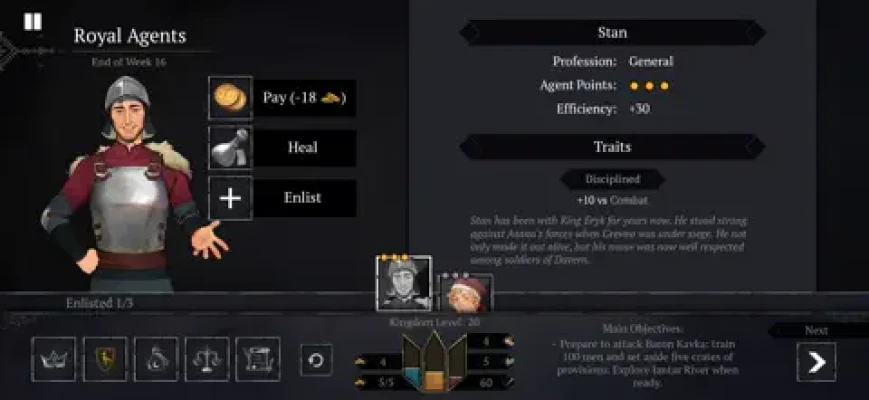
Agents can assist with royal matters and help resolve situations that would otherwise be difficult to manage. Each agent has individual skills and a personality, so choosing the right person for a particular assignment is an important strategic decision.
Their personal stories also add another layer to the game. An agent is not simply a tool for completing tasks; their relationships and motivations can become part of the wider narrative.
4. Make Political Decisions
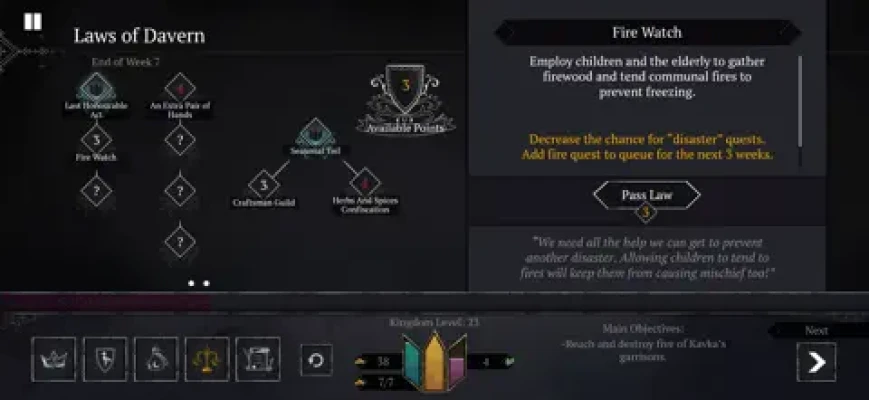
Taxes and laws give you ways to influence the kingdom's finances and social conditions. However, increasing revenue or introducing a new rule should not be treated as an automatic victory.
A decision that improves the treasury may create dissatisfaction elsewhere. The challenge is to find a balance between immediate financial needs and the long-term stability of your realm.
5. Protect Your Family
Your family members have their own needs and relationships with the king. Caring for them is part of your responsibility, even when the kingdom demands most of your attention.
Ignoring personal matters can make the story feel different from a playthrough in which you actively support your loved ones. Family decisions are therefore an important part of role-playing as King Eryk.
6. Experience Character-Driven Stories
The game features individual character arcs, side quests, and situations that can develop in unexpected directions. These stories give you reasons to pay attention to more than the immediate reward attached to a decision.
Different petitioners, agent stories, and choices help add variety to repeat playthroughs.
7. Prepare for Conflict
Political stability and relationships with influential characters matter when the kingdom faces larger threats. Recruiting suitable agents and managing resources carefully can help you prepare for difficult situations rather than reacting only when trouble arrives.
Complete Strategy Guide for Yes, Your Grace 2: Snowfall
1. Establish a Stable Financial Foundation
At the beginning of a playthrough, resist the temptation to spend resources on every request that reaches the throne.
Instead, consider three questions before committing to a costly decision:
Is the problem urgent?
Could solving it prevent a larger problem later?
Will this expense leave enough resources for other royal responsibilities?
Keep a mental reserve for unexpected events. Spending everything on early requests can leave you with fewer options when a more serious situation develops.
2. Evaluate Petitioners Individually
Do not assume that every petitioner deserves the same response. Some requests may concern immediate survival, while others involve personal disputes, financial assistance, or opportunities to gather useful information.
Read the dialogue carefully and consider what each character is actually asking for. If a request appears vague, pay attention to any details that could reveal a hidden risk or a wider problem.
A useful general approach is to prioritize serious threats and urgent needs, then consider requests that could strengthen the kingdom in the longer term.
3. Avoid Making Decisions Based Only on Immediate Rewards
A choice may provide money or solve a problem quickly without being the best option for the future.
Consider the wider consequences before accepting a short-term benefit. For example, a financial decision that appears attractive might conflict with another priority, while a smaller investment could help prevent a recurring difficulty.
The exact outcome depends on the situation, so avoid assuming that one response will always be correct.
4. Use Agents Strategically
When assigning agents, match their abilities to the situation whenever possible. Review the available information about their skills and personalities rather than choosing randomly.
Before sending someone on a task, think about what the assignment is intended to achieve. Is it meant to resolve a dangerous situation, gather information, assist a petitioner, or strengthen your position?
Also, pay attention to agent storylines. Their personal problems may intersect with royal business, and the people you choose to trust can become important to the narrative.
5. Balance Taxation With Stability
Collecting taxes can help replenish your resources, but financial decisions should be considered alongside their possible effects on the kingdom.
Before imposing or increasing a tax, ask whether the additional income is necessary and whether the timing makes sense. A ruler who focuses entirely on revenue may overlook the wider consequences of political decisions.
Use taxation as part of a broader financial plan instead of relying on it to solve every shortage.
6. Treat Laws as Long-Term Decisions
Passing laws can shape how the kingdom operates. Before introducing a new law, consider the problem you want to solve and whether the change could create new difficulties.
Avoid making major policy decisions simply because they appear beneficial at first. Think about who might benefit, who might be disadvantaged, and how the law fits your current priorities.
When the game presents competing options, choose the one that best matches the situation rather than following a rigid rule for every playthrough.
7. Make Time for Your Family
Royal duties can easily dominate your attention, but family relationships are an important part of the experience.
When the game presents an opportunity to support a family member, consider the narrative consequences alongside the immediate demands of government. Supporting your loved ones can make the story more meaningful and help you develop a clearer sense of the kind of king you want to be.
There is no need to treat every family decision as a purely economic calculation. Some choices are valuable because of their personal or emotional significance.
8. Read Dialogue Before Choosing an Answer
Dialogue is one of the most useful sources of information in Yes, Your Grace 2: Snowfall. A character's explanation may reveal additional context that changes how a request should be handled.
Take your time when an encounter appears important. Look for clues about urgency, conflicting interests, promises, or possible risks.
This habit is especially useful when a decision involves scarce resources or a character who may return later in the story.
9. Prepare for Major Challenges Early
Do not wait until a crisis is already unfolding to think about the kingdom's condition. Keep your resources under control, pay attention to important relationships, and make thoughtful use of your agents.
Preparation gives you more flexibility when difficult events arrive. Even when you cannot prevent every problem, maintaining a stable position can make it easier to respond.
10. Accept That Not Everyone Can Be Satisfied
One of the central challenges of the game is that the king cannot solve every problem at once. Limited resources mean that helping one person may require delaying or declining another request.
Rather than searching for a perfect answer in every encounter, decide which priorities matter most to your version of King Eryk. You may choose to favor compassion, financial stability, political caution, or family welfare in different situations.
The most satisfying playthrough is often the one in which your decisions reflect a consistent approach to leadership, even when the results are difficult.
11. Learn From the Consequences of Your Choices
When a decision leads to an unexpected outcome, use it as information for later encounters. Consider whether you underestimated a cost, overlooked a detail, trusted the wrong person, or prioritized an immediate reward over a lasting benefit.
This is particularly valuable when replaying the game. Knowledge from a previous attempt can help you recognize patterns and explore different approaches.
12. Experiment With Different Playstyles
You do not need to approach every playthrough in the same way. One run might focus on cautious financial management, while another emphasizes helping petitioners and supporting family relationships.
Trying different approaches can reveal new character interactions and help you understand how the game's systems work together.
If you are interested in the story, avoid turning every decision into a calculation. If you prefer strategy, take extra time to evaluate resource costs and the potential consequences of each option.
Beginner Tips for New Players
Save your resources for situations that genuinely matter.
Read the full dialogue before choosing a response.
Think about long-term consequences instead of immediate rewards alone.
Assign agents according to their strengths and the demands of each task.
Consider the effects of taxes and laws on the kingdom as a whole.
Do not neglect family relationships while handling royal business.
Keep enough flexibility to respond to unexpected events.
Explore side quests and character stories instead of focusing only on the main conflict.
Try different choices when replaying to discover alternative outcomes.
Remember that difficult compromises are part of the game's central experience.
Is Yes, Your Grace 2: Snowfall Difficult?
The main challenge comes from decision-making rather than fast reflexes. Players must weigh competing priorities, manage limited resources, and consider the consequences of their actions.
New players may initially find it difficult to know which requests deserve immediate attention. The best way to improve is to pay close attention to dialogue, monitor the kingdom's needs, and avoid unnecessary spending.
The game is particularly rewarding for people who enjoy thinking through moral dilemmas and managing several interconnected responsibilities.
Is Yes, Your Grace 2: Snowfall Worth Playing?
Yes, Your Grace 2: Snowfall is worth considering if you enjoy story-driven RPGs, kingdom management games, political choices, and character-focused adventures.
Its greatest strength is the way it connects practical decisions with personal consequences. Managing the treasury is important, but so are the people who depend on the king. This combination gives routine court encounters a sense of weight.
Players looking for constant action, fast-paced combat, or an open-world adventure may find the deliberate pace less appealing. Those who prefer thoughtful choices, narrative tension, and strategic planning are more likely to appreciate its design.
Frequently Asked Questions
What is Yes, Your Grace 2: Snowfall?
Yes, Your Grace 2: Snowfall is a narrative-driven kingdom management RPG in which you play as King Eryk and make decisions about resources, petitioners, agents, politics, and family.
Is Yes, Your Grace 2: Snowfall a sequel?
Yes. It continues the story of King Eryk and the kingdom of Davern after the events of the original Yes, Your Grace.
Do I need to play the first game?
No. New players can enjoy Snowfall without playing the original, although returning players may appreciate the additional background.
Is Yes, Your Grace 2: Snowfall free to play?
The iOS version lets players try the beginning for free, with a one-time in-app purchase required to unlock the full game. Pricing may vary by region.
Can I play Yes, Your Grace 2: Snowfall offline?
Offline availability is not confirmed here. Check the game's current requirements and test its behavior on your device before relying on offline play.
What is the main objective of the game?
Your goal is to rule Davern while balancing the kingdom's finances, the needs of its people, political decisions, agent assignments, and your family's well-being.
How can I manage resources more effectively?
Avoid unnecessary spending, prioritize urgent problems, maintain a reserve for unexpected events, and consider the possible long-term effects of taxation and other decisions.
Are choices important in Yes, Your Grace 2: Snowfall?
Yes. Decisions influence how you handle royal responsibilities and character relationships. The game emphasizes consequences, difficult compromises, and personal approaches to leadership.
What makes Snowfall different from other kingdom management games?
Its emphasis on narrative, petitioners, family relationships, and individual character stories gives resource management a personal dimension. You are not simply building an empire; you are deciding what kind of ruler King Eryk will become.
Final Verdict
Yes, Your Grace 2: Snowfall combines kingdom management, narrative RPG elements, and meaningful moral dilemmas into an experience built around the responsibilities of leadership. Managing resources is only part of the challenge: you must also decide whom to trust, which problems deserve attention, how to govern fairly, and how much of yourself to give to the crown.
For players who enjoy thoughtful strategy and emotionally driven storytelling, Snowfall offers a compelling reason to return to Davern and discover how different decisions shape the journey.
Rate the Game
User Reviews















Popular Games



















 Android
 iOS
iOS Windows
 Xbox
Xbox