




Latest Version
October 18, 2026
Chilly Room
Role Playing
iOS
0
Report a Problem
More About :game
What Is Abyssal Soul?
Genre: Roguelike card RPG · Developer: ChillyRoom
Abyssal Soul takes place in a strange, unsettling fantasy world filled with dangerous creatures, mysterious rituals, and difficult decisions. Instead of relying on fast reflexes, the game rewards careful planning and a willingness to adjust your strategy when a run does not go as expected.
Each adventure combines exploration, tactical card battles, and character development. You choose a character, travel through branching routes, gather cards and other enhancements, and face increasingly difficult enemies. The choices you make along the way determine how your deck develops and how well you handle later encounters.
The game is particularly appealing to players who enjoy turn-based strategy, roguelike replayability, dark fantasy settings, and experimenting with combinations of abilities.
Key Features of Abyssal Soul
1. Unique Sequential Card Battles
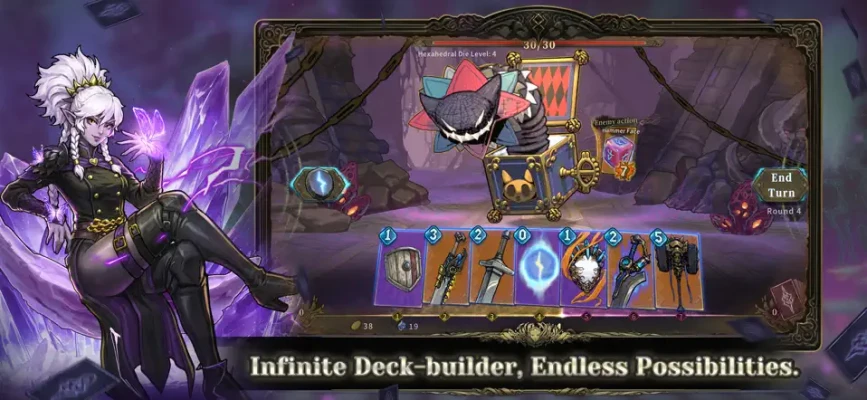
The central mechanic makes Abyssal Soul different from many traditional card games. Playing a card may consume the cards that follow it in your hand, turning the order of your cards into an important tactical decision.
A powerful card can deal substantial damage, but using it at the wrong moment might sacrifice another card you need. Successful players learn to balance immediate damage against the value of the cards they give up.
2. Multiple Classes and Playable Characters
The game features four major classes and 17 characters, each offering different cards, talents, starting options, and strategic possibilities. The available character roster can influence whether you focus on aggressive attacks, defensive play, or more specialized combinations.
3. Extensive Deck-Building Options
Abyssal Soul features a large collection of gameplay options, including:
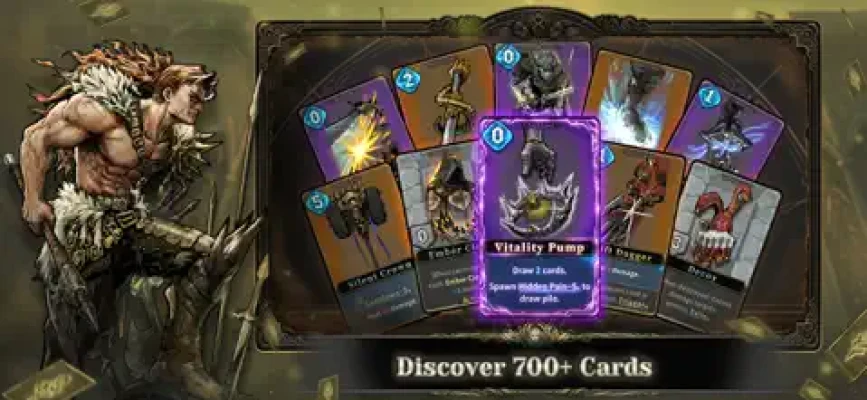
More than 700 cards.
Over 170 blessings.
50 types of runes.
85 amulets.
Character-specific abilities and progression systems.
These options encourage experimentation rather than relying on one fixed deck for every encounter.
4. Changing Routes and Random Events
Every run presents choices about where to travel and which encounters to face. Different routes and ritual events can change your available rewards, introduce additional risks, or influence your strategy.
5. Dark Fantasy and Eldritch Horror
Hand-drawn artwork, strange creatures, eerie environments, and dramatic battle effects create a dark fantasy atmosphere. The presentation complements the game's themes of sacrifice, uncertainty, and survival.
6. Permanent Progression and Difficulty Levels
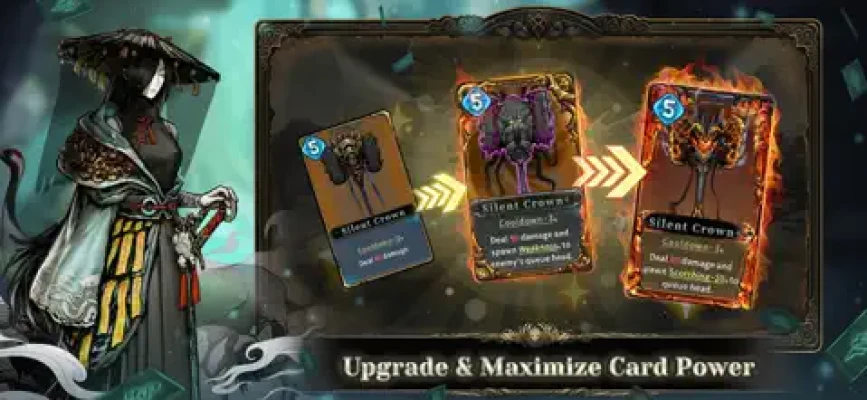
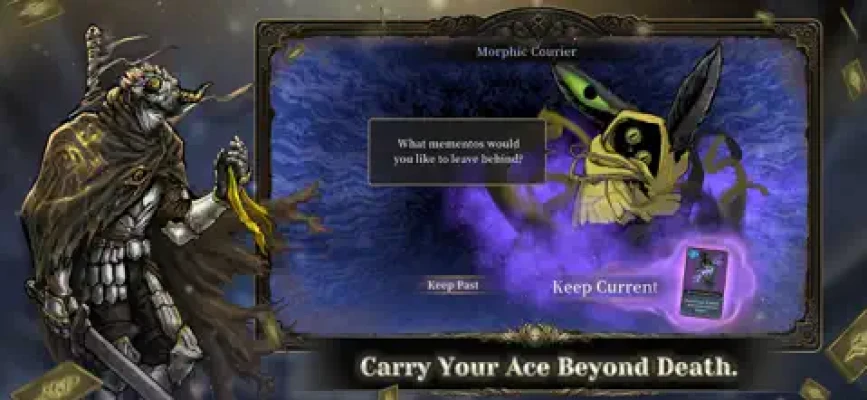
The game supports character development and card upgrades across repeated runs. Its Memento legacy system also allows you to carry a selected card forward into a subsequent ritual. Fourteen difficulty tiers provide additional challenges as your understanding of the game improves.
Abyssal Soul Gameplay Guide
Understanding the Main Gameplay Loop
A typical adventure revolves around several connected activities.
Choose your character: Begin with a character whose abilities and starting deck suit your preferred approach.
Explore the route: Select paths through the labyrinth, considering the possible rewards and dangers of upcoming encounters.
Fight enemies: Use your cards strategically while watching enemy intentions and deciding which threats deserve immediate attention.
Improve your deck: Collect cards and enhancements that strengthen your developing strategy.
Develop your character: Use available progression systems to improve future attempts and explore more challenging content.
Learn from every run: When an adventure ends, consider which choices helped you survive and which decisions weakened your deck.
The key is to treat each run as a developing strategy rather than a collection of unrelated battles.
Full Abyssal Soul Strategy Guide
1. Master the Card Sequence Mechanic
This is the first skill every new player should learn.
Before playing a card, inspect the cards that will be sacrificed when it is activated. A powerful attack is not always the best move if it removes a defensive card or a useful ability from your hand.
Follow these principles:
Read card effects before committing to a play.
Reorder your hand when the game allows it.
Consider the full cost of each action, not just its energy or immediate effect.
Avoid sacrificing valuable cards for minor damage unless the situation demands it.
Look for combinations in which the benefits of a powerful card justify the cards consumed.
Advanced tip: Before committing to a major attack, mentally compare two possible sequences. The better sequence is often the one that produces a useful combination while preserving enough options for the next turn.
2. Build Around a Clear Strategy
A common beginner mistake is collecting every attractive card without considering how the cards work together.
Instead, choose a main direction for your deck.
Aggressive damage build
Focus on cards that deal reliable damage and allow you to eliminate dangerous enemies quickly. This approach can reduce the number of turns spent exposed to enemy attacks, but it becomes risky if your deck lacks defensive options.
Defensive survival build
Prioritize ways to reduce incoming damage and maintain consistency in difficult encounters. This approach can help against powerful enemies, although battles may last longer if your damage output is too low.
Combo-focused build
Look for cards whose effects complement one another. These decks can create powerful turns, but they require careful sequencing and may become unreliable if key pieces are sacrificed too early.
Balanced build
Combine reliable damage, appropriate defense, and useful utility effects. This is often the most forgiving starting point while learning the game's systems.
The best build is not necessarily the one with the highest individual card damage. It is the one that works consistently with your character, available upgrades, and preferred tactics.
3. Study Enemy Intentions Before Acting
Abyssal Soul provides previews of enemy actions, giving you an opportunity to plan your turn.
Use that information before spending valuable cards.
If an enemy is preparing a dangerous attack, consider defense or eliminating the threat.
If the incoming damage is manageable, you may be able to focus on defeating the enemy.
If several enemies are active, compare their threats instead of attacking the nearest target automatically.
Avoid spending your strongest combination when a smaller action can solve the immediate problem.
The ability to inspect enemy intentions makes thoughtful planning particularly valuable. Take advantage of the turn-based system instead of rushing through decisions.
4. Choose Your Route Carefully
Exploration is part of the strategy, not simply a way to reach the next battle.
Evaluate routes according to your current condition and deck strength. A risky encounter may be worthwhile if the potential reward directly improves your build, but unnecessary danger can end a promising run.
Consider the following when selecting a route:
Your remaining health and defensive capabilities.
Whether your current deck can handle difficult fights.
The potential value of available rewards.
Whether your build needs a particular improvement.
How much uncertainty you can reasonably accept.
When your character is struggling, a safer route can be more valuable than chasing an uncertain reward.
5. Make Better Use of Blessings, Runes, and Amulets
These systems give you additional ways to shape a character's strengths.
Rather than selecting an enhancement simply because it looks powerful, consider how it supports your current deck.
Choose damage-oriented bonuses when your deck already supports an aggressive playstyle.
Consider defensive improvements when surviving enemy attacks is your main weakness.
Look for enhancements that complement your strongest card interactions.
Avoid spreading your build across several unrelated strategies.
Reconsider your priorities when a new reward offers a better direction.
A useful enhancement should solve a real problem or improve a strategy that is already working.
6. Improve Your Deck Without Losing Consistency
More cards do not automatically mean a stronger deck.
A collection filled with expensive, situational, or incompatible cards can make it harder to find the abilities you need. Pay attention to how often your important cards become available and whether your hand contains enough useful options.
When evaluating a new card, ask yourself:
Does it improve my main strategy?
Does it work well with my existing cards?
Is its effect worth the cards it consumes?
Will it help against enemies that currently give me trouble?
Does it provide something my deck is missing?
Prioritize synergy and reliability over collecting powerful-looking cards without a plan.
7. Develop Your Characters Between Runs
Repeated attempts are an important part of long-term progression.
Use available character-development and card-upgrade systems to strengthen future runs. If you repeatedly lose to the same type of encounter, identify the weakness before investing resources.
For example, frequent defeats caused by incoming damage suggest that you may need better defensive options. If battles consistently last too long, improve your damage output or find more efficient card combinations.
Progress is most satisfying when each attempt teaches you something and helps you make better decisions next time.
8. Approach Boss Battles with a Plan
Boss encounters can punish decks that depend on a single powerful turn or have no answer to sustained pressure.
Before a difficult fight:
Review the strengths and weaknesses of your current deck.
Preserve useful defensive cards when you expect heavy attacks.
Identify opportunities to deal damage without sacrificing essential follow-up cards.
Focus on the boss's most dangerous actions rather than playing cards automatically.
Avoid committing your entire strategy to a combination that may not be available when you need it.
If a boss defeats you, look back at the sequence of decisions that led to the loss. Often, improving the opening turns or adjusting your deck will help more than simply attempting the same strategy again.
9. Progress Through Higher Difficulty Levels
Abyssal Soul's difficulty tiers offer a way to test your mastery of its systems.
Start with a difficulty that allows you to understand the mechanics and experiment with different characters. Increase the challenge when your decisions become consistent rather than after a single lucky victory.
At higher difficulties, pay closer attention to deck reliability, defensive options, route choices, and the consequences of sacrificing cards.
The objective is to develop a strategy that survives unfavorable situations, not merely one that performs well when every reward is ideal.
10. Beginner Mistakes to Avoid
Playing the strongest card immediately: A powerful effect can be a poor choice when its sequence cost removes valuable cards.
Collecting too many unrelated cards: A focused deck is often easier to use effectively.
Ignoring enemy intentions: Failing to prepare for a major attack can turn a manageable battle into a defeat.
Choosing every risky encounter: Rewards matter, but so does preserving the run.
Neglecting character progression: Long-term upgrades can help future attempts become more manageable.
Repeating unsuccessful builds: If a strategy consistently fails, change the cards, route choices, or combat priorities responsible for the problem.
Recommended Beginner Build Strategy
For new players, a balanced deck is a practical starting point. The goal is to develop a reliable foundation before attempting complicated combinations.
Balanced starter approach
Reliable damage
Keep enough offensive options to defeat ordinary enemies without depending on one expensive card.
Defensive support
Maintain ways to handle incoming attacks, especially when enemies signal dangerous moves.
Card synergy
Choose cards and enhancements that support the same plan instead of mixing incompatible effects.
Flexible route choices
Adapt your exploration to your health, available rewards, and the weaknesses of your current build.
This is a general strategy framework, not a guaranteed optimal character build. The strongest specific combinations depend on the cards and enhancements available during a run.
Controls and Gameplay Tips
Abyssal Soul is designed for iPhone and iPad, with turn-based card selection rather than real-time action controls.
Read card descriptions carefully before activating an ability.
Check which cards will be consumed by your selection.
Examine enemy intentions before ending your turn.
Learn the interface for rearranging cards and selecting targets.
Take your time with difficult encounters; there is no need to rush a tactical decision.
Review newly unlocked systems as you progress.
Exact interface details may vary between versions and devices.
Progression, Challenges, and Replay Value
Abyssal Soul offers several reasons to return after completing an initial run. New characters and cards encourage experimentation, while blessings, runes, and amulets expand the number of possible combinations.
Character progression provides longer-term goals, and the Memento system introduces a legacy element between attempts. Higher difficulty tiers give experienced players additional challenges once the basic combat mechanics become familiar.
Replayability comes from adapting to the available cards and changing circumstances, rather than relying on a single fixed walkthrough.
Graphics, Atmosphere, and Overall Experience
Abyssal Soul uses a dark, hand-drawn fantasy aesthetic to distinguish itself from brighter, more traditional card battlers. Its strange creatures, unsettling environments, and supernatural themes give the adventure a strong identity.
The slower, tactical combat complements this atmosphere. Players can take time to examine card effects and consider difficult choices instead of responding to constant real-time pressure.
The main learning curve comes from understanding the sequential card system. Players who enjoy complex decisions may find this mechanic rewarding, while those who prefer simple, fast-paced combat may need time to adjust.
Pros and Cons of Abyssal Soul
Pros
Distinctive card-sacrifice combat mechanics.
Extensive deck-building and character customization.
Four classes and a varied character roster.
Dark fantasy artwork and atmospheric encounters.
Turn-based battles that reward careful planning.
Persistent character development and multiple difficulty tiers.
Cons
The card-sequencing mechanic may take time to master.
Large collections of cards and enhancements can feel overwhelming to beginners.
Randomized encounters mean a preferred build may not come together in every run.
The game's complexity may not suit players who prefer straightforward action games.
The iOS version requires a substantial download of approximately 1.2 GB according to its store listing.
Is Abyssal Soul Worth Playing?
Abyssal Soul is worth considering if you enjoy roguelike deck builders, turn-based strategy, character progression, and dark fantasy adventures. Its sequential card system adds an unusual layer of decision-making because every play can affect the options that remain available.
It is particularly suitable for players who enjoy testing different builds, learning from failed runs, and gradually improving their tactical decisions.
However, players looking for a simple card game with minimal planning may find its mechanics demanding. Its appeal lies in the decisions between cards as much as in the cards themselves.
Frequently Asked Questions
What type of game is Abyssal Soul?
Abyssal Soul is a roguelike card-battle RPG that combines turn-based combat, deck building, exploration, and character progression.
Who developed Abyssal Soul?
The game is developed by ChillyRoom, the studio known for other action and role-playing games.
Is Abyssal Soul free to play?
The iOS version is listed as free to download and includes in-app purchases. Optional purchases are available for certain characters, card-related items, and other content.
How does the card combat system work?
Playing a card can sacrifice the cards positioned behind it. Players must therefore consider both a card's effect and the value of the cards lost when it is played.
How many classes and characters are available?
The game's published description lists four major classes and 17 characters. New content and updates may change the available roster.
How can beginners build a strong deck?
Start with a clear strategy, prioritize cards that work together, maintain sufficient defensive options, and avoid sacrificing important cards without a good reason.
Does Abyssal Soul have permanent progression?
Yes. The game includes character development, card upgrades, and a Memento legacy mechanic that can carry a selected card into a subsequent run.
Is Abyssal Soul difficult?
The game offers 14 difficulty tiers. Beginners can learn the core mechanics before moving toward more demanding encounters and challenges.
Can I play Abyssal Soul on iPhone and iPad?
Yes. The iOS listing supports iPhone and iPad, with iOS 15.0 or later required for iPhone and iPadOS 15.0 or later for iPad.
What is the best strategy for boss fights?
Study enemy intentions, protect yourself against dangerous attacks, and use card combinations that deliver damage without sacrificing essential follow-up options.
Final Verdict
Abyssal Soul combines strategic card battles with roguelike exploration and a distinctive dark fantasy atmosphere. Its defining feature is the need to think carefully about card order and sacrifice, making each turn a puzzle of risk, timing, and opportunity.
For fans of deck-building RPGs, the combination of varied characters, extensive card options, and repeatable adventures offers plenty to explore. The best way to improve is to build around a clear strategy, learn from each encounter, and treat every card selection as part of a larger plan.
Rate the Game
User Reviews















Popular Games



















 Android
 iOS
iOS Windows
 Xbox
Xbox