


Latest Version
October 06, 2026
Dreamplay Games Inc.
Role Playing
iOS
0
Report a Problem
More About :game
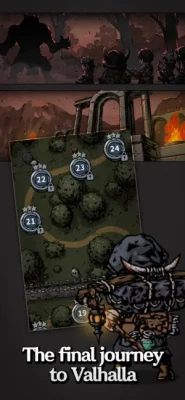
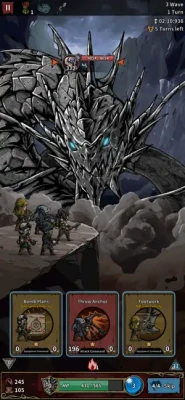
The adventure takes you toward Valhalla, where seven powerful Titans stand between you and victory. Along the way, you can recruit characters from different occupations, experiment with card combinations, improve your deck, and adapt your strategy to different enemies.
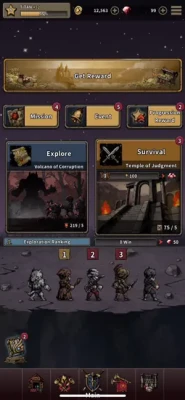
The game also expands beyond its single-player adventure with multiplayer survival battles and a competitive tower mode, giving deck-building fans several ways to test their decisions.
Game Information
Game: Slay the Titan: Deckbuild RPG
Genre: Role-Playing, Card RPG, Deck Builder, Dungeon Crawler, Roguelike
Developer: Dreamplay Games Inc.
Platforms: iPhone and iPad
Age Rating: 13+
Game Style: Character collection, strategic card combat, dungeon progression
Players: Single-player and multiplayer modes
Languages: English, French, German, Japanese, Korean, Simplified Chinese, Spanish, and Traditional Chinese
Controls: Touch controls designed for mobile devices
Monetization: Free to play with optional in-app purchases
What Makes Slay the Titan Different?
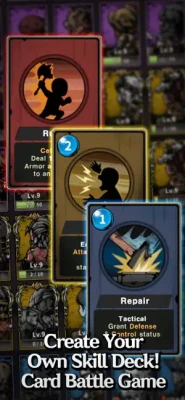
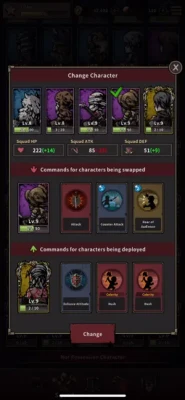
The main attraction is the relationship between characters, skill cards, and deck synergy. A character is not simply another unit to collect. The skills associated with your characters can influence the structure and strategy of your entire deck.
That means a deck containing individually strong characters is not necessarily better than a carefully constructed combination of characters whose abilities complement each other.
You may find yourself asking:
Which characters work well together?
Which skills should form the core of the deck?
Should you prioritize damage or survivability?
Which abilities are useful against a particular Titan?
When should you replace a weaker card?
Is your deck too dependent on one strategy?
These decisions are what give the game its strategic depth.
Character Collection and Deck Building
Characters come from different occupations, including pirates, witches, knights, rogues, slayers, and crawlers. Each character can contribute different skills to your overall strategy.
When building a deck, don't judge a character only by its individual strength. Consider how its abilities interact with the rest of your team.
A balanced deck should have a clear purpose.
For example, you might build around:
Consistent damage
Defensive sustainability
Skill-based combinations
High-impact attacks
Long survival
Countering a particular enemy
A mixture of offense and defense
The best deck is usually the one that allows your characters to support each other instead of simply stacking powerful abilities together.
Single-Player Adventure
The single-player campaign takes you toward Valhalla while placing increasingly difficult obstacles between you and your goal.
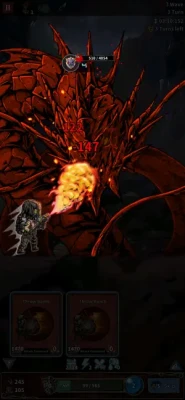
The seven Titans are major challenges that require more than simply increasing your character strength. You need to understand what each opponent is doing and adjust your deck accordingly.
Before entering a difficult encounter, examine your current setup and ask whether your deck can survive a prolonged fight.
If your strategy depends entirely on quickly defeating an enemy, it may struggle against a boss that consistently disrupts your damage output. Likewise, a defensive deck may survive longer but lack the damage needed to finish a Titan.
Adaptation is therefore one of the most important skills in the game.
Full Slay the Titan Strategy Guide
1. Build Around Synergy, Not Individual Power
One of the easiest mistakes for new players is choosing characters simply because they appear powerful.
Instead, look at the entire deck.
A character with an average skill can become extremely useful when another character creates the perfect situation for it. Conversely, a powerful ability may be disappointing if the rest of the deck cannot support it.
When evaluating a new character, ask:
Does this character improve my current strategy?
If the answer is yes, the character may be more valuable than a seemingly stronger option.
2. Give Your Deck a Clear Identity
Avoid building a deck that tries to do everything at once.
A deck should have a primary strategy.
For example:
Aggressive deck
Focus on dealing damage quickly.
Prioritize offensive skill combinations.
Try to end dangerous battles before they become prolonged.
Defensive deck
Focus on staying alive.
Use abilities that help you withstand repeated attacks.
Gradually create opportunities to deal damage.
Balanced deck
Maintain reliable damage while keeping enough defensive options.
This is often a comfortable approach for learning unfamiliar encounters.
Once you understand the game better, specialized builds can become much more effective.
3. Don't Ignore Defensive Options
Damage is exciting, but surviving long enough to use your strongest abilities is often more important.
A deck with excellent offensive potential can still fail if it collapses after a few enemy attacks.
When preparing for difficult dungeon encounters, consider whether your deck has enough tools to handle bad situations.
A strong defensive option can give you another turn to draw the card or use the ability that turns the battle around.
4. Learn From Every Failed Run
A failed run should tell you something.
Instead of simply increasing character levels and trying again, identify the reason for the defeat.
Ask yourself:
Did I take too much damage early?
Did I lack enough damage?
Was my deck too inconsistent?
Did I choose characters that didn't work together?
Did I enter the encounter without adapting my strategy?
Was I relying too heavily on one character or skill?
Once you identify the weakness, change one part of your strategy and test it again.
5. Prepare Specifically for Titans
The seven Titans are not simply obstacles that can all be approached in exactly the same way.
Before fighting a major boss, consider the type of battle you are entering.
If the encounter punishes slow strategies, increase your ability to generate reliable damage.
If the battle lasts longer, survivability becomes more valuable.
If your normal deck performs poorly against a particular opponent, don't be afraid to rebuild it.
Titan counters are often more important than simply having the highest overall power.
6. Improve Your Weakest Link
When upgrading your setup, don't automatically improve your strongest character.
Sometimes the biggest improvement comes from fixing the weakest part of the deck.
For example, if your damage is already excellent but your survivability is poor, another offensive improvement may provide less value than a defensive addition.
Think of your deck as a chain.
If one important part consistently fails, improving that weakness can increase the effectiveness of the entire strategy.
7. Avoid Overloading Your Strategy
More abilities do not automatically mean a better deck.
A deck becomes difficult to use when too many cards serve unrelated purposes.
Try to maintain a recognizable pattern.
If your main strategy depends on a particular combination, make sure the rest of your choices support that combination rather than distracting from it.
Consistency is especially valuable when facing difficult encounters.
8. Experiment With Different Character Combinations
The game encourages experimentation because different character skills can produce different results.
Don't permanently commit yourself to one combination.
Test new characters when you acquire them and compare them with your existing lineup.
Some characters that initially appear underwhelming may become useful when placed alongside the right teammates.
This is particularly important in the competitive tower mode, where your choices can force you to work with characters you do not normally own.
9. Strategy for Multiplayer Survival
Multiplayer survival changes the way you should think about deck building.
Instead of preparing for a predictable dungeon encounter, you're dealing with another player's strategy.
A deck that works extremely well against Titans may not necessarily perform equally well against another adventurer's deck.
Pay attention to:
How quickly the opponent can build pressure
Whether they rely on a specific combination
How long their strategy takes to become effective
Whether you can survive their strongest sequence
Whether your deck can punish their weaknesses
Survival is not always about winning immediately.
Sometimes the best move is to stay alive and wait for the opponent's strategy to weaken.
10. Think About Counterplay
A strong deck should have an answer to common threats.
If your opponent is extremely aggressive, look for ways to survive the initial pressure.
If they depend on a long setup, look for opportunities to attack before their strategy becomes fully established.
If they have a highly specialized combination, avoid playing directly into it.
The strongest players don't simply follow one rotation. They adjust their decisions based on what the opponent is doing.
Tower of Competition Strategy
The Tower of Competition adds an interesting twist because you can experiment with characters you don't necessarily own.
Your choices can be influenced by random selections, which means you cannot always build the perfect deck from the beginning.
This mode rewards adaptability.
Choose Compatibility Over Rarity
When several characters are available, consider which one fits your current strategy.
A character that perfectly complements your existing abilities can be more useful than an unfamiliar character that looks stronger on paper.
Keep Your Options Open
Because your future selections are uncertain, avoid building around an extremely narrow strategy too early.
A flexible deck gives you more opportunities to adapt when the next character choice does not fit your original plan.
Use the Tower as Practice
The competitive tower is also a useful place to learn unfamiliar characters.
Experiment with abilities you normally wouldn't use and pay attention to how they interact with different strategies.
This can improve your understanding of the wider character pool and help you build better decks in the main adventure.
Early-Game Tips for New Players
If you're starting Slay the Titan for the first time, concentrate on learning the fundamentals rather than chasing a perfect deck immediately.
Tip 1: Learn Your Characters
Understand what each character contributes before deciding where they belong.
Tip 2: Watch Your Synergy
Two average abilities that work together can be more valuable than two powerful abilities that have no relationship.
Tip 3: Don't Rebuild Everything After One Loss
Identify the actual problem first. Make targeted changes.
Tip 4: Keep Testing
The game is designed around experimentation. Try different combinations instead of using the same setup forever.
Tip 5: Prepare for Bosses
Treat Titan battles as strategic encounters rather than ordinary fights.
Tip 6: Value Survival
A strategy that keeps you alive gives you more opportunities to use your strongest abilities.
Tip 7: Adapt in Multiplayer
Don't assume that your single-player deck is automatically the best PvP or survival deck.
Advanced Deck-Building Tips
Once you understand the basic mechanics, start thinking about your deck in terms of consistency.
A strong deck should answer three questions:
How does it start?
You need a reliable way to begin your strategy.
How does it develop?
Your characters and skills should become more effective as the battle progresses.
How does it finish?
You need a way to turn an advantage into an actual victory.
If one of these stages is missing, your deck may feel powerful in theory but inconsistent in real battles.
Build for Your Goal
Different modes reward different approaches.
For dungeon progression, reliability and survivability can be extremely valuable.
For Titan encounters, counter-building becomes increasingly important.
For multiplayer survival, you need to think about what another player's deck can do against you.
For the Tower of Competition, flexibility becomes particularly important because your character choices can be unpredictable.
Common Mistakes to Avoid
Using Only the Strongest Characters
Raw power doesn't guarantee synergy.
Ignoring Defense
A deck that cannot survive long enough to execute its strategy will struggle against difficult opponents.
Refusing to Change Your Deck
If a strategy repeatedly fails against the same encounter, changing the approach is usually more productive than repeating it unchanged.
Building Without a Purpose
Randomly combining characters can produce a deck that looks impressive but performs poorly.
Playing Every Mode the Same Way
Dungeon crawling, Titan battles, multiplayer survival, and competitive tower play require different approaches.
Spending Resources Without a Plan
Before investing heavily in a character or upgrade, consider whether it supports the deck you actually want to play.
Is Slay the Titan: Deckbuild RPG Worth Playing?
Slay the Titan: Deckbuild RPG is a good choice for players who enjoy card-based RPGs, character collection, dungeon crawling, and experimenting with different deck combinations.
Its strongest idea is the way character collection and deck building work together. Instead of simply collecting stronger heroes, players are encouraged to think about how abilities fit together.
The seven Titans provide clear long-term goals, while multiplayer survival and the competitive tower add additional strategic challenges.
Players who enjoy experimenting with builds will likely get the most from the game. It is less appealing if you prefer straightforward action combat with little preparation or deck management.
Pros and Cons
Pros
Strategic deck-building system
Character collection with different occupations
Seven major Titans to challenge
Dungeon-crawling progression
Single-player and multiplayer content
Competitive tower gameplay
Plenty of room for experimenting with character combinations
Easy-to-understand concept with deeper strategy underneath
Cons
Random character choices can sometimes disrupt a planned strategy
Progression can require patience
Players who dislike card-based combat may find the gameplay slow
Competitive modes can feel demanding when facing stronger combinations
The large number of possible character combinations can be overwhelming for new players
Frequently Asked Questions
What is Slay the Titan: Deckbuild RPG?
Slay the Titan: Deckbuild RPG is a role-playing card game that combines deck building, dungeon crawling, character collection, and strategic battles.
How many Titans are in the game?
The single-player adventure features seven Titans that stand between the player and Valhalla.
Does Slay the Titan have multiplayer?
Yes. The game includes a multiplayer survival mode where players can battle against other adventurers and their decks.
What type of game is Slay the Titan?
It combines several genres, including deck builder, card RPG, dungeon crawler, roguelike, and character-collection gameplay.
Can I experiment with characters I don't own?
The Tower of Competition allows players to experiment with characters that they do not normally own as they progress through the tower.
What is the most important part of deck building?
Synergy is one of the most important factors. Characters and skills should work together rather than simply being selected because they are individually powerful.
How can I defeat difficult Titans?
Study the encounter, identify the weakness of your current strategy, and build a deck that can counter the Titan while maintaining enough survivability to finish the fight.
Is the game suitable for beginners?
Yes, but new players should expect to experiment. Understanding character abilities and deck synergy becomes increasingly important as the difficulty rises.
Final Strategy Advice
The biggest lesson in Slay the Titan: Deckbuild RPG is simple: don't build the strongest collection; build the strongest combination.
A successful deck is the result of several decisions working together. Character selection, skill synergy, defensive options, damage output, and knowledge of your opponent all matter.
When a run fails, don't immediately assume that you need more power. Sometimes you simply need a different combination.
Experiment with characters, test different decks, learn the patterns of the Titans, and adapt your strategy as you progress toward Valhalla.
With the right combination of patience and experimentation, even difficult encounters can become manageable.
Rate the Game
User Reviews













Popular Games


















 Android
 iOS
iOS Windows
 Xbox
Xbox