






Latest Version
October 10, 2026
DAERI SOFT Inc
Role Playing
Android
0
com.daerigame.reaperage
Report a Problem
More About :game
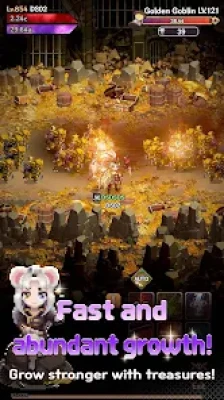
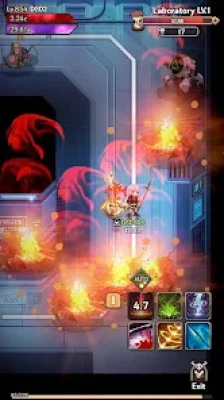
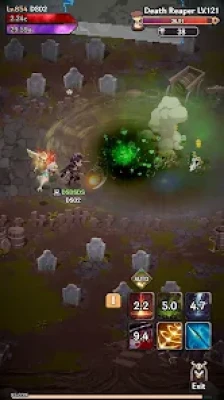
The game combines classic RPG progression with automated growth. You can develop your character, collect rewards, and steadily increase your damage while enjoying a distinctive pixel-art presentation. Instead of relying on realistic graphics, the game uses handcrafted pixel animation to create its own dark fantasy atmosphere.
One of its most unusual features is its sound design. Alongside fantasy music, the game incorporates beatbox sound effects created by Beatpella House and an exclusive track associated with beatboxer Hiss. This gives battles and progression a sound that stands apart from many conventional idle RPGs.
Whether you enjoy watching numbers climb, strengthening a fantasy character, or gradually pushing past increasingly demanding challenges, Grim Reaper Idle: Medieval Arc offers a progression-focused adventure built around continuous growth.
What Is Grim Reaper Idle: Medieval Arc?
Grim Reaper Idle: Medieval Arc is an idle role-playing game in which your central goal is to make the Grim Reaper stronger over time. The setting draws inspiration from a dark medieval era, where a ruined kingdom, cursed warriors, and dangerous magical forces create a bleak fantasy backdrop.
The main attraction is character progression. You develop your reaper, improve its power, collect rewards, and work toward increasingly impressive damage output. The game emphasizes steady growth rather than requiring every moment to be spent actively controlling a traditional action RPG character.
Its presentation is equally distinctive. Detailed pixel art gives the fantasy world a handcrafted look, while beatbox-inspired sound effects and a substantial music selection add personality to the experience.
The result is an idle RPG that blends familiar character-growth mechanics with an unusual combination of visual and audio styles.
Main Features of Grim Reaper Idle: Medieval Arc
Handcrafted Pixel Art
The game features pixel art created by an experienced artist, giving its characters and fantasy setting a recognizable visual identity. The style evokes classic RPGs while using detailed animations to bring the Grim Reaper and the surrounding world to life.
For players who appreciate traditional pixel-art games, this handcrafted presentation is one of the experience's main attractions.
Dark Medieval Fantasy Setting
The story takes place in a troubled world marked by ruined kingdoms, cursed knights, and mages who have awakened forbidden powers. This darker setting separates the game from colorful fantasy RPGs that focus on cheerful adventures.
The Grim Reaper's journey is framed by a world in which danger and supernatural forces are part of everyday life.
Idle RPG Progression
Grim Reaper Idle: Medieval Arc revolves around continuous character development. You can keep working toward greater power without treating every session as a demanding, manually controlled battle.
Idle progression makes it easier to return periodically, collect available rewards, and invest in upgrades. The long-term appeal comes from seeing how much stronger your character becomes over time.
Increasing Damage and Power
A major goal is to keep improving the Grim Reaper's combat strength. The game encourages players to push their damage higher and discover just how far progression can go.
Large damage numbers provide a visible measure of development, making upgrades feel rewarding as the character moves toward increasingly ambitious goals.
Abundant Rewards and Upgrades
Rewards are an important part of the game's growth cycle. Collecting resources and using them effectively helps you continue developing your character.
Rather than spending everything immediately, pay attention to which upgrades provide the greatest improvement for your current stage.
Beatbox Sound Effects
One of the game's most unusual features is its use of human beatboxing for sound effects, created in collaboration with Beatpella House. These sounds give the action a different feel from the standard sword clashes, magical effects, and electronic sounds commonly found in fantasy RPGs.
Original Music and Background Tracks
Music is another part of the game's identity. Its selection of background tracks helps create an atmosphere suited to the dark medieval setting, while the exclusive track associated with beatboxer Hiss adds a distinctive musical element.
Classic RPG Inspiration
Although its progression is built around idle mechanics, the game draws on the appeal of classic role-playing games: developing a character, growing stronger, exploring a fantasy setting, and pursuing increasingly difficult goals.
This makes it a potential fit for players who enjoy RPG progression but prefer a more relaxed approach to moment-to-moment gameplay.
How to Play Grim Reaper Idle: Medieval Arc
New players should begin by learning the main progression systems and understanding how their available rewards translate into stronger character development.
Step 1: Start your Grim Reaper's journey
Complete the introductory portion of the game and familiarize yourself with the main screen. Look for the areas that display your current power, available rewards, and character upgrades.
Step 2: Learn how progression works
Pay attention to how your character becomes stronger and which resources are used for development. Understanding these systems early helps you avoid wasting valuable materials.
Step 3: Collect available rewards
Check your reward and progression screens regularly. Idle RPGs are built around accumulated progress, so collecting resources and putting them to work is an important part of the routine.
Step 4: Invest in useful upgrades
Use your resources to increase your character's strength. Prioritize improvements that support your current progression rather than spending everything without considering the benefit.
Step 5: Monitor your damage growth
Your damage output provides a useful indication of how effectively your character is developing. Watch how it changes after upgrades and use that information to guide future decisions.
Step 6: Keep progressing through difficult points
When growth slows, review your available resources and upgrade options. Collect additional rewards and strengthen your character before expecting a major improvement.
Step 7: Establish a regular routine
Return to collect rewards, check available upgrades, and continue improving your reaper. Consistent development is more useful than making random purchases or upgrades whenever you open the game.
Grim Reaper Idle: Medieval Arc Strategy Guide
1. Focus on Consistent Character Growth
The most important principle in Grim Reaper Idle: Medieval Arc is to keep your character developing. Each improvement contributes to your broader goal of increasing combat power.
Rather than trying to maximize every system immediately, concentrate on the upgrades that are most relevant to your current stage. As your character becomes stronger, reassess your priorities and direct resources toward the next meaningful improvement.
A consistent approach makes progression easier to understand and helps you avoid wasting resources on upgrades that offer little immediate value.
2. Use Idle Rewards Efficiently
Idle progression is most useful when you turn accumulated rewards into practical improvements.
When you return to the game, collect available resources and review your upgrade options. Think about what is currently limiting your growth and spend resources accordingly.
If you are progressing comfortably, you may be able to invest in broader development. If growth has slowed, concentrate on the improvements most likely to help you move forward.
3. Make Damage Growth Your Progress Indicator
The game places considerable emphasis on increasing damage. Use this as a way to measure whether your character development is producing useful results.
After making an upgrade, check how your damage changes. This helps you compare improvements and understand which investments appear most valuable.
Do not judge every upgrade only by its immediate effect, however. Some investments may contribute to longer-term growth, so consider their purpose alongside your current progress.
4. Avoid Spending Resources Without a Plan
It can be tempting to use every available resource as soon as an upgrade becomes affordable. A more thoughtful approach is to consider the benefit before committing.
Ask yourself three questions:
Will this upgrade noticeably improve my current progression?
Is there another available improvement that would provide greater value?
Am I spending resources I may need for a more important development later?
These simple checks can make your resource management more effective, especially as upgrade costs increase.
5. Recognize When Progress Is Slowing
Idle RPGs often have periods when character growth feels rapid and other periods when improvement becomes more gradual. Grim Reaper Idle: Medieval Arc's long-term progression focus makes patience important.
When your damage stops increasing as quickly as expected, avoid making random changes. Check your available rewards, review the upgrades you can afford, and determine whether you have overlooked a useful progression option.
A slower period is a reason to reassess your development plan, not necessarily a sign that you have reached the end of the game's progression.
6. Set Short-Term and Long-Term Goals
Large damage targets can be motivating, but they can also make progress feel distant if you focus only on the final number.
Break your development into smaller milestones. Your next goal might be to purchase a meaningful upgrade, reach a new damage threshold, or improve your overall progression efficiency.
Once you achieve that milestone, establish another. Smaller targets make it easier to see progress and give each session a clear purpose.
7. Learn the Value of Every Available Upgrade
Do not assume that every upgrade is equally valuable. Review the information provided by the game and compare the cost of an improvement with the benefit it offers.
When the game presents multiple development choices, prioritize the ones that support your immediate needs. As your character grows, revisit those choices because an upgrade that was useful early on may no longer be your best investment.
This habit becomes increasingly important as you work toward much higher levels of power.
8. Make the Most of Short Sessions
One advantage of idle RPGs is that they can accommodate players who do not have time for long gaming sessions.
A short session can still be productive if you collect rewards, review upgrades, and invest resources carefully. You do not need to spend every visit making numerous changes.
Develop a simple routine that fits your schedule. Consistency helps you maintain momentum without turning progression into a chore.
9. Enjoy the Game's Distinctive Audio and Art
Progression is the main gameplay focus, but the presentation is part of what makes Grim Reaper Idle: Medieval Arc memorable.
Pay attention to the handcrafted pixel animations, the dark medieval atmosphere, and the beatbox sound effects. The unusual audio direction gives the game a different personality from many other idle fantasy titles.
If you enjoy playing with sound, the music and effects are worth experiencing rather than treating the game solely as a sequence of upgrades and damage numbers.
10. Review Changes After Updates
Mobile RPGs can receive balance adjustments, bug fixes, and new content. If a familiar strategy becomes less effective after an update, review the current in-game information before assuming the old approach still applies.
Pay attention to any changes affecting rewards, upgrade values, or progression systems. Keep your strategy flexible and base decisions on the version you are actually playing.
Beginner Tips for Grim Reaper Idle: Medieval Arc
Collect rewards regularly. Accumulated resources are an important part of idle progression.
Prioritize meaningful upgrades. Focus on improvements that support your current growth rather than spending resources indiscriminately.
Track your damage. Use changes in damage output to help evaluate the value of your upgrades.
Set achievable milestones. Small goals make long-term progression easier to manage.
Be patient when growth slows. Review your options and keep developing rather than expecting constant rapid increases.
Understand upgrade costs. Check the cost and benefit of an improvement before spending valuable resources.
Return with a purpose. A short session can be productive if you collect rewards and make one or two useful decisions.
Enjoy the presentation. The pixel art, music, and beatbox effects are a distinctive part of the experience.
Check current game information. Details may change with updates, so rely on the current version when planning your progression.
Advanced Progression Tips
Compare the Cost and Benefit of Upgrades
As your character becomes stronger, upgrade decisions may require more resources. Compare available improvements rather than automatically selecting the first one you can afford.
Look at the expected benefit and consider whether the upgrade helps you reach your next goal. This makes it easier to prioritize limited resources.
Build a Repeatable Progression Routine
A reliable routine helps you avoid unnecessary decisions every time you return to the game.
Collect rewards, inspect your development options, make your most useful upgrades, and check your progress. If you have reached a temporary wall, use the next cycle of accumulated resources to prepare for further growth.
Do Not Confuse Big Numbers With Efficient Progress
High damage figures are satisfying, but the most impressive number is not always the best measure of efficiency. Consider how much a particular improvement costs and whether it helps you progress toward your next milestone.
The aim is to grow steadily while using resources intelligently, not merely to spend everything in pursuit of an immediate increase.
Adapt as Your Character Develops
Your priorities may change as you move further into the game. Review your progression periodically and reconsider which upgrades deserve attention.
Avoid following a rigid plan if the available systems or your current needs suggest a better alternative. Flexible decision-making is useful in any long-term idle RPG.
Common Mistakes to Avoid
Spending every resource immediately: Keep your goals in mind before making upgrades. An affordable improvement is not automatically the most valuable one.
Ignoring accumulated rewards: Regularly check for available resources and use them to support character development.
Expecting constant rapid growth: Long-term idle progression naturally rewards patience. Some improvements may take more time and resources than others.
Making upgrades without checking their impact: Monitor your damage and progression after investing resources so you can make more informed choices.
Focusing only on the final damage target: Smaller milestones make it easier to recognize progress and maintain a sensible upgrade plan.
Ignoring the game's own information: Read the available descriptions and upgrade details rather than assuming that all systems work the same way as other idle RPGs.
Treating presentation as irrelevant: The handcrafted art and distinctive sound design are major parts of this game's identity and may enhance the experience for players who appreciate them.
Is Grim Reaper Idle: Medieval Arc Worth Playing?
Grim Reaper Idle: Medieval Arc is worth considering if you enjoy idle RPGs, dark fantasy, character development, and watching your damage numbers grow over time.
Its strongest feature is its distinctive presentation. Handcrafted pixel art gives the game a classic RPG feel, while beatbox sound effects make its audio identity unusual. The idle progression system also suits players who prefer gradual character development rather than constant manual combat.
The main consideration is its progression-focused structure. Players who enjoy setting goals, collecting rewards, and repeatedly improving a character may find the growth loop satisfying. Those who prefer story-heavy adventures, complex tactical battles, or continuous hands-on action may want a different style of RPG.
The game contains advertisements and in-app purchases, so players should also consider how those systems fit their preferences.
Overall, Grim Reaper Idle: Medieval Arc is a distinctive option for fans of pixel-art fantasy games who enjoy long-term idle progression and the satisfaction of steadily increasing their character's power.
Pros and Cons
Pros
Handcrafted pixel-art visuals.
Dark medieval fantasy atmosphere.
Idle character progression and accumulated rewards.
Long-term damage and power-growth goals.
Unusual beatbox sound effects.
A broad selection of background music.
A style inspired by classic role-playing games.
Cons
The gameplay centers heavily on repeated character growth.
Progress may feel slower when major upgrades require more resources.
Players who prefer direct, action-heavy combat may want more hands-on gameplay.
Advertisements and in-app purchases are included.
Grim Reaper Idle: Medieval Arc – Frequently Asked Questions
What is Grim Reaper Idle: Medieval Arc?
It is a dark-fantasy idle RPG from DAERI SOFT Inc. in which you develop a Grim Reaper, increase its power, collect rewards, and pursue increasingly ambitious damage goals.
Who developed Grim Reaper Idle: Medieval Arc?
The game was developed by DAERI SOFT Inc.
What makes this idle RPG different?
Its combination of handcrafted pixel art, dark medieval fantasy, beatbox sound effects, and a focus on continuous character growth gives it a distinctive identity.
Does Grim Reaper Idle: Medieval Arc have idle progression?
Yes. The game emphasizes continuous growth and rewards, including progression while idle.
How can I increase my damage?
Keep developing your character, collect available rewards, and invest in upgrades that meaningfully improve your progression. Review your available options when growth slows.
Is the game suitable for beginners?
Players who enjoy idle RPGs can start by learning the basic reward and upgrade systems. A steady routine and careful resource management can help make long-term progression easier to understand.
What is the game's visual style?
The game uses handcrafted pixel art, giving its dark medieval fantasy setting a classic RPG-inspired appearance.
Does the game have original sound effects?
Yes. Its published description highlights beatbox sound effects created by Beatpella House, along with an exclusive track associated with beatboxer Hiss.
Is Grim Reaper Idle: Medieval Arc free to play?
The game is listed on Google Play with advertisements and in-app purchases. Check the current store listing for the latest purchase information.
What should I do when progression slows down?
Collect your available rewards, compare your upgrade options, and choose improvements that support your next milestone. Avoid spending resources randomly just to see a short-term increase.
Final Verdict
Grim Reaper Idle: Medieval Arc combines dark medieval fantasy, handcrafted pixel art, unusual beatbox audio, and an idle RPG progression system built around steadily increasing power.
For the best experience, collect rewards consistently, compare upgrade options, track your damage growth, and set realistic milestones. These habits can help you get more from the game's long-term progression while enjoying its distinctive artistic and musical style.
Rate the Game
User Reviews















Popular Games



















 Android
 iOS
iOS Windows
 Xbox
Xbox