



Latest Version
October 04, 2026
Bandai Namco Entertainment Inc.
Role Playing
iOS
0
Report a Problem
More About :game
Unlike many SAO games that place Kirito at the center, Integral Factor lets you experience the death-game scenario from your own character's perspective. The story follows a parallel "what-if" route connected to the original Sword Art Online story while introducing events and developments not seen in the anime.
What Is SWORD ART ONLINE: Integral Factor?
SWORD ART ONLINE: Integral Factor is a 3D online RPG/MMORPG based on Sword Art Online from Bandai Namco Entertainment.
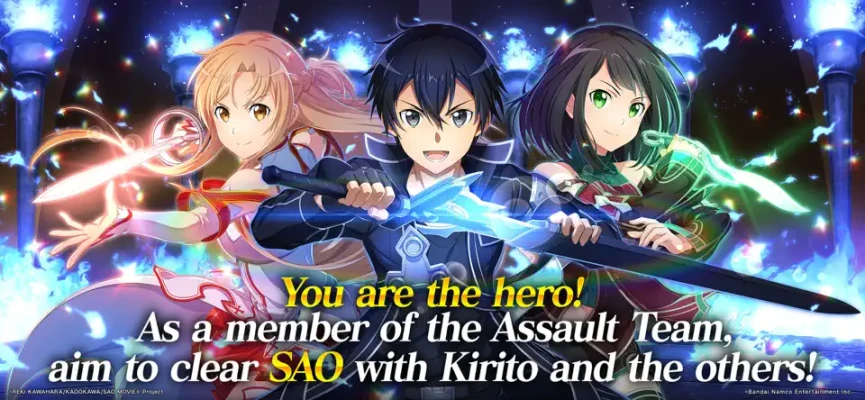
You play as a member of an Assault Team trapped inside Aincrad. Your objective is to survive, become stronger, cooperate with other players, and eventually work toward clearing all 100 floors.
The game combines:
Character customization
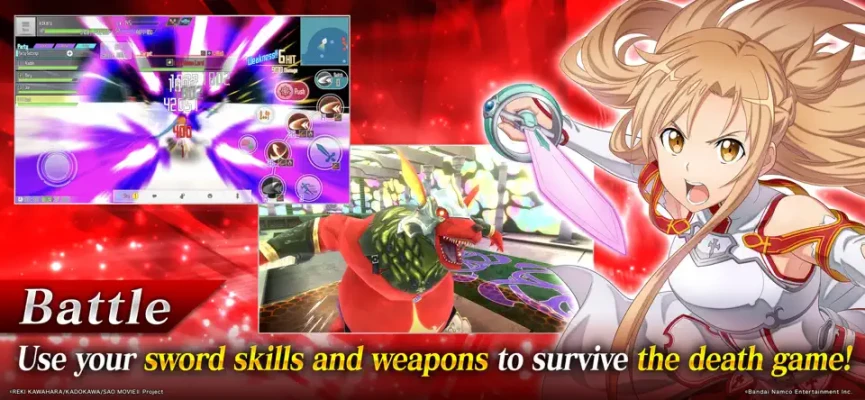
Real-time action combat
Weapon progression
Skill Records
Story quests
Boss battles
Multiplayer cooperation
Character development
Aincrad exploration
Events and additional content
The App Store currently lists the game as a free role-playing title with optional in-app purchases and random-item purchases.
Your Character Is the Main Protagonist
One of Integral Factor's biggest differences from other Sword Art Online games is that you are the protagonist.
Instead of simply following Kirito's story, you create and develop your own avatar.
Your character becomes part of the Assault Team and experiences Aincrad from a different perspective.
This gives the game a distinctive SAO fantasy:
What would happen if you were actually trapped inside Sword Art Online?
You explore the floors, fight monsters, meet familiar characters, work with Koharu, and experience a parallel story that connects with events from the original series.
SWORD ART ONLINE Integral Factor Gameplay
The main gameplay loop revolves around exploration, quests, combat and character progression.
A typical session may involve:
Accepting a quest.
Traveling into an Aincrad field.
Fighting monsters.
Collecting materials and rewards.
Completing objectives.
Returning to town.
Improving weapons and skills.
Preparing for the next quest or boss.
Continuing the story.
As you progress, enemies become stronger and your equipment and Skill Record setup become increasingly important.
Complete Beginner Guide
If you're starting Integral Factor for the first time, don't worry about trying to understand every system immediately.
Concentrate on a few fundamentals.
Step 1: Follow the Main Story
The main story is one of the best ways to learn the game.
It introduces:
New areas
Combat mechanics
Characters
Equipment
Progression systems
Boss encounters
New Aincrad floors
Don't spend all your early-game resources chasing optional content before establishing a strong character.
Step 2: Choose a Weapon You Enjoy
Your weapon determines which Sword Skills you can use.
Experiment with different weapons early and decide which combat style feels comfortable.
Step 3: Build a Small Skill Record Collection
You don't need every Skill Record.
Instead, develop a useful set of offensive and defensive abilities that work with your chosen weapon.
Step 4: Upgrade Your Equipment
Don't allow your equipment to fall far behind your character level.
A stronger weapon can dramatically improve your ability to clear quests.
Step 5: Learn Enemy Patterns
Don't simply attack continuously.
Watch for:
Attack animations
Area attacks
Charges
Stuns
Knockbacks
Weak points
Recovery windows
The official game description specifically emphasizes preparing for enemy weaknesses and attack patterns.
Combat Guide
Combat is one of Integral Factor's strongest features.
Instead of relying entirely on automatic battles, you actively control your character and choose skills during encounters.
Success depends on understanding:
Weapon type
Skill effects
SP management
Enemy weaknesses
Attack timing
Positioning
Defensive opportunities
Party cooperation
A high-level character can still struggle if the player repeatedly uses ineffective skills against an enemy.
Skill Records Explained
Skill Records are central to your combat setup.
Equipping Skill Records on yourself or your partner allows you to use different abilities. Official Bandai Namco documentation explains that Skill Records have a cost, meaning you cannot equip more than your available maximum cost allows.
There are two important categories:
Sword Skills
Sword Skills consume SP and require the appropriate weapon to be equipped.
This means you need to match your Skill Records to your weapon.
Abilities
Abilities work differently.
Their effects can be applied simply by equipping them, although some abilities activate only when their specific conditions are met.
How to Build a Better Skill Record Setup
Don't equip skills randomly.
Think about what your character needs.
A practical setup should generally include:
Reliable damage
A strong single-target skill
An area attack when appropriate
Useful buffs or debuffs
Defensive or survival options
Skills that exploit enemy weaknesses
You should also pay attention to Skill Record costs.
A powerful skill is not automatically useful if equipping it prevents you from creating a balanced loadout.
Weapon Guide
Your weapon determines your combat style and which Sword Skills you can use.
The best weapon is therefore not necessarily the weapon with the highest damage number.
Consider:
Attack speed
Skill range
Skill animation
Enemy matchup
Your preferred playstyle
Available Skill Records
Boss mechanics
Recent game updates have also expanded weapon proficiency levels and proficiency skills, making long-term weapon development an increasingly important part of character progression.
Weapon Proficiency Strategy
Weapon proficiency should be treated as a long-term investment.
If you constantly switch weapons without developing any of them properly, your progression can become inefficient.
A better approach is:
Choose a primary weapon → develop its proficiency → build compatible Skill Records → learn its combat style → use a secondary weapon when you have the resources to support it.
This doesn't mean you should never experiment.
It simply prevents you from spreading resources too thin.
How to Level Up Efficiently
Level progression comes naturally through story quests, monster battles and other activities.
For efficient progression:
Prioritize Story Content
Story progression gives you access to additional content and helps you learn the game.
Complete Available Objectives
Don't ignore easy rewards.
Farm Appropriate Enemies
If you hit a difficulty wall, fight enemies that you can defeat efficiently rather than repeatedly attempting content far above your current strength.
Upgrade Your Equipment
Character level alone doesn't determine combat power.
Improve Your Skills
A properly optimized Skill Record setup can make difficult encounters significantly easier.
Equipment Strategy
Equipment is one of the most important parts of character development.
When upgrading gear:
Prioritize your main weapon.
Keep armor reasonably current.
Improve equipment before attempting significantly harder content.
Replace outdated gear when better options become available.
Avoid spending rare resources on equipment you will replace immediately.
If your damage suddenly feels too low, check your weapon before assuming that you need a completely different character build.
Boss Battle Guide
Boss fights require a different mindset from normal monster battles.
A regular enemy can sometimes be defeated through sustained attacks.
A boss usually requires you to understand its patterns.
Before the Fight
Check:
Recommended level
Boss weaknesses
Attack patterns
Your weapon
Skill effects
Equipment
Healing options
Partner setup
During the Fight
Watch the boss carefully.
Don't blindly spam skills.
Wait for attack openings and avoid standing in dangerous areas.
The official App Store description specifically recommends preparing around enemy weaknesses and attack patterns, which is particularly important during difficult boss encounters.
How to Deal With Enemy Weaknesses
When an enemy is difficult to defeat, don't immediately assume that you need more levels.
Ask:
Am I using the right weapon?
Am I using effective Skill Records?
Am I exploiting the enemy's weakness?
Am I attacking during the correct openings?
Is my equipment strong enough?
This approach can save a large amount of farming time.
Koharu and Partner Strategy
Koharu is your important partner throughout the Integral Factor story.
The game is designed around fighting alongside her while progressing through Aincrad.
Your partner can provide valuable support during battles, so don't treat partner development as secondary.
When preparing for challenging content, consider how your partner's skills complement your own.
For example:
You deal sustained damage → partner provides support.
You focus on close combat → partner provides additional pressure or utility.
The best combination depends on the encounter.
Multiplayer and Assault Team Strategy
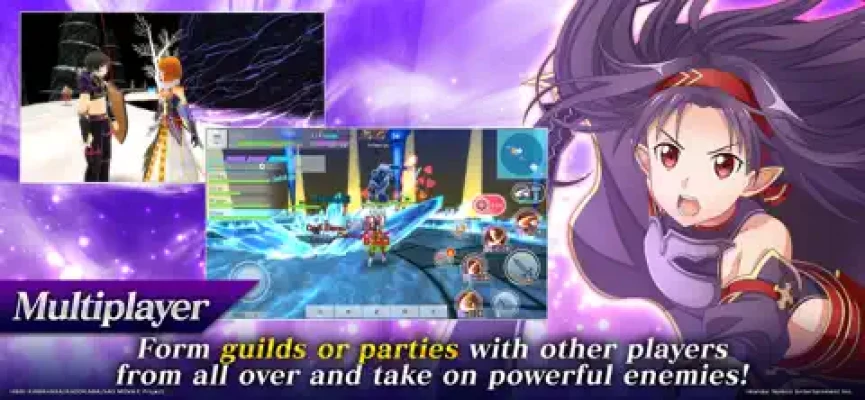
Integral Factor is an online RPG, so cooperation is an important part of the experience.
Powerful monsters and difficult quests can become much easier when players coordinate.
When playing with others:
Communicate when possible.
Avoid attacking randomly.
Focus on the boss.
Pay attention to positioning.
Don't ignore mechanics.
Use complementary skills.
Help teammates recover from dangerous situations.
The official game description emphasizes cooperation with Assault Teams when tackling powerful monsters and difficult quests.
Best Beginner Strategy for Bosses
Use this simple process:
1. Observe
Spend a few moments learning the boss's attack pattern.
2. Identify Openings
Look for moments when the boss is vulnerable.
3. Attack
Use your strongest appropriate Skill Records.
4. Retreat
Don't remain in a dangerous area simply to deal a few extra hits.
5. Repeat
Successful boss battles are often about consistency rather than one enormous attack.
Resource Management
Avoid spending every resource immediately.
Save valuable materials for meaningful upgrades.
Prioritize:
Main weapon
Main armor
Core Skill Records
Weapon proficiency
Important abilities
Character progression
If you constantly upgrade temporary equipment, you can find yourself short of materials when an important upgrade becomes available.
Skill Record Cost Management
Because Skill Records have a maximum cost limit, you need to think about your complete loadout rather than selecting abilities independently.
Before equipping a new Skill Record, ask:
Does this improve my current build?
Is its effect worth its cost?
Does it work with my weapon?
Does it fill a weakness in my current setup?
If the answer is no, save it for another build.
Advanced Combat Strategy
Once you understand the basics, begin thinking about skill rotation.
Instead of using skills whenever they become available:
Start with a setup ability if useful.
Apply buffs or debuffs.
Wait for the appropriate attack window.
Use your strongest damage skill.
Reposition.
Recover resources.
Repeat.
The objective is to maximize the amount of useful damage you deal while minimizing unnecessary damage taken.
Don't Ignore Defensive Play
Many new players focus entirely on damage.
That's a mistake.
A dead character deals no damage.
Learn to recognize when an enemy is preparing a major attack.
Move away when necessary.
Wait for the attack to finish.
Then punish the opening.
This becomes increasingly important as you progress into harder Aincrad content.
Aincrad Progression
The long-term objective is to advance through Aincrad toward the 100th floor.
Each stage of progression introduces stronger challenges and requires a stronger character.
The game currently contains extensive Aincrad content beyond its original launch progression, with recent updates adding additional floors and raising progression caps. The App Store update history, for example, records recent increases to the player level cap and weapon proficiency systems.
This makes the game suitable for players who enjoy long-term character development rather than a short campaign.
Events and Additional Content
Events provide additional activities outside the main story.
They can be useful sources of:
Upgrade materials
Equipment
Currency
Skill-related rewards
Limited rewards
Additional gameplay challenges
Check event requirements before spending resources.
Some events are much more efficient for certain materials than normal farming.
What to Do When You Hit a Difficulty Wall
If a boss or floor becomes too difficult, don't immediately grind random enemies.
Use this checklist:
Character Level
Is your level appropriate?
Weapon
Is your main weapon strong enough?
Armor
Is your defensive equipment outdated?
Skill Records
Are your skills appropriate for the enemy?
Weapon Proficiency
Can you improve your proficiency?
Enemy Weakness
Are you exploiting the boss's weaknesses?
Partner
Is your partner properly equipped?
Combat Technique
Are you taking unnecessary damage?
This checklist often reveals the actual reason for a failed quest.
Free-to-Play Strategy
Integral Factor includes optional purchases and random-item purchases, so free-to-play players should be particularly careful with resources.
A sensible free-to-play approach is:
Save premium currency.
Avoid impulsive pulls.
Prioritize useful Skill Records.
Build one strong primary setup first.
Take advantage of event rewards.
Upgrade efficiently.
Don't constantly change builds.
The goal is to make your account stronger over time rather than trying to obtain everything immediately.
Common Beginner Mistakes
Upgrading Everything
Spreading materials across too many weapons and Skill Records slows progression.
Ignoring Skill Costs
A collection of powerful abilities isn't useful if your cost limit prevents you from equipping them effectively.
Using the Wrong Weapon
Some Sword Skills require specific weapons.
Ignoring Enemy Weaknesses
Raw damage isn't always the answer.
Standing in Boss Attacks
Learn attack patterns instead of absorbing damage.
Neglecting Equipment
Character level doesn't replace proper gear.
Changing Builds Constantly
Give a build enough time to develop before abandoning it.
Graphics and Atmosphere
Integral Factor captures the atmosphere of Aincrad through large 3D environments, monster-filled fields, towns, dungeons and boss encounters.
The most appealing aspect for SAO fans is the opportunity to experience these locations through a custom protagonist rather than simply watching Kirito's story.
The game's official description specifically positions the player as an Assault Team member and offers a parallel "what-if" story connected to the original SAO narrative.
Story and Characters
The story follows your character and Koharu as they attempt to survive Aincrad.
Familiar Sword Art Online characters appear throughout the experience, allowing the game to connect your personal journey with recognizable events and personalities from the franchise.
However, Integral Factor also introduces its own story developments and perspectives.
That makes it more than a simple recreation of the anime.
Is SWORD ART ONLINE: Integral Factor an MMORPG?
Yes. The App Store describes Integral Factor as "The First SAO MMORPG."
It combines an online RPG structure with real-time combat, cooperative content, character progression and a persistent Aincrad adventure.
Platforms and Technical Information
Game: SWORD ART ONLINE: Integral Factor
Genre: MMORPG / Role-Playing
Developer: Bandai Namco Entertainment Inc.
Main Setting: Aincrad
Main Character: Player-created protagonist
Partner: Koharu
Primary Objective: Progress through Aincrad toward the 100th floor
Platforms: iPhone, iPad, Android, PC/Steam
Business Model: Free to play with optional purchases
Age Rating: 13+ on the US App Store
App Store Size: About 408.5 MB on the current US listing
In-App Purchases: Yes, including random-item purchases and optional Boost Mode subscription.
The game is also available on Steam, where the PC version supports keyboard and controller configurations.
Pros and Cons
Pros
Play as your own SAO protagonist
Large Aincrad adventure
Real-time action combat
Extensive character progression
Koharu partner system
Skill Record customization
Weapon progression
Multiplayer cooperation
Familiar Sword Art Online characters
Original "what-if" storyline
Long-term progression
PC version available
Cons
Many progression systems can feel overwhelming initially
Skill Record optimization takes time
Later content can require significant grinding
Random-item purchases are available
The large amount of content can make the game feel repetitive for some players
New players have a lot of systems to learn
Frequently Asked Questions
Is SWORD ART ONLINE: Integral Factor free to play?
Yes. The game is free to download and play, with optional in-app purchases.
Is Integral Factor an MMORPG?
Yes. It is presented as a Sword Art Online MMORPG featuring online RPG gameplay and cooperative content.
Can I create my own character?
Yes. The player character is the protagonist, allowing you to experience Aincrad from your own perspective.
Who is Koharu?
Koharu is the player's important partner and accompanies the protagonist through the Aincrad adventure.
What are Skill Records?
Skill Records are equippable skills that provide Sword Skills or abilities. They have a cost limit, so your complete loadout must fit within your available cost.
Do Sword Skills require specific weapons?
Yes. Official Bandai Namco documentation states that Sword Skills require their specified weapon to be equipped.
What are abilities?
Abilities are Skill Records whose effects apply simply by being equipped, although some require specific conditions.
What is the main goal of Integral Factor?
The long-term goal is to progress through Aincrad and work toward clearing its floors while developing your character and cooperating with other players.
Does the game follow the original SAO story?
It connects to the original story but presents a parallel "what-if" scenario from the perspective of your own protagonist.
Can I play with other players?
Yes. Cooperative Assault Team gameplay is an important part of the experience.
Is there a PC version?
Yes. The game is available on Steam, with keyboard and controller support.
What should beginners upgrade first?
Focus on your primary weapon, useful Skill Records, appropriate equipment and weapon proficiency rather than spreading resources across everything.
Final SWORD ART ONLINE Integral Factor Strategy
The key to progressing through SWORD ART ONLINE: Integral Factor is understanding that character level is only one part of your strength.
Build a weapon you enjoy, develop its proficiency, create a focused Skill Record loadout, upgrade your equipment, learn enemy attack patterns and take advantage of weaknesses.
For difficult bosses, don't simply attack harder. Study the fight.
Learn when the enemy attacks, identify its openings, use the right skills and avoid unnecessary damage.
Most importantly, don't rush to build everything at once. A focused character with a well-designed weapon and Skill Record setup will generally be much easier to develop than an account that spreads resources across dozens of options.
If you enjoy Sword Art Online, MMORPGs, anime RPGs, character progression and real-time combat, Integral Factor offers one of the more direct ways to experience Aincrad from the perspective of your own character.
Rate the Game
User Reviews














Popular Games


















 Android
 iOS
iOS Windows
 Xbox
Xbox