

Latest Version
September 23, 2026
Thomas Young
Action
iOS
0
Report a Problem
More About :game
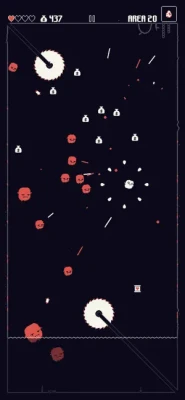
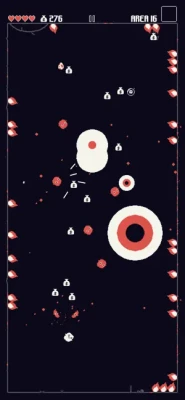
The game combines arcade-style action with unusual tap controls. You don't directly control Fowlst like a traditional platform character. Instead, you tap the left or right side of the screen to make him hop in that direction, while swiping upward activates the item you're carrying.
The result is a game that looks simple at first but requires surprisingly precise control once enemies, projectiles and environmental hazards begin filling the rooms.
What Is Fowlst?
Fowlst is the original game in the Fowlst series, preceding Super Fowlst and Super Fowlst 2.
Its premise is deliberately ridiculous: an owl is trapped in Hell and has decided that the best solution is to smash demons until he finds his way out.
The game features:
- Unlimited stages
- Randomly changing chambers
- Demon enemies
- Large bosses
- Loot
- Egg bombs
- Rockets
- Buzz saws
- Turbines
- Tubes
- Stalactites
- Game Center leaderboards
The App Store describes the stages as different every time you play, making adaptability more important than memorizing a fixed campaign.
How Fowlst Gameplay Works
The controls are intentionally minimal.
Tap Left
Fowlst hops toward the left.
Tap Right
Fowlst hops toward the right.
Swipe Up
Fowlst activates the item currently being held.
That's essentially the entire control system.
But because movement is based around hopping rather than traditional walking, positioning becomes extremely important.
You aren't simply deciding where to move.
You're constantly deciding:
Where will Fowlst be after this hop?
That distinction is the foundation of good Fowlst gameplay.
Mastering Fowlst Movement
The first thing new players should practice is controlling Fowlst without panicking.
Rapidly tapping both sides can make movement unpredictable.
Instead, use deliberate inputs.
Small correction
Use a single tap when you only need to adjust your position.
Longer movement
Use several taps in the same direction when crossing a larger section.
Enemy approach
Don't automatically jump directly into an enemy.
Try to position Fowlst so that your attack connects while giving you somewhere safe to move afterward.
The Most Important Movement Rule
Think about the landing point before you tap.
Suppose an enemy is on the other side of a room.
You could immediately tap toward it.
But ask:
- Where will Fowlst land?
- Is there a projectile nearby?
- Is a buzz saw below?
- Will another enemy be waiting?
- Can I escape after hitting the target?
A successful attack isn't necessarily a good attack if it leaves Fowlst trapped in a dangerous position.
Fowlst Combat Strategy
Combat is based heavily on movement and positioning.
The game encourages you to smash demons by colliding with them while navigating around the room.
The basic combat loop is:
Approach → attack → reposition → attack again
Avoid remaining in one location for too long.
Enemies and environmental hazards can make stationary play dangerous.
Don't Chase Every Enemy
One of the most useful habits is learning when not to attack.
If an enemy moves away from you, chasing it can lead Fowlst into another hazard.
Sometimes it's safer to:
- Move away.
- Let the enemy approach.
- Position yourself.
- Attack when the enemy enters your path.
- Continue moving.
This turns enemy movement into an advantage.
Fighting Groups of Demons
When multiple enemies occupy a chamber, don't rush directly into the center.
Instead, try to control the engagement.
Step 1
Move toward one side of the room.
Step 2
Allow enemies to spread out.
Step 3
Attack the closest safe target.
Step 4
Immediately reposition.
Step 5
Repeat.
The objective isn't simply to kill everything quickly.
It's to reduce the amount of danger surrounding Fowlst.
How to Deal With Projectiles
Projectile attacks are particularly dangerous because they can punish predictable movement.
Don't react only when a projectile is already beside you.
Instead, watch where it is traveling.
If you see a projectile coming from one direction, your next hop should ideally move Fowlst into a safer part of the room rather than simply away from the projectile for a moment.
Projectile rule
Move across the attack line, not randomly around the room.
This gives you a clearer escape route.
Fowlst Power-Ups
Loot can be traded for powerful abilities, including items such as egg bombs and rockets.
Power-ups are important because they allow you to handle situations that would otherwise require risky close-range attacks.
Use them strategically rather than treating them as something to save indefinitely.
Egg Bomb Strategy
Egg bombs are particularly useful when several enemies are clustered together.
Instead of trying to collide with each demon individually, use the bomb to create breathing room.
They're especially useful when:
- Multiple enemies surround you
- A boss has supporting enemies
- You need to clear a dangerous section quickly
- Your movement position is poor
The important point is timing.
Use the bomb before the situation becomes impossible.
Rocket Strategy
Rockets provide another way to deal damage while maintaining distance.
They're particularly useful when approaching a dangerous enemy directly would put Fowlst at risk.
Instead of:
Enemy → rush toward it
try:
Enemy → create distance → attack with rocket → reposition
This keeps combat more controlled.
Don't Hoard Power-Ups
A common mistake in action games is saving powerful items for an imaginary "perfect moment."
In Fowlst, dying while carrying a useful item doesn't help.
Use a power-up when it provides a clear advantage.
Good opportunities include:
- Difficult enemy groups
- Boss encounters
- Tight rooms
- Dangerous projectile patterns
- Situations where your health is already low
The objective is survival, not having a full inventory when the run ends.
Environmental Hazards
Fowlst isn't only fighting demons.
The chambers contain hazards including:
- Buzz saws
- Turbines
- Tubes
- Stalactites
- Projectiles
The App Store specifically highlights these environmental dangers as part of the game's challenge.
This means you should always read the entire room.
Don't focus so heavily on an enemy that you forget what is around it.
Buzz Saw Strategy
Buzz saws are among the most obvious hazards because they can punish careless movement immediately.
Before jumping through a saw-filled section:
- Identify the safe space.
- Watch the movement of nearby hazards.
- Decide your direction before moving.
- Avoid unnecessary corrections.
- Don't rush just because the path looks short.
If you are unsure, wait for a safer opening rather than forcing the movement.
Turbine Strategy
Turbines can interfere with your movement and make a normal route behave differently than expected.
When approaching one, don't assume Fowlst will travel exactly as he would in an empty room.
Use smaller movements until you understand how the environmental object affects the situation.
Tubes and Stalactites
Tubes and stalactites add additional spatial hazards.
The key is to maintain awareness of the entire chamber.
Before attacking an enemy near one of these obstacles, ask:
If I hit the enemy, where will Fowlst go next?
That question can prevent many unnecessary deaths.
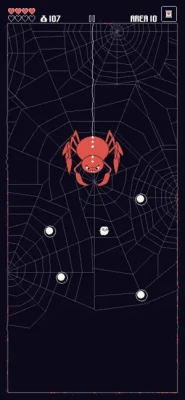
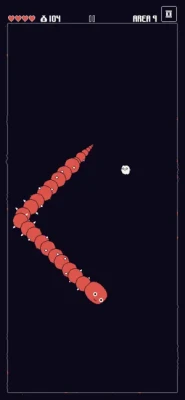
Boss Strategy
Fowlst includes large boss encounters as part of its progression.
Boss fights require a different mindset from normal chambers.
Don't immediately attack.
First observe:
- Boss movement
- Projectile patterns
- Safe areas
- Attack timing
- Environmental hazards
- Opportunities to use power-ups
Your first encounter with a boss should often be treated as a learning attempt.
Boss Fight Formula
A reliable approach is:
Observe → dodge → reposition → attack → escape
Avoid staying underneath or beside a boss simply because you have an opportunity to deal damage.
The best attack is one that leaves you in a safe position afterward.
Use Power-Ups Against Bosses
Bosses are one of the best situations for using your strongest offensive items.
If you have a rocket or bomb available and the boss creates a difficult opening, use it.
Don't enter a boss encounter with the mindset that every item must be saved for later.
The current fight is the reason you collected the item.
How to Survive Longer Runs
Because Fowlst uses unlimited stages that change between plays, long-term survival depends on adaptability.
You cannot rely entirely on memorizing one route.
Instead, develop a repeatable decision-making process.
Entering a chamber
Look around.
Identifying threats
Find enemies and hazards.
Choosing a route
Move toward the safest useful position.
Attacking
Strike when the opportunity is clear.
Repositioning
Move away before becoming surrounded.
Exiting
Don't take unnecessary risks when the chamber is nearly cleared.
Fowlst Loot Strategy
Loot is an important part of progression because it can be exchanged for powerful abilities.
This creates a useful risk-versus-reward decision.
A coin or piece of loot that is safely within reach is worth collecting.
A piece sitting behind a dangerous hazard may not be.
Ask yourself:
How much do I gain?
versus
How much danger does collecting it create?
Good players don't necessarily collect everything.
They collect the rewards that make sense for the situation.
Loot Collection Tips
Safe loot
Collect it immediately.
Loot near enemies
Clear or avoid the enemies first.
Loot beside hazards
Wait for a safe opportunity.
Loot requiring a risky jump
Consider whether the reward justifies the risk.
This becomes increasingly important during longer runs.
Fowlst Survival Strategy
The biggest improvement you can make is to stop thinking only about attacking.
Think about survival first.
Your priorities should generally be:
- Stay alive.
- Maintain a safe position.
- Reduce dangerous enemies.
- Collect worthwhile loot.
- Use power-ups intelligently.
- Continue progressing.
A dead Fowlst can't collect anything.
How to Handle a Bad Position
Sometimes you'll make a mistake and end up surrounded by enemies or near a hazard.
Don't panic and mash the controls.
Instead:
Find the nearest safe space.
Even a small opening can be enough.
Move away from the largest threat.
You don't necessarily need to attack immediately.
Use a power-up if necessary.
Creating space can be more valuable than saving an item.
Re-establish control.
Once Fowlst is safe, return to attacking.
Advanced Movement Technique
One of the best ways to improve is to separate movement decisions from attack decisions.
Don't think:
"I need to attack that enemy."
Think:
"I need to get into a safe position from which I can attack that enemy."
This small change makes the game easier to read.
Advanced Combat Technique
When possible, attack enemies while already moving toward a safe area.
This creates a simple rhythm:
Attack → escape
rather than:
Attack → remain exposed → panic → take damage
The second pattern is one of the easiest ways to lose health unnecessarily.
How to Deal With Increasing Difficulty
The game becomes more demanding as you progress.
One App Store reviewer described the increasing difficulty as a major part of the challenge, while another praised the game's ability to combine classic arcade-style action with modern mobile controls. These are individual player impressions, but they reflect the game's focus on repeated skill improvement.
When the game becomes difficult, don't try to make every action faster.
Instead:
Make fewer mistakes.
That is usually the more reliable path to longer runs.
Fowlst for New Players
If you're just starting, spend your first few runs learning three things:
1. Movement
Learn how far Fowlst travels after each tap.
2. Hazards
Understand which environmental objects require immediate attention.
3. Power-ups
Learn when an item can rescue a bad situation.
Once those three skills become natural, combat becomes considerably easier.
Fowlst for Experienced Players
Once you understand the controls, start optimizing.
Focus on:
- Faster chamber clearing
- Better positioning
- Efficient enemy kills
- Safer loot collection
- Fewer unnecessary hits
- Better power-up timing
- Longer survival
- Higher leaderboard scores
The game supports Game Center leaderboards, giving experienced players another reason to improve their runs.
Fowlst High-Score Strategy
If your goal is to improve your leaderboard performance, consistency is more important than reckless speed.
A good high-score run should have:
- Efficient movement
- Minimal damage
- Smart loot collection
- Good power-up usage
- Controlled boss encounters
- Few unnecessary risks
Don't sacrifice a strong run for a single piece of loot unless the reward is genuinely worthwhile.
Difficulty and Learning Curve
Fowlst has a simple control system but a more demanding mastery curve.
The first few chambers teach you the basic idea quickly.
The challenge comes from combining movement with:
- Enemy attacks
- Projectiles
- Environmental hazards
- Loot collection
- Boss encounters
- Limited safe space
The game's 2024 App Store feedback includes praise for its increasing challenge and its blend of classic arcade design with mobile controls.
Atmosphere and Presentation
Fowlst has a darker visual identity than the later Dadish games.
Its retro pixel-art presentation, demonic setting and Hell-themed environments give it a distinctive arcade atmosphere.
At the same time, the premise remains intentionally silly.
An owl trapped in Hell.
Rockets fired from behind.
Demons being smashed apart.
Egg bombs.
It is deliberately absurd, and that contrast gives Fowlst much of its personality.
Fowlst vs. Super Fowlst 2
Fowlst is worth treating as its own game rather than simply a smaller version of the sequels.
The original has a more compact visual and gameplay presentation, while later games expanded the formula with additional mechanics and content.
One App Store reviewer specifically praised the original's retro visual style and said they preferred its ability to show the entire rectangular level on screen, while another praised its controls compared with the sequels. Those are individual preferences, but they highlight an important characteristic of the original: its compact presentation is part of its identity.
Game Information
| Feature | Details |
|---|---|
| Game | Fowlst |
| Developer | Thomas Young |
| Genre | Action / Arcade |
| Main Character | Fowlst |
| Stages | Unlimited |
| Level Structure | Procedurally changing chambers |
| Main Objective | Smash demons and collect loot |
| Bosses | Yes |
| Power-Ups | Yes |
| Hazards | Buzz saws, turbines, tubes, stalactites and more |
| Controls | Touch |
| Leaderboards | Game Center |
| Platform | iPhone, iPad |
| Language | English |
| Age Rating | 9+ |
| Size | 36.8 MB |
| Price | Free |
| Current listed iOS requirement | iOS 10 or later |
The current US App Store listing shows 4.8/5 from 63 ratings. Ratings can differ by storefront and sample size.
Updates and Compatibility
The App Store currently lists compatibility with iPhone, iPad, iPod touch and Apple Vision, with iOS 10 or later required.
The listed version history includes version 1.01, which fixed an issue where jumping could be delayed when touching near the edge of the screen, along with minor bug fixes.
The developer has not provided privacy details to Apple on the current listing.
Honest Feedback on Fowlst
Fowlst's biggest strength is its simplicity.
There are only a few basic controls, but those controls create an arcade system built around movement, timing and positioning.
The procedural chamber design also gives the game strong replay value. Because stages change between runs, success depends on your ability to react rather than simply memorizing a walkthrough.
The original game also has a more compact identity than its sequels. The retro presentation and straightforward room-based structure make it easy to understand while still leaving room for mastery.
The main limitation is that players looking for a large story-driven campaign may find the minimalist structure less satisfying. Fowlst is fundamentally an arcade action game, and its replay value comes from improving your performance rather than progressing through a conventional narrative.
For players who enjoy short, repeatable action runs, unusual controls and high-score challenges, that simplicity is exactly what makes Fowlst work.
Pros and Cons
Pros
- Simple touch controls
- Unlimited changing stages
- Fast arcade gameplay
- Loot and power-ups
- Egg bombs
- Rockets
- Large bosses
- Numerous environmental hazards
- Retro pixel-art presentation
- Game Center leaderboards
- Easy to understand
- Difficult to master
Cons
- Minimal story
- Procedural structure may not appeal to everyone
- Limited control system takes practice
- Difficulty can rise quickly
- Players looking for extensive character progression may want a later game in the series
Frequently Asked Questions
What is Fowlst?
Fowlst is an action arcade game in which you control an owl trapped in Hell and fight demons while collecting loot.
How do you control Fowlst?
Tap the left side of the screen to hop left and the right side to hop right. Swipe upward to activate the item Fowlst is holding.
Does Fowlst have unlimited levels?
Yes. The App Store describes the game as having unlimited stages that are different each time you play.
Does Fowlst have bosses?
Yes. The game features large boss encounters in addition to normal demon enemies.
What power-ups are available?
The game includes abilities such as egg bombs and rockets, which can be obtained by trading collected loot.
What hazards are in Fowlst?
The game features hazards including buzz saws, turbines, tubes and stalactites.
Does Fowlst have leaderboards?
Yes. The App Store lists Game Center support with leaderboards.
Who created Fowlst?
Fowlst was developed by Thomas Young, who later created the Super Fowlst and Dadish games.
Is Fowlst free?
The current US App Store listing displays Fowlst as free.
Is Fowlst difficult?
The controls are simple, but surviving longer runs requires learning movement, enemy patterns, environmental hazards and power-up timing.
Final Thoughts
Fowlst is a compact arcade game built around one clever idea: give the player extremely simple controls and make them master those controls under pressure.
The unlimited changing chambers, demon enemies, loot, power-ups, bosses and environmental hazards provide enough variety to make repeated runs worthwhile.
The best way to improve is not to tap faster.
It's to become more deliberate.
Learn where Fowlst will land, understand the room before attacking, use power-ups when they matter and treat hazards as part of the level rather than background decoration.
Once those habits become natural, the strange hopping movement starts to feel much more precise.
Fowlst is a small, unusual arcade game with a surprisingly deep movement system—and its greatest challenge is learning to control one very determined owl in Hell.
Rate the Game
User Reviews















Popular Games



















 Android
 iOS
iOS Windows
 Xbox
Xbox