

Latest Version
October 15, 2024
GOODROID,Inc.
Casual
iOS
0
Report a Problem
More About :game
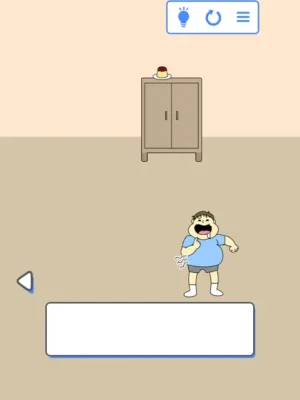
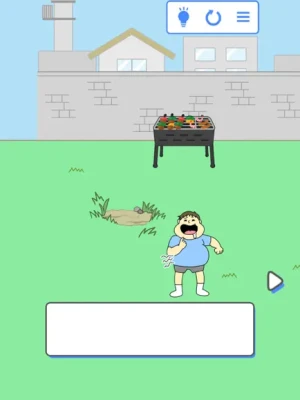
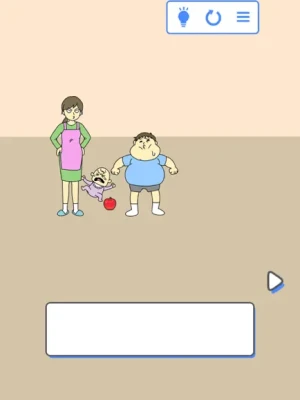
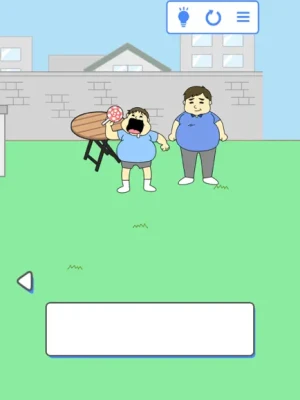
Don't Eat! is a lighthearted escape puzzle game built around a simple but amusing problem: you want to eat the sweets Mom has forbidden you from touching. Your mission is to figure out how to reach your goal without triggering the consequences of getting caught.
Rather than relying on fast reactions or complicated controls, the game focuses on observation, experimentation, and logical thinking. Each stage presents a situation that you need to investigate before deciding what to do next.
The basic gameplay loop is straightforward: inspect your surroundings, tap objects that look important, collect or discover useful items, and use drag-and-drop interactions to solve the puzzle.
The result is a casual mobile game suited to players who enjoy short challenges, humorous situations, and simple escape-room mechanics.
Don't Eat!
Casual puzzle adventure
Developer: GOODROID, Inc.
Platforms: iPhone and iPad
Price: Free listing on the US App Store
Age rating: 4+
Languages listed: English, Japanese, and Simplified Chinese
Main gameplay features
Room exploration: Examine the environment to find clues and interactive objects.
Point-and-tap puzzles: Investigate suspicious areas and discover which objects matter.
Item interactions: Drag and drop items to test possible solutions.
Escape-style challenges: Work out how to complete each situation without being caught.
Simple controls: Learn the core mechanics without complicated button combinations.
Stage-based progression: Solve puzzles to advance through the available levels.
Casual entertainment: Enjoy short puzzle sessions at your own pace.
The precise objectives and interactions vary by stage, so the best approach is to examine each scene rather than assume every puzzle works the same way.
Beginner's guide: How to play
The game uses three basic actions: checking the room, tapping suspicious objects, and dragging and dropping items
Inspect the entire room
Start by looking at the sweets, furniture, doors, containers, and other visible objects. Notice anything unusual or positioned differently from the rest of the scene. Avoid making your first move before understanding the situation.
Tap suspicious objects
Test objects that appear important to the puzzle. A successful interaction may reveal a clue, change the scene, or provide something useful for your next move.
Experiment with items
When you discover an item, consider how it might interact with other objects. Drag it to a plausible target and watch for changes. If the action fails, reconsider the clue rather than repeating it endlessly.
Complete the stage
Use the clues and objects you have discovered to work out a solution. Think about what might attract Mom's attention and which actions could help you reach the sweets safely.
Essential tips for solving difficult puzzles
1. Look beyond the obvious objects
The sweets are the main attraction, but the solution may depend on something elsewhere in the room. Check the background and less noticeable objects before interacting with the main target.
2. Read the situation before acting
Imagine what could happen after each action. Could an object make noise, reveal your intentions, or attract attention? Thinking through possible consequences helps you avoid careless decisions.
3. Pay attention to changes in the scene
After tapping or moving something, inspect the room again. An object may have moved, a new clue may have appeared, or another interaction may now be possible.
4. Use items for a reason
Randomly dragging every item onto every object can waste time. Look for a logical connection between what an item does and what the puzzle requires.
5. Try alternative approaches
If your first idea fails, return to the clues and consider another interpretation. Some puzzles require you to change the environment before attempting the obvious action.
6. Learn from unsuccessful attempts
A failed interaction can help narrow down the available possibilities. Remember what you have already tested so that you can focus on unexplored options.
7. Be patient with unfamiliar stages
Later puzzles may be less obvious than the opening challenges. Take a moment to study the whole scene rather than tapping rapidly without a plan.
Advanced puzzle-solving strategy
Once you understand the basic mechanics, use a consistent process to tackle more challenging levels.
Observe
Identify the main objective, possible hazards, suspicious objects, and anything that appears out of place.
Form a hypothesis
Decide which objects might help you reach the sweets and which actions could lead to getting caught.
Test one action
Tap an object or try one sensible item interaction. Changing one thing at a time makes the outcome easier to understand.
Review and adjust
Check what changed, eliminate approaches that did not work, and use the new information to choose your next move.
Confirm the solution
Finish the required interactions and make sure the stage has registered as completed before moving forward.
How to avoid getting caught
The central joke in Don't Eat! is the temptation to eat sweets that belong to Mom. Use that theme to guide your reasoning.
Consider whether an action would make the sweets easier to notice.
Check for clues that suggest Mom may return or notice something unusual.
Look for ways to change the situation before attempting to reach the food.
Avoid assuming that the most direct route is necessarily the correct solution.
If a stage fails, review the sequence of actions that led to the outcome.
These are general strategies based on the game's stated premise and interaction style, not verified solutions for individual numbered levels.
What to do when you are stuck
If a puzzle seems impossible, try the following checklist before restarting or looking for a walkthrough.
If none of these steps works, a gameplay walkthrough showing the exact stage can be more useful than a general tips video.
Is Don't Eat! Difficult?
Don't Eat! is designed around accessible point-and-click interactions rather than complex controls. Its main challenge comes from interpreting each puzzle correctly and discovering the right sequence of actions.
Controls
Simple tap and drag-and-drop interactions.
Main challenge
Observation, logical reasoning, and choosing the correct actions.
Best way to play
Take your time, inspect clues, and experiment methodically.
For players who enjoy escape games and casual brain teasers, the straightforward controls make it easy to begin playing. Players who prefer explicit instructions or direct action may need more patience when a puzzle's solution is not immediately clear.
Graphics, Atmosphere, and Overall Experience
Don't Eat! uses a playful premise to turn an everyday temptation into a series of puzzle challenges. The appeal comes from wondering how the character can get to the sweets without being caught.
Its casual structure makes the game suitable for short breaks, while the room interactions encourage players to pay attention to small details. Rather than requiring extensive knowledge of a complicated game world, the experience centers on individual puzzles and their solutions.
The strongest reason to try the game is its combination of humor, simple controls, and escape-style problem-solving. Players who enjoy experimenting with objects and discovering unexpected solutions may find its format particularly appealing.
Pros and Cons
Pros | Cons |
|---|---|
Simple tap-based controls | Some puzzle solutions may not be obvious |
Humorous and easy-to-understand premise | Players who prefer action may find the pace slow |
Encourages observation and logical thinking | Repeated experimentation may be needed |
Suitable for short gaming sessions | Exact stage solutions may require a walkthrough |
Familiar escape-puzzle mechanics | Current feature and update details should be checked against the live listing |
These points describe the game's stated mechanics and likely player experience; they are not a substitute for testing every level or feature.
Frequently Asked Questions
What is Don't Eat! about?
Don't Eat! is a casual escape puzzle game in which you try to eat Mom's sweets without getting caught. You inspect rooms, tap suspicious objects, and drag and drop items to solve challenges.
How do you play Don't Eat!?
Start by examining the room, then tap objects that seem important. Discover useful items and drag them to suitable targets to progress through the puzzle.
Is Don't Eat! a puzzle game?
Yes. It is described as a simple puzzle-solving game and uses escape-game mechanics based on exploring scenes and interacting with objects.
Is Don't Eat! free to play?
The US App Store listing identifies the game as free. Availability and any optional purchases or advertising may vary, so check the current listing for the latest details.
Can beginners play Don't Eat!?
Yes. Its basic controls are easy to understand. The more challenging part is figuring out what each puzzle requires and how different objects interact.
What should I do if I cannot solve a level?
Inspect the entire scene again, tap objects you may have missed, review discovered items, and test plausible interactions one at a time. A walkthrough for your exact stage can help if you remain stuck.
Is Don't Eat! available on Android?
The specific listing covered in this guide is for iPhone and iPad. Android availability should be verified separately rather than assumed from the Apple listing.
Who developed Don't Eat!?
The App Store lists GOODROID, Inc. as the developer.
What makes Don't Eat! different from other casual games?
Its distinctive premise combines the temptation to eat forbidden sweets with room exploration and escape-style puzzles. Success depends on figuring out how to reach the goal rather than simply reacting quickly.
Rate the Game
User Reviews















Popular Games



















 Android
 iOS
iOS Windows
 Xbox
Xbox