

Latest Version
October 13, 2026
Supercent, Inc.
Casual
0
com.peb.whackstack
Report a Problem
More About :game
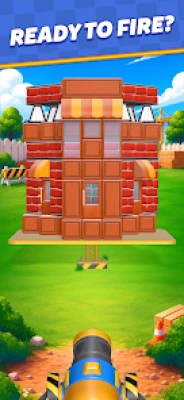
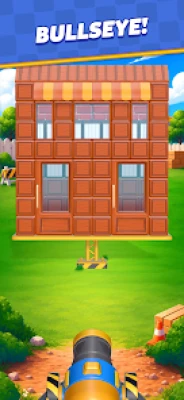
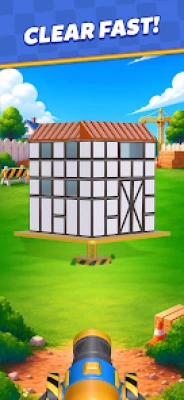
Whack Stack! turns demolition into a series of physics-based puzzles. Each level presents a structure made from stacked materials, towers, walls, bridges, or other architectural arrangements. Your job is to aim a cannon, fire at the right point, and knock down the structure to complete the stage.
Although the controls are straightforward, success depends on understanding how each structure is built. Some blocks provide essential support, while others are exposed and easier to dislodge. A well-placed cannonball can destabilize an entire building, causing blocks to tumble and collide in a satisfying chain reaction.
The game combines casual arcade action with puzzle-solving. Instead of simply firing repeatedly, you must consider the target, shooting angle, impact location, and likely direction of the collapse.
Whack Stack! Game Information
Game title: Whack Stack!
Developer: Supercent, Inc.
Genre: Casual, physics puzzle, destruction
Platform: Android; also available for iPhone and iPad
Gameplay: Cannon aiming, structure demolition, and physics puzzles
Main objective: Knock down structures and clear each stage
Controls: Aim and fire a cannon
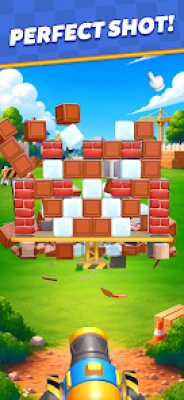
Visual style: Colorful 3D environments with destructible-looking structures
Monetization: Free to play, with advertisements and in-app purchases
Content rating: Everyone
Best for: Casual gamers, destruction game fans, and players who enjoy physics challenges
The core experience is easy to understand, but the different structures encourage experimentation and more thoughtful shooting as you progress.
Main Features of Whack Stack!
1. Cannon-Based Destruction
The cannon is your main tool for demolishing structures. Aim at a target, fire, and watch the impact change the arrangement of blocks. Choosing the right point can make the difference between a small disturbance and a complete collapse.
2. Physics-Based Puzzle Gameplay
Every structure presents a different problem. Blocks can fall, slide, collide, and destabilize neighboring sections. Understanding these interactions helps you identify the most effective shot.
3. Towers, Walls, Bridges, and Buildings
Whack Stack! features a variety of architectural arrangements. Tall towers, broad walls, stacked materials, and more complicated structures require different approaches.
4. Weak-Point Challenges
Some parts of a structure are stronger or better supported than others. Finding a vulnerable section is central to solving each puzzle efficiently.
5. Satisfying Chain Reactions
A single cannonball can set off a sequence of collisions. When one section falls into another, the resulting chain reaction may bring down much more of the structure than the original impact.
6. Simple Controls
The basic aim-and-fire mechanics make the game accessible to new players. Most of the challenge comes from choosing where and how to shoot rather than learning complicated controls.
7. Short, Replayable Levels
The stages are suited to quick gaming sessions. You can attempt a puzzle, study the result, and try another approach without needing to commit to a long campaign.
8. Additional Challenges and Rewards
The game's listing has included daily rewards and events such as Temple of the Month and Streak Up. The available events and rewards may change as the game receives updates.
How to Play Whack Stack!
The objective is to knock down the required structure and clear the level using your cannon.
Step 1: Examine the structure. Look at its height, shape, supporting blocks, and exposed sections before firing.
Step 2: Find a weak point. Identify a section that may destabilize the surrounding structure when struck.
Step 3: Choose your shooting angle. Consider the direction of the cannonball and how the target may move after impact.
Step 4: Fire the cannon. Watch how the structure responds, paying attention to which blocks fall and which remain standing.
Step 5: Evaluate the result. If the structure survives, work out whether the target was too strong, the angle was ineffective, or another section needs to be hit first.
Step 6: Complete the stage. Apply what you learned and continue until the required structure has been knocked down.
Full Strategy Guide for Whack Stack!
1. Find the Structural Weak Point
The most important skill in Whack Stack! is identifying the part of a structure that is most vulnerable to a cannonball.
Do not automatically target the tallest section or the most obvious block. Look at how the structure is assembled. A narrow support, an exposed connection, or a section carrying weight from above may offer a more effective target.
Think about the consequences of moving that particular block. If it falls away, could the upper section lose its support? Could the movement affect another part of the building?
The best target is the one that offers the greatest potential to destabilize the structure.
2. Understand How the Structure Is Supported
Before firing, examine the arrangement as a whole. A tower may rely on a small number of supporting blocks, while a wide wall may distribute its weight across several sections.
Look for areas that appear to carry the weight of other blocks. Consider whether the structure is symmetrical or whether one side is less stable than the other.
A successful shot often comes from recognizing how the pieces depend on one another rather than focusing on individual blocks.
3. Aim for Chain Reactions
Chain reactions are among the most rewarding parts of the game. Instead of knocking down each section separately, try to find a shot that starts a larger collapse.
For example, hitting a supporting block could cause an upper section to fall into a neighboring group. That group may then lose its balance and bring down another part of the structure.
When examining a level, look for sections positioned close enough to affect one another. The goal is to make the first impact do as much work as possible.
4. Choose the Right Shooting Angle
A cannonball's direction can influence how a target moves. Hitting a block from one side may push it toward a vulnerable section, while another angle might move it away from the rest of the structure.
When the controls permit different aiming directions, consider the likely path of the impact. Think about where the struck block may go and what it could hit next.
Do not focus only on reaching the target. Focus on what happens after the collision.
5. Target Lower Supports When Appropriate
Lower sections can be important because they may hold up several blocks above them. Removing a strategically placed support can destabilize a much larger area than striking an isolated block near the top.
However, not every structure has the same weak points. Some lower blocks may be particularly strong or well protected, so assess the arrangement before committing to a shot.
Compare the possible results and select the target with the greatest chance of creating a useful collapse.
6. Treat Every Building as a Different Puzzle
A strategy that works on one tower may fail against a wall or bridge. Different shapes distribute weight differently, and the most vulnerable section may change from one level to the next.
For narrow towers, examine the balance of the upper sections. For broad structures, consider the connections between separate areas. For bridges, pay attention to the parts supporting the span.
These are general structural principles rather than guaranteed solutions for every level. Always adapt your plan to the layout in front of you.
7. Learn from Every Cannon Shot
A failed shot can still provide useful information. If a block moves but the tower remains standing, you have learned something about how the structure responds.
Observe whether the impact caused a small movement, shifted the weight, or affected nearby blocks. Use that information to choose a better target on your next attempt.
Change one major variable at a time when possible. For example, keep the target but adjust the angle, or keep the angle but choose a different block. This makes it easier to understand why the result changes.
8. Make Every Shot Count
When a level offers limited opportunities or makes additional shots costly, accuracy becomes especially important.
Take a moment to inspect the structure before firing. Compare the likely effect of different targets and favor the shot that has the best chance of clearing the stage.
Avoid firing simply because the cannon is ready. A short pause to plan can save repeated attempts.
9. Pay Attention to Different Materials
Some levels may contain different building materials, including stone, wood, metal, or fragile components. Their arrangement and behavior can affect how a structure reacts to an impact.
Do not assume that every material will respond identically. Observe what happens when a particular section is struck and use those results to inform your next decision.
If a material appears to protect a weak point, consider whether another section provides a better route to destabilizing the structure.
10. Use Power-Ups Carefully
The game may offer additional balls, rockets, or other helpful items. When these options are available, consider using them on stages where your ordinary cannon shots are not producing an effective result.
Avoid spending limited resources on an easy structure that you can already handle with a well-placed shot. Save them for situations where they offer a meaningful advantage.
The value of a power-up depends on its actual effect and the requirements of the level, so check the available in-game description before using it.
11. Approach Difficult Levels Methodically
When a structure refuses to collapse, resist the temptation to repeat the same shot without reconsidering your approach.
Look for a different weak point, study how the blocks are connected, and consider whether an impact from another direction could be more effective.
If a stage introduces a new structural arrangement, treat it as a fresh puzzle rather than assuming that previous solutions will work.
12. Balance Speed with Precision
Whack Stack! is suitable for quick play, but rushing every shot can make challenging stages unnecessarily difficult.
The most effective approach is to observe, plan, fire, and learn. Once you recognize the patterns in a familiar arrangement, you may be able to make decisions faster without sacrificing accuracy.
Advanced Whack Stack! Tips and Tricks
Study the entire structure first: A weak point may be far from the most obvious target.
Look for supporting blocks: Removing one strategically placed piece can affect a much larger section.
Think beyond the first impact: Consider where falling blocks might travel and what they could hit.
Experiment with different angles: The direction of impact can change the result.
Use failed attempts as feedback: Identify what happened before changing your strategy.
Avoid wasting power-ups: Save useful resources for difficult stages when they provide a clear benefit.
Adapt to the material and layout: Towers, bridges, and walls may require different approaches.
Prioritize effective shots over repeated firing: Careful planning can reduce unnecessary attempts.
Check event rewards: Daily rewards and limited-time events may offer additional incentives to play.
Stay patient: Some structures require more observation and experimentation than others.
Common Mistakes to Avoid
Firing at the Tallest Point Every Time
The tallest part of a building is not necessarily its weakest point. Examine the supporting structure before choosing a target.
Ignoring Connections Between Blocks
A structure is made up of connected sections. A shot that affects the relationship between those sections may be more effective than hitting an isolated block.
Repeating an Ineffective Shot
If the same shot repeatedly produces the same result, reconsider the target or angle instead of expecting a different outcome.
Spending Resources Too Early
Additional balls and other special items may be useful on difficult levels. Use them thoughtfully rather than treating them as the first solution to every problem.
Expecting Every Structure to Collapse in One Shot
Some layouts may respond to a single well-placed cannonball, while others require a different approach. Study the actual objective and adapt to the level.
Rushing Through New Challenges
New structures may behave differently from familiar ones. Take time to understand their layout before firing.
Is Whack Stack! Worth Playing?
Whack Stack! is a good option for players who enjoy casual destruction games with a puzzle-solving element. Its cannon-based gameplay is easy to understand, while the changing structures encourage players to think about angles, weak points, and the effects of falling blocks.
The biggest attraction is the satisfaction of finding a well-placed shot that causes an entire tower to collapse. The game also works well for short sessions because its central objective is clear and each stage presents a compact challenge.
Players looking for a deep storyline, elaborate character progression, or competitive multiplayer may find the experience relatively simple. Advertisements and in-app purchases are also worth considering if you prefer games with fewer monetization interruptions.
Overall, Whack Stack! is best suited to casual players who enjoy physics puzzles, cannon shooting, building demolition, and experimenting with different ways to knock down structures.
Frequently Asked Questions
What is Whack Stack!?
Whack Stack! is a casual physics puzzle game from Supercent, Inc. Players use a cannon to knock down buildings, towers, walls, bridges, and stacked blocks.
How do you play Whack Stack!?
Aim the cannon at a vulnerable part of the structure and fire. Your goal is to bring down the required stack and complete the stage.
What is the best strategy for Whack Stack!?
Study the structure, identify its weak points, and choose an angle that may destabilize several connected blocks. Learn from each shot and adjust your strategy when necessary.
Does Whack Stack! have physics-based destruction?
Yes. Its central gameplay involves cannonball impacts, falling blocks, collapsing structures, and chain reactions.
Is Whack Stack! free to play?
The game is available as a free-to-play title on Google Play and includes advertisements and in-app purchases. Optional purchase prices and available items may vary.
Can I play Whack Stack! on iPhone or iPad?
Yes. Whack Stack! is also listed for iPhone and iPad, although availability can vary by region and device compatibility.
Does Whack Stack! have daily rewards?
The game's listing has included daily rewards and events. The available rewards and event schedules may change with updates.
Are power-ups useful in Whack Stack!?
Power-ups can be helpful when a structure is difficult to knock down with ordinary shots. Use them when their effect offers a clear advantage, and check their in-game descriptions first.
Is Whack Stack! suitable for children?
The Google Play listing gives the game an Everyone content rating. Parents should also consider the presence of advertisements and in-app purchases.
Does Whack Stack! require a strategy?
Yes. Although the controls are simple, effective play involves identifying weak points, choosing suitable shooting angles, and understanding how a structure may collapse.
Final Verdict
Whack Stack! combines simple cannon controls with satisfying physics-based demolition puzzles. Its appeal comes from working out how to bring down a structure with a carefully planned shot rather than firing without thinking.
For better results, study the arrangement, target vulnerable support points, experiment with shooting angles, and pay attention to chain reactions. Whether you want a quick casual game or a series of increasingly tricky destruction puzzles, Whack Stack! offers an accessible way to test your aim and problem-solving skills.
Rate the Game
User Reviews














Popular Games



















 Android
 iOS
iOS Windows
 Xbox
Xbox