
Latest Version
October 12, 2026
Amobear VN Game Global
Casual
0
com.mimik.challenge.fun
Report a Problem
More About :game
MemeMix Challenge: Funny Party is a casual mobile game developed by Amobear VN Game Global. Instead of relying on traditional action controls, it puts your voice at the center of the gameplay.
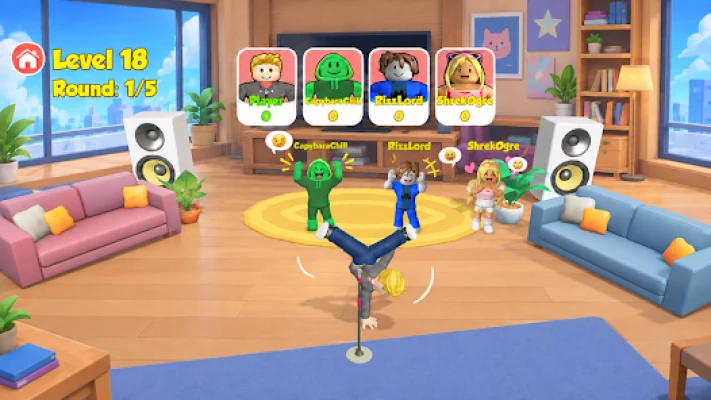
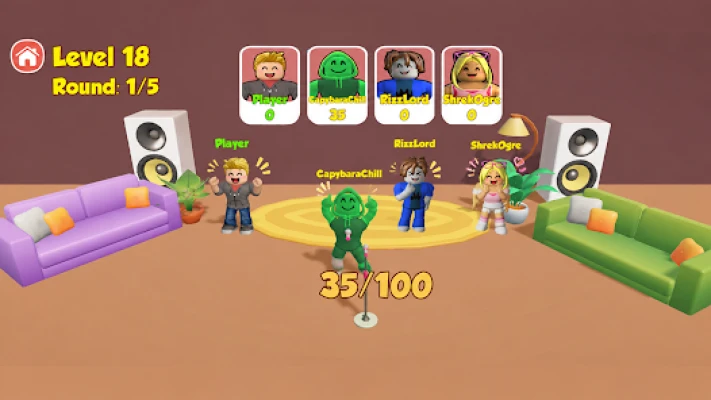
Each challenge presents a sound for you to imitate. You listen carefully, turn on your microphone, and attempt to reproduce the sound as accurately as possible. The game then evaluates your performance and provides a score, giving you a target to beat in the next round.
The concept is simple, but getting a high score can take practice. Matching the general sound is not always enough; your timing, vocal pitch, rhythm, and tone can influence the result.
The game also features different sound packs inspired by internet memes, anime, fictional characters, and animals. This variety makes it suitable for quick solo sessions or lighthearted challenges with friends.
Gameplay and Main Features
1. AI-Powered Voice Scoring
The central feature of MemeMix Challenge is its voice-scoring system. According to the game description, the AI evaluates elements such as pitch, rhythm, and tone.
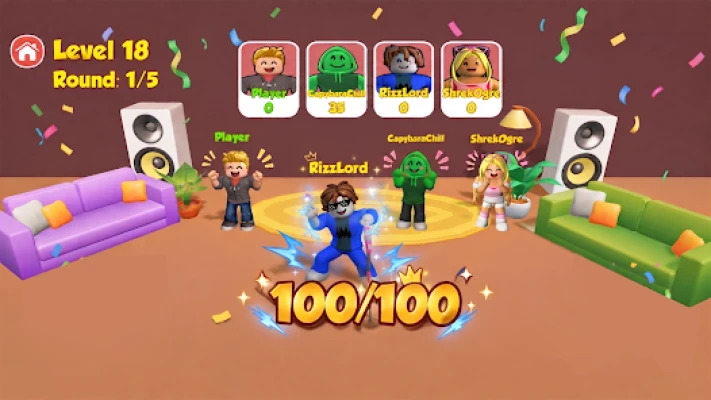
Your objective is to imitate the reference sound closely and aim for a score of 100 points. Every attempt becomes an opportunity to learn what works and improve your next performance.
The score is part of the challenge rather than a guarantee that the imitation will sound perfect to every listener. If a result seems unexpectedly low, try adjusting your delivery and repeating the challenge.
2. One Sound, One Challenge
Each round follows a straightforward sequence: listen to the sound, imitate it, receive your score, and move to the next challenge.
This format makes the game easy to understand without requiring lengthy tutorials. You can start playing quickly and concentrate on improving your voice imitation.
The short challenge structure also makes MemeMix convenient for brief breaks or casual sessions with friends.
3. Viral Meme Sound Pack
The Meme Vault features viral soundbites and funny laugh effects. These challenges are designed around recognizable internet-style humor and exaggerated sounds.
Some clips may be easier to imitate than others. A simple laugh or short sound effect gives you a clear target, while an unusual vocalization may require more experimentation.
4. Anime Voice Challenges
The Anime Edition includes iconic anime-style lines and character-inspired sounds.
These challenges are especially appealing to players who enjoy animated series and expressive character voices. Instead of simply repeating a phrase in your normal speaking voice, try to reproduce its energy, timing, and emotional delivery.
5. Character Voice Pack
Character Voices features cartoon figures and superhero-style quotes. These sounds encourage you to experiment with different vocal styles, from dramatic delivery to exaggerated character expressions.
You do not need professional voice-acting skills to enjoy the challenge. The fun comes from trying different approaches and seeing how closely you can reproduce the reference.
6. Animal Sound Challenges
The Animal Chaos pack includes unusual animal noises, such as screaming goats and crazy cats.
Animal sounds can be especially funny because they often require you to move beyond ordinary speech. Focus on the sound's rhythm, length, and pitch instead of trying to make every imitation sound like a human sentence.
7. Challenge Friends and Share the Fun
MemeMix is designed around entertaining voice challenges that can be enjoyed socially. You can take turns imitating sounds and compare scores with friends.
The experience works well as a casual party activity because even a failed attempt can be entertaining. A low score may become the funniest moment of the session.
The game description promotes challenging friends, but it should not be assumed that every version includes a full online multiplayer system or live matchmaking feature.
8. Simple Controls and Quick Sessions
The core controls are easy to understand: listen, speak into the microphone, and review the result.
The challenge comes from reproducing unfamiliar sounds accurately. This combination makes the game accessible to beginners while leaving room to improve through repeated attempts.
Complete MemeMix Challenge Strategy Guide
1. Listen to the Entire Reference Sound
Do not start imitating immediately if you have not understood the reference.
Listen for the sound's beginning, middle, and ending. Notice whether it contains a sudden change in pitch, a long vowel, a sharp consonant, a laugh, or a brief pause.
A clear understanding of the reference gives you a better starting point than simply making a similar noise.
2. Match the Pitch Before Adding Style
Pitch is one of the elements the game's description says its AI evaluates.
Try to identify whether the reference sound is high, low, or somewhere in between. Reproduce that general pitch before adding exaggerated emotion or character acting.
You do not have to force your voice into an uncomfortable range. Use a comfortable vocal range and focus on creating a closer imitation within it.
3. Pay Attention to Rhythm and Timing
A sound can have the correct pitch but still feel different if its timing is wrong.
Notice whether the reference is fast, slow, evenly paced, or broken into several distinct bursts. Try to copy those timing patterns.
For short meme sounds, even a small pause or change in rhythm can make the imitation more recognizable.
4. Copy the Tone and Energy
Tone is another important element mentioned in the game's description. A calm voice, an excited shout, and a dramatic character line can sound very different even when the words are identical.
If the reference is energetic, try a more animated delivery. If it sounds flat or robotic, avoid adding unnecessary emotion that changes the original character of the sound.
Focus on the style of the reference rather than automatically speaking louder.
5. Use Your First Attempt as a Baseline
Your first score gives you a starting point. Instead of repeating exactly the same imitation, consider what you could change.
For example, if the sound was too low, try a slightly higher pitch. If it felt rushed, slow down and pay attention to its rhythm.
Make one adjustment at a time so you can better understand which approach works.
6. Aim for Accuracy Rather Than Volume
Shouting does not automatically make an imitation more accurate. A loud performance may even make it harder to control your pitch and timing.
Speak or vocalize clearly at a comfortable volume. Increase your expressiveness only when it helps reproduce the reference.
You should not strain your throat or force an uncomfortable sound just to chase a higher score.
7. Approach Different Sound Packs Differently
Each sound category requires a slightly different technique.
Memes: Focus on recognizable timing, exaggerated expressions, and distinctive sound patterns.
Anime: Pay attention to emotional delivery, pitch changes, and the rhythm of the line.
Character voices: Notice the character's vocal style and the way words are emphasized.
Animals: Concentrate on pitch, repeated sounds, and the length of each vocalization.
These approaches are practice techniques, not guarantees of a particular score. The scoring system may respond differently to different sounds.
8. Keep Background Noise Low
A voice challenge depends on the microphone capturing your imitation clearly.
Play in a reasonably quiet place and keep your phone's microphone unobstructed. Avoid talking over music, television audio, or other people when recording a response.
If the game seems to misunderstand your voice, check microphone permissions and try again in a quieter environment.
9. Speak Naturally and Clearly
Do not rush through a challenge just to reach the next one. A controlled imitation can be easier to reproduce than a hurried performance.
For spoken lines, pronounce the important sounds clearly. For nonverbal effects, focus on the distinctive shape and rhythm of the noise.
Experiment with your delivery without forcing your voice into an uncomfortable position.
10. Learn From Unexpected Scores
A low score does not necessarily mean your imitation sounded bad to a person listening. Automated scoring may evaluate characteristics that are not obvious to you.
If you receive a result that seems unfair, repeat the sound, change your approach slightly, and compare the result. If the problem happens repeatedly across different challenges, check the microphone setup and consider whether the game is functioning correctly.
11. Choose a Comfortable Sound Pack First
Start with sounds you recognize or find easy to reproduce. Familiarity makes it easier to identify the correct pitch, rhythm, and expression.
Once you become comfortable with the scoring process, experiment with more difficult categories. This gives you a chance to develop your technique without becoming frustrated too early.
12. Treat the Game as Entertainment
The main appeal of MemeMix is its combination of imitation and comedy. Do not let a single score determine whether an attempt was enjoyable.
Take turns with friends, try different character styles, and laugh at unexpected results. The experience can be entertaining even when nobody achieves the maximum score.
Beginner's Guide: How to Play MemeMix Challenge
Step 1: Open the game. Explore the available challenges and sound packs.
Step 2: Allow microphone access. The game needs microphone access to evaluate your voice imitation. Review the permission prompt and grant access if you want to use the voice-scoring feature.
Step 3: Listen carefully. Pay attention to the reference sound before attempting to reproduce it.
Step 4: Imitate the sound. Try to match its pitch, rhythm, tone, and overall delivery.
Step 5: Review your score. Use the result as feedback for your next attempt.
Step 6: Experiment with another sound. Try memes, anime voices, character lines, or animal noises to discover which challenges you enjoy most.
Step 7: Practise and compare. Repeat difficult sounds and make small adjustments to your delivery.
Advanced Tips for Better Voice Scores
Break sounds into parts: For longer lines, pay attention to each phrase instead of treating the entire sound as one continuous performance.
Notice the strongest vocal feature: A reference may be recognizable because of its high pitch, unusual rhythm, or distinctive ending.
Avoid unnecessary improvisation: Adding extra words or sounds may make your imitation less similar to the original.
Repeat difficult challenges: Repetition helps you understand the sound, even if the scoring result is not always consistent.
Keep your microphone position consistent: Large changes in distance can affect how clearly your voice is captured.
Use a quiet environment: Clear audio can make it easier for the game to recognize your response.
Do not confuse loudness with accuracy: A controlled imitation is often easier to reproduce than an uncontrolled shout.
Take breaks when needed: Repeated vocal challenges should remain comfortable. Stop if your throat feels strained.
Common Mistakes to Avoid
Speaking Before Understanding the Sound
Starting too quickly can cause you to miss important details. Listen carefully before attempting your imitation.
Using Your Normal Voice for Every Challenge
Different sounds have different vocal characteristics. Experiment with pitch, rhythm, and expression to suit the reference.
Shouting to Get a Higher Score
Loudness alone does not guarantee a better result. Focus on similarity and control rather than volume.
Ignoring Microphone Conditions
Background noise, blocked microphones, or denied permissions can interfere with voice recognition. Check your setup if the game does not seem to capture your response correctly.
Expecting Every Score to Feel Perfectly Fair
The automated score may not always match your own judgment or the opinions of friends listening to the same imitation. Treat it as feedback rather than an absolute measure of voice-acting ability.
Repeating the Same Attempt Without Changes
If a sound repeatedly produces a low score, try changing one aspect of your performance. Adjusting pitch, timing, or tone gives you a more useful way to experiment.
Graphics, Controls, and Overall Experience
MemeMix Challenge: Funny Party focuses on voice interaction rather than complex movement, combat, or exploration. Its interface and short challenges are built around listening, imitating, and receiving feedback.
The sound packs provide variety, moving from familiar internet humor to anime-inspired lines, character voices, and unusual animal sounds. This makes the game suitable for players who enjoy experimenting with voices and creating funny moments.
Its biggest strength is accessibility. You do not need advanced gaming skills to participate, and each round has a clear objective.
However, the experience depends heavily on how well the voice-scoring system works for you. Some players may enjoy the feedback and challenge, while others may find the scoring inconsistent or the advertising disruptive.
Is MemeMix Challenge: Funny Party Worth Playing?
MemeMix Challenge: Funny Party is worth trying if you enjoy voice imitation, internet memes, anime characters, and casual party games.
The AI scoring system gives each sound a clear goal, while the different sound packs encourage you to experiment with new vocal styles. It can also create funny social moments when friends compare their attempts.
The main limitations are its reliance on microphone-based gameplay, the possibility of inconsistent scores, and the advertising included in the free version. Players who prefer traditional action gameplay or extensive progression systems may find it less engaging.
Pros
Easy-to-understand voice-based gameplay.
AI-powered scoring for imitation attempts.
Sound packs covering memes, anime, characters, and animals.
Short challenges suitable for casual sessions.
Can be entertaining with friends.
Encourages experimentation with pitch, rhythm, and tone.
Free to download.
Cons
Requires microphone access for voice challenges.
Automated scores may not always match expectations.
Advertising may interrupt gameplay.
Optional in-app purchases are available.
Replay value depends on how much you enjoy repeating voice challenges.
Players seeking traditional action or story-based gameplay may prefer another genre.
MemeMix Challenge: Funny Party Game Information
Game title: MemeMix Challenge: Funny Party
Developer: Amobear VN Game Global
Genre: Casual, voice mimicry, party game
Platform: Android, with Windows availability listed on Google Play
Price: Free to download
Monetization: Contains ads and offers in-app purchases
Google Play rating: Approximately 3.7 stars at the time of checking
Downloads: 1 million or more according to the Google Play listing
Content rating: Everyone
Main feature: AI-powered voice scoring
Sound categories: Memes, anime voices, character lines, and animal noises
Microphone: Required for voice imitation and scoring
Gameplay style: Short, repeatable voice challenges
Ratings, downloads, compatibility, and available sound packs can change as the game is updated. Check the current store listing for the latest details.
Frequently Asked Questions
What is MemeMix Challenge: Funny Party?
It is a casual voice-mimic game in which you imitate sounds and receive an AI-generated score based on aspects of your performance.
Who developed MemeMix Challenge: Funny Party?
The game was developed by Amobear VN Game Global.
Is MemeMix Challenge free to play?
Yes. It is free to download, with advertisements and optional in-app purchases.
How does the AI scoring system work?
The game description says its AI evaluates pitch, rhythm, and tone. Your objective is to reproduce the reference sound accurately and aim for a score of 100.
What sound packs are available?
The listed categories include Anime Edition, Meme Vault, Character Voices, and Animal Chaos. These cover anime-inspired lines, viral memes, cartoon and superhero-style voices, and animal noises.
Does MemeMix Challenge require a microphone?
Yes. Microphone access is needed to record or capture your voice for the imitation challenges.
Why did I receive a low score even though my imitation sounded correct?
The automated scoring system may evaluate aspects of the sound that are not obvious to a human listener. Try matching the reference's pitch and rhythm more closely, reduce background noise, and check that the microphone is working properly.
Can I play MemeMix Challenge with friends?
The game promotes challenging friends and sharing funny voice moments. You can take turns attempting sounds and comparing results, although specific multiplayer features may depend on the current version.
Is MemeMix Challenge suitable for children?
Google Play lists the game with an Everyone content rating. Parents should still consider microphone permissions, advertising, in-app purchases, and the game's current privacy information before allowing children to play.
Does MemeMix Challenge contain advertisements?
Yes. The Google Play listing states that the game contains ads and offers in-app purchases.
How can I improve my voice score?
Listen to the complete reference, practise matching its pitch and timing, reduce background noise, and change one aspect of your performance at a time.
Does the game collect voice recordings?
The Google Play listing's data safety section states that the developer declares no data collected and no data shared with third parties. Data practices can change, and this declaration does not independently verify every technical detail of how microphone audio is processed. Review the current privacy information and permission settings if you have concerns.
Final Verdict
MemeMix Challenge: Funny Party puts voice imitation at the center of a simple, humorous gaming experience. Its AI scoring system gives players a reason to repeat challenges, while its meme, anime, character, and animal sound packs provide different ways to experiment.
The best way to approach the game is to listen carefully, imitate the reference rather than simply shouting, and use each score as a chance to improve. Playing with friends can make even unsuccessful attempts entertaining.
For players who enjoy funny sounds, character voices, and casual party challenges, MemeMix Challenge offers an accessible alternative to conventional mobile games. Its appeal ultimately depends on whether you enjoy performing with your voice and experimenting with the game's scoring system.
Rate the Game
User Reviews















Popular Games



















 Android
 iOS
iOS Windows
 Xbox
Xbox