
Latest Version
October 13, 2026
Supercent, Inc.
Casual
0
com.peb.targetsmash
Report a Problem
More About :game
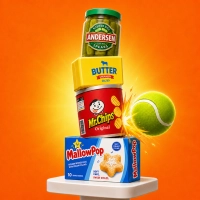
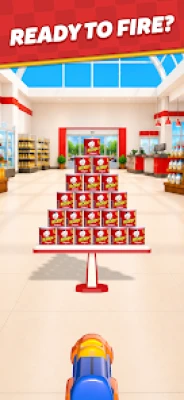
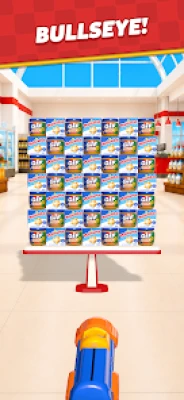
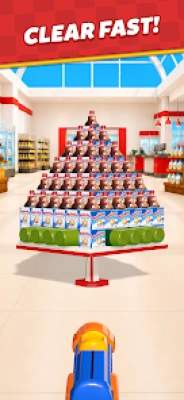
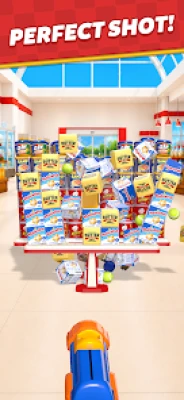
Target Smash! turns ordinary supermarket shelves into physics-based destruction puzzles. Your objective is to knock down stacks of products by launching balls at carefully chosen targets. Cans, boxes, bottles, jars, crates, and other objects react to each impact, creating opportunities for spectacular collapses.
Although the controls are easy to understand, completing a stage can require more thought than simply throwing a ball at the biggest stack. Objects support one another in different ways, and hitting the right section can cause a chain reaction that brings down much of the display at once.
The game is a good choice for players who enjoy casual mobile games, physics puzzles, destruction challenges, and short levels that reward careful aiming.
Target Smash! Game Information
Game title: Target Smash!
Developer: Supercent, Inc.
Genre: Casual, physics puzzle, destruction
Platform: Android, with Windows availability listed on Google Play
Gameplay style: Single-player-style aiming and destruction challenges
Main objective: Knock down supermarket displays and clear stages
Controls: Aim and throw or launch balls at targets
Visual style: Colorful 3D environments featuring stacked store products
Monetization: Contains ads and in-app purchases
Content rating: Everyone
Best for: Casual players, puzzle fans, and anyone who enjoys satisfying physics-based gameplay
The game is easy to pick up for a quick session, while later puzzles encourage more deliberate aiming and an understanding of how stacked objects interact.
Main Features of Target Smash!
Physics-Based Destruction
The central attraction is the way objects fall, bounce, roll, and scatter after being hit. A well-placed shot can destabilize several connected objects, allowing a single impact to produce a much larger collapse.
Aim, Shoot, and Smash
The basic gameplay loop is straightforward. Study the display, choose a target, line up your shot, and watch the result. The challenge comes from deciding where the ball will have the greatest effect.
Supermarket Display Puzzles
Levels feature stacks of cans, boxes, bottles, jars, crates, and other products. Different arrangements create different problems, so the best approach depends on how the objects are positioned.
Chain Reactions
Objects can knock into neighboring items as they fall. Learning to exploit these collisions is an important part of clearing difficult stages efficiently.
Short, Accessible Levels
Target Smash! is designed around bite-sized challenges, making it suitable for short breaks. Its simple premise allows players to start quickly without learning complicated controls.
New Challenges and Content
The Google Play listing has described additional levels, new objects, and limited-time events, including Temple of the Month and Streak Up. Available content may change with updates.
How to Play Target Smash!
The goal is to knock down the display by hitting an effective target with a ball.
Step 1: Study the arrangement. Look at the height, width, and shape of the stack. Notice which objects support other items and which ones appear exposed.
Step 2: Choose your target. Rather than automatically aiming at the center, look for an object whose movement could destabilize the rest of the structure.
Step 3: Line up your shot. Consider the direction of the impact and how the ball will contact the target. A direct hit is not always the most effective hit.
Step 4: Watch the collision. Observe which objects fall, which remain standing, and how the display reacts. The result can reveal the structure's weak points.
Step 5: Adjust your next attempt. If the stack only wobbles or a section remains standing, change your target or angle instead of repeating the same shot without a reason.
Step 6: Clear the stage. Continue applying what you learn until the required display is knocked down and the level is completed.
Full Strategy Guide for Target Smash!
1. Identify the Weakest Part of the Stack
The most important skill in Target Smash! is recognizing where a display is vulnerable. A tall stack may look like the obvious target, but the most useful point could be near its base or at a joint where several objects meet.
Look for narrow support areas, uneven stacks, exposed objects, and sections carrying the weight of items above them. Removing or displacing one of these objects may affect several others.
The best target is not necessarily the largest object. It is the object whose movement is likely to cause the greatest disruption.
2. Think About the Whole Structure
Before shooting, consider how the products support one another. A tightly packed group may behave differently from a narrow tower or a display with several separate sections.
Ask yourself three questions:
Which objects appear to hold the structure together?
Which direction might the stack fall if one support moves?
Can one impact affect more than one section?
This simple mental check can help you make better decisions without wasting attempts.
3. Aim for Chain Reactions
Chain reactions are one of the most satisfying parts of the game. Instead of trying to hit every product individually, look for a shot that starts a sequence of collisions.
For example, knocking a lower object sideways might cause the items above it to fall into a neighboring group. Those objects may then push another section over.
When studying a level, look for connected groups that could fall into one another. A good shot can turn a small initial impact into a much larger collapse.
4. Avoid Random Shots
Throwing balls without studying the display may occasionally work, but it is not a reliable strategy for harder levels.
Random shots make it difficult to understand why an attempt succeeded or failed. Deliberate shots give you useful information about the structure and help you make a better decision on the next attempt.
If a shot does not work, identify what happened. Did the target move without falling? Did the ball hit the wrong part? Did the impact affect only one section? Use that information to refine your next shot.
5. Pay Attention to Impact Direction
The direction of a collision can matter as much as the object you hit. A shot that pushes an object toward another unstable section may create a useful chain reaction, while a different angle may simply move the target away from the rest of the stack.
When the aiming controls allow it, experiment with different angles. Think about where the object will move after impact rather than focusing only on whether the ball reaches the target.
6. Treat Every Level as a New Puzzle
Do not assume that a strategy that worked on one display will work on the next. Different arrangements can have different support points, spacing, and collision paths.
A compact stack may respond well to a shot near its lower section, while a wide display may require you to target a connection between two groups. The right solution depends on the actual layout.
Study the arrangement first, then choose your strategy.
7. Learn from Failed Attempts
A failed attempt is useful when it teaches you something. If the display moves but does not collapse, you have learned that the selected point may not be weak enough or that the impact direction was ineffective.
Make one meaningful adjustment at a time. Changing the target and angle together can make it harder to determine what improved the result.
Over time, this approach helps you recognize patterns in the game's physics puzzles.
8. Focus on Efficient Clears
When you can choose between several possible targets, prefer the one that has the best chance of bringing down multiple objects at once.
Efficiency comes from understanding the layout, not simply shooting faster. A carefully planned shot may achieve more than several poorly aimed attempts.
However, do not assume every stage has a one-shot solution. Some displays may require a different approach depending on the arrangement and the available mechanics.
9. Recognize Special Objects and Obstacles
The game may introduce new objects or mechanics as updates and stages progress. Pay attention to anything that behaves differently from ordinary boxes, cans, or bottles.
If an object appears to affect movement or prevent a collapse, test how it responds to an impact. Learning its role can help you work out a more effective solution.
Avoid assuming that every new object has the same physical properties as familiar products.
10. Stay Patient on Difficult Stages
Some displays are harder to collapse because their objects are packed tightly or arranged in a stable formation. When a level becomes frustrating, take a moment to study it again.
Look at the areas you have not targeted, reconsider the direction of the expected fall, and try a different approach. A short pause can be more productive than repeatedly firing at the same spot.
The key is to combine observation with experimentation rather than relying entirely on luck.
Advanced Target Smash! Tips and Tricks
Look below the obvious target: A lower object may support more of the display than an exposed item near the top.
Search for connected sections: A shot near the boundary between two groups may help one section knock the other down.
Consider where objects will land: The direction of falling products can determine whether a chain reaction continues.
Do not confuse movement with progress: A display that shakes or shifts has not necessarily been cleared.
Use each attempt as a test: Notice exactly what changed after the collision.
Adapt to new layouts: Reassess each stage instead of repeating a favorite shot automatically.
Watch for new mechanics: Added objects and obstacles may require different tactics.
Prioritize precision over speed: A thoughtful shot is often more useful than an immediate one.
Common Mistakes to Avoid
Shooting at the Biggest Stack
The largest section may look impressive, but its most visible area may not be its weakest point. Search for the support structure before choosing your target.
Ignoring the Lower Objects
Items near the bottom can help support an entire display. If the arrangement allows it, disrupting a lower support may create a larger collapse than hitting an isolated object above it.
Repeating the Same Failed Shot
If an approach produces the same result several times, change something. Try a different target or direction and evaluate the new outcome.
Expecting Every Object to React Identically
Different shapes and arrangements can lead to different collision outcomes. Observe what happens instead of assuming all products will move in the same way.
Rushing Through Difficult Levels
Fast decisions can be entertaining, but complicated stacks often reward a few seconds of observation before the next shot.
Is Target Smash! Worth Playing?
Target Smash! is worth considering if you enjoy casual games built around simple controls, physical interactions, and satisfying destruction. Its supermarket theme gives the puzzles a recognizable setting, while the changing arrangements provide opportunities to experiment with different shots.
The main appeal is the balance between relaxation and problem-solving. You do not need to learn an elaborate control system, but finding the most effective point of impact can take thought.
The experience may be less appealing to players who prefer deep stories, extensive character development, competitive multiplayer, or complex progression systems. Players sensitive to advertisements should also be aware that the Google Play listing states that the game contains ads and in-app purchases.
Overall, it is best suited to players looking for a light physics puzzle game that rewards observation, precision, and clever use of chain reactions.
Frequently Asked Questions
What is Target Smash!?
Target Smash! is a casual physics puzzle game developed by Supercent, Inc. Players aim and launch balls at supermarket displays to knock down stacked products and complete levels.
How do you win in Target Smash!?
Study the display, identify a vulnerable target, and aim for an impact that brings down as many connected objects as possible. Adapt your approach if the first shot does not clear the stage.
Is Target Smash! easy to play?
The basic controls are simple to understand. However, some stages require careful aiming and an understanding of how objects support one another.
Does Target Smash! have physics-based gameplay?
Yes. Falling, bouncing, and colliding objects are central to the experience. Players use these interactions to create chain reactions and knock down displays.
Is Target Smash! free?
The Google Play listing offers the game with advertisements and in-app purchases. The availability and pricing of optional purchases may vary.
Can I play Target Smash! on a PC?
Google Play lists Android and Windows availability, with Windows access associated with Intel technology. Check the availability and compatibility details for your device before playing.
Does Target Smash! receive updates?
The game's listing has included additional levels, new objects, and events. The exact content available can change with future updates.
What is the best strategy for difficult levels?
Start by studying the arrangement and looking for weak points. Aim at a target that can destabilize connected objects, observe the result, and adjust your next attempt based on what happened.
Is Target Smash! suitable for children?
Google Play lists the game with an Everyone content rating. Parents should still review the current listing and consider its advertisements and in-app purchases.
Final Verdict
Target Smash! offers a straightforward but engaging take on physics puzzle games. Its central challenge is not simply knocking products over; it is discovering how a single well-placed shot can affect an entire display.
For the best results, examine each stack, identify its weak points, consider the direction of falling objects, and learn from every attempt. Whether you are playing for a quick break or trying to master increasingly difficult stages, thoughtful aiming is the key to getting more out of Target Smash!.
Rate the Game
User Reviews













Popular Games



















 Android
 iOS
iOS Windows
 Xbox
Xbox