
Latest Version
October 04, 2026
Netmarble Corporation
Casual
iOS
0
Report a Problem
More About :game
Unlike a simple merge puzzle, the game combines resource management, island customization, creature collection, exploration and strategic merging. Your decisions about space, resources and merge chains can make a major difference as the island becomes larger and more complicated.
What Is Merge Fantasy Island?
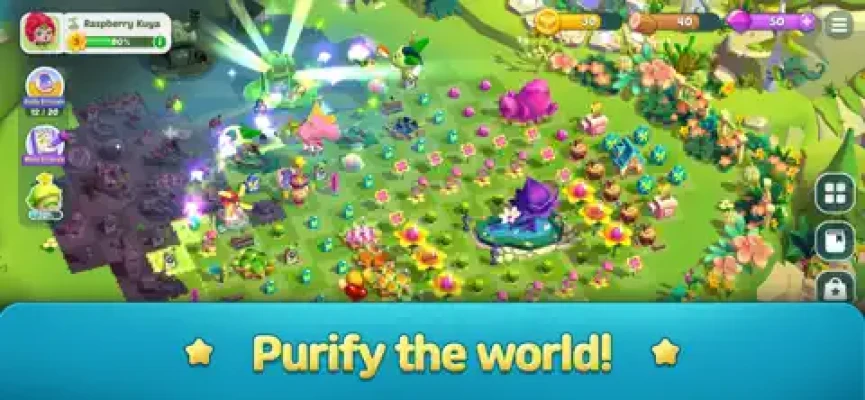
In Merge Fantasy Island, you become the new Spirit Keeper, tasked with restoring an island that has been affected by pollution.
The basic idea is easy to understand: collect objects, place matching items together and merge them into higher-level resources.
But the island gradually becomes more demanding.
You need to decide what to merge, what to keep, where to place objects and when to spend resources. At the same time, you collect different Kuya, the island's spirits, each with their own personalities and useful roles.
The result is a combination of:
Merge puzzles
Island restoration
Resource management
Creature collection
Exploration
Decoration
Adventure puzzles
Long-term progression
Merge Fantasy Island Gameplay Overview
The main island acts as your central workspace.
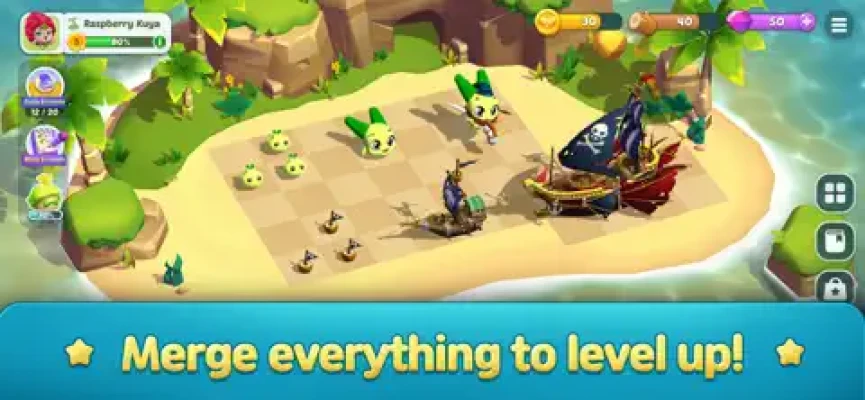
You'll gather resources and combine matching objects to create better versions. Some of these resources eventually become useful structures, decorations or other island improvements.
The official description specifically gives examples such as spores becoming flowers and logs becoming houses, illustrating how merging gradually transforms the island.
The important part is that your island has limited space.
That makes organization almost as important as the merging itself.
A player who merges everything immediately can quickly end up with a crowded board and no room for useful resources.
How the Merge System Works
The basic merge loop is straightforward:
Collect → Place → Merge → Upgrade → Expand → Repeat
Matching objects can be combined to produce a higher-level item.
For example, a basic resource may eventually become a more valuable version after several merges.
The temptation is to merge anything that can be merged.
Don't.
Good merge-game strategy is about creating useful chains while preserving enough flexibility to react to new resources.
The 5-Merge Strategy
One of the most useful habits in a merge game is learning when to make a three-item merge and when to wait for five.
If you have enough identical objects available, waiting for a larger merge can provide better value than immediately combining three.
Players have specifically praised Merge Fantasy Island's merge mechanics, including its one-click merge-all functionality.
Beginner Rule
If you're not under pressure:
Don't automatically merge the first three matching items you see.
Look around the board first.
If two more copies are close to appearing, keeping the existing items together may produce a more efficient chain.
When Three-Merging Makes Sense
A smaller merge can still be useful when:
You need the upgraded item immediately.
Your board is becoming crowded.
The item is not difficult to obtain.
You're trying to complete a specific objective.
Waiting would prevent other important merges.
The best strategy isn't "always five-merge."
It's knowing when the extra efficiency is worth the space and time.
Island Organization Strategy
Island space becomes one of the biggest strategic issues as your collection grows.
A messy board can make simple tasks frustrating.
Try dividing your island into functional areas.
Resource Area
Keep frequently merged resources together.
Production Area
Place related objects near each other so new materials are easy to identify.
Kuya Area
Keep your Kuya and their related activities organized so they don't constantly obstruct important resources.
High-Level Items
Reserve a section for valuable objects that you don't want accidentally merged or sold.
This simple organization can save a surprising amount of time.
How to Manage Island Space
Space is a resource.
Don't treat empty tiles as wasted space.
Empty tiles give you room to:
Receive new resources
Arrange merge chains
Separate different resource types
Prepare five-item merges
Move large objects
Complete objectives
One of the common complaints in player reviews is that creatures and large objects can sometimes make it difficult to select items around them.
Keeping your board organized therefore isn't just cosmetic.
It directly improves usability.
Kuya: The Spirits of the Island
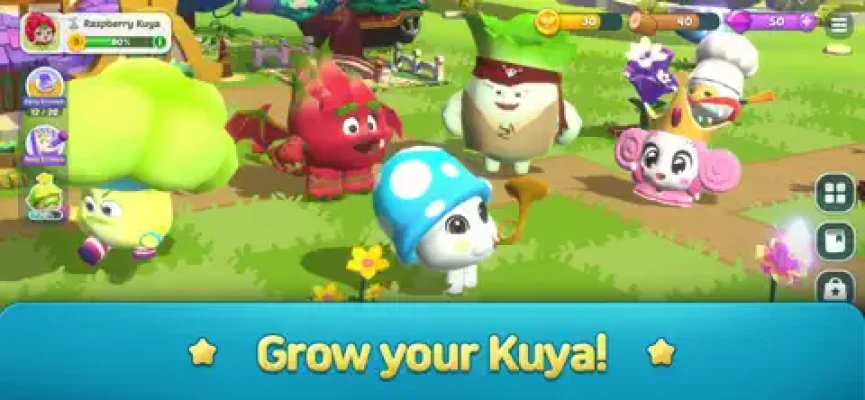
The Kuya are one of Merge Fantasy Island's defining features.
They are the spirits that inhabit your island, and the game allows you to collect different Kuya with different personalities.
Don't think of them as simply decorative creatures.
They are part of the game's progression and island-management systems.
As your collection grows, learn which Kuya are most useful for the activities you're currently working on.
Kuya Management Tips
Keep Your Active Area Clear
Large Kuya can sometimes get in the way when you're trying to select objects.
Move them away from important merge chains when necessary.
Don't Focus Only on Rarity
A rare Kuya isn't automatically more useful for every situation.
Consider what you are trying to accomplish.
Use Kuya Strategically
Some Kuya-related functions can make island management considerably easier.
Player feedback has highlighted tools such as the magnet effect and the Cleaning Kuya, which can help organize or merge available objects.
Cleaning Kuya and Island Management
The Cleaning Kuya is particularly interesting for players who allow their islands to become crowded.
The feature was added during an earlier update and was specifically designed to help organize the island.
If your board is full of scattered objects, tools that consolidate or organize resources can save considerable manual effort.
However, don't use organizational tools without thinking.
Before cleaning or mass-merging, check whether you are saving specific items for an upcoming objective.
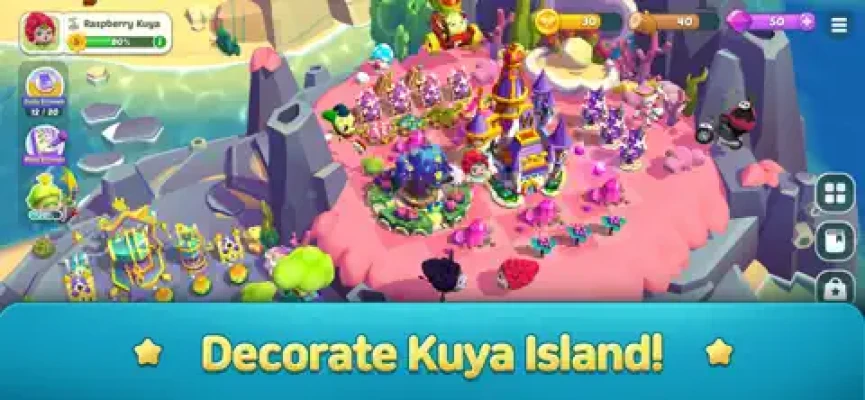
Building Your Tropical Paradise
Restoring the island isn't only about progression.
You can also customize it.
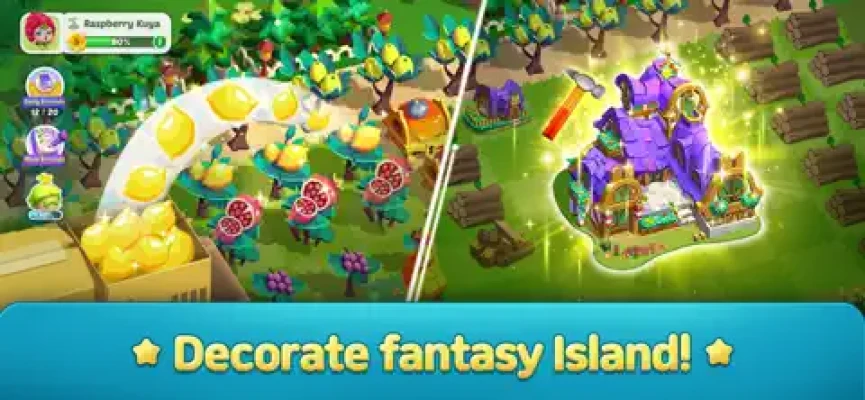
The game allows you to create an island filled with flowers and buildings, while different resources can transform into structures and decorations.
This gives the game two different appeals:
Optimization:
How efficiently can you progress?
Creativity:
How attractive can you make your island?
The best layouts can combine both.
Resource Management
Resources are the foundation of your island.
Avoid spending everything immediately.
Instead, keep track of:
Basic merge materials
Higher-level resources
Coins
Gems
Wood
Event resources
Special materials
Resources needed for specific objectives
Some player reviews have criticized daily collection limits on certain storage resources such as wood and coins.
That makes resource planning especially important.
Gems: Spend Carefully
Premium currency is usually more valuable than ordinary resources.
Before spending gems, ask:
Will this purchase permanently improve my progression, or am I simply saving a few minutes?
Good reasons to spend premium currency can include important progression opportunities or purchases that provide lasting value.
Poor reasons include rushing ordinary actions that you could complete naturally.
For a free-to-play player, saving premium currency for meaningful opportunities is usually more efficient.
Adventure Islands
The main island isn't the entire game.
Adventure Islands introduce puzzle-style challenges where you need to use different strategies to clear the island.
These stages change the way you think about merging.
Instead of simply improving your permanent island, you need to consider the specific objectives and available resources in the challenge.
Adventure Island Strategy
Before making your first merge, look at the entire stage.
Ask:
What is blocking the area?
Which resources are immediately available?
What objects can be combined?
Which merge will open the most space?
Which resources should be preserved?
What appears to be the final objective?
Don't make your first move automatically.
Take a few seconds to understand the puzzle.
That small habit can prevent unnecessary merges.
Puzzle-Solving Tips
Adventure stages reward planning more than speed.
Open the Board Gradually
Don't waste resources simply because they're available.
Look for Chain Reactions
One merge can create an item that allows another merge.
Think several moves ahead.
Preserve Rare Resources
If a resource appears difficult to replace, don't immediately consume it.
Work Backward
If the objective requires a high-level item, consider what lower-level components you'll need to create it.
This is one of the strongest habits you can develop in merge puzzle games.
Mystery Island
Earlier content updates introduced Mystery Island, a special area where players could search for hidden treasures and obtain special resources and Kuya.
The event-style structure makes Mystery Island different from ordinary island development.
When temporary content is available, prioritize objectives that provide unique rewards rather than spending all your resources simply for small short-term gains.
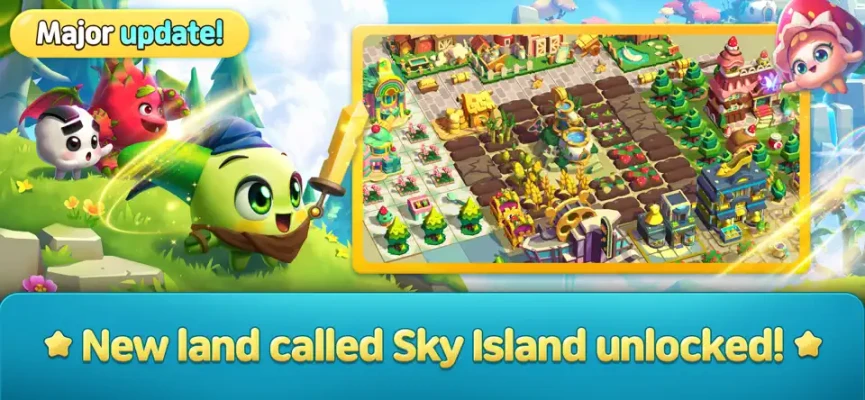
Sky Island
A major update increased the game's maximum level and introduced Sky Island, along with new adventures. The update also required players to clear Special Errands to receive rewards connected with unlocking the new land.
This illustrates an important progression principle:
New areas are often tied to completing specific objectives rather than simply reaching a level.
If an area isn't available yet, check your special missions and progression requirements before assuming you need more raw experience.
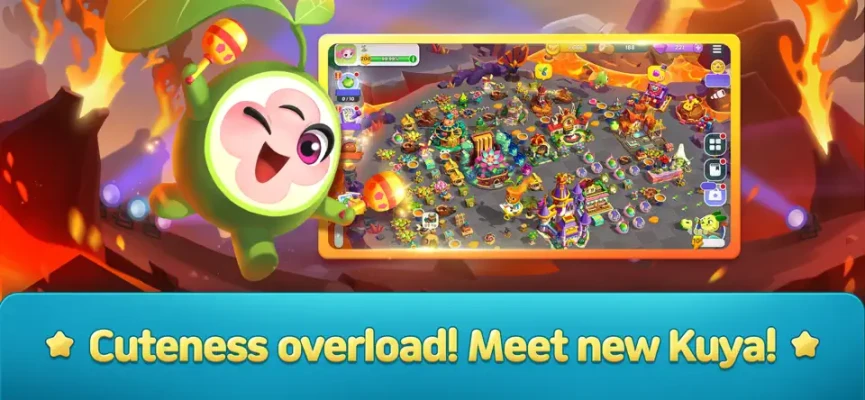
Volcanic Island
Earlier content also introduced Volcanic Island, where players were tasked with cooling down land affected by a volcanic eruption and restoring its natural beauty. That update also added new Kuya, resources, ruins and increased the maximum level to 200 at the time.
This type of themed island gives the game more variety than simply expanding the same tropical landscape.
Train Station and Special Content
The game's earlier updates also introduced new resources and content such as the Train Station, along with a new Tulip Kuya and a Kuya 4-Merge Event.
Because Merge Fantasy Island has accumulated multiple content systems, new players should concentrate on the core island progression first instead of trying to understand every historical feature simultaneously.
Card Collection and Special Events
The game has also featured a Card Collection system and limited-time events.
These systems add another layer beyond the basic merge board.
When participating in an event, determine its reward structure first.
Don't spend valuable permanent resources simply because an event introduces a new collectible.
Sanrio Collaboration
One of the game's previous major collaborations added Sanrio-themed characters and decorations, including Hello Kitty, Cinnamoroll and Pompompurin, along with exclusive resources and tiles.
This demonstrates how Merge Fantasy Island has used limited-time collaborations to expand its collection and decoration systems.
Beginner Progression Guide
If you're starting from the beginning, use this progression path.
Step 1: Learn the Basic Merge Chain
Don't worry about maximizing every resource immediately.
Learn what combines with what.
Step 2: Keep the Island Organized
Start separating resources early.
This prevents clutter later.
Step 3: Build Efficient Merge Chains
Use five merges when practical and three merges when you need immediate progress.
Step 4: Develop Your Kuya Collection
Learn what your available Kuya can contribute to your island.
Step 5: Complete Objectives
Don't ignore missions simply because free merging feels more enjoyable.
Objectives often help guide progression.
Step 6: Explore Adventure Islands
Once you're comfortable with the main island, begin learning the game's puzzle-focused challenges.
Step 7: Save Premium Resources
Don't waste gems on every convenience feature.
Step 8: Expand Strategically
When new land becomes available, don't immediately fill every new tile.
Leave room for future merge chains.
Advanced Merge Strategy
Experienced players should start thinking about board economy.
Every object occupies a tile.
Every tile has an opportunity cost.
Suppose you have three low-level resources and one valuable high-level object.
The low-level resources may look insignificant, but keeping them could eventually create another high-level item.
This means the correct decision isn't always the visually obvious one.
Ask Three Questions Before Merging
What will I receive?
What will I lose?
What could this resource become later?
That simple process dramatically improves decision-making.
The Biggest Merge Mistake
The biggest mistake is merging without a goal.
You see three matching objects.
You merge them.
Then another item appears.
You merge that.
Five minutes later your island is full of random high-level objects that don't help your current objective.
Instead, establish a target.
For example:
"I need to produce this building."
Then work backward.
What materials create it?
What creates those materials?
Which resources should remain untouched?
This approach makes the board much easier to manage.
Energy and Stamina Management
Limited stamina or energy can change how efficiently you progress, especially during special activities.
Some player feedback has criticized stamina limits and the cost of refilling it with gems.
The best response is to avoid wasting stamina on low-value actions.
Prioritize:
Objectives
High-value resources
Important event rewards
Progression-blocking activities
Optional tasks
Don't spend limited energy simply because you have it.
Common Mistakes to Avoid
Merging Everything Immediately
This destroys flexibility.
Filling Every Empty Tile
Empty space is valuable.
Spending Gems Without a Plan
Premium currency disappears quickly.
Ignoring Objectives
Objectives often determine what you should be doing next.
Forgetting Adventure Islands
They provide a different strategic challenge from the main island.
Letting Kuya Block Your Board
Move large creatures away from important merge areas.
Saving Too Many Low-Level Items
Organization doesn't mean keeping everything forever.
If an item has no realistic future purpose, consider whether it is consuming valuable space.
Treating Decoration as Progress
A beautiful island isn't necessarily an efficient island.
Find a balance between appearance and functionality.
Daily Routine for Efficient Progress
A practical daily routine can look like this:
1. Check Your Island
Look for completed resources and available merges.
2. Complete Important Objectives
Prioritize progression-related tasks.
3. Review Your Storage
Make sure you're not wasting resources because storage is full.
4. Perform Planned Merges
Use your prepared merge chains rather than randomly combining objects.
5. Check Adventure Content
Complete useful puzzle stages when available.
6. Review Events
Temporary activities may offer unique rewards.
7. Reorganize the Island
Finish the session with a clean board.
This makes your next session much faster.
Is Merge Fantasy Island Free to Play?
Yes. Merge Fantasy Island is free to download and includes optional in-app purchases. The US App Store currently lists the game as free with in-app purchases.
The game includes purchases for items such as gems, starter packs, island-related packs and other premium offerings.
You can therefore approach the game as a free player, but premium currency and paid packs can provide additional convenience or resources.
Graphics and Atmosphere
The game's visual identity is one of its strongest features.
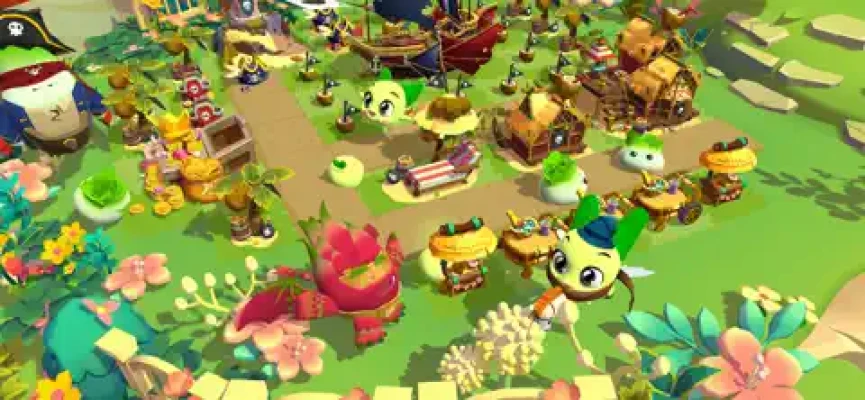
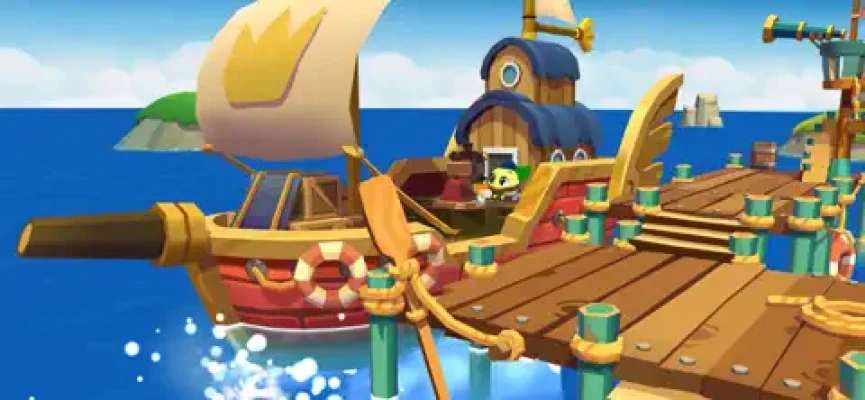
Instead of presenting the merge board as a purely abstract puzzle, Merge Fantasy Island gives the player a colorful tropical environment that gradually changes as the island is restored.
Flowers, buildings, creatures and decorations make the results of progression visible.
That gives the merging system a stronger sense of purpose:
You're not simply combining objects—you are rebuilding an island.
Honest Pros and Cons
Pros
Relaxing merge gameplay
Attractive fantasy island setting
Island customization
Cute Kuya creatures
Resource-management depth
Adventure Island puzzles
Large collection of mergeable objects
Multiple areas and themed content
Strategic rather than purely casual merging
Simple mechanics that become deeper over time
Cons
Island clutter can become frustrating
Limited space requires constant organization
Energy/stamina restrictions can slow some activities
Premium currency can be tempting to spend
Some progression requirements aren't always obvious
Players who dislike repetitive merging may find the later game slow
The public iOS version history appears dated, with Apple's listing showing version 3.0.14 from July 2023, despite the Android listing showing a March 2026 update.
Who Should Play Merge Fantasy Island?
This game is a good choice if you enjoy:
Merge games
Island-building games
Relaxing casual games
Resource management
Collection mechanics
Cute fantasy creatures
Puzzle games
Decorating and customization
Long-term progression
It may be less suitable if you want:
Fast action
Competitive multiplayer
Short arcade sessions
Constantly changing gameplay
A game with no energy or resource restrictions
Frequently Asked Questions
What is Merge Fantasy Island?
Merge Fantasy Island is a casual merge and island-building game from Netmarble where players restore a polluted island, merge resources, collect Kuya and complete adventure puzzles.
What are Kuya in Merge Fantasy Island?
Kuya are the spirits that inhabit the island. Players can collect different Kuya with unique personalities and use the game's creature systems as part of their island progression.
Can you decorate your island?
Yes. Island customization is one of the game's main features, allowing players to develop an island filled with flowers, buildings and decorations.
Does Merge Fantasy Island have puzzles?
Yes. Adventure Islands introduce puzzle-style challenges that require different strategies to clear.
Is Merge Fantasy Island free?
Yes. It is free to play with optional in-app purchases.
Is Merge Fantasy Island available on iPhone and iPad?
Yes. The App Store listing supports both iPhone and iPad and requires iOS 11.0 or later.
Does Merge Fantasy Island have different islands?
Yes. The game has introduced additional themed areas over its development, including Volcanic Island and Sky Island.
What is the best merge strategy?
Avoid merging automatically. When possible, preserve five matching objects for a more efficient merge, but use three-item merges when you need immediate progress or additional board space.
How do I keep my island organized?
Group similar resources together, keep valuable items in a protected area, leave open tiles for new resources and move large Kuya away from important merge chains.
Final Verdict
Merge Fantasy Island takes the familiar merge-game formula and gives it a stronger sense of progression by placing the puzzle board inside a growing fantasy island.
The most satisfying part is watching basic resources transform into increasingly useful objects while the island gradually becomes more developed.
Its Kuya collection, island customization, Adventure Islands and resource-management mechanics give it more depth than a basic three-match-style casual game.
The biggest challenge is managing space.
Once your island becomes crowded, careless merging can create a chain of problems. Players who keep their board organized, plan larger merge chains and protect their premium resources will generally have a smoother experience.
If you enjoy merge games, island-building, collection systems and relaxed puzzle progression, Merge Fantasy Island is an appealing choice with plenty of systems to explore.
Rate the Game
User Reviews





Popular Games












 Android
 iOS
iOS Windows
 Xbox
Xbox