

Latest Version
Visit PageMore About :game
Smash Down: Blast It Away! turns cannon firing into a series of compact destruction challenges. Instead of relying on fast reactions alone, the game encourages players to study the arrangement of objects, identify vulnerable points, and decide how to bring down a structure with an effective shot.
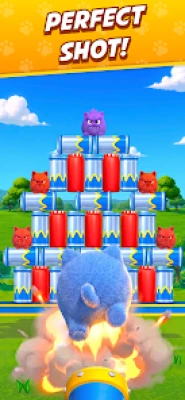
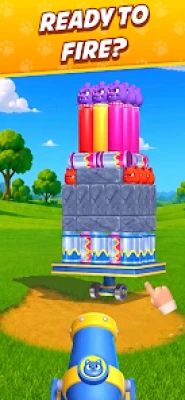
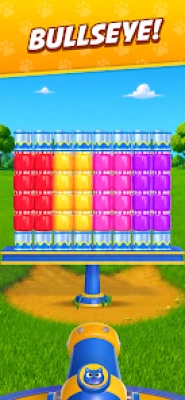
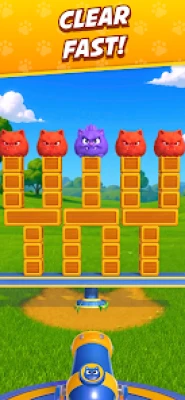
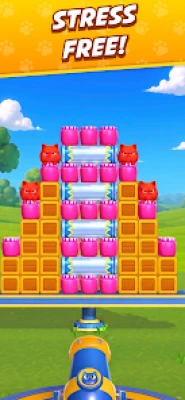
Developed by Supercent, the game features colorful three-dimensional arenas filled with breakable objects, including jars, crates, stones, and towers. Each stage presents a different arrangement to destroy, making aim and shot selection important parts of the experience.
The basic concept is easy to understand: line up the cannon, adjust the angle and power, and fire at the target. The real challenge comes from learning which object to hit first. A shot aimed at a supporting block may cause several objects to fall, while a direct hit on a less important target might leave most of the structure standing.
Smash Down is designed for players who enjoy casual arcade games, destruction simulators, and physics-based puzzles. It can be played in short sessions, but more difficult arrangements reward patience and careful experimentation.
Gameplay and Main Features
Cannon Aiming and Shooting
The cannon is the center of the gameplay. Before firing, consider the target's position, the height of the structure, and the direction from which the projectile will approach.
Aiming is more than simply pointing at the largest object. The most useful target may be a small block holding up a larger section. Finding that weak point can make the difference between clearing a stage efficiently and needing several attempts.
Physics-Based Destruction
Objects react to cannon impacts and collisions. Jars can shatter, blocks can break, and unstable structures may collapse when their support is removed. Watching how objects interact is part of the puzzle.
The goal is to make each shot count by using the arrangement of the level rather than firing without a plan.
Chain Reactions
One of the most satisfying parts of Smash Down is creating a chain reaction. A well-placed projectile can knock one object into another, causing a sequence of collisions that brings down a large section of the arena.
Chain reactions are especially useful when a structure contains several connected pieces. Instead of targeting every object individually, look for a single impact that can start a wider collapse.
Progressively Challenging Levels
The game offers many stages with different object arrangements and obstacles. As you progress, you may need to pay closer attention to the angle of attack, the structure's balance, and the order in which targets should be hit.
The best approach is to treat each new level as a separate puzzle rather than relying on one shooting pattern for every situation.
Colorful 3D Environments
Smash Down uses bright visuals, animated effects, and three-dimensional arenas to make destruction easy to follow. The visual feedback helps players see where a shot lands and how the resulting collisions affect the structure.
Simple, Accessible Controls
The controls are designed to be easy to learn. Players can focus on aiming, choosing a suitable shot, and observing the results instead of mastering a complicated control system.
The simplicity makes the game suitable for casual play, while the physics challenges provide room to improve.
How to Play Smash Down: Blast It Away!
Step 1: Study the Arena
Before shooting, take a moment to examine the arrangement. Identify the main structure, the objects that appear to support it, and any obstacles that could affect the projectile.
Step 2: Choose a Target
Decide whether you should hit a central support, a lower block, an exposed object, or another vulnerable point. The best target is often the one that causes the greatest amount of destruction.
Step 3: Set Your Aim
Adjust the cannon's direction and power to reach the intended point. Consider whether a direct shot or an angled approach is more likely to produce the result you want.
Step 4: Fire and Observe
After firing, watch the entire structure rather than focusing only on the initial impact. Secondary collisions may destroy additional objects or reveal a new opportunity.
Step 5: Learn From Each Attempt
If the shot fails to clear the stage, identify what happened. Perhaps the projectile hit too high, missed a support, or lacked the right angle. Use that information to improve your next attempt.
Step 6: Complete the Stage and Continue
Clear the required targets and advance to the next challenge. As the arrangements become more complicated, apply the same process of observation, planning, and controlled shooting.
Strategy Guide: Tips for Clearing More Levels
1. Aim for Structural Weak Points
Do not automatically target the biggest object. A large block may be difficult to move, while a smaller supporting piece could hold the entire structure together.
Look for objects that appear to carry the weight of other pieces. Removing one of these supports may cause a much larger collapse.
2. Think About the Result After Impact
A successful shot can do more than damage the first object it hits. Consider where that object will move, which pieces it may collide with, and whether those collisions could bring down the rest of the structure.
Planning the second and third impacts can help you make better decisions before firing.
3. Experiment With Different Angles
A shot from the front may strike a solid surface without changing much. A different angle may reach a vulnerable side or push an object in a more useful direction.
When a direct shot does not work, adjust the approach instead of repeating the same attempt without a reason.
4. Use Power Carefully
More power is not automatically better. A strong impact may be useful for a heavy target, but the position and direction of the hit still matter.
Choose a level of force that supports your intended result. If the shot repeatedly misses the useful area, reconsider the aim before changing everything else.
5. Look for Opportunities to Clear Multiple Targets
The most efficient shots often affect several objects. Search for connected pieces, unstable stacks, and objects positioned where one collision could trigger another.
A chain reaction can save attempts and make a complicated stage much easier.
6. Avoid Rushing Difficult Stages
Because the game relies on aiming and physics, a few seconds spent examining a structure can be more useful than firing immediately.
If a level looks complicated, identify the main obstacle and choose one clear objective for your next shot.
7. Change One Thing at a Time
When a shot fails, do not change the angle, power, and target all at once. Adjust one element so you can understand what improved or worsened the result.
This makes experimentation more productive and helps you develop a better feel for the cannon.
8. Pay Attention to Heavy and Fragile Objects
Different objects may respond differently to impacts. Fragile targets can break easily, while heavier pieces may require a more direct or strategically positioned hit.
Use the visible arrangement and the results of previous shots to decide how to approach each object.
9. Learn From Unexpected Collisions
Sometimes the first impact does not produce the collapse you expected. Rather than treating every unexpected result as a failure, study how the objects moved.
That information can reveal which parts of the structure are stable and which can be moved with a better shot.
10. Be Patient With New Challenges
As the game introduces more complicated arrangements, earlier habits may not work as reliably. Take time to understand each setup and adapt your strategy instead of assuming every level has the same solution.
Common Mistakes to Avoid
Firing without examining the structure: A quick shot may destroy only one object. Check for supports and opportunities for a wider collapse first.
Targeting the most obvious object: The largest or most visible target is not always the most useful one. Look for the point that can affect the rest of the structure.
Repeating an unsuccessful shot: If the same approach produces the same result, change the target, angle, or power based on what you learned.
Ignoring secondary collisions: The initial impact is only part of the outcome. Watch how objects fall or move after being struck.
Assuming maximum power solves every problem: Accuracy and impact direction can be more important than raw force.
Expecting one strategy to work everywhere: Each arrangement can require a different approach. Adapt your plan to the layout in front of you.
Is Smash Down: Blast It Away! Difficult?
Smash Down is easy to understand because its core controls are simple. However, the puzzle element can become more demanding when structures are arranged in ways that make a direct hit ineffective.
The difficulty comes primarily from choosing the correct target and predicting how objects will move after impact. Players who enjoy experimenting with angles and learning from failed attempts may find these challenges satisfying.
Players looking for deep character progression, a lengthy story, or complex combat systems may find the experience relatively straightforward. Its main attraction is the short cycle of planning a shot, watching the destruction, and moving on to the next puzzle.
Graphics, Sound, and Overall Atmosphere
The game uses colorful 3D environments and clear destruction effects to make each successful hit feel rewarding. Objects break apart or collapse, giving players immediate visual feedback about the effectiveness of their shots.
Its atmosphere is playful rather than realistic or serious. The focus is on satisfying impacts, falling structures, and the pleasure of solving a level with a well-planned shot.
The visual simplicity also helps keep attention on the puzzle. Instead of managing a large number of mechanics, players can concentrate on the objects, their positions, and the possible results of each impact.
Who Should Play Smash Down: Blast It Away!?
Smash Down may appeal to:
Players who enjoy casual destruction games.
Fans of physics-based puzzles and object-collision challenges.
People who prefer short levels rather than long missions.
Players who enjoy experimenting with angles and projectile power.
Casual gamers looking for simple controls and immediate visual feedback.
Anyone who finds it satisfying to topple structures with a carefully planned shot.
It may be less suitable for players who prefer competitive multiplayer, complex narratives, deep customization, or strategy systems involving many interconnected resources.
Pros and Cons
Pros
Simple controls that are easy to understand.
Satisfying object destruction and collapsing structures.
A puzzle element that rewards aiming and observation.
Opportunities to trigger chain reactions.
Colorful three-dimensional environments.
Short stages that suit casual gaming sessions.
Cons
The core shooting-and-destruction loop may feel repetitive to some players.
Success can depend heavily on finding the right impact point.
Players who prefer complex progression systems may want more variety.
Some stages may require repeated attempts to understand the best approach.
The game contains advertisements and optional in-app purchases.
Frequently Asked Questions
What is Smash Down: Blast It Away!?
Smash Down: Blast It Away! is a casual 3D puzzle game in which players fire a cannon to break objects, topple structures, and clear levels using careful aiming and physics-based destruction.
How do you play Smash Down?
Aim the cannon, choose a suitable angle and power, then fire at the objects in the arena. Study the resulting collisions and adjust your next shot if the structure remains standing.
Is Smash Down a puzzle game or an action game?
It combines arcade-style cannon shooting with physics-based puzzles. The controls are action-oriented, but selecting the right target and predicting the resulting destruction are central to success.
What is the best strategy for Smash Down?
Examine the structure before shooting and look for weak points that could trigger a larger collapse. Experiment with different angles and focus on shots that affect several objects rather than only one.
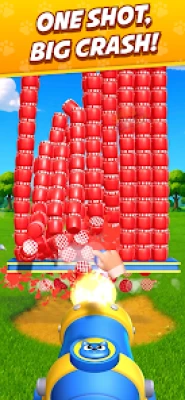
Can one shot destroy an entire structure?
Some arrangements can collapse through a chain reaction caused by one well-placed shot. The outcome depends on the level's layout and how the objects interact.
Does Smash Down have multiple levels?
Yes. The game offers many stages with different arrangements, obstacles, and increasing challenges.
Is Smash Down suitable for beginners?
Its simple controls make it accessible to beginners. Players can learn the basics quickly, while more complicated structures provide opportunities to improve their aim and planning.
Does Smash Down contain ads or in-app purchases?
Yes. The Google Play listing indicates that the game contains advertisements and offers in-app purchases.
Can I play Smash Down for a few minutes at a time?
The level-based format is well suited to short sessions. You can focus on a stage, try to solve its destruction puzzle, and return for another challenge later.
What should I do if my cannon shot does not work?
Observe where the projectile lands and how the objects react. Then try changing the target, angle, or power instead of repeating the same shot without adjustment.
Final Verdict
Smash Down: Blast It Away! offers a straightforward but satisfying take on cannon-based destruction. Its strongest feature is the way a simple action—aiming and firing—becomes a small physics puzzle. The most rewarding moments come from identifying a weak point and watching one impact set off a chain reaction across the arena.
The game is best suited to casual players who enjoy short challenges, visual destruction, and experimentation. Its basic mechanics may become repetitive for those who want a deeper story or more elaborate progression, but players who enjoy finding the perfect shot can appreciate its accessible design.
For anyone searching for a casual cannon game with 3D destruction, breakable objects, and physics-based level challenges, Smash Down: Blast It Away! is worth considering.
Rate the Game
User Reviews












Popular Games



















 Android
 iOS
iOS Windows
 Xbox
Xbox