
Latest Version
September 23, 2026
LinkDesks Classic Puzzle Games
Puzzle
Android
0
Report a Problem
More About :game
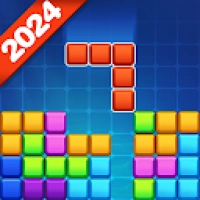
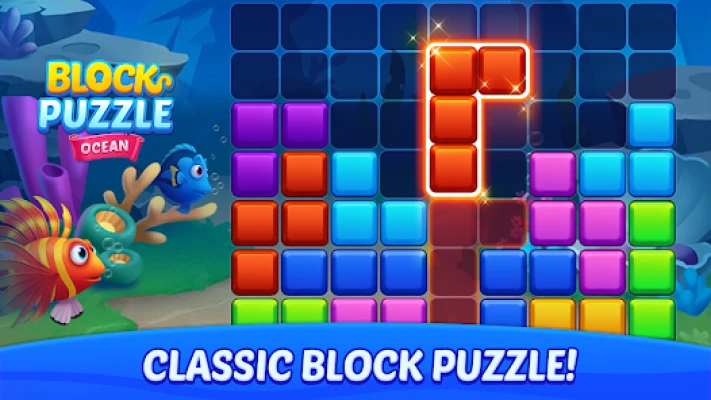
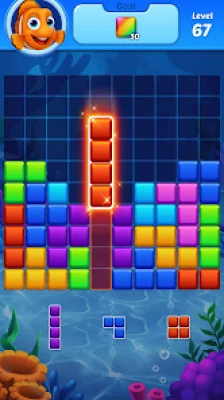
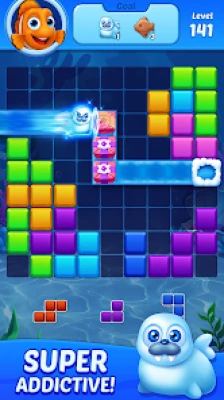
The core gameplay is familiar to anyone who has played Tetris-style or block-puzzle games: drag different-shaped blocks onto the board and complete lines to clear them. The challenge comes from keeping enough open space for future pieces while also completing the goals required by each level.
Google Play currently lists Block Puzzle Ocean as a Puzzle, Block and Casual game with single-player and offline support. It has 100K+ downloads, a 4.6-star rating, approximately 1.44K reviews, ads and in-app purchases.
What Is Block Puzzle Ocean?
Block Puzzle Ocean is a relaxing underwater take on the classic block puzzle formula.
The main gameplay loop is:
Place blocks → complete lines → clear space → complete the level objective → unlock fish and decorations → build your aquarium.
The official description compares the gameplay to a Tetris-style block puzzle while emphasizing that the game uses its own creative mechanics and aquarium progression.
The game is easy to start but becomes more strategic when the board begins filling up.
Your most important resource is empty space.
Every block you place affects the options available for the next pieces.
Main Features
- Classic block puzzle gameplay
- Tetris-like block placement
- Drag-and-drop controls
- Line clearing
- Thousands of puzzle levels
- Different level objectives
- Underwater aquarium theme
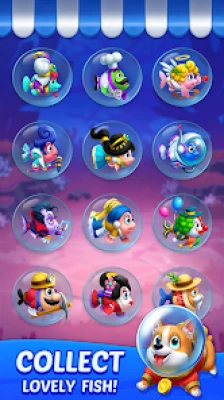
- Fish collection
- Aquarium decorations
- Multiple aquarium themes
- Single-player gameplay
- Offline play
- Casual puzzle experience
- Android gameplay
- Ads and in-app purchases
Google Play describes the game as suitable for both children and adults and specifically highlights brain training, logical thinking and casual play.
How to Play Block Puzzle Ocean
The basic controls are simple.
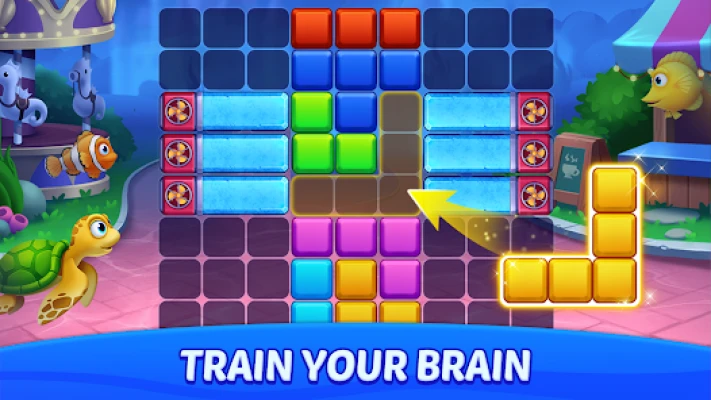
You receive block shapes and drag them onto the puzzle board.
Your goal is to place blocks so that complete lines are formed and eliminated.
The official instructions emphasize three key ideas:
- Drag blocks onto the board.
- Fill lines to eliminate them.
- Keep enough space available for future blocks.
If there is no room for the next block, the level ends.
That last point is extremely important.
A good player is not simply trying to clear lines.
You are also trying to preserve future options.
The Golden Rule: Protect Your Empty Space
The easiest mistake in Block Puzzle Ocean is filling the board too quickly.
A large empty area gives you flexibility.
A board filled with awkward gaps gives you very few options.
Before placing a block, ask:
“Will this placement leave enough room for the next large piece?”
If the answer is no, look for another position.
Don't Chase Every Immediate Line Clear
Clearing a line feels productive, but an immediate clear is not always the best move.
Suppose you have two options:
Option A: Clear one line immediately but create a cramped board.
Option B: Keep the line temporarily and place another block in a way that creates a larger clearing opportunity.
Option B can be stronger because it preserves your board structure.
The best move depends on what pieces are available and what your level objective requires.
Keep the Board Flexible
Try to avoid creating narrow holes that only a specific block shape can fill.
For example, if you leave a single-cell gap surrounded by larger blocks, you may be forced to wait for exactly the right piece.
Instead, whenever possible:
- Keep larger open areas.
- Avoid unnecessary isolated holes.
- Maintain several possible placement zones.
- Leave room for both horizontal and vertical pieces.
- Think about the shape of your next placement.
A flexible board is easier to recover.
Think About Block Shapes
Different pieces create different placement problems.
Before placing a block, look at its:
- Width
- Height
- Number of occupied squares
- Corners
- Straight edges
- Potential line-clearing positions
A long block can be extremely useful when a nearly complete line is available.
A square-shaped block may require a larger open section.
Irregular pieces can become dangerous if the board has too many narrow spaces.
Build Around the Largest Open Area
When possible, keep a substantial central or open area available for future pieces.
This gives you more freedom when an awkward shape appears.
A common beginner mistake is building a neat-looking board around the edges while accidentally creating an unusable center.
Instead, think about the entire board as a workspace.
How to Clear Multiple Lines
Multiple-line clears are especially valuable because they remove more occupied spaces without requiring as many separate placements.
Look for situations where one block can help complete:
- A horizontal line
- A vertical line
- Several lines simultaneously
Before placing a block, inspect both directions.
A placement that completes one line may also put you close to completing another.
Multi-Line Strategy
Try to create setups where a single placement produces multiple clears.
For example:
Nearly complete horizontal line + nearly complete vertical line → one carefully placed block → multiple lines cleared
The benefit isn't only the immediate score or objective progress.
You also create a much more open board for future pieces.
Difficult Level Strategy
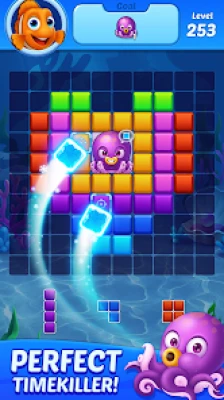
Block Puzzle Ocean contains thousands of puzzle levels with different goals, so not every level should be played in exactly the same way.
When a stage becomes difficult, use this process.
Step 1: Identify the Objective
Know exactly what the level requires before making unnecessary placements.
Step 2: Find the Most Restrictive Area
Determine which part of the board is most difficult to manage.
Step 3: Protect Empty Space
Don't sacrifice the entire board simply to complete one early line.
Step 4: Look for Multi-Line Opportunities
Try to make one block placement accomplish several things.
Step 5: Reassess After Every Clear
A cleared line changes the board dramatically.
Your next move should be based on the new layout.
How to Avoid Getting Trapped
A board can look manageable until one awkward piece appears.
The best defense is preparation.
Avoid creating:
- Tiny isolated holes
- Narrow corridors
- Completely blocked corners
- Large flat areas that cannot accept irregular pieces
- Patterns that require one specific future block
Instead, try to maintain multiple placement possibilities.
What to Do With Awkward Blocks
When a difficult block appears, don't panic.
First identify every location where it can legally fit.
Then compare those positions.
Ask:
- Does this placement complete a line?
- Does it preserve open space?
- Does it create another useful line?
- Does it block an important area?
- Can the next pieces still fit?
The best placement is often the one that produces the healthiest board rather than the largest immediate clear.
Aquarium Progression
The aquarium system gives Block Puzzle Ocean its biggest difference from a traditional block puzzle.
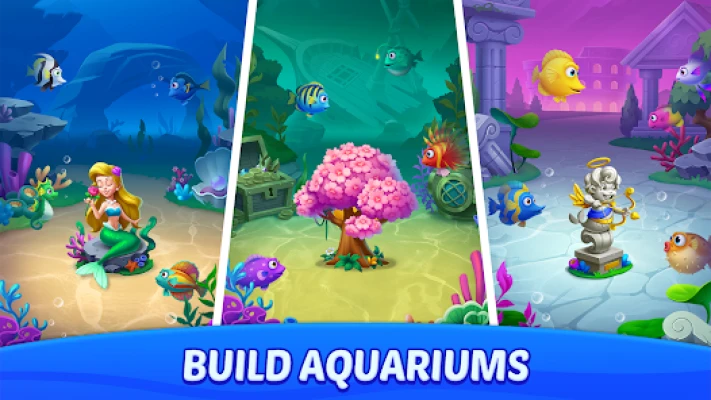
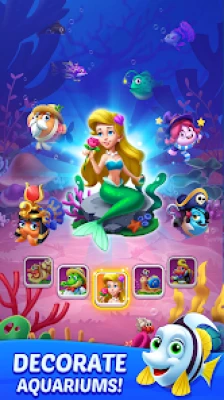
As you advance through the levels, you can unlock fish and decorations. The game also allows players to decorate aquariums according to their preferred style.
The progression loop becomes:
Complete puzzle levels → advance → unlock fish/decorations → improve aquarium → unlock new aquarium themes.
This gives players a visible reward for continuing through the puzzle campaign.
How to Build a Better Aquarium
Aquarium customization is a major part of the game's relaxing side.
As you unlock decorations:
- Experiment with different arrangements.
- Combine decorations with your collected fish.
- Work toward unlocking new aquarium themes.
- Treat each aquarium as a separate design project.
- Continue completing puzzle levels to expand your collection.
The official listing says that decorating an aquarium helps unlock the next themed aquarium, making decoration part of the broader progression system.
Fish Collection
The fish are more than a visual detail.
They are part of the game's collection and aquarium progression.
As you advance, you can build an underwater environment containing different fish and decorations.
This creates a useful contrast:
Puzzle gameplay: logical and strategic.
Aquarium gameplay: creative and relaxing.
Players can therefore switch between solving challenging boards and simply enjoying the aquarium-building side of the game.
Best Beginner Tips
1. Protect Empty Space
Don't fill the board simply because a block fits.
2. Look at All Available Options
Before placing a piece, consider several possible positions.
3. Avoid Small Holes
Awkward gaps can become difficult to fill later.
4. Clear Multiple Lines
Whenever possible, make one placement complete several lines.
5. Keep the Board Balanced
Avoid filling only one side of the board.
6. Plan Around Large Pieces
Always leave room for pieces that require more space.
7. Don't Rush
The game is turn-based, so take time to inspect the board.
8. Read the Level Goal
Different stages can have different objectives.
9. Reassess After Every Clear
A new board means a new strategy.
10. Think About the Aquarium
Puzzle progression also contributes to fish and decoration collection.
Advanced Block Puzzle Strategy
Think About the Next Three Pieces
Don't only look at the block currently in your hand.
If the game presents several upcoming pieces, use that information to decide where to create space.
Even when you don't know exactly what will come next, maintaining a flexible board gives you protection against difficult shapes.
Build From the Edges Carefully
Working from an edge can help organize the board, but completely filling an edge can also create problems.
Leave enough flexibility to accommodate irregular pieces.
Use Corners Carefully
Corners are tempting places to put blocks because they seem harmless.
But an awkward corner can become permanently difficult to fill.
Use corners when the placement contributes to a line or improves the overall board.
Create Controlled Open Areas
A large open area is useful, but an excessively fragmented board can be just as problematic.
Aim for a board that has:
- Several open placement zones
- Potential line clears
- No unnecessary isolated gaps
- Enough room for larger shapes
How to Recover From a Bad Board
If the board is already crowded, don't immediately try to clear everything.
Instead:
1. Find the Most Useful Line
Which line can be completed with the fewest sacrifices?
2. Open the Largest Area
Prioritize clears that create usable space.
3. Avoid Creating More Holes
A desperate placement can make the next pieces impossible to use.
4. Look for Multiple Clears
One large clearing move can completely change a crowded board.
5. Think Beyond the Current Turn
Your objective is not simply to survive the next piece.
You want to restore flexibility.
Common Mistakes
Filling Every Available Space
A block fitting somewhere doesn't mean it belongs there.
Chasing Immediate Clears
A line clear can be harmful if it destroys the structure of the board.
Ignoring Large Pieces
Always maintain enough room for larger shapes.
Creating Single-Cell Gaps
These can become extremely difficult to fill.
Building Only on One Side
An unbalanced board can make future placements awkward.
Forgetting the Level Goal
A good-looking board is not enough if it doesn't accomplish the required objective.
Making the Same Move Repeatedly
If a strategy repeatedly fails, change the opening placement.
Atmosphere and Presentation
Block Puzzle Ocean combines the familiar logic of block-placement puzzles with a colorful underwater setting.
The aquarium system gives the game a more relaxed atmosphere than a purely abstract block puzzle. Instead of seeing only blocks and cleared lines, players gradually build aquatic environments containing fish and decorations.
Google Play categorizes the title as Puzzle, Block, Casual, Single-player, Stylized, Cartoon and Offline, which accurately reflects its lightweight presentation.
The result is a game that can be approached either as a brain-training puzzle or as a relaxing aquarium-building experience.
Honest Player Feedback
The current Google Play reviews show both positive and negative experiences.
One long-term player said the game introduced meaningful changes to the familiar block-puzzle format and found the levels challenging without being impossible. That reviewer also praised the way advertisements were handled.
Another player said they enjoyed the game enough to return to it repeatedly, particularly mentioning the aquarium progression, but also reported buffering problems that affected access to extras.
A more recent August 2026 review reports freezing during gameplay. That is an individual report rather than evidence that all players experience the issue, but it is worth mentioning because the current listing's latest update notes also mention bug fixes and performance improvements.
Overall, the player feedback suggests that the combination of block puzzles and aquariums is a major attraction, while occasional technical issues have been reported by some players.
Block Puzzle Ocean Game Information
| Feature | Details |
|---|---|
| Game | Block Puzzle Ocean |
| Developer | LinkDesks Classic Puzzle Games |
| Package | linkdesks.block.puzzle.ocean.puzzlegames |
| Genre | Puzzle / Block / Casual |
| Rating | Everyone |
| Downloads | 100K+ |
| Google Play Rating | 4.6★ |
| Reviews | About 1.44K |
| Gameplay | Drag-and-drop block placement |
| Main Goal | Complete lines and level objectives |
| Aquarium | Fish, decorations and themed tanks |
| Mode | Single-player |
| Offline | Yes |
| Monetization | Ads and in-app purchases |
| Latest listed update | July 31, 2026 |
Current store information is based on the Google Play listing.
Pros and Cons
Pros
- Easy-to-understand block controls
- Familiar Tetris-style concept with an aquarium twist
- Thousands of puzzle levels
- Different level goals
- Fish collection
- Aquarium decoration
- Multiple aquarium themes
- Offline gameplay
- Suitable for casual sessions
- Relaxing underwater presentation
Cons
- The core block-puzzle concept is familiar.
- Difficult levels can require careful planning.
- Poor board management can quickly lead to a dead end.
- Ads and in-app purchases are part of the current listing.
- Some players have reported freezing or buffering issues.
Is Block Puzzle Ocean Worth Playing?
Block Puzzle Ocean is aimed at players who enjoy classic block puzzle games but want a more colorful progression system.
The puzzle mechanics are straightforward, yet there is plenty of room for strategy because every placement changes the space available for future pieces.
The aquarium system adds another reason to keep playing. Completing levels can unlock fish, decorations and new aquarium themes, turning ordinary puzzle progression into a longer collection journey.
It is particularly suited to players who prefer puzzle games without timers or complicated controls and who enjoy a relaxing visual theme.
Frequently Asked Questions
What is Block Puzzle Ocean?
Block Puzzle Ocean is a Tetris-style block puzzle game combined with aquarium building. Players place blocks to complete lines while progressing toward fish, decorations and new aquarium themes.
How do you play Block Puzzle Ocean?
Drag the available blocks onto the board and arrange them to complete lines. Completed lines are eliminated, creating more space for future pieces.
What happens when there is no room for the next block?
According to the game's official instructions, the level ends when there is no longer enough space for the next block.
Does Block Puzzle Ocean have different level goals?
Yes. Google Play describes the game as having thousands of puzzle levels with various goals.
Can you collect fish?
Yes. Fish can be unlocked as you progress through the game.
Can you decorate the aquariums?
Yes. Players can use decorations to customize their aquariums and progress toward additional aquarium themes.
Is Block Puzzle Ocean offline?
Yes. Google Play explicitly lists the game as offline and says it can be played without internet or Wi-Fi.
Does Block Puzzle Ocean contain ads?
Yes. The current Google Play listing says that the game contains ads and in-app purchases.
Is Block Puzzle Ocean suitable for kids?
Google Play currently gives the game an Everyone content rating and describes it as suitable for all ages.
Final Block Puzzle Ocean Strategy
The secret to Block Puzzle Ocean is space management.
Don't judge a move only by whether it clears a line. Judge it by what the move does to the board afterward.
Keep open areas available, avoid unnecessary gaps, think about large and awkward block shapes, and look for placements that clear multiple lines at once.
When the board becomes crowded, don't panic. Find the most useful clearing opportunity and use it to restore space.
And remember the game's second progression system: every successful puzzle contributes toward building your underwater world.
Keep the board flexible, clear lines intelligently, collect your fish and build an aquarium that makes the puzzle journey feel like more than just another block game.
Rate the Game
User Reviews






Popular Games


















 Android
 iOS
iOS Windows
 Xbox
Xbox