




Latest Version
September 23, 2026
LinkDesks Classic Puzzle Games
Puzzle
0
com.phonemaster.jewelhunter
Report a Problem
More About :game
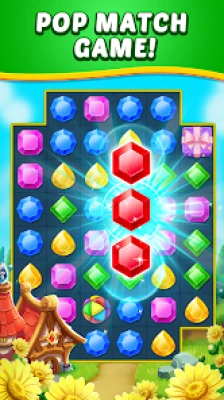
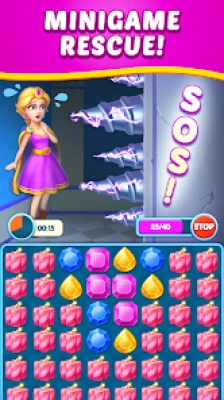
The game adds depth through special jewel combinations, boosters, power-ups, bonuses, gifts and star-based scoring. The current Google Play listing describes thousands of challenging levels and says players can make fewer moves to earn three stars.
Jewel Hunter is also designed for relaxed offline play, making it suitable for short puzzle sessions when you don't have an internet connection.
What Is Jewel Hunter?
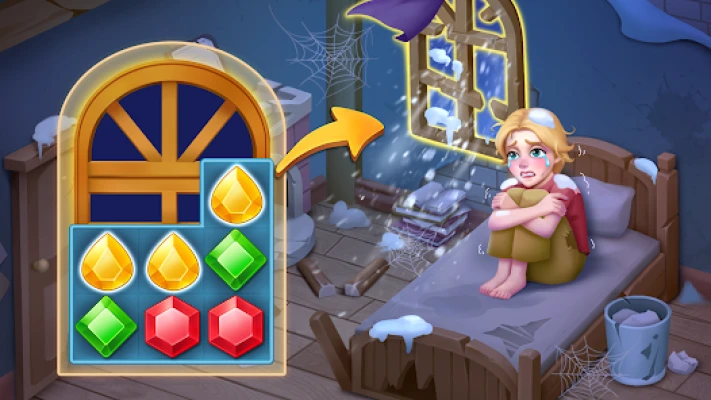
Jewel Hunter follows the familiar match-3 formula but places strong emphasis on combining special jewels and completing specific objectives.
The basic loop is:
Swap jewels → create matches → trigger effects → complete the objective → earn stars → advance.
The current Google Play listing classifies the game as Puzzle, Match 3, Match 3 Adventure and Casual, with single-player and offline support.
The game is easy to start because the controls are based on simple swipes, but later boards require more careful planning.
Jewel Hunter Gameplay
The core mechanic is matching three or more jewels of the same type.
Once matched, the jewels disappear and new pieces fall into their places.
That falling movement can create additional automatic matches, commonly known as cascades.
A single good move can therefore produce several effects in sequence.
Main gameplay features
- Match three or more jewels
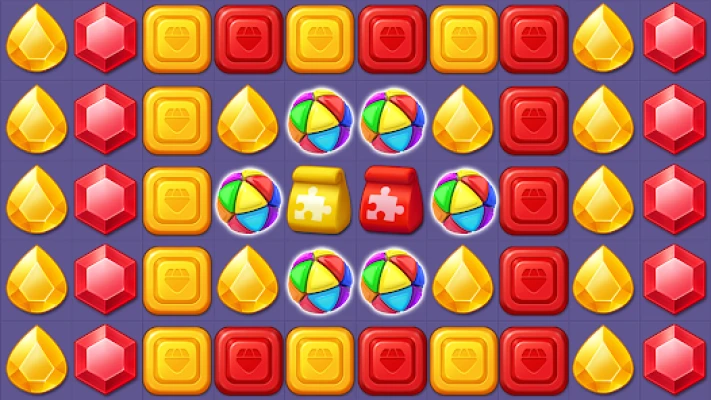
- Special jewel combinations
- Powerful effects
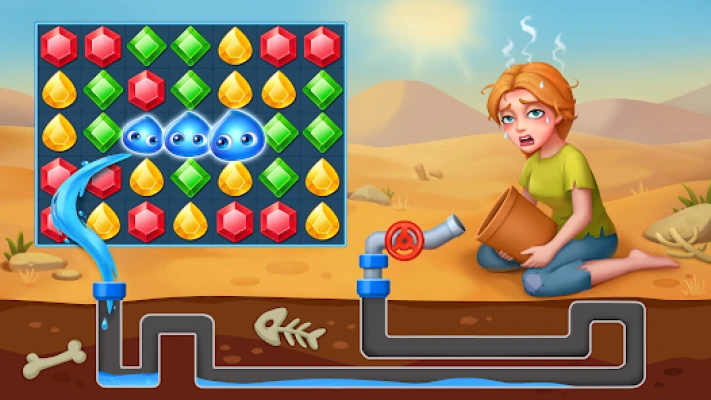
- Level objectives
- Boosters and power-ups
- Three-star scoring
- Bonuses and free gifts
- Thousands of puzzle levels
- Jewel and diamond themes
- Offline gameplay
- Single-player mode
- Adventure-style progression
These features are listed in the current Google Play description.
How to Play Jewel Hunter
The basic controls are straightforward.
Find two neighboring jewels that can be swapped to create a line of three or more matching pieces.
For example:
Blue – Blue – Red
If you can move another blue jewel beside the two blue pieces, the resulting match clears them.
But strong play goes beyond making the first available match.
Before every move, look for opportunities to create larger combinations or special jewels.
Jewel Hunter Strategy Guide
1. Don't Always Make the First Match You See
This is one of the most important match-3 habits.
The first possible match isn't necessarily the best move.
Before swapping, scan the entire board.
Look for:
- Four-jewel matches
- Five-jewel matches
- Special-jewel opportunities
- Moves near blocked areas
- Moves that create cascades
- Matches that advance the level objective
A basic three-jewel match may clear a few pieces.
A better move can potentially create a special jewel and clear a much larger section.
2. Prioritize the Level Objective
Every level has a goal.
The current game description specifically tells players to complete level objectives to progress.
That means you shouldn't judge a move only by how many jewels it removes.
Ask:
Does this move help me complete the objective?
If the goal requires clearing a particular type of jewel or removing obstacles, prioritize moves that directly contribute to that target.
3. Create Larger Matches Whenever Possible
Three matching jewels are useful.
Four or five can be much more valuable because they can create special effects.
Before making a simple match, check whether moving one jewel differently could create a larger combination.
Good priority
Five-match opportunity → four-match opportunity → useful three-match → random three-match
This isn't an absolute rule, because level objectives can change the best move, but it is a strong general strategy.
4. Learn to Use Special Jewels
The game specifically advertises special jewels and spectacular effects created by combining them.
These special pieces should be treated as strategic resources.
Don't immediately activate one simply because you can.
Instead, consider whether you can combine it with another special jewel.
A carefully planned combination can clear much more of the board than activating the pieces separately.
5. Combine Special Jewels
One of the most useful advanced techniques is combining special pieces.
A special jewel can already be powerful by itself.
Two special jewels used together can potentially create a much larger board-clearing effect.
Before activating a special jewel, ask:
- Can I move it next to another special jewel?
- Will the combination help the level objective?
- Can I clear a difficult section?
- Can the explosion open blocked areas?
- Is there a better location for the activation?
Patience can turn one useful power-up into a much stronger move.
6. Look for Cascades
A cascade occurs when one match causes jewels to fall into new positions and create additional matches.
Cascades are valuable because they give you extra progress without requiring additional manual swaps.
To create more cascades:
- Make matches lower on the board
- Look for moves that disturb several columns
- Avoid unnecessarily clearing the upper portion first
- Consider where new jewels will fall
A good lower-board match can sometimes create a chain reaction.
7. Work From the Bottom When Appropriate
Matching lower on the board can cause the pieces above to fall.
That creates new combinations and can change the entire board.
This doesn't mean you should always play from the bottom.
If a special combination or objective is available elsewhere, take it.
But when the board is relatively open, lower matches can be excellent for generating cascades.
8. Don't Waste Moves on Easy Areas
If one section of the board is already open, don't spend several moves there simply because matches are available.
Instead, identify the area that is causing the level to fail.
For example:
If the left side is clear but the right side contains difficult obstacles, prioritize the right side.
This is particularly important on objective-based levels.
Three-Star Strategy
The current Google Play listing specifically states that using fewer moves can help you earn three stars.
That changes the way you should approach levels.
For a normal completion:
Finish the objective.
For a three-star attempt:
Finish the objective efficiently.
Three-star tips
- Look for larger matches
- Create cascades
- Avoid unnecessary swaps
- Use special jewels intelligently
- Combine power-ups when useful
- Don't make moves that don't advance the objective
A level can be completed successfully without being completed efficiently.
Three-star play is about the second part.
Booster and Power-Up Strategy
Jewel Hunter includes boosters and power-ups designed to help clear difficult boards.
The biggest mistake is treating boosters as something to use immediately.
Save them for situations where they solve a real problem.
Good times to use a booster
- You have very few moves remaining
- A required objective is difficult to reach
- An obstacle is blocking important jewels
- The board has become difficult to manipulate
- A power-up can create a much larger chain
Poor time to use one
When the board is already easy and a normal match can accomplish the same thing.
How to Handle Difficult Levels
As levels become harder, random matching becomes less effective.
When stuck, use a structured approach.
Step 1: Identify the objective
Know exactly what has to be completed.
Step 2: Identify the bottleneck
Find the part of the board preventing progress.
Step 3: Search for special combinations
Look for four- and five-jewel opportunities.
Step 4: Work toward the objective
Don't spend moves simply making attractive matches.
Step 5: Save boosters
Keep them available until the board genuinely requires assistance.
How to Manage Limited Moves
Move efficiency becomes particularly important on difficult levels.
Before every swap, ask:
What does this move accomplish?
A strong answer might be:
- Removes required jewels
- Opens an obstacle
- Creates a special jewel
- Creates a cascade
- Moves you toward the level objective
A weak answer is:
- “It was the first match I noticed.”
That small change in thinking can significantly improve your results.
Jewel Hunter Advanced Strategy
Plan Two Moves Ahead
Don't stop your analysis after finding a match.
Ask:
What will the board look like after this swap?
Then:
What might fall into the empty spaces?
This is especially useful when setting up special-jewel combinations.
Protect Good Positions
Sometimes you will have a promising arrangement of jewels.
Don't destroy it accidentally with an unnecessary swap.
If the board contains a potential four- or five-match, consider whether another move will preserve it.
Create Space Before Chasing Bonuses
Large effects are attractive, but if an area is blocked or crowded, opening the board can be more useful.
A simple match that creates space may enable a much stronger move on the next turn.
Common Jewel Hunter Mistakes
Mistake 1: Taking the first available match
The first match isn't necessarily the strongest.
Mistake 2: Ignoring level objectives
Clearing jewels without advancing the objective wastes moves.
Mistake 3: Activating special jewels immediately
Sometimes combining them produces a much stronger effect.
Mistake 4: Wasting boosters on easy levels
Save valuable assistance for genuinely difficult situations.
Mistake 5: Ignoring cascades
Board-changing moves can produce free additional matches.
Mistake 6: Using too many moves
Three-star performance depends partly on completing objectives with fewer moves.
How to Improve at Jewel Hunter
The biggest improvement comes from changing how you look at the board.
Beginners tend to see:
“Where can I make three jewels?”
Experienced players see:
“Which move creates the most useful chain?”
That difference is crucial.
Try to identify:
- The best special-jewel setup
- The most useful cascade
- The most important objective
- The most difficult part of the board
- The move that creates the most future possibilities
Jewel Hunter Atmosphere
Jewel Hunter is designed as a colorful and relaxing puzzle experience.
The current listing emphasizes sparkling jewel and diamond designs, visual effects and the ability to play at your own pace.
The combination of bright gems, explosive matches and progressively harder objectives gives it a familiar casual-puzzle feel.
It works particularly well for short sessions because a player can complete a few levels without needing a long continuous play session.
Offline Gameplay
One of Jewel Hunter's useful features is offline support.
Google Play explicitly states that the game can be played without Wi-Fi, while also supporting online play.
That makes it suitable for:
- Travel
- Waiting rooms
- Flights
- Commuting
- Areas with poor connectivity
- Quick offline puzzle sessions
Honest Feedback on Jewel Hunter
Jewel Hunter's biggest strength is its straightforward match-3 design. The rules are immediately understandable, but special jewels, boosters, objectives and three-star scoring give experienced players reasons to think more carefully.
The current Google Play listing shows 4.9 stars and 136K reviews, alongside 10M+ downloads.
Player feedback is not completely uniform. Some long-term reviews praise the graphics and enjoyable progression but report that later levels can become extremely difficult. One player specifically felt that higher levels became difficult enough to require additional purchases, while another criticized the strength of certain bombs. The developer responded that difficult levels are intended as part of the game's challenge and encouraged players to contact support when they encounter problems. These are individual player experiences, not a universal description of the game.
There are also complaints about advertising from some players, including reports of intrusive or lengthy ads. Again, these comments represent individual experiences rather than a definitive assessment of every player's experience.
For players who enjoy classic match-3 puzzles, colorful jewel effects, offline play and increasingly challenging levels, the game's current feature set provides a straightforward reason to keep progressing.
Jewel Hunter Pros and Cons
Pros
- Easy swipe-based controls
- Classic match-3 gameplay
- Special jewel combinations
- Boosters and power-ups
- Thousands of levels
- Three-star scoring
- Level objectives
- Colorful jewel graphics
- Bonuses and free gifts
- Offline play
- Single-player
- Regular new-level updates
- Available on Android and Windows
Cons
- Later levels can become substantially more difficult
- Some players consider certain power-ups less effective than expected
- Some player reviews criticize advertising frequency
- Contains ads
- Includes in-app purchases
The current Google Play listing confirms the advertising, in-app purchases, offline mode and Android/Windows availability.
Jewel Hunter Game Information
| Feature | Details |
|---|---|
| Game | Jewel Hunter - Match 3 Games |
| Developer | LinkDesks Classic Puzzle Games |
| Genre | Puzzle / Match 3 / Casual |
| Mode | Single-player |
| Platforms | Android, Windows |
| Offline | Yes |
| Controls | Swipe and match |
| Main mechanic | Match 3+ jewels |
| Special jewels | Yes |
| Boosters | Yes |
| Power-ups | Yes |
| Level objectives | Yes |
| Three-star scoring | Yes |
| Bonuses | Yes |
| Downloads | 10M+ |
| Google Play rating | 4.9★ |
| Google Play reviews | 136K |
| Ads | Yes |
| In-app purchases | Yes |
| Content rating | Everyone 10+ |
| Latest listed update | September 19, 2026 |
The figures and current platform information above are based on the Google Play listing checked for this page.
Jewel Hunter FAQ
What is Jewel Hunter?
Jewel Hunter is a match-3 puzzle adventure where players swap colorful jewels, create groups of three or more, complete level objectives and use special effects to clear the board.
How do you play Jewel Hunter?
Swipe to swap adjacent jewels and create matches of three or more identical pieces.
Is Jewel Hunter an offline game?
Yes. Google Play currently lists Jewel Hunter as an offline game.
Does Jewel Hunter have boosters?
Yes. The game includes boosters and power-ups that can help clear difficult levels.
How do you get three stars?
The game states that using fewer moves can help you earn three stars. Focus on efficient matches, cascades, special jewels and moves that directly advance the level objective.
What is the best Jewel Hunter strategy?
Look beyond simple three-jewel matches. Prioritize larger combinations, special jewels, useful cascades and moves that directly contribute to the level objective.
Should I save boosters?
Generally, yes. Save them for levels or situations where normal moves are unlikely to solve the objective efficiently.
Is Jewel Hunter difficult?
The basic gameplay is easy to learn, but player reviews indicate that some later levels can become considerably more challenging.
Does Jewel Hunter have ads?
Yes. The current Google Play listing says the game contains ads and in-app purchases.
Can Jewel Hunter be played without Wi-Fi?
Yes. The listing specifically promotes offline play without requiring an internet connection.
Final Jewel Hunter Strategy
Jewel Hunter may look like a simple match-3 game, but strong play depends on making efficient decisions rather than simply matching whatever is available.
The best general approach is:
Check the objective → scan the board → search for large matches → create special jewels → look for cascades → use boosters carefully → finish with as few wasted moves as possible.
For three-star attempts, efficiency becomes even more important.
Don't just ask:
“Can I make a match?”
Ask:
“Which match gives me the most useful result?”
That change in mindset is the key to progressing through Jewel Hunter's increasingly challenging puzzle levels.
Rate the Game
User Reviews









Popular Games



















 Android
 iOS
iOS Windows
 Xbox
Xbox