


Latest Version
September 22, 2026
PlayDots
Puzzle
0
com.weplaydots.twodotsandroid
Report a Problem
More About :game
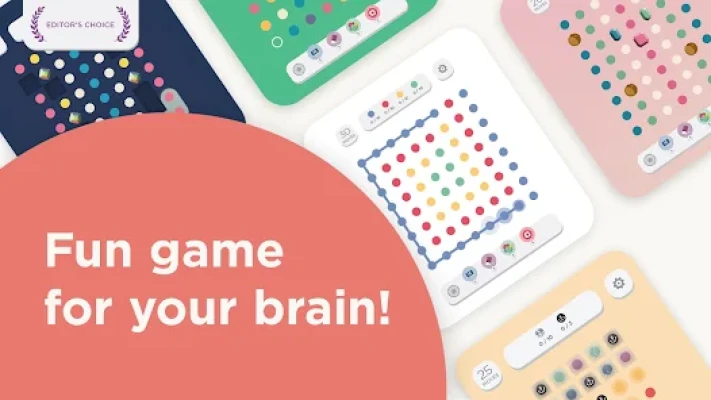
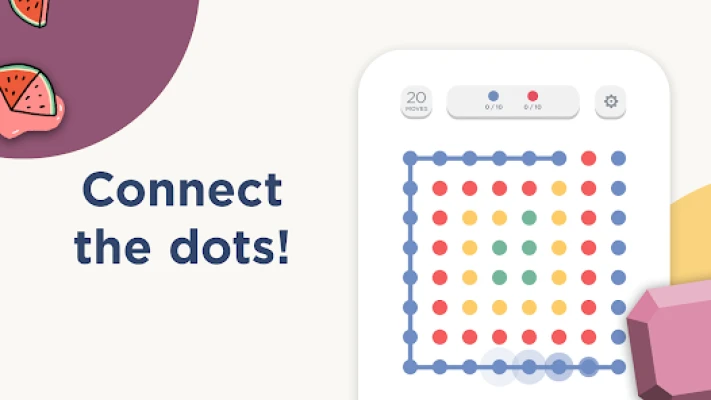
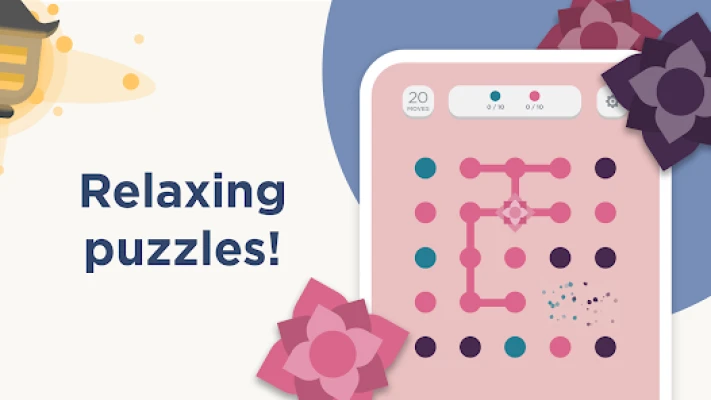
Two Dots is a casual puzzle adventure centered on one simple idea: connect dots of the same color.
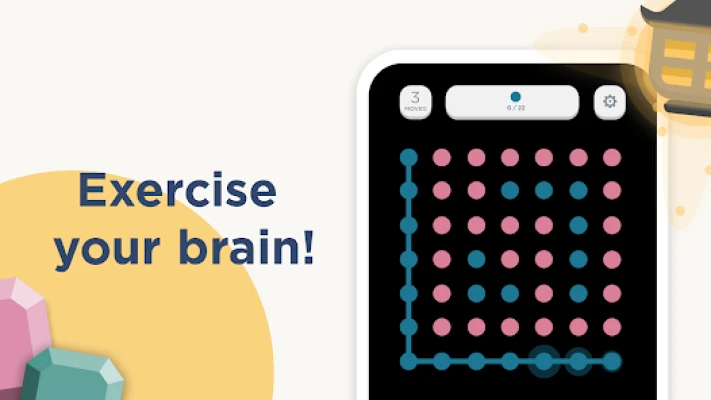
You can connect matching dots horizontally or vertically to remove them from the board. The real strategy begins when you look for larger patterns, especially squares. Creating a square can clear every dot of that color from the board, producing a much stronger move than a normal connection.
The game follows Emily and Uncle Jack as they travel through different environments while completing puzzles and collecting treasures. The official game site describes the adventure as a journey through locations ranging from the world to the underwater depths and even across the galaxy.
Two Dots Game Information
Game: Two Dots: Brain Puzzle Games
Developer: PlayDots
Genre: Puzzle / Casual
Main gameplay: Color-matching and connection puzzles
Modes: Puzzle levels, Scavenger Hunt, Arcade, Flip, Treasure Hunt and Rewind puzzles
Players: Single-player
Platform: Android and Windows
Rating: PEGI 3
Google Play rating: 4.5 stars at the time checked
Google Play reviews: More than 1 million
Downloads: 50M+
Business model: Free with ads and optional in-app purchases
Offline: Listed as available offline
Colorblind mode: Available
Latest Android update checked: September 18, 2026
How to Play Two Dots
The basic rule is straightforward.
Look for two or more adjacent dots of the same color and drag your finger across them to create a connection.
Connections can move horizontally or vertically, but normal connections do not move diagonally.
After the connected dots disappear, the remaining dots fall downward, changing the board and potentially creating new opportunities.
The important part is that you should not automatically make the first available connection. Good Two Dots play comes from examining the entire board before committing to a move.
The Most Important Move: Make a Square
The square is one of the key mechanics in Two Dots.
Instead of connecting dots in a simple line, look for four matching dots that can form the corners of a square.
Creating a square produces a powerful board-clearing effect for that color.
This is why experienced players often scan the board for possible squares before making ordinary connections.
Basic example
Imagine four blue dots positioned so they form:
● —— ●
| |
● —— ●
Connecting them around the shape creates a square.
Rather than simply clearing the dots used in the connection, the resulting effect can remove other dots of the same color across the board.
This can dramatically change the puzzle.
Full Two Dots Strategy Guide
1. Study the Board Before Moving
Don't immediately connect the first pair you see.
At the beginning of a level, examine:
- The objectives
- The number of moves available
- Difficult obstacles
- Existing clusters
- Potential squares
- Colors positioned near important targets
- Dots that could fall into better combinations
A few seconds of planning can save several moves later.
2. Look for Squares First
When you see several dots of the same color, don't simply ask:
"What can I connect?"
Instead ask:
"Can these dots form a square?"
This change in thinking is one of the biggest improvements a new player can make.
A normal connection solves a small part of the board.
A square can influence the entire board.
3. Think About What Falls Down
Every time dots disappear, the dots above them move downward.
That means a move has two effects:
- It clears the selected dots.
- It changes the future board.
The second effect is easy to overlook.
A connection that looks ordinary may cause several new dots to line up, potentially creating another powerful move.
Before making a move, consider what will fall into the empty spaces.
4. Plan Two Moves Ahead
Try to predict the next board rather than focusing only on the current one.
For example:
- A red connection removes several dots.
- Blue dots then fall into place.
- The blue dots create a possible square.
- That square can then clear the board.
The first move was valuable because it created the second opportunity.
This type of chain planning becomes increasingly important in difficult levels.
5. Prioritize the Level Objective
Don't forget that Two Dots levels have specific objectives.
Your goal isn't necessarily to clear as many dots as possible.
Depending on the level, you may need to:
- Collect anchors
- Break ice
- Clear particular colors
- Collect objects
- Complete another special objective
The official support information describes Two Dots as a game where players connect dots of the same color to clear them and complete objectives.
Always ask:
"Does this move actually help me finish the objective?"
6. Save Moves
Moves are a resource.
If you have an objective requiring several items, avoid wasting moves on combinations that don't contribute toward it.
A visually impressive chain isn't necessarily useful if it doesn't move you closer to completing the level.
7. Use Large Connections
When a square isn't available, look for long chains.
A longer connection can clear more dots at once and may create better falling patterns.
However, don't automatically choose the longest possible line.
Compare it with the other available moves.
A shorter connection that creates a square on the next move can be much more valuable.
8. Create Cascades
A cascade happens when one move causes another useful combination to appear.
To create more cascades:
- Look at the spaces underneath your connection.
- Predict which colors will fall.
- Look for areas where several matching colors could meet.
- Prefer moves that open useful spaces.
Cascades are especially helpful when you are running low on moves.
9. Understand Obstacles
As you progress through the game, levels introduce different mechanics and obstacles.
The official Two Dots site specifically provides tutorials covering elements such as Water, Anchors, Ice and Fire Dots.
Don't approach every obstacle in exactly the same way.
Before making a move, determine what the obstacle requires and then prioritize the connections that directly affect it.
10. Anchors
Anchor objectives require you to work toward bringing or clearing anchors according to the rules of the particular level.
Instead of simply matching colors wherever possible, examine the board around the anchors.
Look for connections that help create a path toward the objective.
When multiple anchors are present, consider whether one move can affect more than one target.
11. Ice
Ice can restrict movement and make useful dots harder to reach.
When ice is involved, don't waste your strongest opportunities on areas that don't help open the board.
Work toward freeing important sections first.
Once the board becomes more open, square opportunities become easier to spot.
12. Fire Dots
Fire Dots introduce another type of board pressure.
When a level contains special mechanics such as Fire Dots, pay attention to their behavior before spending too many moves elsewhere.
The official game site includes Fire Dots among its tutorial topics, confirming that they are part of the game's special puzzle mechanics.
Power-Ups Strategy
Two Dots includes Power-Ups that can help when a level becomes difficult. Players can earn or purchase Power-Ups, according to the current Google Play listing.
Don't Waste Power-Ups Early
If you are only a few moves into a level, don't immediately use a powerful item because the board looks inconvenient.
First try to identify whether a square or cascade can solve the problem naturally.
Save Power-Ups for situations where:
- You are close to completing the objective.
- The remaining moves are limited.
- A difficult obstacle is blocking progress.
- One strategic boost could finish the level.
Scavenger Hunt Strategy
Scavenger Hunt is one of the game's signature experiences.
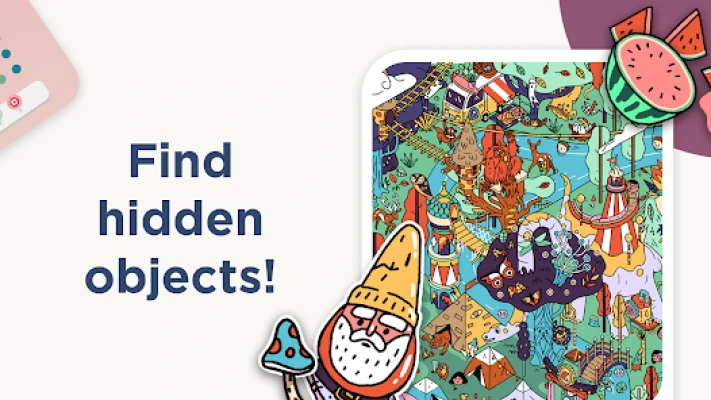
Instead of focusing exclusively on traditional dot-clearing objectives, you search for hidden objects while working through the puzzle environment.
The official site describes Scavenger Hunt as a mode where players search for hidden treasures and progress through tiers for rewards.
Scavenger Hunt Tips
- Examine the entire scene carefully.
- Don't rush through the puzzle.
- Remember where unusual objects appear.
- Work methodically instead of tapping randomly.
- Take advantage of the game's colorful visual design.
- Keep track of objects you have already discovered.
Arcade Mode
Arcade provides a different way to experience Two Dots outside the normal campaign progression.
The official game site lists Arcade as one of the game's main ways to play.
When switching to Arcade, focus on adapting to its particular rules rather than applying the exact strategy you use in standard levels.
Flip Mode
Flip introduces another variation of the familiar Two Dots formula.
The official listing describes Flip as a mode where players connect every color.
The best approach is to continually scan the entire board and avoid becoming fixated on one color when another connection may be more urgent.
Treasure Hunt
Treasure Hunt adds another collectible-focused layer to the Two Dots experience.
When playing treasure-oriented content, think beyond simply completing the current connection.
Look for opportunities that advance the larger collection objective while maintaining enough moves to finish the puzzle.
Rewind Puzzles
Two Dots also includes Rewind puzzles, which allow players to revisit original events and puzzle experiences.
These can be useful for players who enjoy older Two Dots challenges or want another variation on the main puzzle progression.
Best Two Dots Tips for Beginners
Tip 1: Always Search for Squares
This should become automatic.
Tip 2: Read the Objective First
Know exactly what the level wants before using moves.
Tip 3: Don't Rush
Two Dots is generally more rewarding when you plan instead of making random connections.
Tip 4: Watch the Falling Dots
Every cleared group changes the board.
Tip 5: Think Beyond One Move
Try to create the next opportunity rather than only solving the current one.
Tip 6: Save Power-Ups
Use them when they provide meaningful value.
Tip 7: Learn Special Obstacles
Understand the rules of Ice, Anchors, Fire Dots and other mechanics as they appear.
Tip 8: Use Large Clears Wisely
A big combination is most valuable when it contributes directly to your objective.
Advanced Two Dots Strategy
Build the Board Around Your Objective
Suppose your level requires you to clear a particular number of objects.
Don't simply clear random dots until those objects eventually disappear.
Instead, study the board and determine which colors and positions will help you reach the target.
This makes each move part of a larger plan.
Use Squares as Board Resets
A square can dramatically alter the color distribution.
This makes squares useful not only for clearing dots but also for reshaping the board.
If one color is blocking the area you need, a square of that color may create a much more favorable board.
Look for Forced Moves
Sometimes there aren't many useful combinations available.
In these situations, identify the move that gives you the greatest chance of creating a better board afterward.
This is particularly important when the number of remaining moves is low.
How to Handle Difficult Levels
When you fail a level, don't immediately repeat the same strategy.
Instead ask:
Where did the level become difficult?
Was it:
- Too few moves?
- A poorly timed combination?
- An obstacle you ignored?
- A missed square?
- A bad opening?
- A Power-Up used too early?
Identifying the actual problem makes the next attempt more useful.
Two Dots Progression
Two Dots has a large campaign with thousands of puzzles. Google Play currently describes the game as having more than 5,000 relaxing puzzle levels, while the official site highlights multiple game modes and regularly changing special features and events.
The long progression means that strategies that work on beginner boards won't always work later.
As levels become more complex, focus increasingly on:
- Move efficiency
- Squares
- Cascades
- Obstacles
- Objective management
- Power-Up timing
- Board prediction
Rewards and Collectibles
Two Dots includes collectible objects and rewards throughout its various game experiences.
The Google Play listing specifically mentions collecting hidden objects and rewards, while Scavenger Hunt provides an important collectible-focused mode.
If you enjoy completion-style gameplay, keeping track of collections can add another layer beyond simply finishing campaign levels.
Events and New Content
Two Dots continues to receive new content and limited-time activities.
The Google Play page checked on September 22, 2026 lists current events and offers, including a new Scavenger Hunt and other temporary activities. The game was updated on September 18, 2026.
The official site also lists recent 2026 event updates, including September and August activities.
Because events can change, players should check the current in-game event screen rather than relying on an old guide for exact event rewards or deadlines.
Atmosphere and Presentation
One of Two Dots' defining characteristics is its colorful, minimalist visual style.
The game combines bright dots, clean boards, illustrated environments and relaxing music. Google Play describes the experience as a way to relax while connecting colorful dots, while the official site presents the game as an adventure through unusual worlds and landscapes.
The result is a puzzle experience that can be played casually but still rewards careful planning.
Is Two Dots Difficult?
The basic mechanics are easy to understand, but difficulty increases as the puzzle objectives and board mechanics become more complicated.
Early levels are useful for learning:
- Matching colors
- Creating lines
- Forming squares
- Understanding falling dots
Later puzzles require more deliberate planning and better use of limited moves.
Is Two Dots Good for Short Sessions?
Yes. Individual puzzle levels are naturally suited to short play sessions, while the large campaign also supports longer progression sessions.
The game's casual presentation and simple touch controls make it easy to start a level without needing to learn complicated controls. Google Play currently categorizes it as a casual, single-player puzzle game.
Honest Player Considerations
Two Dots has a large established player base, with Google Play currently showing more than 50 million downloads and over 1 million reviews.
At the same time, player feedback is not completely uniform. Some published reviews praise the puzzle design and Scavenger Hunt, while other reviews have raised concerns about advertisements, progression costs, and difficult levels. These are individual player experiences rather than universal characteristics, but they are worth knowing before spending money inside the game.
The game also contains advertisements and optional in-app purchases, including random items, according to its current Google Play listing.
Two Dots Pros and Cons
Pros
- Simple controls
- Thousands of puzzle levels
- Strong focus on strategic connections
- Square mechanic adds depth
- Multiple game modes
- Scavenger Hunt collectibles
- Regular events and new content
- Colorblind mode
- Can be played offline
- Relaxing visual presentation
Cons
- Later levels can become substantially more demanding
- Contains advertisements
- Optional purchases are available
- Some players have reported concerns about advertising and progression
- Temporary events can change over time
The features and monetization details above reflect the current Google Play listing, while the comments about player concerns are based on published user reviews.
Frequently Asked Questions
What is Two Dots?
Two Dots is a casual puzzle game where players connect dots of the same color, complete objectives and progress through thousands of levels.
How do you make a square in Two Dots?
Connect four or more matching dots around a closed square shape. Creating a square produces a powerful clear for that color.
What is the best strategy in Two Dots?
Look for squares before ordinary connections, understand the level objective, plan around falling dots and avoid wasting moves on combinations that don't contribute toward the goal.
How many levels does Two Dots have?
The current Google Play listing describes the game as having more than 5,000 puzzle levels.
Does Two Dots have different game modes?
Yes. Current official descriptions include Scavenger Hunt, Arcade, Flip, Treasure Hunt and Rewind puzzles, alongside the main puzzle progression.
Does Two Dots have power-ups?
Yes. Players can win or purchase Power-Ups to help with difficult puzzles.
Can Two Dots be played offline?
Google Play currently lists Two Dots as an offline game. Some online or event-related functionality may naturally require connectivity.
Does Two Dots have a colorblind mode?
Yes. The current Google Play description states that colorblind mode is available for free.
Is Two Dots free?
Yes. Two Dots is free to download, with advertisements and optional in-app purchases.
Final Two Dots Strategy Checklist
Before every important move, check:
1. What is the level objective?
2. Can I make a square?
3. What dots will fall after this move?
4. Will this create another useful combination?
5. Am I spending a move without advancing the objective?
6. Should I save this opportunity for a stronger cascade?
7. Do I actually need a Power-Up right now?
The most important lesson in Two Dots is simple: don't just connect dots—shape the board.
Look ahead, search for squares, control the falling pattern and make every move serve the objective. Once those habits become natural, the game's later puzzles become much easier to approach strategically.
Rate the Game
User Reviews










Popular Games

















 Android
 iOS
iOS Windows
 Xbox
Xbox