






Latest Version
September 26, 2026
Yso Corp
Action
iOS
0
Report a Problem
More About :game
The central gameplay loop connects production directly to survival. A more efficient factory means a more reliable ammunition supply, while upgrades and new production possibilities help you handle increasingly difficult stages, tougher enemies, and powerful bosses.
What Is Ammo Assembly?
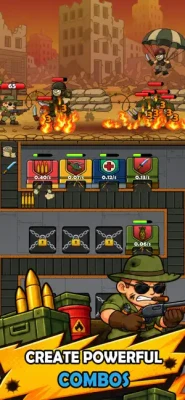
Ammo Assembly is an action factory-building game from Yso Corp that combines production-line management with battlefield survival.
Instead of managing a factory separately from combat, the two systems are directly connected. Your production line creates the ammunition your soldier needs to keep fighting.
You therefore have two priorities:
- Build an efficient ammunition factory.
- Keep enough ammunition flowing to survive enemy attacks.
The App Store describes the game around three core ideas: build, optimize, and fight.
Main Features
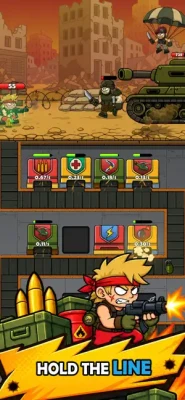
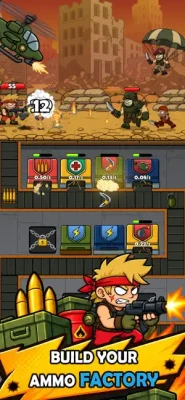
Build Your Ammo Factory
The factory is the foundation of your progression.
You can place machines, connect production lines, and improve the factory so ammunition is produced at a steady rate.
Optimize Production
Simply having machines isn't enough. Their arrangement and upgrades affect how effectively your production system operates.
A well-organized factory can keep ammunition moving smoothly and reduce interruptions during combat.
Keep Your Soldier Armed
The factory exists for a specific purpose: supplying your battlefield unit.
If ammunition production cannot keep up with combat requirements, your soldier's ability to fight becomes limited.
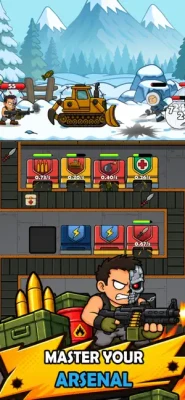
Upgrade Machines
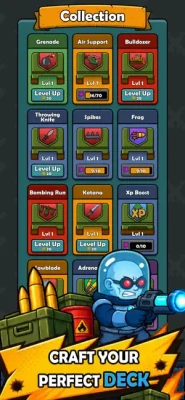
The game allows you to improve production equipment and unlock new production possibilities as you progress.
Upgrades become increasingly important as stages become more demanding.
Survive Enemy Waves
Your production setup is tested during combat encounters.
Enemies become more dangerous as you progress, with the App Store specifically mentioning tougher enemies and powerful bosses.
How to Play Ammo Assembly
The basic gameplay cycle is:
Build → Produce → Supply → Fight → Upgrade → Expand → Repeat
Start by constructing your production system.
Connect the necessary machines so ammunition can move through the factory. Once your production is operating, the resulting ammunition supports your soldier during combat.
When you encounter stronger enemies, improve the factory and unlock additional production capabilities.
The key is to understand that factory efficiency and battlefield survival are part of the same system.
Complete Ammo Assembly Strategy Guide
1. Build With Production Flow in Mind
Don't think of each machine as an isolated object.
Your factory should function as a connected production line.
When placing machines, consider:
- Where resources enter
- Where they need to go next
- How many production steps are involved
- Whether the line has unnecessary interruptions
- Whether future upgrades can fit into the layout
A compact and logical factory is easier to manage than a disorganized collection of machines.
2. Keep the Production Line Moving
A factory that frequently stops producing ammunition can create problems during combat.
Monitor the production chain and look for anything that prevents a smooth flow.
If one stage becomes a bottleneck, improving another machine may not solve the real problem.
Always identify the slowest or most restrictive part of the production process first.
3. Identify Your Factory Bottleneck
A bottleneck is the point where production is being limited.
For example, if one machine cannot process materials as quickly as the machines before it, the entire production chain can become less efficient.
When upgrading, ask:
Which part of my factory is currently limiting output?
Upgrade that area before spending resources on improvements that don't address the problem.
4. Don't Build Randomly
It can be tempting to place machines wherever there is available space.
However, factory games reward planning.
Leave enough room for future improvements and consider how new production equipment could connect to your existing system.
Your factory will grow over time, so today's layout can affect tomorrow's efficiency.
5. Prioritize Consistent Ammunition Production
During combat, consistency matters.
A production system that creates ammunition steadily is generally more useful than one that produces large amounts irregularly.
Think about maintaining a reliable supply rather than only maximizing short bursts of production.
6. Upgrade Before Difficult Battles
When a new stage introduces stronger enemies, check your factory before starting the encounter.
If production already feels strained against current enemies, a harder wave can expose the weakness immediately.
Use the available resources to improve the most important part of your production system before moving deeper into the game.
7. Learn From Every Enemy Wave
Enemy encounters are useful tests of your factory.
If your soldier runs low on ammunition, consider whether production speed or factory organization needs improvement.
If you have a comfortable ammunition supply, you can focus more heavily on advancing your production system.
Each battle provides information about whether your factory is keeping pace with combat.
Ammo Management Strategy
Ammunition is the link between your factory and your soldier.
The App Store emphasizes that your soldier can only continue fighting as long as the factory keeps producing.
This creates an important strategic relationship:
Better production → more reliable ammunition → longer combat capability.
Don't treat ammunition production as a secondary feature. It is one of the central progression systems.
How to Improve Factory Efficiency
Shorten Unnecessary Production Paths
If your factory allows a more direct route between production stages, use it where practical.
Less unnecessary movement can make the overall setup easier to manage.
Keep Related Machines Organized
Grouping related production equipment can make it easier to understand where resources are going and where potential bottlenecks are developing.
Leave Room for Expansion
Don't fill every available space immediately.
Future production options may require additional room, so maintaining some flexibility can make later factory expansion easier.
Upgrade the Weakest Link
When production slows, don't automatically upgrade the most visible machine.
Find the actual bottleneck.
This is one of the most useful habits for factory-management gameplay.
Beginner's Guide to Ammo Assembly
If you're starting Ammo Assembly for the first time, use this simple progression strategy.
Step 1: Build the Basic Production System
Learn what each machine contributes to the production chain.
Step 2: Connect Your Machines
Make sure production can move logically from one stage to the next.
Step 3: Test Production
Observe whether ammunition is being produced consistently.
Step 4: Enter Combat
See how your factory performs under battlefield pressure.
Step 5: Find Weak Points
Determine whether ammunition production is sufficient for the current enemy wave.
Step 6: Upgrade
Improve the machines or production capabilities that are limiting your progress.
Step 7: Expand
Use newly unlocked production possibilities to create a stronger factory.
How to Handle Enemy Waves
Combat is where your factory's performance is put to the test.
The game introduces increasingly dangerous enemies and powerful bosses as you progress.
Before a Wave
Check your production setup.
Make sure your ammunition supply is functioning properly and your most important machines have been upgraded where possible.
During a Wave
Pay attention to the relationship between combat and production.
If your soldier continues fighting effectively, your production system is keeping up.
If ammunition becomes a problem, your factory may need improvement.
After a Wave
Use the encounter to identify weaknesses.
Ask:
- Was production fast enough?
- Did a particular machine limit output?
- Did the enemy wave expose a weak point?
- Which upgrade would improve the next encounter?
Boss Strategy
Bosses provide a tougher test of the production system.
Because the App Store specifically identifies powerful bosses as part of the later challenge, preparing your factory before these encounters is important.
Before a boss encounter:
Check production → upgrade bottlenecks → improve your setup → enter combat.
Don't wait until the middle of a difficult encounter to discover that your ammunition production cannot keep pace.
Boss encounters are a good reason to maintain a healthy upgrade cycle throughout progression.
Upgrade Strategy
Not every upgrade has the same practical value at every stage.
A useful way to prioritize improvements is:
1. Production Bottlenecks
Improve whatever is currently limiting ammunition output.
2. Essential Machines
Strengthen equipment that is constantly involved in your production chain.
3. New Production Capabilities
Unlock new possibilities when they can significantly improve your factory.
4. Expansion
Use your improved production system to prepare for increasingly difficult stages.
The exact priority can change as your factory grows, so regularly reassess your setup rather than following one fixed upgrade order.
Advanced Factory Strategy
Once you understand the basic mechanics, start thinking about your factory as a system.
A production line has several stages, and the performance of one stage can influence everything downstream.
For example:
Input → Processing → Assembly → Ammunition → Soldier
If the processing stage is too slow, improving the final assembly stage may not meaningfully increase total output.
This is why identifying bottlenecks is more important than simply upgrading everything equally.
Resource Management Tips
Use your available resources with a purpose.
Before spending resources, ask:
Will this upgrade increase production, improve efficiency, unlock new possibilities, or help me survive the next challenge?
If an upgrade doesn't address an immediate limitation, you may want to consider saving resources for a more useful improvement.
This becomes particularly important as the cost and complexity of progression increase.
Common Mistakes to Avoid
Building Without a Plan
A factory can become difficult to manage when machines are placed randomly.
Ignoring Bottlenecks
Upgrading a machine that isn't limiting production may provide less practical benefit than fixing the actual bottleneck.
Focusing Only on Combat
The soldier depends on the factory, so battlefield progression and factory progression need to develop together.
Ignoring Production During Progression
Moving into harder stages without strengthening production can make ammunition shortages more likely.
Using All Resources Immediately
Keep some flexibility for important upgrades and newly unlocked production possibilities.
Ammo Assembly Tips and Tricks
Keep Your Factory Organized
A clean production layout makes problems easier to identify.
Monitor Your Ammunition Flow
Don't wait until combat becomes difficult before checking production.
Upgrade Weak Points
Improve the part of the factory that is actually limiting output.
Prepare for Bosses
Stronger enemies require a stronger production system.
Think Long Term
Leave room for future machines and production improvements.
Balance Factory and Combat Progression
Your factory and battlefield capability should grow together.
Ammo Assembly Gameplay Experience
Ammo Assembly stands out by connecting factory management directly to action gameplay.
In a conventional factory game, production may simply generate money or products. Here, production has an immediate battlefield purpose: ammunition becomes firepower for your soldier.
That creates a clear gameplay relationship between construction and combat.
You aren't building a factory simply because factory building is fun. You're building it because a functioning production line is necessary to keep fighting.
Why Factory Design Matters
The game's factory system gives you a strategic problem to solve.
You need to create a production line that can continuously turn its available inputs into ammunition.
As the game introduces new production possibilities and more challenging combat stages, the factory becomes increasingly important.
This makes optimization a major part of progression.
Is Ammo Assembly Worth Playing?
Ammo Assembly is designed for players who enjoy a mixture of factory building, production-line optimization, resource management, action gameplay, and wave-based combat.
Its defining feature is the connection between the factory and battlefield: production directly supports the soldier, while combat provides the test for your factory's efficiency.
The App Store currently lists the game as a free download with in-app purchases and an age rating of 13+, while noting frequent cartoon or fantasy violence and guns or other weapons.
Ammo Assembly FAQs
What is Ammo Assembly?
Ammo Assembly is an action game that combines ammunition factory management with combat against waves of enemies.
What do you do in Ammo Assembly?
You build and optimize an ammunition factory, connect production lines, upgrade machines, supply your soldier, and survive increasingly difficult enemy waves.
Does Ammo Assembly have factory building?
Yes. Building and optimizing an ammunition factory is one of the game's central mechanics.
Can you upgrade machines?
Yes. The game allows you to upgrade factory machines and unlock new production possibilities as you progress.
Are there bosses?
Yes. The App Store description specifically mentions powerful bosses among the increasingly difficult enemies.
Why is ammunition important?
Your soldier depends on the factory's ammunition production to continue fighting, making production efficiency directly relevant to combat survival.
Is Ammo Assembly free?
The App Store lists Ammo Assembly as free with optional in-app purchases.
What devices support Ammo Assembly?
The listing supports iPhone, iPad, iPod touch, Apple Vision, and compatible Apple-silicon Macs. iPhone and iPad require iOS/iPadOS 15.0 or later.
Game Information
| Category | Details |
|---|---|
| Game Title | Ammo Assembly |
| Developer | Yso Corp |
| Genre | Action |
| Core Gameplay | Factory building + combat |
| Main Mechanic | Ammunition production |
| Factory System | Machines and connected production lines |
| Combat | Enemy waves and bosses |
| Progression | Upgrades, unlocks and increasingly difficult stages |
| Platform | iPhone, iPad and other supported Apple devices |
| iOS Requirement | iOS 15.0 or later |
| iPadOS Requirement | iPadOS 15.0 or later |
| App Size | 555 MB |
| Age Rating | 13+ |
| In-App Purchases | Yes |
| Category | Action |
| Languages | English plus 13 additional languages |
| App ID | 6810268675 |
These details are taken from the current App Store listing.
Rate the Game
User Reviews















Popular Games



















 Android
 iOS
iOS Windows
 Xbox
Xbox