
Latest Version
October 16, 2024
Tucker Willenborg
Board
iOS
0
Report a Problem
More About :game
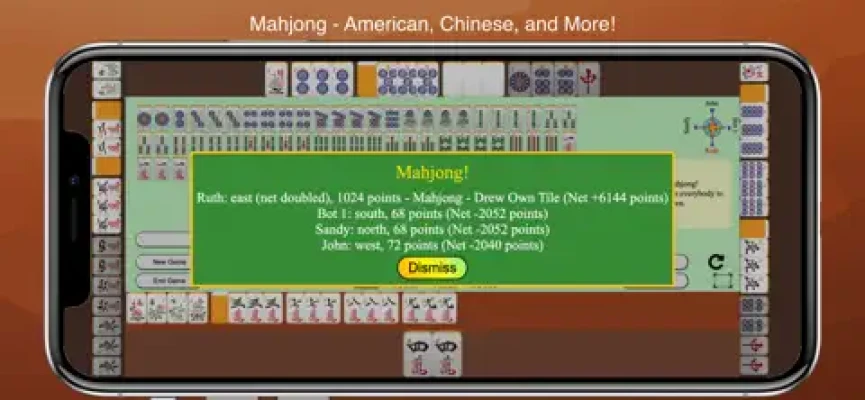
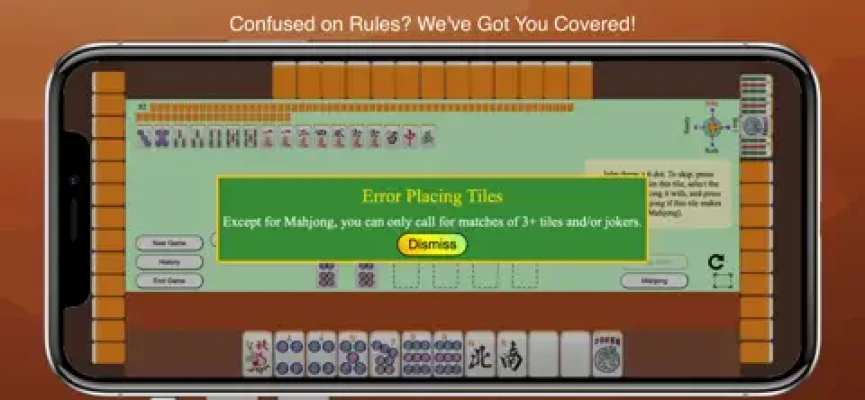
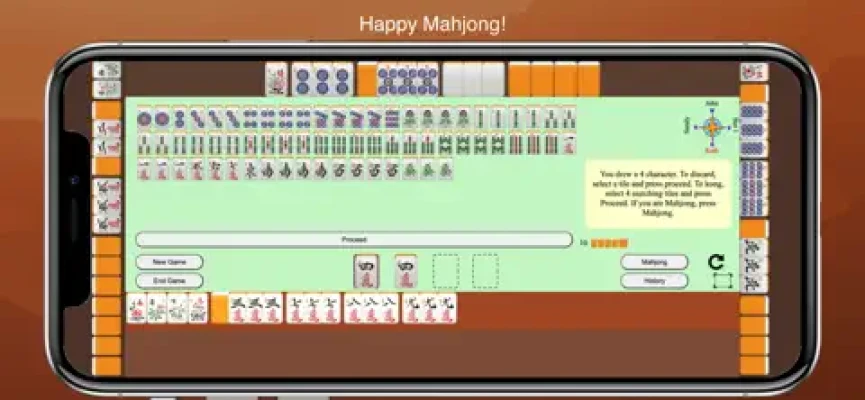
The app currently supports American Mahjong using the NMJL and Marvelous 2026 cards, as well as Chinese, Hong Kong and British variants. Players can compete with friends, fill seats with AI opponents, play against bots for practice, or join public games.
The current App Store listing shows a 4.9/5 rating from 24K ratings, a 13+ age rating, and a size of about 49.5 MB. It is free with in-app purchases and is designed for iPhone and iPad.
What Makes Mahjong 4 Friends Different?
The biggest attraction is that the app supports several genuine Mahjong rule systems rather than forcing every player into one simplified format.
You can play:
- American Mahjong
- Chinese Mahjong
- Hong Kong Mahjong
- British Mahjong
- American Mahjong with current NMJL cards
- Marvelous card-based American Mahjong
- Single-player games against three AI opponents
- Multiplayer games with friends and/or AI
- Public multiplayer tables
The developer's documentation also explains that traditional 14-tile formats use four sets of three or four tiles plus a pair, while American Mahjong uses its own card-based hand system, Charleston rounds and jokers.
American Mahjong Strategy
American Mahjong is substantially different from the Chinese/Hong Kong/British formats, so the strategy should also be different.
The most important tool is the current Mahjong card.
Rather than simply collecting tiles that look good together, you are trying to construct one of the legal patterns shown on your card.
That means your first major decision is:
Which hand or section of the card am I realistically trying to build?
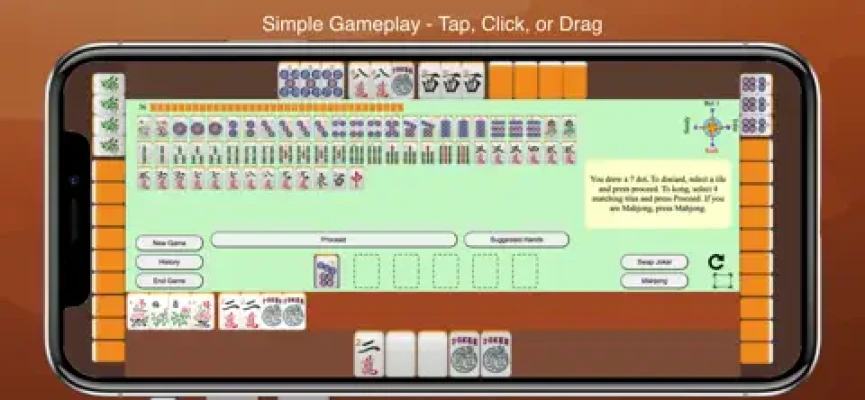
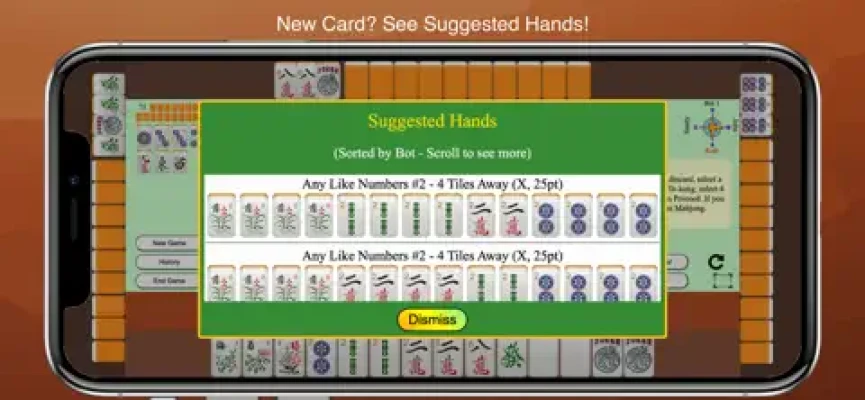
The app includes suggested-hand and practice features that can help beginners understand how their current tiles fit possible combinations.
How to Choose an American Mahjong Hand
When you receive your opening tiles, don't immediately commit to the first attractive combination.
Look for:
- Pairs
- Matching numbers
- Repeated suits
- Consecutive numbers
- Dragons
- Winds
- Flowers
- Potential joker-friendly patterns
- Tiles that appear useful for multiple hands
Then compare those tiles with the available card patterns.
Don't fall in love with your first idea
A common beginner mistake is deciding on a hand too early.
Your initial tiles may suggest one pattern, but the Charleston can completely change what is practical.
Keep multiple possibilities alive until the tiles provide stronger evidence.
American Mahjong Charleston Strategy
The Charleston is one of the defining parts of American Mahjong.
During the Charleston, tiles are passed between players before the main hand develops.
The important principle is:
Pass tiles that are least useful to your realistic hand possibilities while protecting the core of your strongest options.
Avoid passing away useful pairs simply because they don't immediately complete anything.
At the same time, don't hold several isolated tiles simply because they might theoretically become useful later.
During the Charleston, ask:
- Which tiles clearly do not fit my likely hands?
- Which tiles are interchangeable?
- Which tiles could support more than one hand?
- Am I keeping too many unrelated suits?
- Is my hand becoming more focused after each pass?
The goal isn't simply to get rid of bad tiles.
The goal is to improve the structure of your hand while learning from what other players pass to you.
Joker Strategy in American Mahjong
Jokers can dramatically change how an American Mahjong hand develops.
The app supports jokers and enforces the appropriate rules for their use.
A joker is particularly valuable when it completes a difficult group or gives flexibility to a pattern.
However, don't assume that every joker should immediately be used.
Before exposing a joker, consider:
- What hand am I building?
- Does the joker complete a useful group?
- Could I use it more effectively later?
- Does exposing this group reveal my intended hand?
- Am I creating information for my opponents?
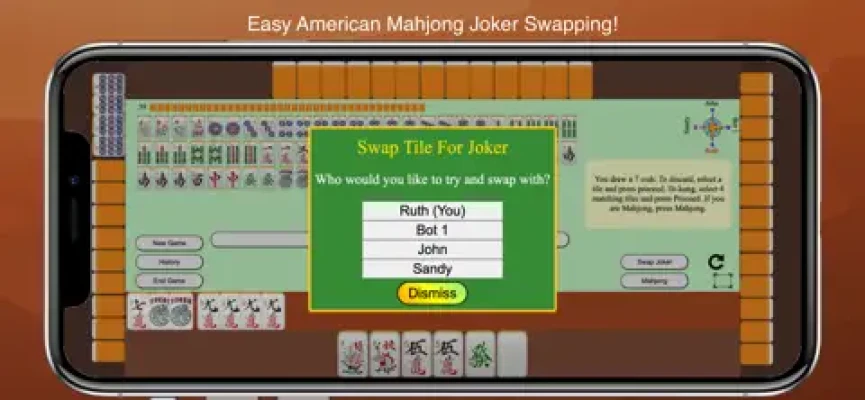
Joker swapping
Mahjong 4 Friends also supports joker swapping.
If you hold the natural tile that corresponds to an exposed joker, the app allows you to swap for that joker under the applicable rules. The developer documentation describes the swap process directly.
This creates another strategic decision: sometimes a tile that looks ordinary in your hand can become valuable because it gives you access to an exposed joker.
Don't Reveal Your Hand Too Early
One of the most important multiplayer principles is information management.
Every exposed group tells your opponents something.
If you expose tiles early, experienced players can often narrow down the hands you might be pursuing.
Before exposing a group, ask:
Does the immediate benefit outweigh the information I'm giving away?
There isn't one answer for every hand.
Sometimes exposing is necessary to complete the hand. Sometimes keeping your options concealed gives you more flexibility.
Chinese, Hong Kong and British Mahjong Strategy
The traditional variants use a different structure from American Mahjong.
The developer documentation describes these styles as 13-tile formats where players build hands around pongs, kongs, chows and pairs, with the exact scoring and special-hand rules depending on the selected variant.
The basic structure rewards players who understand:
- Tile efficiency
- Sequences
- Pairs
- Triplets
- Open versus concealed groups
- Discard information
- Waiting tiles
- Hand value
- Opponent behavior
Building a Strong Traditional Mahjong Hand
A useful way to evaluate your hand is to divide tiles into three categories.
Strong combinations
These include:
- Completed pongs
- Completed sequences
- Useful pairs
- Connected tiles that can easily become sequences
Flexible tiles
These are tiles that can contribute to several possible combinations.
For example, middle-number tiles can often connect in multiple directions.
Isolated tiles
These are tiles that currently have little connection to the rest of the hand.
Isolated terminals and honors can become particularly awkward unless they contribute to a valuable hand.
Why Middle Tiles Can Be Valuable
In traditional Mahjong, middle-number tiles can often participate in several sequences.
For example, a 5 can potentially work with:
- 3-4
- 4-6
- 6-7
This gives middle tiles more flexibility than isolated terminals.
That doesn't mean you should automatically keep every middle tile.
Instead, consider the tile in relation to the rest of your hand.
Understanding the Discard Pile
Your opponents' discards are valuable information.
Don't just watch your own hand.
Look for patterns in what other players are throwing away.
If someone repeatedly discards tiles from the same suit, that may indicate that suit is less important to their hand.
Likewise, if a player suddenly stops discarding a particular category, they may have found a useful combination.
You should never assume a single discard reveals an opponent's complete hand, but a sequence of discards can provide useful clues.
The Importance of Safe Discards
As the hand progresses, discarding becomes increasingly dangerous.
A tile that seems useless to you may be exactly what another player needs.
Pay particular attention to:
- Recently discarded tiles
- Tiles adjacent to combinations you have seen
- Tiles that could complete common sequences
- Tiles that have not appeared for a long time
The safest discard isn't always the tile you personally value least.
It can be the tile that is least likely to help another player.
Mahjong 4 Friends AI Practice Mode
One of the strongest features for beginners is the ability to play against AI players.
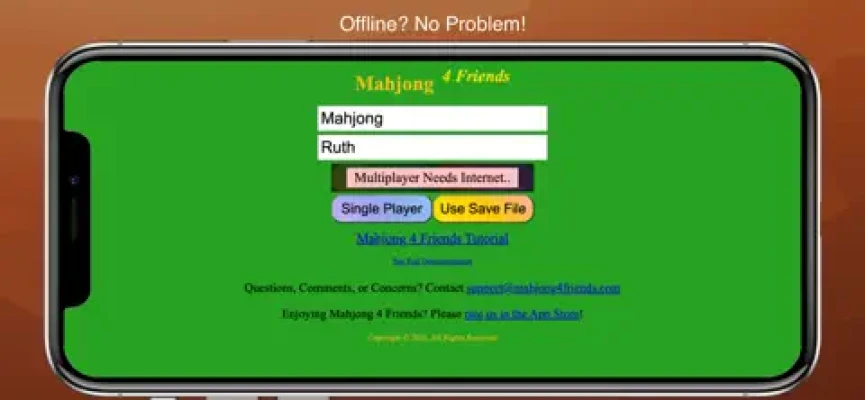
The developer documentation states that single-player games can be played against three bots and can be played offline.
This makes AI games useful for practicing:
- Tile recognition
- Discard decisions
- Hand construction
- Calling pongs
- Calling kongs
- Calling chows
- Understanding Mahjong timing
- Learning the selected ruleset
Instead of treating bot games only as matches to win, use them as practice sessions.
How Beginners Should Practice
A good practice routine is:
First sessions
Concentrate on understanding the legal moves.
Next sessions
Start predicting what your hand could become before discarding.
Later sessions
Watch the other players' discards and try to infer their plans.
Advanced practice
Review your own discarded tiles and ask whether an earlier decision reduced your chances of completing the hand.
This turns each game into a learning exercise rather than simply another round.
Calling a Pong, Kong or Chow
In traditional variants, claiming a discarded tile can change the structure of your hand.
A pong uses three matching tiles.
A kong uses four matching tiles.
A chow uses three consecutive tiles from the same suit.
The developer's quick-start documentation explains that players can claim appropriate discarded tiles and that pongs and kongs can take precedence over a chow in relevant situations.
Don't call every available combination
A legal call isn't automatically a good call.
Before claiming a discard, consider:
- Does this improve my hand?
- What does the exposed group reveal?
- Does it reduce my flexibility?
- Am I moving toward an actual winning hand?
- Is the scoring potential worthwhile?
When to Stay Quiet
Sometimes the best play is simply to draw and discard without calling.
Keeping the hand concealed can preserve flexibility and make your eventual winning pattern harder for opponents to read.
This becomes particularly important when your hand has several possible directions.
How to Improve Your Winning Chances
There are several practical habits that can make your play more disciplined.
1. Count your useful tiles
Don't just count how many tiles you need.
Think about how many possible tiles can improve your hand.
2. Avoid unnecessary commitments
If several hand patterns remain possible, don't close those doors too early.
3. Track visible tiles
Every discarded or exposed tile reduces the number of copies still available.
4. Watch the table
Mahjong is a four-player information game, not a private puzzle.
5. Reassess after every draw
Your strategy should change as new tiles appear.
Mahjong 4 Friends Multiplayer Tips
Playing with friends is different from playing against AI.
Human players are less predictable, and they may deliberately change their strategy based on your discards.
Don't play on autopilot
A move that worked against a bot may not work against an experienced human.
Watch the pace
A sudden change in a player's behavior can sometimes indicate that their hand has changed significantly.
Learn from losses
If another player wins, look back at the visible information and ask:
When did their winning path become apparent?
This is often more useful than simply remembering the final winning tile.
Public Multiplayer Games
Mahjong 4 Friends also supports public tables, allowing players to play against other people rather than only friends or bots. The current App Store description says empty seats can also be filled with AI players.
This makes the app useful for players who want a Mahjong table even when their usual group isn't available.
However, public multiplayer can naturally be less predictable than playing with people you know.
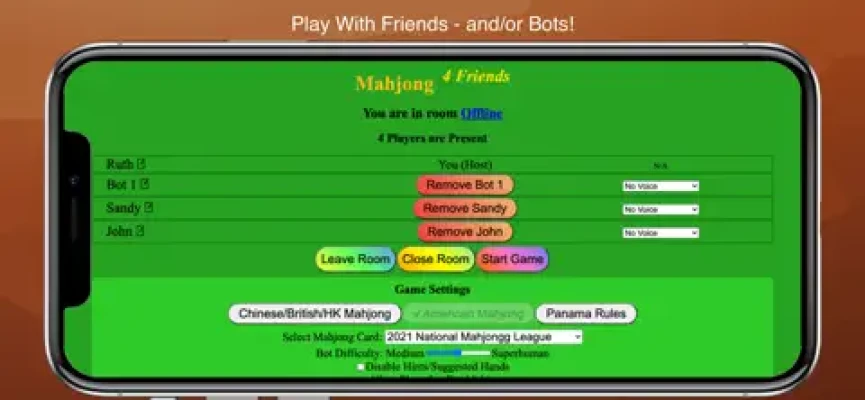
Creating a Private Game With Friends
For a private multiplayer session, the developer documentation describes creating a room and inviting friends using the room information or sharing options provided by the game.
A practical setup is:
- Choose Multiplayer.
- Create a room.
- Select the desired Mahjong rules.
- Invite your friends.
- Fill missing seats with AI if necessary.
- Start the game.
This is especially useful when you want to practice the same ruleset with a familiar group.
Best Beginner Strategy
If you're completely new to Mahjong, don't try to memorize every scoring rule immediately.
Start with three objectives:
Build useful combinations.
Discard unnecessary tiles.
Understand why a winning hand works.
Once those concepts become natural, start learning scoring, defensive play and opponent reading.
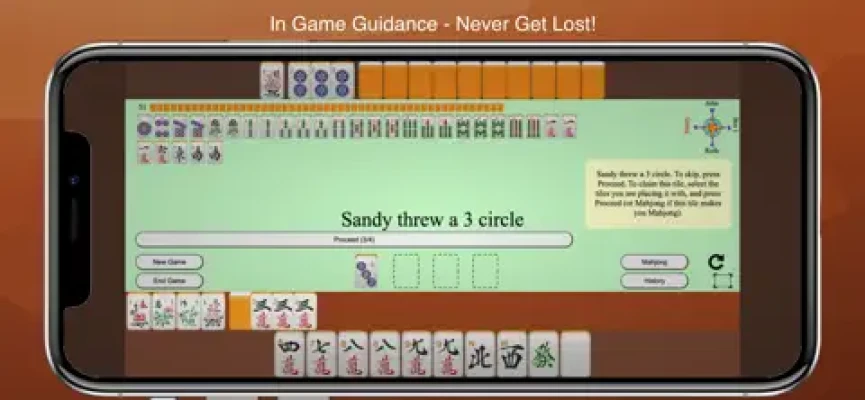
Mahjong 4 Friends also includes built-in tips and suggestions intended to help new players learn during play.
Common Mahjong Mistakes
Choosing a hand too early
Your opening tiles don't always determine your final hand.
Keeping every pair
A pair is useful, but not every pair belongs in your final hand.
Ignoring the discard pile
This throws away one of your best sources of information.
Calling every possible tile
Melding can help, but it also exposes information and can reduce flexibility.
Chasing an impossible hand
If the tiles aren't cooperating, changing direction can be better than stubbornly pursuing the original plan.
Ignoring defensive play
Winning is only half of Mahjong. Avoiding a dangerous discard can be equally important late in a hand.
Mahjong 4 Friends for Learning American Mahjong
For players learning American Mahjong specifically, this app can function as a practice environment rather than simply a multiplayer game.
The App Store currently lists support for the NMJL 2026 and Marvelous 2026 cards, while recent versions have also added practice tools and additional Hong Kong Old Style support.
A particularly useful learning method is to choose a potential hand yourself before checking the app's suggestions.
Then compare your decision with the available suggested hands.
That teaches you to recognize patterns rather than simply following automated recommendations.
Honest Feedback
The biggest strength of Mahjong 4 Friends is the breadth of its rules and play options. It isn't limited to a simple Mahjong-inspired puzzle; it attempts to reproduce actual multiplayer Mahjong across several variants.
The combination of AI opponents, public games, private multiplayer and offline practice makes it particularly useful when four human players aren't available.
The App Store reviews also show that players use the app for learning and self-study. One recent review specifically praised the suggested-hands feature and the ability to practice with bots.
There are also criticisms in user reviews. Some players have mentioned interface changes, accidental tile selections, audio behavior and issues with anonymous multiplayer players leaving or playing slowly. These are individual user reports rather than universal problems, but they are worth knowing about when evaluating the app.
Overall, the actual Mahjong rules and practice possibilities are the heart of the experience.
Atmosphere and Playing Experience
Mahjong 4 Friends has a very different feel from fast-paced mobile games.
The appeal comes from the rhythm of:
draw → evaluate → discard → observe → adjust.
A good game can become surprisingly thoughtful because every discard gives you information while simultaneously changing the possibilities for the other three players.
The multiplayer format also makes it feel much closer to sitting at a real Mahjong table than playing a traditional tile-matching puzzle.
Pros and Cons
Pros
- American Mahjong support
- Chinese, Hong Kong and British variants
- Current NMJL and Marvelous cards
- Online multiplayer
- AI opponents
- Offline practice
- Public tables
- Private games with friends
- Built-in learning assistance
- Joker and Charleston support for American Mahjong
- Useful practice environment for beginners
Cons
- Different Mahjong variants require learning different rules
- New players can initially find American Mahjong cards intimidating
- Multiplayer quality can depend on the behavior of other players
- Some App Store reviewers have reported interface and audio frustrations
- Players looking only for Mahjong Solitaire may find the full four-player rules more complicated than expected
Mahjong 4 Friends: Multiplayer Game Information
| Feature | Details |
|---|---|
| Game | Mahjong 4 Friends: Multiplayer |
| Developer | Unwind Media, LLC |
| Platform | iPhone, iPad |
| Category | Board |
| Age Rating | 13+ |
| Size | 49.5 MB |
| Price | Free with in-app purchases |
| Rating | 4.9/5 |
| Current Ratings | 24K |
| American Mahjong | Yes |
| Chinese Mahjong | Yes |
| Hong Kong Mahjong | Yes |
| British Mahjong | Yes |
| AI Players | Yes |
| Online Multiplayer | Yes |
| Offline AI Play | Yes |
| Public Games | Yes |
| Current American Cards | NMJL 2026 and Marvelous 2026 |
Current App Store information and the developer's documentation support these features and specifications.
Frequently Asked Questions
Is Mahjong 4 Friends the same as Mahjong Solitaire?
No. Mahjong 4 Friends is designed around four-player Mahjong with hands, draws, discards, melds and winning combinations. It is not the tile-pair matching format used by Mahjong Solitaire.
Can I play Mahjong 4 Friends alone?
Yes. You can play against three AI opponents, and the developer says single-player games can be played offline.
Can I play Mahjong 4 Friends with friends?
Yes. You can create multiplayer games and invite friends to your table. AI players can also fill empty seats.
Does it support American Mahjong?
Yes. The app supports American Mahjong with NMJL and Marvelous cards, including Charleston rounds and jokers.
Does it support Chinese Mahjong?
Yes. Chinese Mahjong is supported, along with Hong Kong and British variants.
Can beginners learn Mahjong with this app?
Yes. The app includes instructional tips and suggestions, while AI games provide a way to practice without needing three other human players.
Can I play without an internet connection?
The developer documentation states that single-player games against three bots are offline.
Does Mahjong 4 Friends have jokers?
Yes, American Mahjong supports jokers, including joker-swapping mechanics under the relevant rules.
Final Mahjong 4 Friends Strategy
The biggest lesson is simple:
Don't play your tiles in isolation. Play the table.
Your hand tells you what you can build. The discard pile tells you what may still be available. Your opponents' actions tell you what they might be building.
For American Mahjong, use the card to guide your choices without committing too early. During the Charleston, improve your hand while keeping multiple possibilities alive. In traditional Mahjong, focus on efficient combinations, useful waits and careful discards.
And when you play against real people, remember that Mahjong is as much about information and timing as it is about the tiles themselves.
That combination of hand-building, probability, observation and social multiplayer is what gives Mahjong 4 Friends its depth.
Rate the Game
User Reviews










Popular Games



















 Android
 iOS
iOS Windows
 Xbox
Xbox