
Latest Version
September 06, 2025
Garden City Games
Strategy
0
Report a Problem
More About :game
Rather than focusing on short battles, the game is built around long-term strategic decisions. Your base, economy, army, commanders, alliance, research, and position on the world map all contribute to your strength.
The Google Play listing describes an open world with up to 10 outposts, alliances of up to 50 players, single-player campaigns, commander development, high-tech military units, and real-time events such as World Domination and King of the Hill.
What Is War of Nations?
War of Nations combines several classic strategy mechanics:
Base building
Resource management
Military research
Commander progression
Army development
World-map expansion
Territory competition
Alliance warfare
PvP attacks
Single-player campaigns
Live events
Your objective is not simply to produce the biggest army. You need to create an efficient military economy and use your forces intelligently.
A well-positioned player with strong resource production and an active alliance can often achieve more than a player who focuses only on raw military power.
The World Map
The world map is one of the most important parts of War of Nations.
You can establish up to 10 outposts and choose their locations strategically. Resource patches, enemy positions, alliance territory, and distance from important targets should all influence where you expand.
Choosing an Outpost Location
Before creating an outpost, consider:
Resources:
Rare or valuable resource locations can provide long-term economic benefits.
Distance:
An isolated outpost may be difficult to reinforce.
Enemy Territory:
Building too close to a powerful enemy can make the location difficult to maintain.
Alliance Position:
Being reasonably close to allied players can improve your defensive options.
Expansion Potential:
Think about what the surrounding area will look like after several more outposts and territorial changes.
Do not treat every available location as equally valuable.
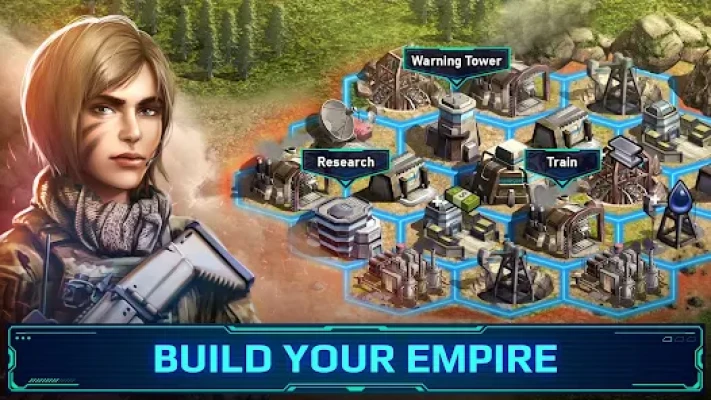
Building Your Military Empire
Your base is the foundation of your empire.
A strong economy supports everything else: research, construction, army production, commander development, and expansion.
When developing your base, maintain a balance between:
Resource production
Military infrastructure
Research
Defensive capability
Storage capacity
Expansion requirements
A common mistake is developing military power faster than the economy can support it.
That can leave you with an impressive army but insufficient resources to maintain meaningful growth.
Resource Management
Resources should always have a purpose.
Before spending a large amount, ask whether the purchase improves one of your immediate priorities.
Good resource management means:
Keeping construction moving.
Funding important research.
Maintaining military production.
Preparing for expansion.
Saving for major upgrades.
Avoiding unnecessary spending on low-priority improvements.
During peaceful periods, build an economic advantage.
During periods of war, convert that advantage into military strength.
Research Strategy
Research unlocks stronger technology and improves your military capabilities.
Because research can affect many areas of your empire, avoid researching randomly.
Instead, identify the type of commander and army you are building.
If your strategy depends on a particular group of units, research that improves those units should generally receive greater attention than technologies that provide little immediate benefit.
A Simple Research Rule
Research toward your strategy, not away from it.
If you are building an offensive army, prioritize technologies that improve your ability to attack and sustain military operations.
If you are surrounded by stronger enemies, defensive and economic improvements may provide more immediate value.
Commanders
Commanders are a major part of War of Nations.
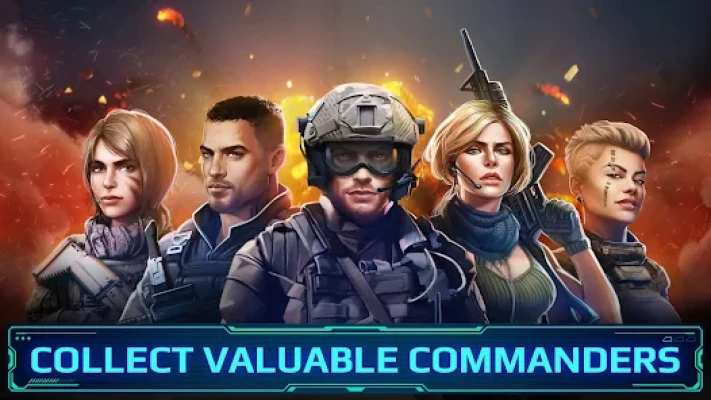
The game allows you to recruit commanders and war experts, improve them, equip them with high-tech gear, and fuse commanders to strengthen your roster.
Do not think of commanders as simple power numbers.
The right commander can improve the effectiveness of the units assigned to them and support a particular military strategy.
How to Develop Commanders
Focus your best development resources on commanders that you actually use.
A useful approach is to build a small core of dependable commanders rather than trying to maximize every commander simultaneously.
Consider:
Their role.
The units they support.
Their equipment.
Their upgrade requirements.
Their usefulness in your preferred type of battle.
The strongest commander on paper is not necessarily the best commander for your army.
Commander Fusion
War of Nations includes a system for fusing commanders.
Before using valuable commanders for fusion, make sure you understand their future usefulness.
Avoid sacrificing a commander simply because you are not using them today. A future event, unit combination, or strategic change could make a previously ignored commander valuable.
When in doubt, build your core roster first and use excess commanders more aggressively later.
High-Tech Military Units
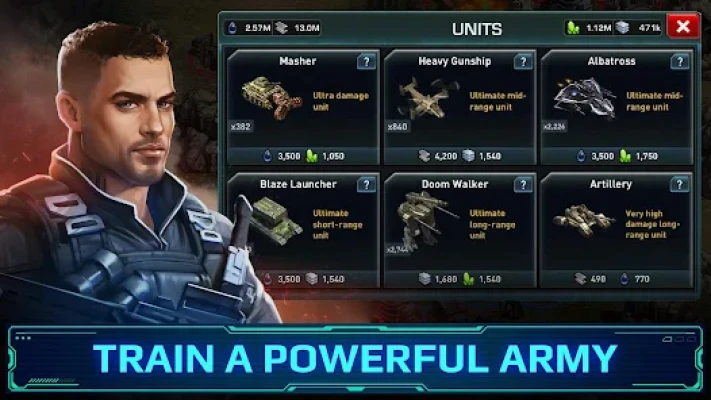
Research allows you to unlock more advanced military units, with the current Google Play description advertising more than 18 powerful units with multiple upgrade levels.
Do not assume that the newest unit automatically replaces everything that came before it.
Different units can have different strategic purposes.
A good army should be designed around:
Damage
Durability
Unit specialization
Commander bonuses
Research bonuses
Resource efficiency
Building an Effective Army
Before launching an attack, consider what you are actually trying to accomplish.
There is a major difference between:
Destroying an enemy army
and
Capturing or occupying an enemy position.
Your army composition should reflect the objective.
If you are attacking a heavily defended target, you may need a different force than you would use for a smaller raid.
PvP Strategy
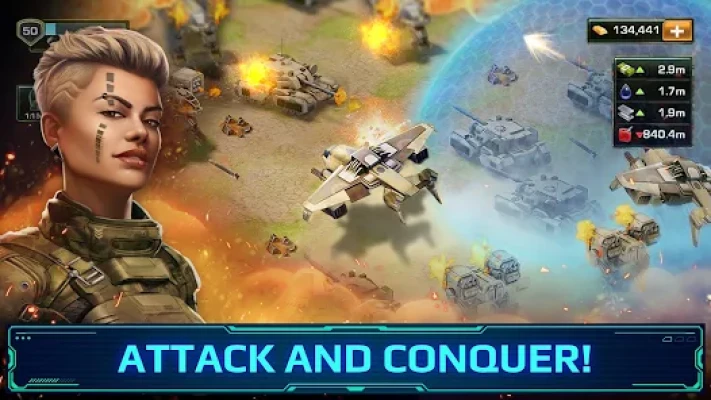
PvP is at the heart of War of Nations.
The game supports several approaches to attacking enemy territory, including raiding, capturing, stealing, and occupying bases. Defensive tools include base shields and the ability to teleport outposts.
Do Not Attack Blindly
Before attacking another player, gather as much information as possible.
Consider:
Their apparent military strength.
Their location.
Their alliance.
Nearby allied players.
The value of the target.
Your ability to reinforce the attack.
What happens if the target retaliates.
A successful attack is not necessarily one that destroys the most units.
The best attack is one that produces a worthwhile strategic advantage without creating an unacceptable cost.
Raiding vs. Occupying
Raiding
Raiding is useful when you want to gain resources or damage an opponent without necessarily committing to permanent territorial control.
It can be appropriate when:
The target is poorly defended.
You want a quick military objective.
You do not want to create a prolonged territorial conflict.
Occupying
Occupation is a more serious strategic commitment.
Before attempting it, make sure your alliance can support the position.
A captured location that cannot be defended is not a successful long-term conquest.
Defensive Strategy
Strong defense starts before the enemy attacks.
Maintain awareness of nearby players and avoid placing valuable outposts in unnecessarily exposed locations.
Use defensive tools intelligently rather than waiting until your base is already in danger.
The game specifically includes base shields and outpost teleportation as defensive options.
When to Use a Shield
A shield is most valuable when it prevents a meaningful strategic loss.
Do not waste defensive protection simply because an enemy is nearby.
At the same time, do not wait until the last possible moment if you know a major attack is coming.
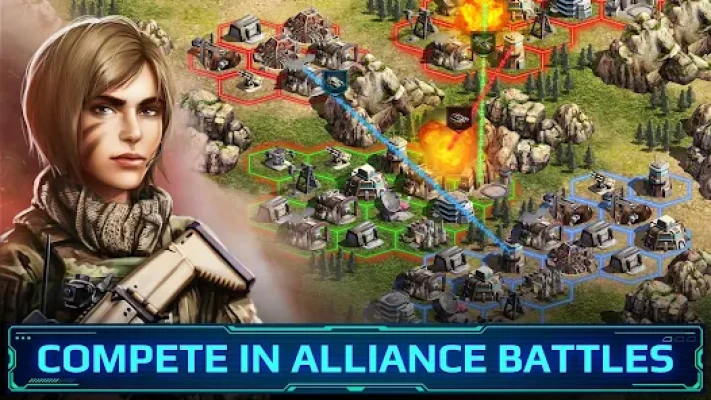
Alliance Strategy
Alliance play can dramatically change your experience.
War of Nations allows alliances to coordinate attacks with up to 50 players around the world.
A strong alliance can provide:
Reinforcements
Coordinated attacks
Defensive support
Shared strategic information
Alliance base bonuses
Help during major events
Choose an Active Alliance
A large alliance is not automatically a good alliance.
Look for one where players actually participate.
An active alliance can be far more valuable than a large but inactive group.
Alliance Base
War of Nations includes an alliance hub where structures such as the Alliance Command, Monument, and Material Compound can provide team benefits.
Alliance development should therefore be treated as a group project.
Individual strength matters, but collective infrastructure can improve the effectiveness of the entire alliance.
Single-Player Campaign
The game also includes single-player campaigns with daily missions and rewards.
Do not ignore these missions simply because PvP is the game's main attraction.
Campaign content can provide a safer environment for:
Testing commanders.
Learning units.
Experimenting with army compositions.
Earning additional rewards.
Practicing combat decisions.
Real-Time Events
War of Nations includes events such as:
World Domination
King of the Hill
Players Arm Race
These events give alliances and individual players additional objectives beyond ordinary map progression.
Event Strategy
Do not spend everything at the beginning of an event.
First determine:
What the event rewards.
Which objectives matter most.
What your alliance is trying to accomplish.
How much you can realistically contribute.
Whether your resources are needed later.
Event success often depends on coordination rather than individual power alone.
World Domination Strategy
For large alliance events, communication is critical.
A coordinated alliance should decide:
Which targets matter.
Who attacks.
Who reinforces.
Who defends.
Where resources should be concentrated.
Which objectives can be ignored.
Sending dozens of players toward unrelated targets may look impressive but can waste the alliance's overall strength.
King of the Hill Strategy
Control-based events reward positioning and timing.
Do not commit your strongest forces too early if doing so leaves your alliance exhausted before the decisive stage.
Watch the battlefield and identify when control is most valuable.
VIP Points
The game includes VIP progression and rewards. The Google Play description states that VIP benefits can include larger armies, commander upgrades, and exclusive events.
Treat VIP rewards as a progression bonus rather than the foundation of your strategy.
Your underlying economy, research, commanders, and alliance activity should still be developed consistently.
Zombie Commanders
One of the more unusual features of the game is its inclusion of undead or Zombie Commanders.
These commanders add another layer to the roster and give players additional options when building specialized armies.
Do not judge them simply by their theme. Evaluate how they fit into your actual military composition.
Best Beginner Strategy
New players should resist the temptation to expand as quickly as possible.
A better progression path is:
Step 1: Build a Stable Economy
Make sure your resource production can support continued development.
Step 2: Upgrade Your Core Buildings
Avoid spreading resources across unnecessary upgrades.
Step 3: Develop a Small Commander Core
Choose several commanders that match your intended army.
Step 4: Research Carefully
Focus research on technologies that directly strengthen your current strategy.
Step 5: Join an Active Alliance
Alliance support becomes increasingly important as the world map develops.
Step 6: Expand Carefully
Use outposts to strengthen your strategic position rather than simply increasing the number of locations you control.
Step 7: Learn From PvP
Start with manageable targets and study what happens after every battle.
How to Choose an Outpost Location
Use this checklist before establishing a new outpost:
Resource value: Is there a worthwhile resource opportunity?
Defensibility: Can your alliance help protect it?
Distance: Can reinforcements reach it quickly?
Enemy activity: Is the surrounding area heavily contested?
Strategic value: Does the location help future expansion?
If the answer is mostly no, another location may be better.
How to Win More PvP Battles
Scout before attacking.
Know your objective.
Match your army to the target.
Use commanders that complement your units.
Avoid unnecessary losses.
Coordinate important attacks with your alliance.
Keep defensive options available.
Do not overextend after a successful attack.
Research technologies that support your army.
Learn from unsuccessful battles.
Common Mistakes
Expanding Too Quickly
More territory does not automatically mean a stronger empire.
Ignoring the Economy
A large army is difficult to maintain without sufficient resources.
Attacking Strong Alliances Alone
A single-player attack against a coordinated alliance can quickly become a disaster.
Developing Too Many Commanders
Spreading resources across the entire roster can slow your strongest commanders.
Wasting Defensive Tools
Shields and relocation options are strategic resources.
Fighting Without a Clear Objective
Know whether you want resources, damage, territory, occupation, or simply information.
Ignoring Alliance Communication
In large-scale PvP, coordination can matter as much as individual military strength.
Advanced Strategy
Think in Terms of Logistics
Distance matters.
A powerful army that takes too long to reach a target may be less useful than a slightly weaker army positioned close to the action.
Maintain a Reserve
Do not commit every useful unit to one operation.
Keeping a reserve can protect your empire from unexpected attacks.
Use Multiple Outposts Strategically
Your outposts should support your overall plan.
Some can prioritize resources while others provide strategic positioning or access to contested territory.
Watch the Map
The world map is constantly changing.
A safe location today can become dangerous tomorrow.
Coordinate Timing
A coordinated alliance attack can be much more effective when several players act together instead of attacking independently.
Is War of Nations Worth Playing?
War of Nations is best suited to players who enjoy long-term strategy rather than short mobile battles.
Its strongest appeal comes from the combination of 4X-style expansion, MMO competition, alliance warfare, commander development, resource management, and a persistent world map.
The current Google Play listing shows more than 10 million downloads and describes the game as a competitive multiplayer strategy experience with open-world expansion, alliances, campaigns, commanders, research, and live events.
However, the player experience is mixed. Google Play currently shows a 3.1-star overall rating from roughly 118,000 reviews, and some reviews complain about technical problems, customer support, and monetization.
That makes War of Nations more appropriate for players who enjoy the genre enough to accept its long-term progression and competitive pressures.
Pros and Cons
Pros
Large persistent world
Deep military strategy
Open-world expansion
Up to 10 outposts
Large alliance battles
Alliance base development
Commander progression
Commander fusion and equipment
18+ high-tech unit types
Single-player campaigns
Real-time events
PvP territory warfare
Multiple tactical attack options
Long-term progression
Cons
Long-term progression can be demanding
Strong emphasis on competitive multiplayer
In-app purchases
Large time commitment for serious PvP
Player reviews include complaints about bugs and performance
The competitive environment can be difficult for new players
Monetization and progression have received criticism from some players
Current Game Information
Game: War of Nations: PvP Strategy
Developer: Garden City Games
Genre: Strategy / 4X / MMO
Combat: PvP and single-player campaigns
Main Focus: Military empire building
World: Persistent open-world map
Outposts: Up to 10
Alliance Size: Up to 50 players
Units: 18+ high-tech units
Commanders: Recruit, upgrade, equip and fuse
Events: World Domination, King of the Hill, Players Arm Race and others
Platforms: Android and Windows
Downloads: 10M+ on Google Play
Google Play Rating: About 3.1 stars
Content Rating: Everyone
In-App Purchases: Yes
Frequently Asked Questions
What is War of Nations: PvP Strategy?
War of Nations is an MMO military strategy game where players build bases, develop armies, recruit commanders, expand across a world map, join alliances, and compete against other players.
How many outposts can you build?
The current Google Play description states that players can build up to 10 outposts on the world map.
How large can a War of Nations alliance be?
The game currently advertises alliance coordination with up to 50 players.
Does War of Nations have PvP?
Yes. PvP is one of the game's main features, with players able to raid, capture, occupy, and otherwise compete for enemy territory.
Does War of Nations have single-player content?
Yes. The game includes single-player campaigns with missions and rewards.
Can commanders be upgraded?
Yes. Commanders can be upgraded, equipped with gear, and fused as part of the game's progression system.
How many military units are available?
The current Google Play description advertises more than 18 high-tech units with multiple upgrade levels.
Is War of Nations free to play?
Yes. It is free to play but contains optional in-app purchases.
Can I play War of Nations on PC?
Yes. Google Play currently lists the game as available on Android and Windows.
Final Verdict
War of Nations: PvP Strategy is a substantial MMO strategy game built around the idea of creating a military empire and gradually turning it into a force capable of competing on a global map.
The most important lesson for new commanders is that power alone is not strategy.
A successful empire needs a healthy economy, carefully developed commanders, appropriate research, useful outpost locations, a capable army, and—most importantly—a strong alliance.
Players who enjoy 4X strategy games, military empire building, PvP conquest, alliance warfare, resource management, commanders, and long-term progression will find plenty of depth here.
The best approach is to expand carefully, develop a focused military core, choose battles with a purpose, and coordinate major operations with your alliance rather than trying to conquer the world alone.
Rate the Game
User Reviews













Popular Games



















 Android
 iOS
 Windows
 Xbox