


Latest Version
October 24, 2026
TERRA SOFTWARE SERVICES SOLUTION PTE. LTD
Strategy
iOS
0
Report a Problem
More About :game
Game Overview
Neogenesis: Auto Combat TCG takes place in a mystical fantasy universe filled with powerful warriors, unusual creatures, and competing factions. Developed by TERRA SOFTWARE SERVICES SOLUTION PTE. LTD. and associated with Mollector Studio, the game focuses on collecting cards, creating effective formations, and developing a team capable of defeating increasingly challenging opponents.
Unlike traditional trading card games that require players to make decisions throughout every turn of combat, Neogenesis uses an auto-combat system. Players prepare their cards and formation before battle, then watch the selected team fight automatically.
This approach shifts much of the challenge toward preparation. The cards you collect, the positions you choose, the combinations you create, and the upgrades you invest in can all influence your results.
The game features six factions: Beast, Dragon, Demon, Elemental, Merch, and The Lost. Each represents a different part of the game's fantasy universe and gives players a broad collection of warriors to explore.
Neogenesis also includes several game modes, allowing players to practice against computer-controlled opponents, compete against other players, and participate in additional challenges. Card collection, trading, combining, and upgrading provide long-term progression beyond individual battles.
Main Objective and Gameplay
The primary goal in Neogenesis is to develop a competitive collection of warrior cards and use them to create effective battle formations. You begin by collecting available cards and learning how their characteristics influence combat.
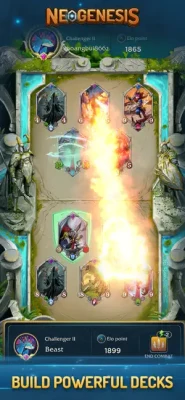
Once you have a selection of warriors, you build a deck consisting of five cards. The formation you create determines how your team approaches the upcoming battle.
After the preparation stage, combat proceeds automatically. Rather than relying on constant input during a fight, you must understand your lineup and anticipate how its members will perform together.
Winning battles helps you progress, collect rewards, and improve your collection. You can use these resources to obtain additional cards, strengthen existing warriors, and experiment with new formations.
The most important principle is to think beyond individual card strength. A powerful warrior may be useful, but a balanced formation with complementary abilities can perform better than a collection of strong cards that do not work well together.
Key Features of Neogenesis: Auto Combat TCG
Five-Card Deck Building
The five-card deck is the foundation of the game's strategy. You must choose a limited number of warriors from your collection, making every selection important.
With six factions and numerous possible combinations, building a team involves balancing individual strength with formation synergy. Experimenting with different lineups helps you discover which combinations suit your preferred approach.
Six Distinct Factions
Neogenesis features Beast, Dragon, Demon, Elemental, Merch, and The Lost. These factions provide the framework for collecting and organizing your warriors.
Exploring different factions helps you understand the variety available in your collection. Rather than committing immediately to one group, experiment with cards from different factions and evaluate their performance.
Automatic Combat
Battles resolve automatically after your formation has been prepared. This makes individual matches more streamlined than traditional turn-based card games.
Because combat is automated, preparation and understanding card interactions are especially important. The battle itself reveals whether your lineup can perform effectively against the opponent.
Card Collection and Upgrades
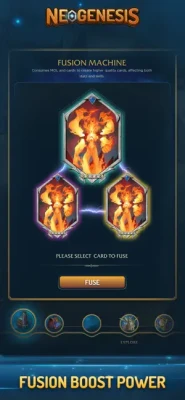
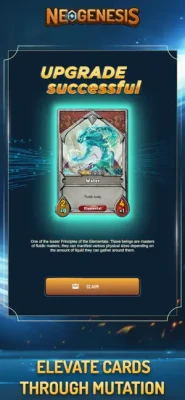
Collecting warriors is only the beginning. Neogenesis allows players to trade, combine, and upgrade cards into stronger Hero cards.
These systems provide a long-term reason to keep improving your collection. Stronger cards can help you compete against more challenging opponents, while careful upgrades can improve the effectiveness of your preferred formations.
Multiple Game Modes
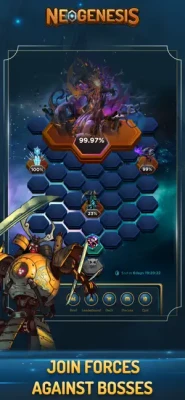
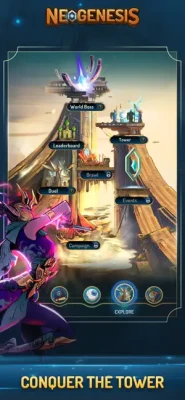
The game includes PvP, PvE, Brawl, and Tournament modes. Each offers a different way to test your collection and develop your strategy.
PvE provides opportunities to practice, while PvP challenges you to compete against other players. Brawl and Tournament modes offer additional competitive experiences.
Strategic Formation Choices
The game emphasizes formation planning, with many possible arrangements and battle outcomes. Small changes to your lineup may influence how your team performs.
Learning to compare formations and evaluate their results is one of the most important skills for long-term improvement.
In-Game Resources
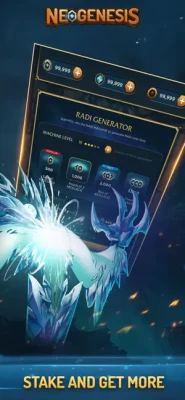
Genesis Molecule (MOL) serves as a primary currency within the game's economy. Radiation Energy (RADI) is another important resource associated with the world's energy and progression systems.
Understanding how these resources are earned and spent helps you make better decisions about card development and other available activities.
Complete Strategy Guide for Neogenesis
Build a Balanced Five-Card Formation
Your five-card formation is the foundation of every battle. Choosing the strongest individual warriors is not always the best approach because the overall performance of a team depends on how its cards work together.
Start by reviewing the warriors you own and identifying what each one contributes. Consider their combat strengths, abilities, durability, and usefulness alongside other cards.
Aim for a formation that can handle different situations rather than one that relies entirely on a single powerful warrior. A balanced lineup can give you more flexibility when facing unfamiliar opponents.
Once you have a promising formation, test it repeatedly and observe the results. Change one card at a time to understand whether the replacement improves your overall performance.
Understand Card Synergy
Card synergy refers to how effectively your warriors complement one another. Two cards that perform well individually may become more valuable when their abilities support the same strategy.
Look for combinations that reinforce a shared approach. If your preferred formation depends on dealing damage quickly, select warriors that help you execute that plan. If you prefer a more resilient team, prioritize combinations that support sustained performance.
Avoid changing your entire deck after every defeat. Make targeted adjustments and compare the results so you can identify which combinations are genuinely effective.
Experiment With All Six Factions
Neogenesis includes six factions: Beast, Dragon, Demon, Elemental, Merch, and The Lost. Exploring these groups helps you discover different warriors and possible formation strategies.
Do not assume that one faction is automatically superior to the others. The effectiveness of a team depends on the cards available, their interactions, and the opponent you are facing.
Try different faction combinations when your collection allows it. Keep track of which warriors contribute most consistently and which combinations struggle against particular opponents.
As your collection grows, you can specialize in a preferred faction or continue building flexible teams that use warriors from several groups.
Learn From Automatic Battles
Because combat resolves automatically, every match gives you an opportunity to evaluate your preparation.
Watch which warriors perform well, which ones contribute little, and where your formation appears to struggle. If your team repeatedly loses despite having several powerful cards, the problem may be the composition rather than the individual card levels.
Review your lineup after each battle and identify the most likely weakness. Adjust the formation, test it again, and compare the outcome.
This process turns losses into useful information instead of encouraging random card changes.
Upgrade Cards With a Clear Plan
Upgrading your warriors improves your collection and helps you prepare for tougher challenges. However, resources are limited, so it is important to choose upgrades carefully.
Start with the cards you use most often in your main formation. Strengthening a dependable warrior can improve several future battles, while upgrading a card you rarely use may provide little immediate value.
Before investing, consider whether the card fits your long-term strategy and whether its upgrade will make a meaningful difference.
Avoid spreading your resources too thinly across your entire collection. Concentrating on a core group of useful warriors is often a more practical approach during early progression.
Use Card Combining Wisely
Card combining is part of the game's progression system and can help you develop stronger Hero cards.
Before combining cards, review the requirements and consequences of the process. Make sure you understand which cards or resources will be consumed and what the resulting upgrade provides.
Prioritize combinations that strengthen your main deck or help you complete a formation you want to test.
Because the exact requirements can vary by card and system, always check the in-game details before committing valuable resources.
Choose PvE for Practice
PvE is a useful starting point when learning the game or testing a new formation. It gives you an opportunity to explore your collection and develop a better understanding of automatic combat.
Use these battles to identify weaknesses without constantly changing your strategy based on a single result.
When you discover a lineup that performs consistently, consider using it as the foundation for your PvP deck. Continue making adjustments as you collect stronger warriors and encounter different challenges.
Approach PvP With a Flexible Strategy
PvP introduces the challenge of competing against other players. Your opponents may use formations that differ significantly from the teams you encounter in PvE.
A formation that performs well against one opponent may struggle against another. Instead of relying on a single lineup without adjustment, evaluate your available cards and consider alternative combinations.
If your results become inconsistent, review recent battles and look for recurring weaknesses. Improving a specific part of your formation can be more effective than rebuilding your entire deck.
The game's asynchronous matchmaking system is designed to match players of similar skill levels. Use this environment to improve gradually and learn from increasingly competitive encounters.
Prepare for Brawl and Tournament Modes
Brawl and Tournament modes offer additional ways to challenge your formation and compete for rewards.
Before entering a competitive event, make sure you understand its requirements and any special rules. Check that your intended lineup is ready and that your important upgrades are complete.
Avoid spending resources on last-minute changes unless you have a clear reason to believe they will improve your performance. A formation you understand well is often more useful than an untested lineup assembled immediately before a match.
Use competitive modes to measure your progress and discover which parts of your strategy need further development.
Resource Management: MOL and RADI
Understand Genesis Molecule (MOL)
MOL is a primary currency in the Neogenesis economy. Managing it effectively helps you make progress without wasting resources on upgrades or purchases that do not support your goals.
Check which activities provide MOL and which upgrades require it. Before spending, identify your most important next objective and preserve enough currency to work toward it.
Avoid making purchases simply because you have enough money available. Consider the long-term benefit of each expense and whether it helps strengthen your main formation.
Manage Radiation Energy (RADI)
RADI is an important resource associated with energy and progression systems in Neogenesis. It plays a role in the game's resource economy and should be managed with the same care as your other valuable materials.
Review the available ways to earn and use RADI, including any current rewards or activities. If a limited-time bonus is available, consider whether it provides a useful opportunity to progress.
The game's advertised rewards and resource systems can change with updates, so use the current in-game information when deciding how to allocate your resources.
Avoid Unnecessary Spending
Neogenesis offers optional in-app purchases, including currency packs and card chests. These purchases can provide additional resources, but they are not a substitute for understanding the game's mechanics.
If you prefer free-to-play progression, focus on completing available activities, collecting rewards, improving your core deck, and spending resources deliberately.
Before purchasing a chest or currency pack, check its contents, price, and potential value for your collection. Do not spend more than you are comfortable with simply to accelerate an upgrade.
Beginner Tips for New Players
Learn the Basic Rules First
Start by understanding how to collect cards, build a five-card formation, and enter battles. Familiarize yourself with the available modes and resource systems before concentrating on advanced strategies.
Keep Your First Deck Simple
Choose warriors that you understand and can use consistently. A straightforward formation makes it easier to evaluate individual card performance and identify weaknesses.
You can experiment with more complicated combinations as your collection expands.
Test Before Investing Heavily
Use available battles to evaluate cards before committing large amounts of resources to their upgrades. Testing helps you avoid investing heavily in a warrior that does not fit your preferred strategy.
Save Useful Duplicate Cards Until You Understand Combining
Duplicate cards may have a role in your progression and card-combining systems. Check their requirements before using or trading them, especially if they could help develop a stronger Hero card later.
Keep Improving Your Main Formation
Choose a reliable core team and improve it gradually. This gives your resources a clear purpose and helps you maintain a competitive foundation while collecting additional warriors.
Review Your Progress Regularly
Check your available rewards, card upgrades, collection, and current objectives. Small, consistent improvements can help you build a stronger deck over time.
Advanced Strategy Tips
Track Your Results
Keep a mental note of the formations that perform well and the opponents that cause difficulties. Recognizing recurring patterns helps you make more informed decisions.
If a particular warrior consistently underperforms, consider replacing it or changing the surrounding formation to improve its usefulness.
Build Alternative Formations
As your collection grows, consider maintaining more than one viable formation. Different lineups give you additional options when your main team struggles against a particular opponent.
Avoid investing equally in every alternative deck too early. Develop a dependable main formation first, then strengthen secondary lineups as resources permit.
Evaluate Upgrades by Their Impact
The highest-level card is not automatically the most valuable card to upgrade next. Consider how much the upgrade improves your overall formation and whether the warrior is essential to your strategy.
A modest improvement to a core card may provide more practical value than a costly upgrade to a rarely used warrior.
Adapt Instead of Chasing a Single Perfect Deck
There is no universally unbeatable formation. Different combinations can perform differently depending on card levels, abilities, and the opposing lineup.
Treat deck building as an ongoing process. Continue testing your options and adapt as your collection develops.
Common Mistakes to Avoid
Choosing cards only because they are powerful: Individual strength does not guarantee that a formation will work well together. Consider synergy and overall team balance.
Upgrading every card at once: Spreading resources across the collection can slow the development of your most useful warriors. Focus on your main formation first.
Ignoring battle results: Automatic combat provides useful feedback. Watch how your team performs and adjust the cards that cause recurring problems.
Changing too many cards at once: Making several changes simultaneously makes it difficult to identify what improved or weakened your formation. Test targeted adjustments.
Ignoring faction variety: Exploring different factions can reveal useful warriors and combinations you might otherwise miss.
Spending currencies without a plan: Check your next progression goal before committing resources to optional purchases or upgrades.
Entering competitive modes without preparation: Make sure you understand your formation and have completed the upgrades that matter most before pursuing difficult challenges.
Assuming one strategy works everywhere: PvE, PvP, Brawl, and Tournament modes may reward different approaches. Adjust your preparation to the challenge.
Is Neogenesis: Auto Combat TCG Worth Playing?
Neogenesis: Auto Combat TCG is worth exploring if you enjoy collectible card games, fantasy warriors, and strategy built around team composition rather than constant manual combat.
Its five-card deck system creates an interesting challenge because every selection matters. The six factions provide variety, while collecting, combining, and upgrading warriors give players long-term goals to pursue.
The automatic battle system also makes matches more streamlined. Players who enjoy planning a lineup and then watching the results unfold may appreciate this approach.
However, the game places significant emphasis on collection growth and card progression. Players who prefer direct control over every action during combat may find the automated system less engaging.
The experience may also require patience as you build a stronger collection and develop effective formations. Your enjoyment will depend on whether you like experimenting with cards and gradually improving your team.
Overall, Neogenesis offers a fantasy auto-battler experience that rewards preparation, experimentation, and thoughtful resource management.
Frequently Asked Questions
What is Neogenesis: Auto Combat TCG?
Neogenesis is a fantasy collectible card game in which players collect warrior cards, create five-card formations, and compete in automatic battles across several game modes.
How many cards can you use in a deck?
The game's advertised core format uses five cards per deck. The challenge is to choose a combination of warriors that work effectively together.
What are the six factions in Neogenesis?
The six factions are Beast, Dragon, Demon, Elemental, Merch, and The Lost. They provide different groups of warriors to collect and use in your formations.
How does automatic combat work?
Players prepare their deck and formation before a battle. Combat then resolves automatically, making card selection and team composition central to the strategy.
What game modes are available?
The advertised modes include PvP, PvE, Brawl, and Tournament. Each provides a different way to test your deck and pursue rewards.
How do you make your cards stronger?
The game supports card collection, trading, combining, and upgrading. These systems help you develop stronger Hero cards and improve your competitive formation.
What is MOL used for?
Genesis Molecule, or MOL, is a primary currency in the game's economy. It supports progression and other resource-related activities.
What is RADI?
Radiation Energy, or RADI, is an in-game resource associated with energy and progression systems. Check the current in-game descriptions for its specific uses and earning opportunities.
Is Neogenesis free to play?
The game is listed as free to download with optional in-app purchases. Players can explore its core systems without treating paid purchases as mandatory, although progression and available resources may vary.
What is the best strategy for beginners?
Start with a balanced five-card formation, learn how your warriors interact, and focus upgrades on cards you use consistently. Practice in PvE, observe battle results, and make gradual improvements before concentrating on competitive modes.
Final Thoughts
Neogenesis: Auto Combat TCG combines collectible warriors, automatic battles, faction variety, and long-term card progression in a fantasy setting. Its central challenge is learning how to turn a limited selection of cards into a formation that performs reliably against different opponents.
For the best results, begin with a straightforward deck, test your combinations, invest in useful upgrades, and manage MOL and RADI carefully. As your collection grows, explore additional factions and develop alternative formations for more challenging battles.
The strongest approach is not simply to collect the rarest cards. It is to understand your warriors, recognize how they work together, and continually refine your strategy as you progress.
Rate the Game
User Reviews











Popular Games



















 Android
 iOS
 Windows
 Xbox