

Latest Version
October 29, 2026
uCool
Strategy
0
com.ucool.heroesarena
Report a Problem
More About :game
Game Information
Game Title: Heroes Arena
Developer: uCool
Game Genre: Multiplayer Online Battle Arena (MOBA), Action, Strategy
Platform: Android, with the listing also referencing Windows compatibility
Game Modes: 1v1, 3v3, and 5v5 multiplayer battles, as described in the store listing
Gameplay Style: Real-time combat, team coordination, hero progression, tactical fighting, and base destruction
Hero Classes: Assassin, Mage, Marksman, Support, Tank, and Warrior
Core Objective: Work with your team to defeat enemy heroes, clear minion waves, overcome defensive turrets, and destroy the opposing team's generator.
Monetization: Free to play with optional in-app purchases
Developer: uCool
Content Rating: The Google Play listing displays an Everyone 10+ rating in the US.
Latest Listed Update: January 26, 2021, according to the Google Play listing. Availability and online functionality may vary, and recent player reports describe connection problems.
What Is Heroes Arena?
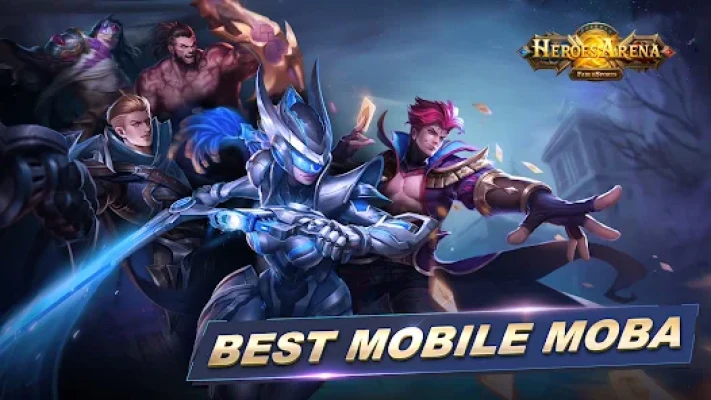
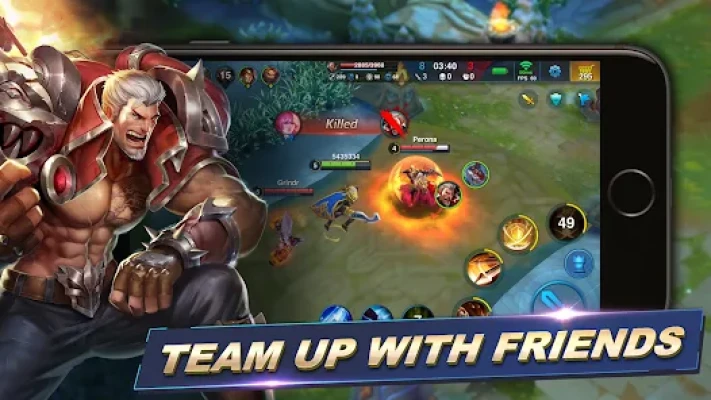
Heroes Arena is a competitive mobile MOBA built around quick matches, hero abilities, equipment choices, and teamwork. Instead of controlling an entire army, players focus on a single hero and work with teammates to gain an advantage over the opposing team.
Each hero has a distinct combat role, making character selection an important part of every match. Some heroes specialize in dealing heavy damage, others excel at protecting allies, and certain characters are better suited to disrupting enemy formations or eliminating vulnerable targets.
The main appeal of Heroes Arena comes from the combination of action and decision-making. Winning requires more than fast reactions. Players must understand their hero's strengths, manage resources, recognize dangerous situations, and cooperate with teammates to secure objectives.
The game was designed for mobile devices, with touch controls, quick equipment purchasing, preset communication messages, and several multiplayer formats. Its gameplay is intended to make classic MOBA battles accessible on a smaller screen while retaining the tactical elements that make team-based combat interesting.
One important consideration for new players is that the game is an older release. Although the store listing remains available, recent user reports indicate that some players experience network errors, freezing, and difficulties entering matches. Successful installation does not necessarily guarantee that online gameplay will work reliably on every device or in every region.
Main Features of Heroes Arena
Real-time multiplayer combat
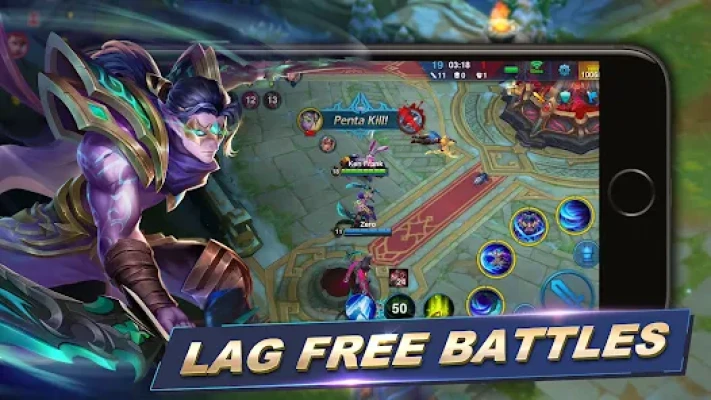
Heroes Arena centers on live battles in which players must react to enemy movements, use abilities at the right moment, and cooperate with their team. Each encounter can change quickly when one side gains a numerical or positional advantage.
Multiple battle formats
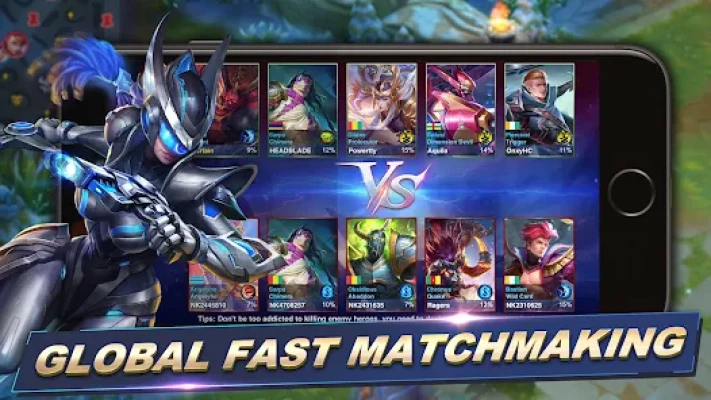
The game listing describes 1v1, 3v3, and 5v5 modes. Smaller matches can help players practice combat and individual decision-making, while larger battles place more emphasis on team composition, map control, and coordinated attacks.
Six distinct hero classes
Assassin, Mage, Marksman, Support, Tank, and Warrior offer different approaches to combat. Understanding these roles helps players select characters that complement their teammates.
Unique abilities and ultimate skills
Heroes have their own abilities, including powerful ultimate skills. Effective ability use can determine the outcome of a duel, protect an ally, interrupt an attack, or turn a team fight around.
Equipment and runes
Players can improve their combat effectiveness through equipment and rune choices. The game also advertises quick equipment purchasing during battle, allowing players to adjust their builds without returning to base.
Leader abilities
The game features additional leader abilities that offer further strategic choices. Their value depends on the selected setup and the demands of a particular match.
Hero skins
Available skins allow players to customize the appearance of their favorite characters. Players should check the current in-game options for specific skins and their acquisition requirements.
Team communication
Preset messages and automated translations are designed to help players communicate across language barriers. Simple calls for assistance, retreating, or attacking objectives can improve coordination.
Battle recordings
The store description advertises automatically recorded and saved battles, allowing players to revisit their performances where this feature is available.
Understanding the Six Hero Classes
The following explains the general strategic role of each class. Exact strengths and ability effects depend on the individual hero.
Assassin
Assassins are designed to pressure vulnerable opponents, especially enemy damage dealers and isolated heroes. Their value comes from choosing the right target and striking when the enemy has limited opportunities to respond.
The best assassin players avoid unnecessary frontal engagements. They watch the map, wait for opponents to use important defensive abilities, and look for opportunities to approach from an unexpected direction.
Recommended approach: Focus on target selection, positioning, and timing rather than chasing every enemy with low health.
Mage
Mages generally rely on magical damage, powerful abilities, and spells that can influence an area or disrupt enemies. They can be especially useful when several opponents gather together.
A mage should usually fight from a protected position. Entering the center of a battle too early can leave the character exposed to assassins and melee fighters.
Recommended approach: Maintain distance, land abilities consistently, and save important spells for moments when they can affect multiple enemies or secure a valuable elimination.
Marksman
Marksmen specialize in sustained damage, often becoming more threatening as they acquire suitable equipment. Their contribution is particularly important during prolonged fights and objective pushes.
Their weakness is often vulnerability to direct attacks. A marksman who stands too far forward can become an easy target for an assassin or warrior.
Recommended approach: Stay behind frontline teammates, attack the nearest safe target, and reposition whenever an enemy threatens to reach you.
Support
Support heroes help the team through defensive abilities, healing, control effects, or other forms of utility, depending on the character.
A good support player recognizes which teammate needs help and when the team should disengage. Support is not a passive role; it requires awareness of enemy movements and the timing of important abilities.
Recommended approach: Protect high-value allies, assist during objective fights, and avoid leaving the team without a clear reason.
Tank
Tanks are built to withstand pressure and help the team establish a safe position. They may initiate fights, absorb incoming damage, protect vulnerable teammates, or disrupt enemy formations.
However, durability does not mean invulnerability. Even a tank can be overwhelmed when surrounded or attacked without allied support.
Recommended approach: Lead engagements only when teammates are ready to follow. Use your position to create space for damage dealers rather than chasing enemies across the map.
Warrior
Warriors generally combine offensive pressure with greater durability than fragile damage-focused characters. They can help initiate fights, contest objectives, and remain effective in extended encounters.
Their flexible nature makes them useful for players who want a balance between dealing damage and surviving incoming attacks.
Recommended approach: Identify whether your team needs a frontline fighter, a secondary damage dealer, or someone who can protect the backline, and adjust your play accordingly.
Complete Heroes Arena Strategy Guide
Choosing the Right Hero
Your first priority should be learning one hero well instead of switching characters after every difficult match.
Start by identifying the hero's primary role, damage type, ability ranges, weaknesses, and ideal combat distance. Learn which ability provides reliable damage, which one helps you escape danger, and which skill is best saved for a decisive encounter.
Once you understand a character's basic abilities, practice the same hero in several matches. Familiarity helps you recognize favorable fights more quickly and reduces the number of mistakes caused by unfamiliar controls.
It is also useful to learn a second hero with a different role. If your preferred character does not fit your team's needs, having another option can improve the overall team composition.
Build a Balanced Team
A team made entirely of damage-focused heroes may eliminate opponents quickly, but it can struggle when the enemy has a durable frontline or strong defensive abilities.
Likewise, a team with too many defensive characters may survive for a long time without dealing enough damage to finish fights or destroy objectives.
A balanced composition generally benefits from a combination of frontline durability, reliable damage, and utility. The precise mix depends on the available heroes and the mode being played.
Before a match begins, consider these questions:
Does the team have someone who can withstand incoming damage?
Can the team eliminate enemies from a safe distance?
Is there a way to pressure vulnerable opponents?
Can teammates protect one another during difficult fights?
Does the team have enough damage to finish an objective after winning an engagement?
You do not need a perfect composition to win. However, understanding what your team lacks helps you avoid choosing a hero that duplicates a role already covered by several teammates.
Understand the Map and Objectives
Hero eliminations are useful because they can create opportunities to advance toward the enemy base. They are not necessarily the main objective of the match.
Pay attention to minion waves, defensive turrets, monsters, and the enemy generator. These elements influence how safely your team can move across the battlefield and when it is appropriate to attack.
Clear nearby threats before attempting a major push. If enemy turrets remain active, advancing without support can expose your team to unnecessary damage.
When the enemy team loses several players, assess whether you can convert that advantage into progress. Depending on the situation, the best choice may be to attack a turret, clear a wave, secure a useful map position, or move toward the enemy generator.
Avoid fighting without a purpose. If a battle does not create a meaningful advantage, consider whether it is worth the risk.
Master Early-Game Farming
The early stage of a MOBA match is important because it establishes the foundation for later fights.
Focus on clearing minions, collecting available resources, and gaining access to useful equipment. Avoid spending too much time pursuing an enemy who can easily escape while nearby resources go unused.
Last-hitting may be valuable where the game's mechanics reward it, but the exact resource system should be learned from the active version of the game rather than assumed.
Stay aware of your health and available abilities. If your hero is too weak to challenge an opponent safely, prioritize farming and positioning over an unnecessary duel.
Early-game objectives include building a useful equipment foundation, understanding your lane or nearby combat area, and avoiding deaths that allow the enemy to gain an advantage.
Choose Equipment Wisely
Equipment should support your hero's role and respond to the enemy team's composition.
Damage-focused heroes generally benefit from offensive attributes suited to their abilities. Tanks may need defensive equipment to survive concentrated attacks. Supports can prioritize items that improve their ability to protect allies or contribute utility, depending on what the game offers.
Do not purchase equipment simply because it is expensive or popular. A more affordable item that addresses an immediate weakness may provide greater value than an expensive upgrade that does not help in the current matchup.
Use the quick-buy system when it is safe to do so. Prepare a preferred equipment setup before combat if that option is available, but remain willing to adjust your choices as the match develops.
If an enemy team relies heavily on physical damage, consider suitable physical defenses. If magical damage is the main threat, look for relevant protection. Against opponents who can quickly eliminate fragile heroes, survival and positioning may be more important than maximizing damage.
Use Abilities at the Right Time
Abilities are most effective when they are used with a clear purpose.
Before engaging, consider whether you need an ability to initiate the fight, deal damage, control an opponent, protect an ally, or escape. Using every skill immediately may leave you without a response when the enemy counterattacks.
Try to recognize predictable enemy movements. If an opponent repeatedly approaches from the same direction, you can prepare a suitable ability rather than reacting after taking damage.
Ultimate abilities deserve particular attention. They can be valuable tools for winning a team fight, but using one against a target who can easily escape may waste an important opportunity.
Coordinate your abilities with teammates whenever possible. A control effect followed by concentrated damage can be more effective than several players using powerful skills at unrelated times.
Position Yourself Correctly
Positioning is one of the most important skills in Heroes Arena.
Tanks and suitable warriors can stand closer to the enemy to create space. Marksmen and many mages should usually maintain a safer distance. Assassins often benefit from approaching vulnerable targets when the enemy formation is distracted.
Do not stand in the same place throughout a fight. Move away from dangerous abilities, avoid predictable approaches, and keep an escape route in mind.
When your team is retreating, do not remain behind simply to deal a little extra damage. Staying alive preserves your ability to defend the next objective and prevents the enemy from gaining additional resources.
Also avoid following an opponent into an unfamiliar or dangerous area without checking the positions of other enemies.
Win Team Fights Through Coordination
Team fights often determine whether a team can advance toward important objectives.
Before committing, check the health of your teammates, the availability of major abilities, and whether nearby allies can join the engagement.
Try to identify the most important enemy target. A vulnerable damage dealer may be a valuable target, but chasing that character is not always the right decision. If doing so exposes your team to heavy damage, attacking a closer and safer opponent may be more effective.
Frontline heroes should create opportunities for their teammates. Damage dealers should focus on dealing consistent damage without exposing themselves unnecessarily. Supports should protect allies and use utility when it can change the fight.
If the engagement begins to go badly, retreat together when possible. A coordinated withdrawal is usually better than allowing each teammate to be eliminated separately.
Learn When to Attack and Retreat
Aggression can create opportunities, but uncontrolled aggression leads to avoidable losses.
Attack when your team has a clear advantage, such as more nearby teammates, healthier heroes, or an opponent who has already used important abilities.
Retreat when your health is low, several enemies are missing from the map, or your team lacks the resources needed for a successful engagement.
Do not assume that an enemy with low health must be chased. Opponents may be waiting for reinforcements or attempting to lure you into a dangerous position.
Likewise, do not defend a lost position indefinitely when regrouping would give your team a better chance to protect the next objective.
Good decision-making is not about fighting constantly. It is about choosing the fights that offer the greatest potential reward for the lowest reasonable risk.
Play Each Multiplayer Mode Differently
1v1 battles
Smaller duels emphasize individual mechanics, ability timing, and resource management. Watch your opponent's movement patterns and avoid wasting abilities when there is little chance of landing them.
Focus on controlling the immediate combat area, trading damage efficiently, and recognizing when to disengage. A single unnecessary mistake can decide a duel.
3v3 battles
Three-player matches reward close coordination. Each hero's contribution becomes particularly important because the team has fewer players to cover missing roles.
Stay near teammates when an important engagement is likely, and avoid beginning a fight when the rest of your team cannot assist.
5v5 battles
Larger matches require more attention to team composition, map objectives, positioning, and coordinated engagements. Keep track of where your teammates are and avoid entering a fight alone.
When your team gains an advantage, use it to advance toward objectives rather than allowing the enemy time to recover.
The official listing describes all three formats, although current access to individual modes may depend on the game's online services and available matchmaking.
Improve Your Map Awareness
Checking the map regularly helps you make better decisions before danger becomes obvious.
Notice when opponents disappear from view, when teammates need assistance, and when an objective becomes vulnerable. Even a brief check can prevent you from advancing into a numerical disadvantage.
If an enemy is missing, avoid assuming that the character has simply returned to base. The opponent may be approaching another fight or preparing to attack an isolated teammate.
When a teammate requests help, evaluate whether you can arrive in time and whether leaving your current position would create a greater problem elsewhere.
Map awareness also helps you avoid unnecessary travel. Moving toward a useful objective or assisting a nearby ally can create more value than chasing an opponent across the battlefield.
Make Team Communication Useful
Preset messages are most effective when they communicate a clear action.
Use available signals to indicate when you need help, when the team should retreat, or when an objective is ready to be contested.
Avoid starting an engagement without checking whether teammates are close enough to contribute. A strong hero can still lose a fight when the rest of the team is unable to follow.
When playing with friends, agree on a simple plan before the match. Decide who will take the frontline, which hero will provide sustained damage, and how the team will approach important objectives.
Clear communication reduces confusion and makes it easier to coordinate abilities during fast encounters.
Avoid Common Beginner Mistakes
Chasing every enemy: Pursuing an opponent too far can separate you from your team and expose you to an ambush.
Ignoring objectives: Eliminations are useful, but they should help the team advance toward victory rather than become the only goal.
Buying equipment without a plan: An unsuitable build can leave your hero vulnerable or unable to contribute effectively.
Using ultimate abilities too early: Powerful skills are more valuable when they can secure an important elimination or influence a major team fight.
Entering fights alone: Even a strong character can be overwhelmed when outnumbered.
Standing too far forward: Fragile heroes need enough distance to deal damage without becoming easy targets.
Ignoring defensive options: More damage is not always the answer. Surviving longer can allow you to contribute more throughout a fight.
Continuing a losing engagement: Recognizing when to retreat is an essential part of competitive play.
Ignoring connection problems: Network instability can interfere with movement, abilities, and combat decisions. Check the connection before starting an important match.
Advanced Tips for Experienced Players
Once you understand the basics, focus on improving the quality of your decisions rather than simply increasing the number of fights you enter.
Learn the effective range of each ability and estimate when opponents are likely to use their most important skills. This makes it easier to bait out defensive abilities before committing to an attack.
Study the enemy team's composition. If they rely on one particularly dangerous damage dealer, plan how your team can pressure that character without abandoning its own vulnerable members.
Adjust equipment according to the match rather than following a single fixed build. A setup that works well against one opponent may be less effective against another.
Pay attention to the timing of engagements. If several enemies are occupied elsewhere, your team may have an opportunity to secure an objective or gain control of a useful position.
After a difficult match, consider why the team lost. Was the problem poor positioning, an unbalanced composition, weak equipment choices, or an unnecessary fight? Identifying one specific mistake to correct in the next match is more useful than changing everything at once.
Recommended Beginner Progression Plan
First Stage: Learn the Controls
Begin with a hero whose abilities are straightforward to understand. Practice movement, basic attacks, skill targeting, and retreating from dangerous encounters.
Your goal is to become comfortable controlling the character without having to think about every input.
Second Stage: Understand Your Role
Learn where your hero is most effective and which teammates benefit most from your assistance. A tank, for example, should not approach combat in the same way as a fragile ranged damage dealer.
Concentrate on fulfilling your role consistently before attempting advanced strategies.
Third Stage: Improve Equipment Choices
Explore the available equipment and rune systems. Learn which attributes support your hero's abilities and which defensive options help against common threats.
Create a basic build that works reliably, then adjust it when the enemy team presents a specific challenge.
Fourth Stage: Practice Team Coordination
Pay attention to teammates, communicate clearly, and avoid isolated engagements. Learn to recognize when the team should attack, defend, or regroup.
This stage is especially important in 3v3 and 5v5 battles.
Fifth Stage: Review Your Performance
Use saved battle recordings if the feature is available. Look for repeated mistakes, such as approaching fights without support, wasting abilities, or neglecting objectives.
Set a small improvement goal for each session. Consistent progress is more valuable than trying to master every mechanic at once.
Is Heroes Arena Free to Play?
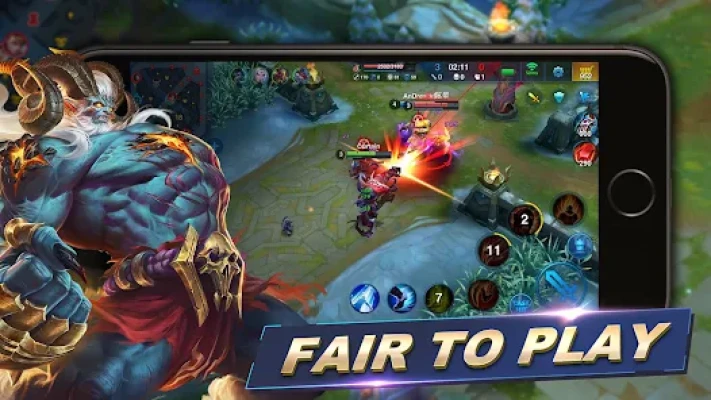
Heroes Arena is listed as a free-to-play game with optional in-app purchases. The store description presents its competitive approach as focused on player skill rather than pay-to-win advantages.
Players should check the current in-game store for the availability and cost of specific items. Purchases are optional according to the published description, and device settings can be used to restrict in-app purchases if necessary.
Does Heroes Arena Require an Internet Connection?
Heroes Arena is designed around online multiplayer gameplay, including real-time battles and matchmaking. It should not be described as a fully offline game.
Recent player reports indicate that network errors and match interruptions may prevent some users from playing successfully. These reports do not establish that every server or region is unavailable, but they make it important to verify connectivity before investing time or money in the game.
How to Fix Common Heroes Arena Connection Problems
If the game displays a network error, try the following troubleshooting steps.
Check whether other online apps work correctly on the same connection.
Switch between Wi-Fi and mobile data to determine whether the problem is network-specific.
Restart the game and your device.
Check that the game is updated through a legitimate distribution source.
Make sure your device has sufficient free storage and that the operating system supports the installed version.
Check whether the problem persists across different networks and at different times.
Contact the developer through its official support channel if the error continues.
If other online games work normally but Heroes Arena repeatedly fails to connect, the issue may be related to the game's own services or compatibility rather than your internet connection. Reinstalling the game is not guaranteed to resolve a server-side problem.
Frequently Asked Questions
What type of game is Heroes Arena?
Heroes Arena is a multiplayer online battle arena game featuring real-time hero combat, team-based strategy, equipment upgrades, and objective-focused battles.
Can you play Heroes Arena with friends?
The game is designed for multiplayer competition and advertises team-based battles. However, the availability of party features and successful matchmaking should be checked in the current version.
How many hero classes are available?
The game listing identifies six classes: Assassin, Mage, Marksman, Support, Tank, and Warrior.
What is the main objective in Heroes Arena?
The main objective is to work with your team to overcome enemy heroes and defenses, advance across the map, and destroy the opposing team's generator.
Which hero class is best for beginners?
There is no universally best class for every player. A durable hero may be more forgiving for someone learning positioning, while a ranged damage dealer may suit someone who prefers attacking from a distance. Choose a character whose abilities are easy for you to understand.
How can you win more matches?
Focus on learning a small number of heroes, choosing suitable equipment, watching the map, coordinating with teammates, and prioritizing objectives over unnecessary fights.
Is Heroes Arena suitable for casual players?
Its different match formats and touch controls may appeal to casual players who enjoy competitive action. However, connection reliability and matchmaking availability can affect the current experience.
Is Heroes Arena still receiving updates?
The Google Play listing reports January 26, 2021, as its latest listed update. Current maintenance activity should not be assumed without confirmation from the developer.
Final Overview
Heroes Arena combines classic MOBA mechanics with mobile-friendly controls, a varied roster of hero classes, real-time multiplayer combat, and tactical equipment choices. Its strongest gameplay elements are the need to cooperate with teammates, understand different combat roles, and convert successful engagements into progress toward the enemy base.
New players can improve by mastering a single hero, learning how to position themselves, and understanding when to fight or retreat. Experienced players can develop more advanced strategies through better map awareness, adaptive equipment choices, and coordinated team fights.
For anyone interested in mobile MOBA games, Heroes Arena offers a useful example of team-based competitive gameplay. However, its older update history and recent reports of connection difficulties should be considered before recommending it as a reliably playable online experience.
Rate the Game
User Reviews



Popular Games



















 Android
 iOS
 Windows
 Xbox