
Latest Version
October 26, 2026
Rollic Games
Strategy
iOS
0
Report a Problem
More About :game
Introduction to Spin Siege
Spin Siege offers a distinctive blend of action, tactical planning, and role-playing progression. Instead of relying entirely on direct attacks, players must think carefully about movement and bonus placement to make every moment of combat count. The battlefield becomes a strategic puzzle in which the right combination of offensive power, defensive protection, and mobility can determine whether a hero survives another wave of enemies.
Developed by Rollic Games, Spin Siege is available on mobile devices and is designed for players who enjoy quick action, character development, and progressively challenging encounters. Its accessible controls make it easy to begin playing, while its hero abilities, equipment, bonus mechanics, and companion system provide additional ways to refine a winning approach.
The key to success is learning how the battlefield responds to your decisions. Strong attacks help remove dangerous enemies, shields provide valuable protection, and movement boosts can create opportunities to escape crowded areas. Combining these tools effectively is more important than choosing upgrades without a clear plan.
Core Gameplay Mechanics in Spin Siege
Bonus Slots and Strategic Placement
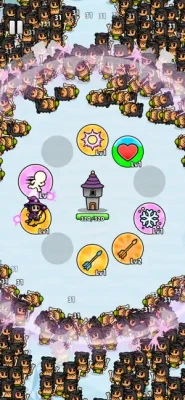
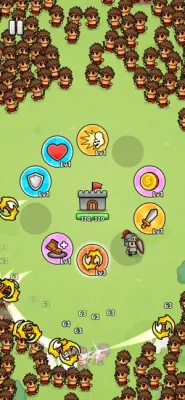
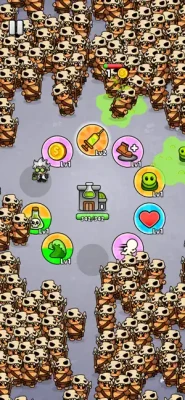
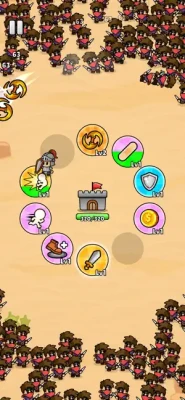
Bonus slots are central to the Spin Siege experience. As your hero moves around the battlefield, stepping on a bonus slot activates its effect immediately. Understanding how to position these bonuses is essential for maintaining a steady flow of damage while avoiding unnecessary risks.
Sword bonuses provide offensive pressure by launching attacks toward nearby enemies. Shield bonuses offer temporary protection, helping your hero withstand dangerous encounters. Dash boosts increase movement speed, making it easier to reposition, escape threats, or move into a more favorable situation.
The most effective strategy is to place bonuses according to the current battlefield conditions. Offensive bonuses are valuable when enemies are within reach, while defensive bonuses become more important when your hero is surrounded or taking heavy damage. Movement bonuses are especially useful when staying in one area becomes dangerous.
Hero Movement and Battlefield Awareness
Movement is more than a way to travel across the arena. It determines which bonuses activate and influences how effectively your hero responds to enemy pressure. A poorly planned route can waste useful effects, while a carefully considered path can combine damage, protection, and mobility.
Pay attention to the location of nearby enemies before committing to a route. Avoid moving blindly toward a bonus if doing so places your hero directly in danger. Instead, consider which effect will provide the greatest immediate benefit and how the next movement will affect your position.
Good battlefield awareness also means recognizing when to prioritize survival over damage. A temporary retreat can give you the space needed to recover control and resume attacking from a safer position.
Heroes and Their Unique Playstyles
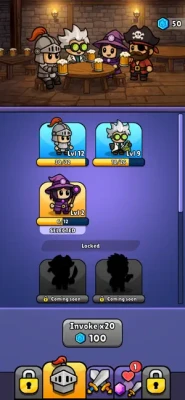
Spin Siege features multiple heroes with different combat styles. Some emphasize direct damage, while others offer specialized abilities or effects that support alternative strategies. Choosing a suitable hero can make a noticeable difference in how comfortably you handle difficult encounters.
Rather than unlocking characters simply to increase your collection, experiment with their abilities and identify which playstyle fits your approach. Players who prefer aggressive combat may favor heroes that deal substantial damage, while those who struggle with enemy pressure may benefit from characters with defensive, healing, or debuff-oriented capabilities.
Every hero should be evaluated according to their strengths, limitations, and available upgrades. A character that performs well in one situation may require a different strategy in another.
Complete Spin Siege Strategy Guide
Best Beginner Strategy for Early Progress
New players should focus on learning the relationship between movement, bonus activation, and enemy positioning before attempting advanced strategies. The early stages provide a useful opportunity to understand how the battlefield works and which decisions consistently produce better results.
Begin by experimenting with sword, shield, and dash bonuses. Observe how each effect changes combat and how frequently you can use it to improve your position. Avoid placing every bonus without a specific purpose.
Develop a balanced approach that combines reliable damage with enough defensive support to survive mistakes. Pure offense can work against weaker enemies, but it may become unreliable when enemy waves grow stronger. Similarly, depending entirely on defensive bonuses can leave dangerous opponents alive for too long.
After each run, consider what caused your success or failure. If enemies overwhelmed your hero, improve your defensive planning. If your damage was insufficient, reconsider your offensive bonuses and hero upgrades. Small adjustments can make subsequent attempts more productive.
How to Use Sword Bonuses Effectively
Sword bonuses are among the most important offensive tools in Spin Siege because they help your hero attack nearby enemies. Their value depends on how well you coordinate bonus activation with enemy positioning.
Try to activate offensive bonuses when enemies are close enough for the effect to contribute immediately. Activating damage effects when there are few useful targets nearby may provide less immediate value than saving that opportunity for a more threatening encounter, where the game's placement mechanics allow you to plan ahead.
When several enemies approach together, offensive bonuses can help reduce the pressure before they close in. Prioritize threats that are likely to restrict your movement or deal significant damage.
Do not neglect defense while pursuing stronger attacks. A hero that deals high damage but cannot survive long enough to use it consistently may struggle in later encounters. The best offensive strategy is one that produces damage without exposing your character to avoidable danger.
When to Choose Shield Bonuses
Shield bonuses are particularly valuable when enemies begin dealing significant damage or when your hero has limited room to maneuver. Their temporary protection can create an opportunity to remain in combat without being overwhelmed.
Use shields when approaching dangerous groups, crossing exposed areas, or preparing for an encounter in which taking damage is difficult to avoid. Activating protection before your hero becomes critically vulnerable is generally safer than waiting until the situation has already deteriorated.
Defensive planning should account for the next few movements, not just the immediate threat. If a shield helps you survive one encounter but leaves you trapped among several enemies, its benefit may be limited. Think about where your hero will move after the protection activates.
For a more reliable approach, combine defensive bonuses with offensive opportunities. Surviving longer gives your hero more time to attack, activate additional effects, and make progress through difficult waves.
How to Make the Most of Dash Boosts
Dash boosts increase movement speed, making them useful for repositioning and escaping dangerous situations. Their effectiveness depends on the route you take and what you intend to accomplish with the extra mobility.
Use speed boosts when enemies begin closing in from several directions or when your current position limits your options. Faster movement can help your hero avoid being trapped and create opportunities to reach useful bonus slots.
Dash boosts can also support aggressive play. If an offensive opportunity appears in a different part of the arena, improved mobility may help your hero reach it more efficiently. However, speed alone does not guarantee safety. Moving rapidly into an occupied area can leave you in an even worse position.
Before using a movement bonus, identify a useful destination. Aim for an area that provides more room to maneuver, access to helpful effects, or a better position from which to continue attacking.
How to Build a Balanced Combat Strategy
A balanced strategy combines damage, protection, and mobility rather than relying on a single type of bonus. The right balance changes as the battle develops.
When enemies are manageable, focus on maintaining consistent offensive pressure. When their numbers increase or their attacks become more dangerous, give defensive options greater priority. If your hero becomes surrounded, use movement tools to create space before attempting to resume an aggressive approach.
This flexible strategy is more dependable than following the same pattern in every encounter. Different enemies, arenas, and hero abilities can change which bonuses provide the greatest value.
The most important habit is to assess the battlefield regularly. Ask yourself whether your current approach is removing threats quickly enough, whether your hero can withstand incoming damage, and whether you have a safe route available if the situation worsens.
How to Survive Difficult Enemy Waves
As you progress, enemies and encounters can become more demanding. Surviving these situations requires careful positioning, efficient bonus use, and sensible character development.
Avoid allowing enemies to surround your hero whenever possible. Maintaining room to maneuver gives you more opportunities to reach bonuses and avoid concentrated attacks. If the battlefield becomes crowded, prioritize creating space rather than attempting to defeat every enemy immediately.
Pay attention to threats that can disrupt your movement or cause damage quickly. Removing dangerous enemies early can reduce the pressure on your hero and make the remaining encounter easier to control.
Defensive abilities are especially useful when the arena offers limited escape routes. However, protection should support an overall survival plan rather than replace it. Combine shields with smart movement and enough offensive power to prevent enemies from accumulating unchecked.
If you repeatedly lose during the same part of a stage, examine your approach before immediately trying again. Your hero may need better equipment, stronger abilities, or a different balance of bonuses.
How to Defeat Stronger Enemies and Bosses
Powerful enemies require more deliberate decision-making than ordinary opponents. Rushing into close combat without considering your available protection can quickly put your hero at a disadvantage.
Maintain enough space to react to incoming threats. Use offensive bonuses when they can contribute meaningful damage, and preserve mobility options for moments when repositioning becomes necessary.
If the encounter lasts longer than expected, prioritize consistency over risky bursts of aggression. Repeatedly dealing damage while remaining in a manageable position is generally more effective than sacrificing most of your health for a short-lived offensive advantage.
Review your equipment and character upgrades if a powerful enemy repeatedly defeats you. A different build may improve your damage output or survivability enough to make the encounter manageable.
Not every difficult fight can be solved by changing your movement alone. Sometimes the most productive decision is to strengthen your hero in easier stages before attempting the encounter again.
Hero Upgrades and Character Progression
Which Hero Upgrades Should You Prioritize?
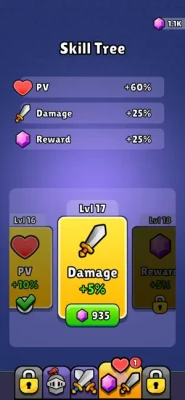
Hero progression helps improve your ability to handle increasingly difficult encounters. Spin Siege includes character development systems involving levels, talents, abilities, and other upgrades, so choosing where to invest your resources is an important part of long-term progress.
Start by identifying the weakness that most frequently causes problems. If your hero deals too little damage, offensive improvements may help you eliminate threats before they become overwhelming. If you regularly lose health too quickly, prioritize survivability and defensive options where available.
Movement-related benefits can also be valuable when positioning is your main difficulty. A hero that can move effectively between bonus slots may gain more opportunities to attack and avoid danger.
Avoid spreading your resources across every available upgrade without considering the benefits. A focused build that supports a clear combat strategy is often easier to evaluate and improve.
How to Unlock and Develop More Heroes
Unlocking additional heroes introduces different ways to approach combat. New characters can offer abilities and strengths that suit encounters where your current hero struggles.
Before committing substantial resources to a new character, consider what they add to your roster. A hero with a different damage profile, defensive capability, or specialized effect can provide useful flexibility.
Develop one dependable main hero first, then expand your roster when you have enough resources to make experimentation worthwhile. This approach helps maintain a reliable source of progress while allowing you to explore alternative playstyles.
Keep in mind that progression costs and character availability can change with game updates. Check the current in-game requirements before planning major investments.
Making Better Use of Talents and Abilities
Talents and hero abilities allow you to develop a character around specific strengths. The best choices depend on your preferred playstyle and the challenges you face most often.
Damage-focused options suit players who can maintain safe positioning and consistently attack enemies. Defensive choices are helpful when surviving incoming attacks is the main obstacle. Abilities that support control, recovery, or debuffs may offer additional value in encounters where straightforward damage is not enough.
Consider how each upgrade complements your existing setup. A collection of individually useful improvements does not always produce the most effective overall build if those improvements do not support the same strategy.
Test your choices across several encounters and observe whether they improve your results. If a particular upgrade does not address your main weakness, consider a different direction when the game permits changes.
Equipment, Gear, and Card Upgrades
How to Improve Your Hero with Gear
Equipment provides another way to strengthen your hero and prepare for more challenging encounters. Spin Siege has introduced a gear system that allows players to equip heroes with stronger items and benefit from equipment sets.
When comparing gear, consider how each item supports your character's role. Offensive improvements can help reduce the time needed to defeat enemies, while defensive benefits can make difficult encounters more forgiving.
Do not evaluate an item only by its rarity or appearance. The practical question is whether it improves the stats or abilities your hero needs most. An item that supports your current build may provide more useful benefits than a seemingly impressive alternative that does not fit your strategy.
Check your equipment regularly as you acquire new items. Replace outdated pieces when the new options provide meaningful improvements, and pay attention to set bonuses when compatible equipment is available.
How to Enhance Cards
Card enhancements provide an additional progression option in Spin Siege. Improving relevant cards can help strengthen your available combat effects and support a more effective overall build.
Focus first on cards that fit your preferred strategy. If you rely heavily on offensive bonuses, improving the effects that contribute to your damage plan may be a sensible starting point. If survival is your main concern, consider the defensive options that help your hero withstand difficult encounters.
Resource management is important because upgrading everything at once can slow progress in areas where you need immediate improvement. Compare the cost of an enhancement with the benefit it offers before spending valuable resources.
As you unlock more options, review your cards again. Your best priorities may change when you develop a new hero or begin facing enemies that require a different approach.
Companions and Team Building
How Companions Support Your Hero
The companion system adds another layer to hero development in Spin Siege. Players can summon and upgrade companions to create a supporting team around their chosen hero.
Companions should be considered part of your overall build rather than a separate feature to ignore after unlocking them. Their value depends on how effectively their available benefits complement your hero and equipment.
When developing your team, look for opportunities to strengthen your weaknesses. A hero that already deals substantial damage may benefit from additional support that improves consistency or survivability, while a more defensive character may need help increasing offensive pressure.
Review companion upgrades as your progression advances. Invest in improvements that provide useful benefits for your current challenges, and avoid spending resources simply because an upgrade is available.
The best companion setup is one that helps your hero perform more consistently across the encounters you actually struggle with.
Building a Stronger Overall Setup
A successful build combines your hero, abilities, equipment, cards, and companions into a coordinated strategy. Each part should contribute to a clear objective.
For example, a damage-oriented setup should help the hero remove threats quickly while retaining enough protection to survive dangerous situations. A survival-focused setup should offer sufficient damage to prevent enemies from accumulating indefinitely.
Movement and bonus placement remain important regardless of your chosen build. Strong equipment cannot completely compensate for consistently poor positioning, just as clever movement cannot always overcome a major gap in character development.
Review your setup whenever progress slows. Small improvements across several systems can work together to make later encounters more manageable.
Resource Management and Efficient Progression
How to Spend Upgrade Resources Wisely
Resources become increasingly important as your heroes develop and upgrade costs change. Spending them carefully can help prevent unnecessary delays when you reach more difficult stages.
Prioritize improvements that directly address the reasons you are losing. If your character survives comfortably but cannot defeat enemies quickly enough, offensive upgrades may provide the greatest benefit. If your damage is sufficient but your hero falls early, invest in survivability.
Avoid upgrading every character equally unless you have a specific reason to do so. Maintaining one reliable hero can make it easier to complete stages and collect the resources needed for further development.
Check the current costs before making a major investment, particularly after updates that adjust progression systems. Requirements may differ from those you encountered earlier in the game.
How to Farm Progress More Efficiently
When a new stage proves too difficult, returning to a manageable encounter can provide an opportunity to practice your strategy and improve your setup. However, the best farming method depends on which rewards each stage currently provides.
Compare the effort required to complete an encounter with the resources it awards. A stage that can be completed consistently may be more practical than a harder stage that frequently ends in failure.
Pay attention to the distinction between different progression currencies and rewards. Some upgrades may require specific resources that ordinary victories do not provide in sufficient quantities. Check the relevant in-game menus to understand how each resource is earned.
Set a clear objective for each farming session, such as gathering enough materials for a particular upgrade or improving your equipment. This makes it easier to measure progress and avoid wasting time on rewards that do not support your immediate needs.
How to Handle Slow Progress
Progress can become slower when enemies grow stronger faster than your character develops. If you encounter this problem, review the entire progression system instead of focusing only on hero levels.
Check whether your equipment is appropriate, your cards are enhanced, your talents support your playstyle, and your companions are contributing useful benefits. You may find that a neglected upgrade system is limiting your performance.
Revisit earlier encounters to practice bonus placement and identify safer movement patterns. Improving your combat decisions can sometimes make a meaningful difference without requiring a large investment.
If the game has recently updated, review the current progression requirements before following older advice. Changes to balancing, currencies, or upgrade costs can affect which strategies are most effective.
Advanced Spin Siege Tips and Tricks
Plan Bonus Placement Before Moving
Avoid making every placement decision at the last moment. Consider the next movement, the location of nearby enemies, and the effect you need most.
Planning ahead helps you avoid routes that activate bonuses without providing much practical value. It also makes it easier to combine offensive effects with defensive support.
You do not need to predict every movement perfectly. The goal is to make deliberate choices that improve your position and reduce unnecessary risk.
Adapt Your Strategy to Each Arena
Different environments and layouts can change how easily your hero moves around the battlefield. A route that works well in one arena may expose you to danger in another.
Observe the available space and identify areas where your hero can maneuver safely. Avoid becoming trapped against obstacles or moving into crowded areas without a clear reason.
Use the layout to your advantage whenever possible. Good positioning can create opportunities to activate bonuses while keeping enough distance to respond to approaching enemies.
Avoid Relying on One Bonus Type
A strategy built around a single effect may work during easier encounters but become less dependable as enemy pressure increases.
Excessive focus on damage can leave your hero vulnerable, while relying too heavily on shields may slow your ability to remove threats. Dash boosts are valuable for mobility, but speed alone will not defeat enemies.
Maintain a flexible approach and adjust your priorities to the current situation. A well-timed defensive effect can be more valuable than another attack, and a movement boost can be the most important choice when your hero is about to become surrounded.
Learn from Every Failed Attempt
A failed run can reveal useful information about your current strategy. Instead of immediately repeating the same decisions, identify the point at which the encounter became difficult.
Consider whether your hero lacked damage, protection, mobility, or sufficient progression. Then change one or two relevant elements and test the results.
This approach makes experimentation more productive because you can better understand which changes actually help. Over time, you will develop a clearer picture of how your chosen hero performs and which upgrades are worth prioritizing.
Keep Your Build Flexible
As you unlock new abilities, equipment, cards, and companions, your original strategy may need adjustments. Do not assume that a build that worked early in the game will remain optimal in every later encounter.
Review your available options whenever you encounter a significant difficulty spike. A different combination of upgrades or a more suitable hero may solve a problem that repeated attempts with your current setup cannot.
Flexibility is especially important when game updates change character balance or progression requirements. Evaluate your build according to its current performance rather than relying exclusively on past success.
Common Spin Siege Mistakes to Avoid
Ignoring Defensive Bonuses
Focusing entirely on offense can make early encounters feel easier, but the same approach may fail when enemies become stronger. Defensive bonuses help maintain your hero's ability to keep fighting and should not be overlooked.
Using Dash Boosts Without a Destination
Moving faster is not always the same as moving safely. Plan where you want to go before relying on a speed boost, and avoid entering crowded areas without a clear escape route.
Spending Resources Across Too Many Heroes
Developing every character at once can leave your strongest hero underpowered for difficult stages. Concentrate on a dependable main character before investing heavily in alternatives.
Neglecting Gear and Companions
Hero levels are only one part of progression. Equipment, card enhancements, abilities, and companions can also influence combat performance. Review these systems regularly rather than assuming character levels alone will solve every problem.
Repeating Failed Strategies Without Adjustments
If the same approach repeatedly fails, another identical attempt is unlikely to solve the underlying issue. Change your bonus priorities, improve your build, or practice a safer route before trying again.
Ignoring Changes Introduced by Updates
Game balance and progression requirements can change. Strategies based on an older version may no longer produce the same results, so check current in-game information when upgrade costs or enemy difficulty seem unexpectedly different.
Is Spin Siege Free to Play?
Spin Siege is available as a free-to-download mobile game with optional in-app purchases. The store listing includes paid offers related to items such as hero bundles, equipment, progression, and ad removal.
Players can begin exploring its core gameplay without purchasing a paid package. However, optional purchases and progression systems may affect how quickly some players unlock or improve content.
A practical free-to-play approach is to concentrate on one main hero, spend resources carefully, and improve your combat strategy before considering purchases. Evaluate offers according to your own preferences rather than assuming that every available upgrade is necessary.
Frequently Asked Questions About Spin Siege
What type of game is Spin Siege?
Spin Siege is a mobile action strategy game with role-playing progression. It combines movement-based combat, interactive bonus slots, multiple heroes, equipment, and companion development.
How do you play Spin Siege?
Guide your hero through the battlefield and use strategically placed bonuses to activate attacks, temporary shields, and movement boosts. Choose your routes carefully, respond to enemy threats, and improve your character between encounters.
What is the best strategy for beginners?
Start with a balanced approach that combines reliable damage, defensive protection, and useful movement. Learn how bonus slots work, upgrade your main hero, and adjust your tactics whenever you encounter a difficult wave.
Which bonuses are most useful?
Sword bonuses are useful for dealing damage, shields help protect your hero, and dash boosts improve mobility. Their relative value depends on the current enemy positions and the condition of your character.
How can I make my hero stronger?
Develop your hero through available levels, talents, abilities, gear, card enhancements, and companions. Prioritize upgrades that address your most common weaknesses and complement your chosen playstyle.
How do companions help in Spin Siege?
Companions provide additional support for your hero. Summoning and upgrading them can strengthen your overall setup, so consider how their available benefits complement your character and equipment.
What should I do when I cannot beat a stage?
Review your hero's equipment, abilities, cards, and companions. Practice on manageable encounters if useful, identify why your current strategy fails, and return with a more suitable build or improved bonus placement.
Can I progress without spending money?
You can download and begin playing Spin Siege for free. To make the most of free progression, focus on consistent victories, careful resource management, and upgrades that directly improve your performance.
Does Spin Siege have different game modes?
The game has introduced additional content, including dungeon modes, alongside new heroes, equipment, and progression features. The modes available to you may depend on your current game version and progression.
Final Thoughts on Spin Siege
Spin Siege rewards players who combine tactical movement with thoughtful character development. Its bonus-slot mechanics give each decision a practical purpose, while heroes, gear, cards, and companions offer several ways to improve your combat performance.
The most reliable path forward is to understand your hero's strengths, use offensive and defensive bonuses at the right moments, and invest resources in upgrades that solve real problems. When a stage becomes difficult, focus on identifying the weakness in your current approach rather than relying on repeated attempts alone.
With better positioning, balanced upgrades, and a flexible strategy, you can approach increasingly challenging encounters with greater confidence and make more consistent progress through Spin Siege.
Rate the Game
User Reviews










Popular Games



















 Android
 iOS
 Windows
 Xbox