


Latest Version
October 28, 2026
Funovus
Strategy
0
com.wildsky.wildcastle
Report a Problem
More About :game
Wild Castle: Tower Defense TD – Game Overview
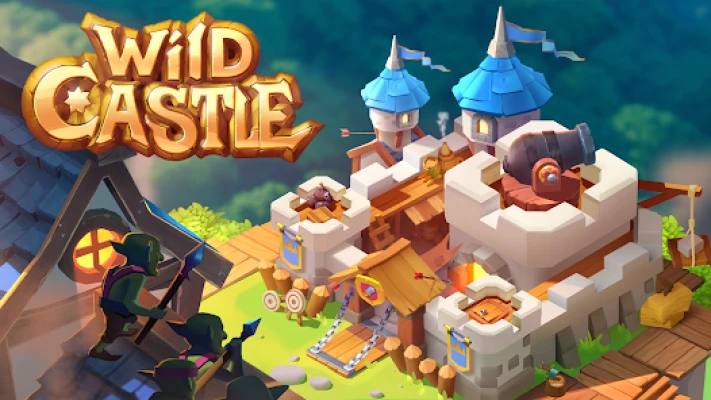
Wild Castle: Tower Defense TD, developed by Funovus, challenges players to transform a small castle into a powerful defensive stronghold. Rather than relying on a single tower or hero, success comes from improving several parts of the kingdom and building a team that can handle different enemy waves.
The gameplay revolves around defending your castle, earning resources, upgrading your army, and expanding your available defensive options. As you progress, stronger monsters make it increasingly important to balance damage, survivability, and resource management.
The game also supports automatic battles that help generate rewards while you are away from active play. This makes it suitable for players who enjoy steady progression without needing to fight manually at every moment.
Main Game Features
Castle building and development
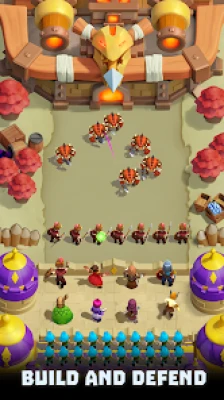
Build your kingdom from the ground up by improving your castle and unlocking additional defensive possibilities. Castle development is an important part of progression because stronger infrastructure helps you prepare for more demanding battles.
Tower defense combat
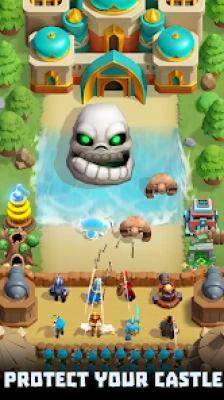
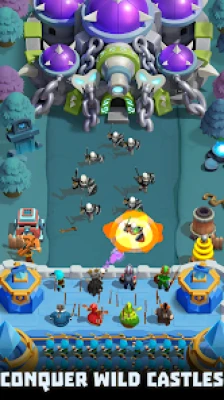
Protect your fortress from repeated waves of monsters. Your defensive setup, upgrade choices, and ability to improve damage output all influence how long your castle can survive.
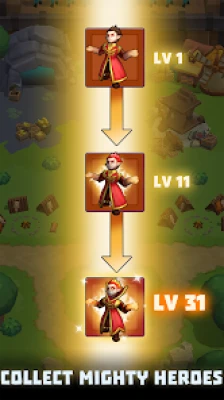
More than 60 collectible heroes
Recruit and level up a large roster of heroes, each offering distinct abilities. Choosing complementary heroes is more effective than simply collecting characters without considering how their strengths work together.
Hero upgrades and team development
Invest resources in heroes that contribute meaningfully to your current strategy. A focused team with improved abilities can often perform better than a large roster of underdeveloped characters.
Idle and automatic battle rewards
Use automatic battle features to support your progression and collect rewards with less active involvement. These rewards can help fund upgrades and reduce the amount of repetitive grinding.
Global leaderboard competition
Compete with other players around the world and work toward better results. Leaderboards offer an additional goal for players who want to improve their performance beyond ordinary progression.
Long-term progression
As your castle becomes stronger, you can continue refining your heroes, improving defenses, and preparing for increasingly challenging enemy waves.
Understanding the Main Gameplay Systems
Castle Upgrades
Your castle is the foundation of your entire defense. Improving it helps develop your defensive capabilities and can unlock additional options as you advance.
It is tempting to spend resources on every available improvement, but a more effective approach is to prioritize upgrades that directly support your current stage. If your damage output is too low, offensive improvements should take priority. If your castle is struggling to survive long enough for your heroes to defeat enemies, strengthen the parts of your defense that improve survival.
Always consider the overall value of an upgrade rather than judging it by its immediate visual effect.
Heroes and Their Abilities
Heroes are central to the game's strategy. Their individual abilities can contribute to damage, support, or other combat advantages, depending on the character.
Instead of spreading resources equally across your entire collection, identify the heroes that fit your preferred approach. Strengthen your core team first, then invest in additional characters when they offer a clear advantage.
A balanced roster can be especially useful when stronger waves require more than raw damage to overcome.
Towers and Defensive Structures
Towers provide another important layer of protection. Different tower options can serve different purposes, so your goal should be to create a defensive arrangement that complements your heroes.
Focus on strengthening the structures that contribute most to your current progress. If enemies are overwhelming your castle quickly, review your overall defensive development. If they survive for too long despite your castle remaining safe, concentrate on improving your offensive capabilities.
Resources and Rewards
Resources allow you to improve your castle, recruit or develop heroes, and strengthen your defensive setup. Managing them carefully makes a noticeable difference over time.
Avoid spending everything as soon as it becomes available. Keep enough resources for upgrades that provide meaningful improvements, and use automatic rewards to support your longer-term development.
Full Strategy Guide for Wild Castle: Tower Defense TD
Best Strategy for Beginners
When starting Wild Castle, concentrate on understanding the core battle loop before trying to optimize every available feature.
Begin by progressing through the available waves and collecting the resources they provide. Use your early earnings to improve your main damage sources and strengthen the castle where necessary.
As new heroes and defensive options become available, experiment with their contributions. Pay attention to which upgrades help you clear waves more comfortably and which ones have little effect on your immediate progress.
Your early priorities should be straightforward: build a reliable defense, improve your most useful heroes, unlock additional options through progression, and avoid wasting resources on upgrades that do not solve a current problem.
The strongest start is not necessarily the one with the most upgrades. It is the one that establishes a dependable foundation for future growth.
How to Build a Strong Hero Team
A successful hero lineup should be built around complementary abilities rather than individual character strength alone.
Choose heroes that contribute consistently to defeating enemies. Include different types of combat contributions when your available roster permits it, and avoid relying entirely on one source of damage.
If a particular hero performs well in your current wave range, prioritize improving that character before investing heavily in several alternatives. Once your primary team is effective, gradually expand your investment into heroes that provide useful additional abilities.
Revisit your lineup whenever progress slows. A team that works well against ordinary enemies may not be equally effective against tougher opponents.
Practical team-building advice:
Prioritize heroes that provide reliable value throughout a battle.
Invest in your strongest core characters before spreading resources across the entire roster.
Consider how each hero's abilities complement your other units.
Test changes over several waves instead of judging a lineup after one battle.
Replace underperforming choices when a better alternative becomes available.
There is no single universally perfect lineup for every stage. Your best team depends on the heroes you have unlocked, their upgrade levels, and the enemies you need to defeat.
How to Upgrade Efficiently
Upgrade efficiency is one of the most important skills in a progression-focused tower defense game.
Before spending resources, identify the problem holding you back. If enemies survive for too long, focus on damage improvements. If your defense collapses early, strengthen the relevant defensive options. If you can defeat enemies comfortably but progress remains slow, consider which available upgrades will improve your overall development.
Try to avoid distributing resources evenly among every possible upgrade. Concentrated investment in a few effective systems often produces a more noticeable improvement than many small, unrelated increases.
Check the cost of each upgrade against the benefit it provides. When an expensive improvement offers only a minor advantage, compare it with cheaper upgrades that might help you progress more quickly.
How to Defeat Difficult Enemy Waves
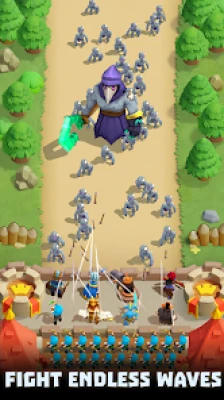
As you advance, enemy waves can become more demanding. Stronger opponents may require additional damage, better defensive preparation, or a more suitable combination of heroes.
When a wave defeats you, do not immediately repeat the same strategy without making changes.
First, identify when the battle begins to go wrong. If enemies reach a dangerous point too quickly, examine your defensive strength. If they remain alive for too long, improve your offensive output. If your current heroes are not contributing effectively, experiment with a different combination.
Make one or two targeted improvements, then attempt the wave again. This approach makes it easier to understand which changes actually help.
Also consider your overall progression. Sometimes the best response to a difficult encounter is to spend time earning rewards from easier content before trying again.
How to Make the Most of Idle Rewards
Automatic battle rewards are useful for maintaining progress when you do not want to remain actively engaged with the game.
Collect available rewards regularly and use them to fund your next meaningful improvements. If your progress has slowed, allow passive rewards to accumulate where the game permits it, then return to upgrade your strongest systems.
Idle progression works best when paired with a clear spending plan. Resources collected automatically can disappear quickly if they are divided among too many low-priority improvements.
Treat automatic rewards as support for your strategy rather than a substitute for it. Hero development, castle improvements, and thoughtful team choices remain important when facing more difficult waves.
Resource Management for Faster Progress
Good resource management helps you avoid unnecessary delays.
Keep your most important upgrades in mind and save enough resources to complete them when possible. Do not assume that every available improvement deserves immediate attention simply because you can afford it.
Focus on upgrades that solve a current weakness or improve several aspects of your progression. If a castle upgrade opens new defensive possibilities, evaluate whether those options will help your current team. If a hero upgrade significantly improves your primary damage source, compare its value against other available purchases.
Make use of the rewards you earn from regular battles and automatic progression. Consistent resource collection, followed by deliberate spending, is more dependable than repeatedly investing without a plan.
How to Approach Tower Development
Tower development should complement your heroes rather than operate independently from the rest of your defense.
Review which defensive options are available and determine how they contribute to your overall strategy. Prioritize the towers that best support your current needs, whether that means improving damage, strengthening your ability to withstand waves, or creating a more balanced defense.
Avoid assuming that the most expensive tower is automatically the best choice. An upgrade is useful when it provides a meaningful advantage for your current stage.
As you unlock more possibilities, revisit your existing setup and make adjustments. A flexible defense is often more effective than a rigid arrangement that never changes as the enemies become stronger.
How to Progress Through the Midgame
The midgame is where careful planning becomes increasingly valuable. Early upgrades may provide quick improvements, but later progress can require more deliberate investment.
At this point, focus on developing a dependable core team and identifying which upgrades give the best return. Continue improving your castle while avoiding unnecessary spending on systems that contribute little to your current battles.
If you reach a progression wall, use the time to collect rewards, strengthen your most useful heroes, and reconsider your defensive setup. Do not assume that advancing immediately is always the most efficient choice.
Gradual improvements can make the next group of waves much easier to handle.
Advanced Strategy for Long-Term Progression
For long-term success, treat every upgrade as part of a larger plan.
Develop your main heroes, improve the castle, and maintain a defensive arrangement that supports your preferred playstyle. As you gain access to more systems, evaluate their contribution to your current goals instead of upgrading everything automatically.
Pay attention to how changes affect your results. If a new hero does not improve your performance, consider whether that character needs further development or whether another member of your roster would be more useful.
Use difficult battles as opportunities to identify weaknesses. A failed attempt can reveal whether your strategy needs more damage, stronger defenses, or a different hero combination.
Consistency is especially important in a game with ongoing progression. Regular rewards, focused upgrades, and sensible adjustments can gradually turn a modest castle into a much stronger fortress.
How to Compete on the Global Leaderboard
Leaderboard competition rewards players who continually improve their overall performance.
Build a dependable team before concentrating on rankings. Strengthen your most effective heroes, improve your defensive systems, and make sure your resources are being used efficiently.
Rather than chasing every new upgrade, concentrate on improvements that contribute directly to your results. Reassess your strategy whenever your progress slows, and use available rewards to close the gap between your current setup and your next goal.
Remember that leaderboard performance can depend on progression, available characters, and other game systems. Focus on improving your own results consistently rather than expecting a single upgrade to transform your ranking.
Common Mistakes to Avoid
Upgrading too many heroes at once
Spreading resources across your entire collection can leave your main team too weak. Establish a core lineup before investing heavily in additional characters.
Ignoring the castle
Heroes are important, but castle development is also part of your progression. Neglecting the main defensive structure can limit your ability to handle stronger waves.
Spending resources without a goal
Every upgrade should support a specific need. Identify your biggest weakness before committing valuable resources.
Repeating failed battles without adjustments
If the same wave repeatedly defeats you, change your approach. Review your damage output, defensive strength, and hero selection before trying again.
Ignoring automatic rewards
Passive rewards can help maintain your progress. Collect them when available and use them to support your next meaningful improvement.
Assuming one strategy works forever
As you advance, your needs change. Reassess your heroes and upgrades instead of relying on an unchanged setup throughout the game.
Recommended Daily Gameplay Routine
A simple routine can help you make steady progress without spending unnecessary time on repetitive tasks.
Start by collecting available rewards and checking your current resources. Review your heroes and castle to identify the most valuable upgrades you can afford.
Next, attempt the available waves and monitor your results. If you progress comfortably, continue advancing. If you encounter a difficult wave, identify the weakness that is limiting your success and invest in a targeted improvement.
Use automatic battle rewards when you are away from the game, then return to collect them and continue upgrading your strongest systems.
Before finishing a session, consider your next objective. Having a clear goal, such as improving a core hero or strengthening your defense, helps make your next session more productive.
Is Wild Castle: Tower Defense TD Worth Playing?
Wild Castle: Tower Defense TD is worth considering if you enjoy fantasy castle defense, hero collection, incremental upgrades, and strategic progression. Its combination of tower defense and role-playing elements gives players several ways to improve their strength, while automatic rewards make it easier to continue developing between active sessions.
The game is particularly appealing to players who enjoy gradually building a stronger team and experimenting with different defensive approaches. However, its many upgrade opportunities can require patience, especially when progress slows and stronger enemies demand more investment.
The game is free to download and includes advertisements and optional in-app purchases. Players who prefer a completely purchase-free experience should keep in mind that progression and some available offers may differ depending on the features they choose to use.
Final Thoughts
Wild Castle: Tower Defense TD combines castle building, hero development, and wave-based combat into a progression-focused strategy experience. Its central challenge is learning how to use limited resources effectively while building a defense that can withstand increasingly powerful enemies.
For the best results, strengthen your most useful heroes, improve your castle steadily, use idle rewards wisely, and adjust your strategy whenever progress stalls. With a balanced approach and consistent upgrades, you can build a formidable fortress and continue pushing toward more challenging stages.
Rate the Game
User Reviews










Popular Games



















 Android
 iOS
 Windows
 Xbox