

Latest Version
October 29, 2026
HypeHype Inc.
Strategy
0
com.frogmind.badlandbrawl
Report a Problem
More About :game
Game Overview
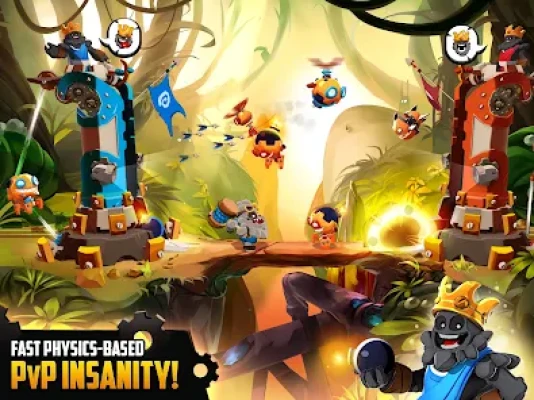
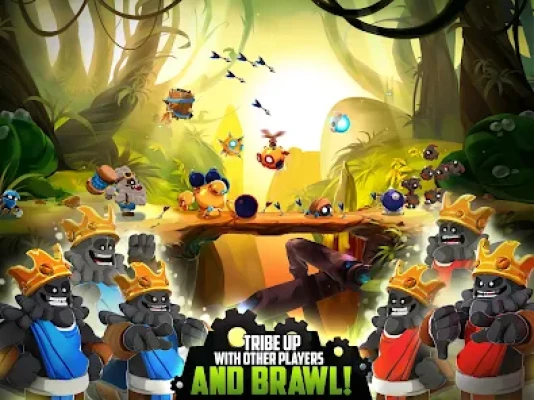
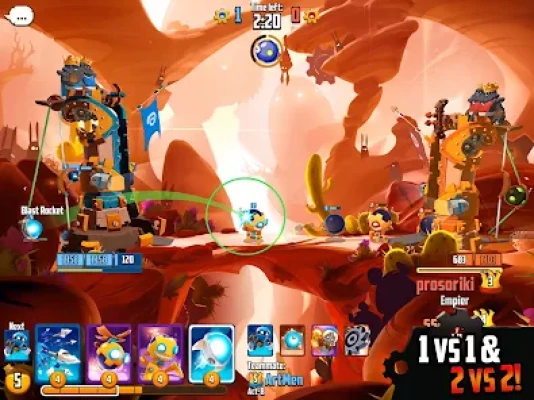
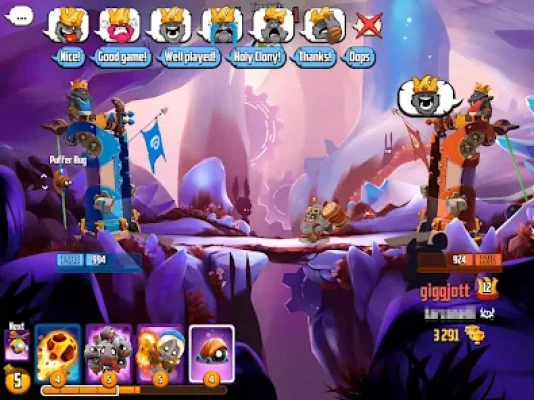
Badland Brawl transforms traditional tower battles into a fast-paced contest of timing, physics, and strategic decision-making. Instead of directly controlling characters as they move across the battlefield, players launch clones from their tower and use their unique abilities to attack opponents, defend their own structure, and create opportunities for devastating combinations.
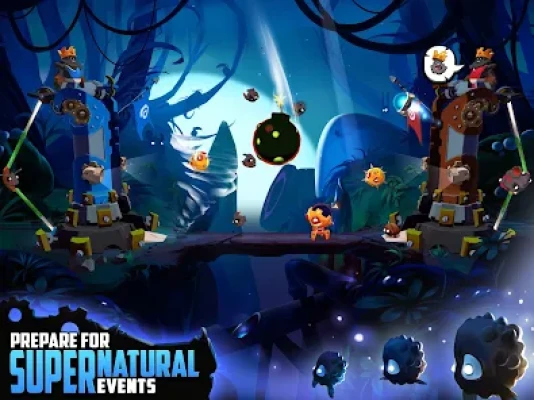
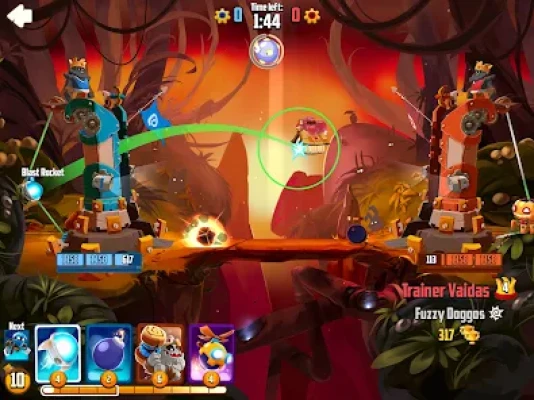
The central objective is to destroy the opposing tower before your own tower suffers greater damage. Each tower has three floors, and the player who destroys more floors wins. This makes every deployment important because a well-aimed clone can damage the enemy, disrupt an attack, or trigger a chain reaction that changes the entire match.
The game features a wide variety of clones, each with different behaviors, strengths, and tactical uses. Some are designed to attack towers directly, while others can absorb damage, knock opponents backward, or create openings for follow-up attacks.
Badland Brawl is easy to understand at first but becomes increasingly challenging as opponents learn to anticipate your moves. Winning consistently requires more than launching characters as quickly as possible. You must manage your available resources, understand the physics system, and recognize the right moment to attack or defend.
The game also includes collectible eggs, clone upgrades, competitive progression through different lands, tribes, private duels, and BadTube, where players can watch battles to discover new tactics. It requires an internet connection for its real-time multiplayer gameplay.
Main Features of Badland Brawl
Real-Time Multiplayer Battles
Fight against real players in live PvP matches. Each opponent uses different clones and strategies, requiring you to adapt your approach throughout the battle.
Physics-Based Slingshot Combat
Launch clones by pulling back and releasing the slingshot. Your launch angle, power, and timing influence how characters travel and interact with other objects.
Unique Clone Characters
Collect a diverse roster of characters with distinct abilities. Build a team that combines direct attacks, defensive support, and creative tactical options.
Destructive Chain Reactions
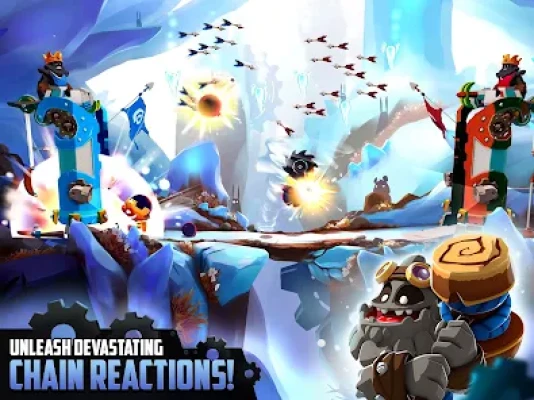
Combine clone abilities to trigger powerful sequences of collisions and attacks. A carefully planned combination can break through defenses and deal significant damage to an enemy tower.
Tower Destruction Gameplay
Each tower has three floors. Your objective is to destroy more floors than your opponent, making both offense and defense essential throughout a match.
Collectible Eggs and Upgrades
Unlock BADLAND eggs, collect clone units, and upgrade your favorite characters. Developing a reliable team is an important part of long-term progression.
Lands and Competitive Progression
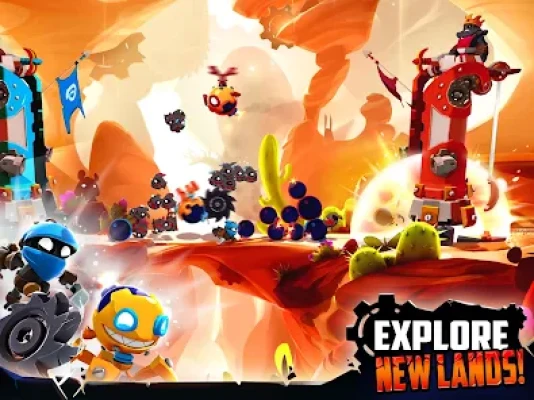
Compete in battles and advance through different lands as you improve your skills and strengthen your collection.
Tribes and Friendly Duels
Join or create a tribe, share clones where supported, and challenge friends or fellow tribe members in private battles.
BadTube Battle Replays
Watch recorded battles to study different combinations, launch angles, and tactical decisions. Observing experienced players can help you discover new ways to use your own team.
Understanding the Battle System
The Three-Floor Tower System
Each player controls a tower with three floors. Your objective is to destroy the opponent's tower while protecting your own.
Victory depends on the number of floors destroyed by the end of the battle. This means that dealing damage consistently is important, but a well-timed defensive move can be just as valuable as a successful attack.
Destroying the opponent's first floor also grants your King an additional crossbow, creating a useful advantage as the battle continues.
How the Slingshot Works
Your clones are launched using a slingshot. Pulling it back and choosing the release angle determines the direction and strength of the launch.
Some clones travel farther or faster depending on the launch power, while their mass can influence movement and collision damage. Learning these physical interactions is central to mastering the game.
A short launch can be more effective than a powerful one when you need precise positioning. Likewise, a stronger launch may be useful when you want a character to travel across the battlefield or collide forcefully with an enemy.
Clone Abilities and Roles
Different clones serve different purposes. Understanding their roles helps you construct a balanced party.
Tower attackers: Characters intended to reach the enemy structure and damage its floors.
Defensive clones: Units that intercept incoming threats or protect your side of the battlefield.
Heavy clones: Characters whose mass or impact can help disrupt enemy formations and create opportunities.
Support clones: Units that improve the effectiveness of other characters or make follow-up attacks easier.
Disruptors: Characters that interfere with opposing units through collisions, knockback, or other special effects.
These categories describe general tactical functions rather than fixed classifications for every character. Check each clone's description to understand its actual abilities.
Full Strategy Guide for Badland Brawl
Build a Balanced Brawl Party
Your team should contain clones that work well together. A lineup focused entirely on direct damage can struggle against defensive opponents, while a party made up mostly of defensive characters may find it difficult to destroy towers efficiently.
Include reliable tower attackers, a way to interrupt incoming threats, and characters that can support combinations. Consider each clone's deployment cost and how frequently you can use it during a match.
Avoid selecting characters solely because they have high levels. A lower-level clone that complements your strategy may be more useful than a stronger unit that does not fit your lineup.
Test your party against different opponents and replace characters that consistently fail to contribute.
Master Launch Angles and Power
Accurate launches are among the most important skills in Badland Brawl.
A steep launch may help you reach a particular area, while a flatter trajectory can be useful when you want to travel across the battlefield. The best angle depends on the clone, its movement behavior, and the situation.
Experiment with different pullback distances and release angles in friendly matches. Observe where each clone lands and how it interacts with other units.
Once you understand a character's movement, you can make more deliberate launches instead of relying on guesswork.
Learn to Create Chain Reactions
Chain reactions are one of the game's most distinctive mechanics. Rather than treating each clone as an isolated attack, consider how one deployment can affect everything already moving across the field.
A well-timed launch may knock an enemy away, redirect another character, or create a clear route toward the opposing tower. Combining several abilities can produce much greater results than using the same characters separately.
Start with simple combinations and learn their timing. Introduce additional clones only after you understand how the initial interaction works.
Remember that chain reactions are influenced by physics. Even a familiar combination can behave differently when characters are positioned differently or when your opponent intervenes.
Manage Your Deployment Opportunities
Every launch should have a purpose. Avoid sending clones into the battlefield merely because they are available.
Before deploying a character, consider whether it will damage the tower, stop an enemy, protect an important area, or prepare a stronger follow-up attack.
If the opponent has just launched an expensive offensive combination, a well-chosen defensive clone may neutralize much of that investment. Once the threat is handled, you can look for an opportunity to counterattack.
Being selective with your deployments helps you maintain pressure without leaving your defense exposed.
Balance Offense and Defense
An aggressive strategy can destroy tower floors quickly, but it also creates opportunities for counterattacks. A defensive strategy can prevent damage, yet it may allow your opponent to control the pace of the match.
The best approach changes according to the current situation.
When your tower is safe and the opponent's defenses are weak, concentrate on creating a reliable attack. When several enemy clones are approaching, interrupting their progress may be more valuable than launching another attacker.
Watch the movement of enemy characters and respond before they reach a dangerous position. Good defense often begins with anticipating the opponent's next move rather than reacting after damage has occurred.
Use Heavy Clones Strategically
Characters with substantial mass can have useful physical effects, including forceful collisions and stomping damage where applicable.
However, launching a heavy clone without considering its trajectory may waste its potential. Pay attention to where it lands, what it collides with, and whether its movement supports your next attack.
A heavy unit can be especially useful when the opponent's formation creates an opportunity for a disruptive impact. In other situations, a lighter or more precise character may accomplish the objective more efficiently.
Choose based on the task rather than assuming that the heaviest clone is always the strongest option.
Protect Your Tower from Incoming Clones
When an enemy character is moving toward your tower, evaluate whether you can intercept it before it causes damage.
Positioning and launch timing are important. A defensive clone launched too early may miss the threat, while one launched too late may fail to prevent a collision.
Learn which of your characters can interrupt enemy movement and which are better suited to absorbing impacts. Use that knowledge to select the most efficient response.
Also remember that a clone pushed toward its own base will not damage that tower. Understanding this interaction can help you distinguish a genuine threat from an enemy unit whose movement has already been disrupted.
Exploit Your Opponent's Mistakes
Many opportunities arise when an opponent uses the wrong character, misjudges a launch, or commits too much of their available offense at once.
If an enemy attack misses its intended target, consider whether the resulting position leaves a clear route toward the tower. If an opponent's defensive unit is out of position, exploit the opening before the formation recovers.
Do not rush into every apparent opportunity. Check whether the enemy has another clone ready to intercept your attack.
The strongest counterattacks combine good timing with an understanding of what the opponent can do next.
Upgrade the Right Clones
Collecting and upgrading clones improves your ability to compete as you advance through the game.
Focus on characters that regularly contribute to your strategy. A reliable attacker or a defensive unit that consistently stops dangerous threats is often a better investment than a character you rarely deploy.
Consider how each upgrade changes the character's usefulness and whether your team needs that improvement. Building a dependable core lineup is generally more efficient than spreading resources evenly across every available clone.
Continue experimenting as you unlock new characters, but avoid replacing your entire party whenever a new option appears.
Use Eggs and Rewards Efficiently
BADLAND eggs are an important part of collecting and developing clones. Open available rewards according to the game's current progression systems, and review your collection regularly to identify useful upgrade opportunities.
Pay attention to the rewards available through ordinary battles, events, and other in-game activities. Where choices are offered, prioritize resources that strengthen your main party.
Avoid spending resources without a clear objective. A planned upgrade path makes it easier to build a cohesive team and prepare for more competitive opponents.
Learn from BadTube Replays
BadTube provides a way to observe other players' battles and discover different approaches to combat.
When watching a replay, focus on the decisions behind each successful attack. Notice how the player chooses launch angles, times defensive responses, and combines clones.
Look for tactics that solve problems you encounter regularly. If you struggle to stop a particular kind of attack, observe how experienced players defend against similar situations.
Practice those techniques in friendly matches before relying on them in competitive battles.
Improve Through Friendly Duels and Tribes
Joining an active tribe can provide opportunities to exchange knowledge, share clones where supported, and challenge other members.
Friendly duels are particularly useful because they allow you to test new strategies without focusing exclusively on competitive progression.
Use these matches to practice difficult launches, evaluate alternative lineups, and learn how different clones behave in combination. Discussing tactics with other players can also reveal solutions you may not have considered.
Adapt to Different Opponents
Some opponents focus on rapid attacks, while others wait for an opening before launching a carefully planned combination.
Against aggressive players, prioritize efficient defensive responses and avoid allowing several threats to reach your tower at once.
Against defensive players, vary your attacks and look for ways to force them to use their best counters. Repeating the same launch pattern makes your intentions easier to anticipate.
Against players who rely on chain reactions, observe the initial setup and disrupt the combination before it develops fully.
Flexibility is essential because a strategy that works against one opponent may be ineffective against another.
Advanced Tips for Winning More Battles
Aim for useful interactions, not just distance. A clone that lands in the right position can be more valuable than one that travels across the entire field.
Plan combinations in advance. Consider which clone should launch first and what the next deployment should accomplish.
Avoid predictable launches. Vary your timing and attack patterns so opponents cannot easily anticipate every move.
Defend efficiently. Use the smallest effective response when possible, preserving stronger characters for more dangerous situations.
Study collision behavior. Learn how mass, speed, and launch angle influence interactions between clones.
Prioritize tower damage when an opening appears. Defensive play is important, but you still need to destroy enemy floors to secure a victory.
Review your party after difficult matches. If a particular threat repeatedly defeats you, consider changing one character to address that weakness.
Learn from experienced players. Replays can reveal combinations and defensive techniques that are difficult to discover through experimentation alone.
Common Mistakes to Avoid
Launching Clones Without a Plan
Sending characters into battle without considering their purpose can waste valuable opportunities. Decide whether each deployment is intended to attack, defend, disrupt, or prepare a combination.
Ignoring Physics
Aiming without considering speed, mass, and trajectory makes attacks less predictable for you as well as your opponent. Practice with individual clones until you understand their movement.
Relying on One Combination
A single attack pattern may work initially, but experienced opponents can learn to counter it. Develop alternative strategies and adjust your approach when necessary.
Neglecting Defense
Concentrating only on damaging the enemy tower can allow incoming clones to reach your own structure. Monitor threats and intercept dangerous attacks before they become difficult to stop.
Choosing Clones Without Considering Synergy
A party of individually powerful characters may still perform poorly if their abilities do not complement one another. Build a lineup around combinations and tactical coverage.
Upgrading Characters You Rarely Use
Limited resources should support your preferred strategy. Prioritize the clones that consistently contribute to your victories.
Best Beginner Strategy
New players should begin by learning the slingshot controls and understanding how their first clones move.
Build a balanced party with dependable attackers and useful defensive options. Practice different launch angles and pullback distances, then observe how the resulting movements affect the battlefield.
Focus on protecting your tower while looking for straightforward opportunities to damage the enemy. Avoid complicated combinations until you can consistently execute basic attacks and defensive responses.
As you collect more clones, test new abilities and gradually improve your core lineup. Use friendly duels to practice unfamiliar tactics, and review BadTube battles to learn from experienced players.
The goal is to develop a reliable foundation that you can adapt as you unlock more characters and encounter stronger opponents.
Best Advanced Strategy
Experienced players should focus on precision, tactical flexibility, and efficient combinations.
Build a party that can respond to different threats without relying on one character or attack sequence. Learn how to use physics to redirect enemy clones, create openings, and maximize the impact of each launch.
Anticipate how the opponent will respond to your attacks. Sometimes the best move is to force a defensive reaction before launching your main offensive combination. In other situations, disrupting an incoming attack may create the strongest opportunity for a counterattack.
Track which characters your opponent uses and watch for patterns in their timing. Adjust your strategy as the match develops instead of following a fixed sequence regardless of the situation.
Game Progression and Rewards
Progression in Badland Brawl involves competing in battles, advancing through lands, collecting clones, and upgrading your roster.
Eggs and other in-game rewards help expand your collection and improve your available characters. As your roster grows, you gain more options for constructing specialized parties and experimenting with new combinations.
Tribes offer a social component, while friendly duels provide a useful way to practice and improve. Events and other activities may provide additional opportunities to earn rewards, depending on what is currently available in the game.
The most effective progression strategy is to combine regular play with focused upgrades and continued practice. Improving your understanding of the physics system can be just as important as increasing your characters' levels.
Frequently Asked Questions
What is Badland Brawl?
Badland Brawl is a real-time multiplayer strategy game in which players launch unique clone characters using a slingshot to attack enemy towers, defend their own structures, and create physics-based chain reactions.
How do you win in Badland Brawl?
Destroy more floors of the opponent's tower than they destroy of yours. Each tower has three floors, so effective attacking and timely defense are both important.
Is Badland Brawl free to play?
Yes. The game is free to download and play, with advertisements and optional in-app purchases. Some purchases include randomized in-game items.
Can you play Badland Brawl offline?
No. An internet connection is required for its real-time multiplayer battles.
How do you unlock more clones?
You can collect clones through eggs and other available in-game progression rewards. The available methods and rewards depend on the game's current systems.
What is the best strategy for beginners?
Start with a balanced party, practice launch angles, learn each clone's ability, and prioritize efficient attacks and defensive responses. Avoid wasting deployments on moves that do not serve a clear purpose.
Why are chain reactions important?
Chain reactions allow multiple characters and collisions to work together. A well-timed combination can disrupt enemy defenses and create more damage than an isolated attack.
How can you improve your aim?
Practice different pullback distances and launch angles. Observe where each clone lands, how quickly it travels, and how its mass affects collisions.
What are tribes in Badland Brawl?
Tribes are player communities that support social interaction and activities such as sharing clones where available and challenging fellow members to friendly duels.
How can BadTube help you improve?
BadTube lets you watch battles and learn from other players' tactics. Study their launches, combinations, and defensive decisions, then practice the techniques that suit your own party.
Final Thoughts
Badland Brawl combines imaginative characters, physics-driven combat, and competitive multiplayer strategy in a distinctive tower-battling experience. Every match challenges you to make accurate launches, protect your tower, and find creative ways to overcome an opponent's defenses.
The key to consistent success is understanding how your clones behave and how their abilities work together. Build a balanced party, learn the physics system, manage your deployments carefully, and adapt your tactics to each opponent.
Whether you are just beginning or working toward higher competitive ranks, every battle offers an opportunity to improve your aim and refine your strategy. With practice, smart team-building, and well-timed chain reactions, you can become a more effective Badland Brawl player and enjoy everything the game has to offer.
Rate the Game
User Reviews







Popular Games



















 Android
 iOS
 Windows
 Xbox