



Latest Version
December 18, 2025
SeungHo Chung
Strategy
iOS
0
Report a Problem
More About :game
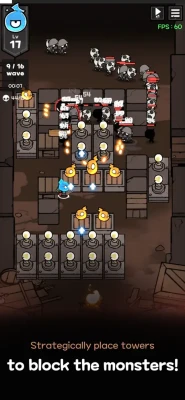
UnderDark: Defense offers a fresh take on the tower defense genre by allowing players to shape enemy routes instead of simply placing defensive structures along a fixed path. Every tower placement can influence how monsters move, how long they remain under attack, and how effectively the player's defenses perform.
The central objective is to protect the Eternal Flame from waves of hostile creatures. As enemies become stronger, players must improve their towers, choose suitable buffs, develop their heroes, and adjust their formations to meet each new threat.
The game is designed for quick mobile sessions, but surviving the later stages requires careful planning. A successful defense depends on more than building as many towers as possible. Players need to understand the map, create efficient enemy routes, and combine their upgrades into a balanced strategy.
What Makes UnderDark: Defense Different?
Maze-building tower defense: Players can strategically place towers to influence monster movement and create longer routes through their defensive formations.
Buff selection and progression: During battles, players choose from available buffs to improve their growing defense. These choices can shape the direction of an entire run.
Hero development: Guardians contribute their own abilities to the battle. Leveling up and enhancing heroes helps players prepare for increasingly demanding encounters.
Multiple tower combinations: Different defensive arrangements allow players to experiment with damage, coverage, and other tactical advantages.
Accessible mobile controls: One-handed controls make the game approachable, while the strategic depth gives experienced tower defense players plenty to consider.
Ongoing challenges: The game also features additional content, including cooperative play, competitive modes, equipment progression, and special events, depending on the current version.
Core Gameplay Mechanics
Building Towers and Controlling Enemy Paths
Tower placement is one of the most important mechanics in UnderDark: Defense. Instead of treating every available space as a place for another tower, consider how each structure changes the route enemies must follow.
A well-designed maze can force monsters to spend more time inside attack range. This gives your defenses additional opportunities to deal damage before enemies reach the camp.
The goal is to create a route that balances three things: distance, tower coverage, and reliable damage. A long path is not automatically a good path if monsters can move through large areas without being attacked.
Place towers where their attacks can cover important sections of the route. Whenever possible, concentrate your strongest defenses around bends, intersections, and other areas where enemies are likely to remain within range.
Choosing the Right Buffs
Buff selection allows you to adapt your defense as a battle develops. Rather than choosing upgrades randomly, think about the weaknesses of your current setup.
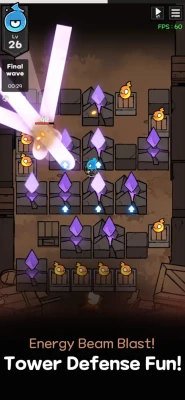
If enemies are surviving your attacks, prioritize buffs that improve damage or other relevant offensive statistics. If your towers already deal substantial damage but cannot cover the route efficiently, focus on upgrades that improve the effectiveness of your existing formation.
The strongest buff is not always the one with the largest individual bonus. An upgrade that improves several towers working together may provide more value than a powerful bonus that benefits only a small part of your defense.
Heroes and Their Abilities
Heroes provide another layer of strategy. Each guardian has distinct abilities, so the right choice depends on your preferred playstyle, available upgrades, and the demands of a particular challenge.
Some heroes may be more suitable for aggressive damage-focused strategies, while others can provide utility or improve the performance of a particular team composition.
Avoid investing resources in every hero at the same time. Develop a dependable primary hero first, then expand your options as your roster and available resources grow.
Equipment and Long-Term Progression
Equipment improves your heroes and can make a significant difference when attempting more difficult stages. As your collection expands, compare the effects of your available items rather than automatically equipping whichever item has the highest grade.
Pay attention to the way an item's main statistics and unique effects support your build. Equipment that complements your hero's strengths can be more useful than an item that offers improvements unrelated to your strategy.
The game also includes an equipment awakening system for eligible high-grade gear. Awakening can increase the main statistic and strengthen unique effects, making it an important long-term progression option for players who have accumulated the required materials.
Complete UnderDark: Defense Strategy Guide
Best Beginner Strategy
New players should focus on learning the relationship between tower placement, enemy movement, and buff selection before attempting complicated formations.
Start by placing towers in positions that influence the route without leaving major sections of the path uncovered. Watch the first few waves to see where enemies spend the most time under attack and where they move through too quickly.
Use your early upgrade choices to establish a reliable foundation. A defense with consistent damage and reasonable coverage is generally more dependable than a formation built around a single powerful tower.
Once your basic setup is working, add more specialized towers and adjust their positions to improve the overall layout.
The most important beginner lesson is to evaluate the entire defense instead of judging each tower separately. Towers work best when their positions and upgrades support one another.
Best Tower Placement Strategy
Effective tower placement begins with understanding the map. Identify the entrance, the route enemies are likely to take, and the areas where you can concentrate your firepower.
Try to make monsters pass through several defended sections instead of relying on a single heavily defended point. This distributes your damage across the route and reduces the risk of enemies reaching the camp after slipping past one concentrated attack zone.
Bends can be useful locations because they may allow towers to cover nearby portions of the path. However, the best position depends on the range and behavior of the tower being used.
Avoid placing towers without considering their relationship to neighboring structures. Several towers with overlapping coverage can produce a strong defensive zone, while towers scattered across the map may leave dangerous gaps.
Review your formation after major upgrades. A layout that works against early enemies may become less effective when later waves introduce stronger monsters or more demanding combat conditions.
Best Buff Selection Strategy
Buff choices should support a clear plan. Before selecting an upgrade, ask yourself what currently limits your performance.
If enemies survive too long, prioritize improvements that increase effective damage. If the route is poorly defended, improve the formation before investing heavily in further damage. If your strategy depends on a particular tower or hero, look for upgrades that strengthen that combination.
It is also important to consider future waves. A buff that provides immediate benefits can be useful, but an upgrade that improves your primary strategy throughout the remaining battle may offer greater overall value.
Avoid spreading your upgrades across unrelated effects without a reason. A focused build is easier to evaluate and often more effective than a collection of bonuses that do not work together.
How to Defeat Stronger Enemies
As you progress, enemy strength increases and mistakes become more expensive. When a difficult wave overwhelms your defenses, determine whether the problem comes from insufficient damage, weak coverage, or poor upgrade choices.
If monsters reach the camp with substantial health remaining, look for gaps in your tower coverage or opportunities to extend their route through defended areas.
If enemies are defeated quickly in some sections but survive elsewhere, redistribute your defensive strength to address the weakest part of the formation.
If your layout already performs well but cannot keep up with enemy durability, concentrate on improving the relevant towers, buffs, hero abilities, and equipment.
Do not change everything at once after a failed attempt. Adjusting one or two major weaknesses makes it easier to understand which improvements actually help.
Boss Battle Strategy
Boss encounters require a more deliberate approach because a single powerful enemy can test whether your entire build is strong enough.
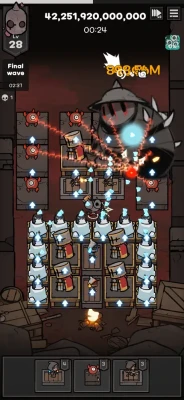
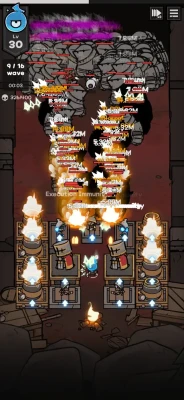
Before a boss arrives, make sure your strongest damage sources are positioned to attack it for as long as possible. A route that keeps the boss inside effective tower range can be more valuable than one that merely looks complicated.
Prioritize upgrades that improve your main damage strategy instead of spending resources on unrelated improvements immediately before the encounter.
Continue monitoring the fight. If the boss survives longer than expected, identify whether the problem is damage output, tower placement, or insufficient progression in your hero and equipment setup.
Preparation is especially important in competitive modes where boss encounters and opposing-player pressure can make an otherwise successful run more difficult.
Advanced Maze-Building Techniques
Experienced players can improve their performance by thinking of the map as a connected network of defensive zones.
Rather than building a maze simply to maximize its length, design the route so that important stretches remain covered by multiple towers. This creates more opportunities for damage and reduces the impact of individual towers performing poorly.
Use concentrated damage zones where the available tower types complement one another. Keep weaker areas in mind, especially when a route changes direction or passes through spaces with limited tower coverage.
Test alternative layouts when a stage becomes difficult. Small changes in tower position can improve coverage without requiring a complete rebuild.
The strongest formations are not necessarily the most complicated. They are the ones that consistently keep enemies under attack while using available space efficiently.
Tower and Hero Upgrade Priorities
Focus on a Reliable Main Build
A reliable main build gives you a foundation for progression. Select towers and a hero that work well together, then direct your resources toward improving their effectiveness.
Avoid upgrading every available option equally. Doing so can leave you with many partially developed tools but no particularly strong combination.
Once your primary build becomes dependable, experiment with alternatives for stages or modes that demand a different approach.
Balance Damage and Coverage
Damage upgrades are valuable only when towers can attack enemies effectively. Similarly, an excellent maze will not protect the camp if its towers cannot defeat the monsters moving through it.
Balance your offensive upgrades with improvements to the overall layout. If your towers already eliminate enemies quickly, better coverage may provide more benefit than additional damage.
If monsters consistently survive the full route, improving your main damage sources may be the better investment.
Develop Heroes with Purpose
Choose heroes based on the strengths of your defensive plan. Consider their abilities, their compatibility with your towers, and the content you play most frequently.
A hero who supports your main strategy can provide more value than a stronger-looking option that does not fit your formation.
As you unlock more heroes, compare their actual effects and experiment with different combinations rather than assuming one character will be ideal in every situation.
Improve Equipment Efficiently
Equipment progression should support your main heroes and preferred strategies.
Compare main statistics and unique effects before spending valuable materials. Save resources for upgrades that produce meaningful improvements rather than making frequent changes that offer little practical benefit.
For eligible high-grade equipment, awakening is worth considering when you have enough duplicate materials and expect to keep using that item. Because awakened equipment retains its awakening level when replaced by an item of the same type and grade, planning your long-term equipment choices can help reduce wasted investment.
Cooperative Gameplay Guide
UnderDark: Defense includes cooperative content where teamwork can make difficult encounters more manageable.
Before entering a cooperative dungeon, review your selected hero, towers, and equipment. A well-prepared loadout allows you to contribute immediately rather than relying on your teammate to compensate for an incomplete build.
Coordinate defensive roles whenever possible. One player can focus on a dependable primary damage setup while the other develops complementary coverage or tower combinations.
Pay attention to the effects of your towers on your teammate's formation. In cooperative content, certain interactions can benefit both players, so positioning and build compatibility matter.
If your team repeatedly loses, identify the source of the problem together. One player may need better damage output, while the other may need a more efficient layout or stronger progression.
Cooperation works best when both players contribute to a balanced strategy instead of attempting to build identical defenses without considering their combined effectiveness.
PvP Strategy Guide
Competitive play requires more than a strong defensive formation. Players must also consider how their choices affect the opponent and how quickly their own setup can respond to increasing pressure.
Develop a stable build before experimenting with aggressive strategies. A defense that consistently handles ordinary waves gives you a stronger foundation for competing against other players.
In the Boss Counterattack mode described in the game's seasonal updates, players can send special bosses to their opponent's side at regular wave intervals. Different bosses can disrupt towers, change tower types, or increase monster movement speed while they remain alive.
These effects demand different responses. Tower disruption makes reliable defensive coverage particularly important, while increased enemy speed makes efficient damage and route management more valuable.
Do not focus entirely on sending threats to your opponent. Maintaining your own defense is equally important, because an aggressive strategy will not succeed if your camp becomes vulnerable.
Study the current rules and seasonal modifiers before each competitive session. Mode-specific restrictions can change which upgrades and formations offer the greatest advantage.
Daily Progression and Resource Management
Consistent progression is usually more effective than spending every resource as soon as it becomes available.
Complete the daily activities and missions that fit your current goals. Participate in events when their rewards provide useful resources for your heroes, towers, equipment, or other progression systems.
Review your available currencies before making major purchases. Decide which upgrades will improve your main build and prioritize those over temporary gains that do not support your longer-term plans.
Take advantage of rewards from cooperative activities, competitive modes, and seasonal content when appropriate. The exact value of each activity depends on your current progression and the rewards available in the latest version.
If you encounter a difficult stage, consider whether additional upgrades or equipment improvements could solve the problem before repeatedly attempting the same approach.
Common Mistakes to Avoid
Placing Towers Without a Plan
Building towers wherever space is available can leave important parts of the route uncovered. Always consider enemy movement and attack coverage before committing to a formation.
Choosing Buffs at Random
Unrelated upgrades can weaken the overall direction of your build. Select buffs that address your current weaknesses or reinforce your primary strategy.
Ignoring Hero Development
Towers are central to the defense, but heroes also contribute important abilities. Neglecting hero progression can make later challenges harder than necessary.
Investing in Too Many Upgrades
Spreading resources across every tower and hero can delay the development of a dependable core setup. Establish your main build first, then expand gradually.
Repeating Failed Attempts Without Adjustments
A loss provides useful information about your defensive weaknesses. Review the battle and make targeted changes rather than repeating the same formation without a clear reason.
Ignoring Equipment Effects
An item's grade does not tell the whole story. Consider how its main statistics and unique effect complement your hero and the strategy you are trying to develop.
Neglecting Cooperative Preparation
Entering multiplayer content with an unsuitable loadout can make a difficult challenge even harder. Review your equipment, hero, and tower selections before joining your team.
Is UnderDark: Defense Worth Playing?
UnderDark: Defense is a strong option for players who enjoy tower defense games that reward experimentation and thoughtful decisions. Its maze-building mechanics add an extra layer of strategy, while buff selection, hero development, and equipment progression provide long-term goals.
The game is approachable for beginners because its controls are simple, but its growing difficulty encourages players to develop more efficient formations over time.
Its additional cooperative and competitive modes offer variety beyond ordinary stage progression. Players who enjoy improving builds, collecting equipment, and testing strategies against increasingly difficult enemies may find plenty to explore.
However, players who prefer games with little resource management or minimal strategic planning may find the progression systems and later challenges demanding.
Frequently Asked Questions
What is UnderDark: Defense?
UnderDark: Defense is a mobile tower defense strategy game in which players build defensive formations, choose buffs, develop heroes, and protect a camp or flame from waves of monsters.
How do you play UnderDark: Defense?
Place towers strategically, shape enemy routes, select useful buffs as you progress, and strengthen your heroes. The objective is to prevent enemies from overwhelming your defenses.
What is the best strategy for beginners?
Start with a balanced defensive layout, keep important sections of the enemy route covered, and prioritize upgrades that address your biggest weaknesses. Develop a dependable main build before experimenting with advanced combinations.
How do you make a stronger tower defense?
Improve both tower coverage and damage. Use the map to create effective attack zones, select complementary buffs, and invest in upgrades that strengthen your main defensive strategy.
Are heroes important in UnderDark: Defense?
Yes. Heroes have distinct abilities and can contribute significantly to a defensive setup. Leveling up suitable heroes and improving their equipment helps prepare for tougher challenges.
Does UnderDark: Defense have multiplayer?
Yes. The game offers cooperative and competitive content, including co-op dungeons and PvP modes. The available activities and rules can change with updates and seasonal events.
Is UnderDark: Defense free to play?
The game is listed as free to download on mobile, with advertising and optional in-app purchases. Some progression and convenience options may involve purchases.
Can you play UnderDark: Defense with one hand?
Yes. The mobile game is designed around simple one-handed controls, making it suitable for short play sessions as well as longer strategy-focused runs.
How can you progress faster?
Focus on a small number of useful upgrades, complete relevant missions, collect progression rewards, and improve your main build before investing heavily in alternatives. Learning from failed attempts can also reduce wasted time and resources.
Final Verdict
UnderDark: Defense combines accessible mobile controls with strategic tower placement, maze construction, buff selection, and long-term character progression. Its most rewarding moments come from finding a defensive arrangement that works efficiently against increasingly difficult waves.
For beginners, the best approach is to learn the map, build a balanced formation, and invest in a reliable core team. For experienced players, refining tower combinations, improving equipment, adapting to bosses, and coordinating with teammates offer additional ways to improve.
The key to success is consistency. A carefully planned defense, supported by well-chosen upgrades and sensible resource management, will generally serve you better than a complicated formation without a clear purpose.
Rate the Game
User Reviews











Popular Games



















 Android
 iOS
 Windows
 Xbox