
Latest Version
December 11, 2025
MOBIRIX
Strategy
iOS
0
Report a Problem
More About :game
Tower Defense Rush Overview
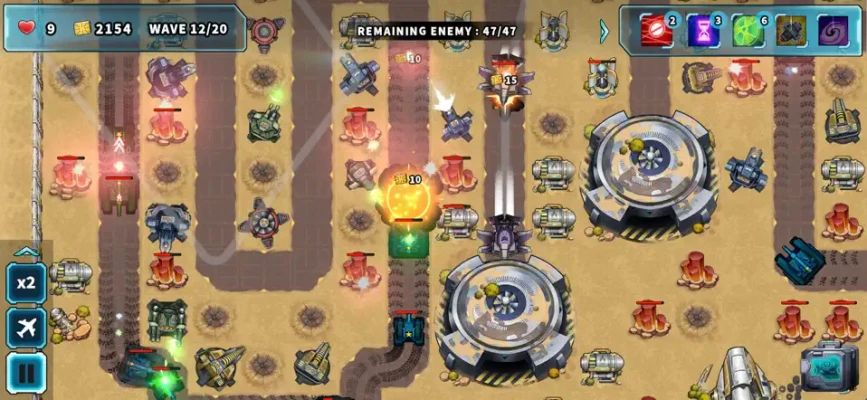
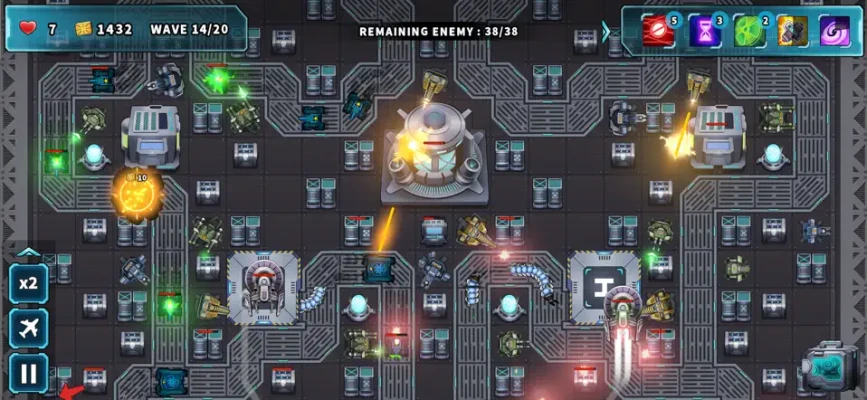
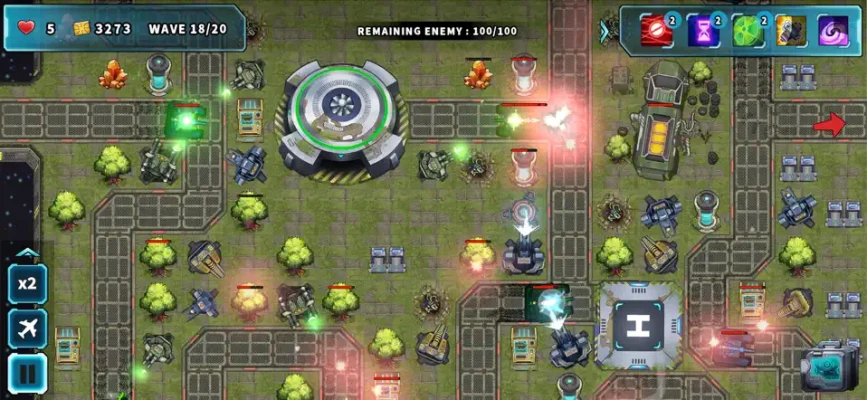
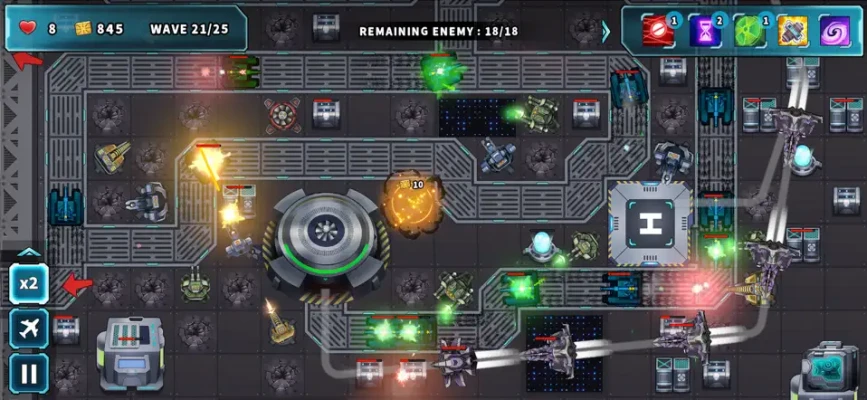
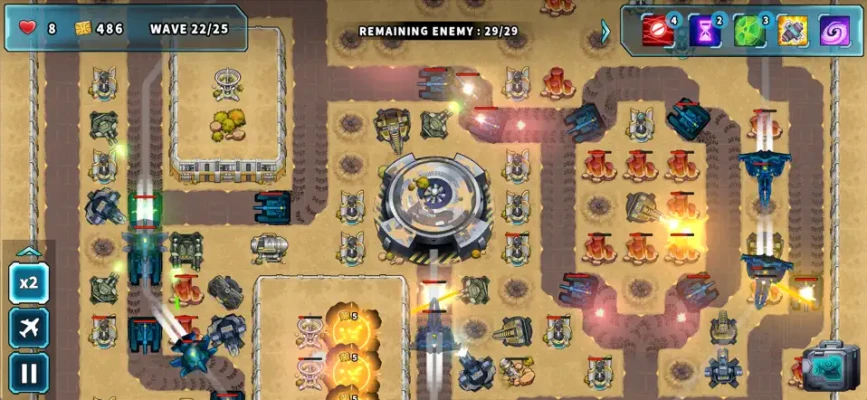
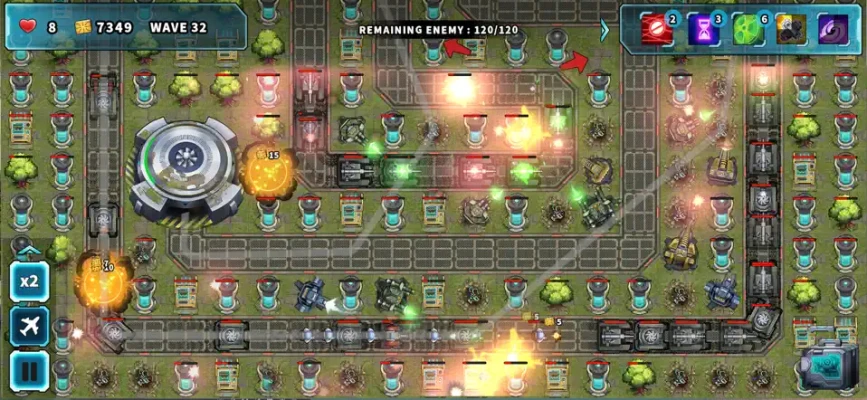
Tower Defense Rush takes the familiar tower defense formula and places it in a science-fiction battlefield. Your mission is to protect a space base from enemy units approaching through different routes. Rather than simply placing towers wherever space is available, you must manage your resources, choose appropriate defensive weapons, and decide which parts of the battlefield need the most protection.
The central objective is straightforward: eliminate incoming enemies before they infiltrate your base and exhaust your available lives. Every defensive structure has a purpose, and understanding those roles is essential for building a reliable defense.
Some turrets specialize in rapid attacks, while others deliver heavy damage or penetrate multiple targets. Support structures can slow enemies or improve the range of nearby attack towers. Obstacles also play an important role because destroying them can open new areas for construction, although your turret may temporarily stop attacking enemies while working on an obstacle.
Beyond standard missions, Tower Defense Rush offers endless gameplay, a random card-placement system, technology upgrades, skill cards, and weekly leaderboard competition. You can also adjust the camera view and increase the game speed to 2x or 3x, allowing you to tailor the experience to your preferences.
The key to success is not simply building as many towers as possible. It is learning how to combine them, place them effectively, and adapt your strategy as the battlefield changes.
Tower Defense Rush Game Information
Game title: Tower Defense Rush
Developer: MOBIRIX
Genre: Strategy and tower defense
Platform: iPhone and iPad
Price: Free to download, with in-app purchases
Setting: Futuristic space-base defense
Main objective: Defeat enemy waves before your base loses all its lives
Tower types: Laser Turret, Plasma Turret, Railgun Turret, EMP Core, and Sensor Tower
Progression systems: Technology tree upgrades and skill-card enhancements
Additional modes: Endless mode and competitive leaderboard challenges
Special features: Obstacle destruction, randomized card placement, adjustable camera views, and 2x or 3x game speed
Offline play: Supported for core gameplay
Developer: MOBIRIX
Compatibility: The App Store listing specifies iOS 12.0 or later for iPhone and iPadOS 12.0 or later for iPad
Monetization: Advertisements, optional purchases, and subscriptions
How to Play Tower Defense Rush
Understanding the basic mechanics is the first step toward building a strong defense.
1. Understand Your Mission
Every defensive mission revolves around protecting your base. Enemy units approach your position, and your turrets must eliminate them before they break through.
You begin with a limited amount of available resources and a set of spaces where defensive structures can be placed. As the battle progresses, you must decide how to spend your resources and which threats deserve immediate attention.
Keep an eye on the condition of your base. Even a powerful defense can fail if too many enemies slip through.
2. Place Turrets on Available Spaces
Select an empty building space and choose an appropriate basic turret within the limits of your available resources.
Tower placement matters because different structures have different capabilities. A rapid-firing turret may be useful against repeated enemy attacks, while a powerful single-shot turret may be better suited to enemies that can withstand lighter damage.
Before placing a tower, consider the nearby enemy routes and how much of the battlefield the structure can cover.
3. Destroy Obstacles to Unlock More Space
Some parts of the map are blocked by obstacles. You can select an obstacle and direct a turret within range to destroy it, creating additional space for defensive construction.
However, there is an important tactical detail: while a turret is attacking an obstacle, it cannot simultaneously attack enemy units. If a threat approaches during this process, you can select the obstacle again to cancel the attack and redirect the turret toward an enemy.
This mechanic creates a meaningful choice between expanding your defensive area and protecting the base from an immediate threat.
4. Defeat Enemy Units Before Losing All Lives
Enemies that infiltrate your base reduce your remaining lives. If all the available lives are lost, the mission fails.
Your goal is to stop enemy units as efficiently as possible. Build a defense that can handle the current wave while preparing for future attacks.
Avoid focusing exclusively on one part of the map if another route remains poorly protected. A strong defensive setup must account for the entire approach to your base.
5. Upgrade Your Defensive Technology
Tower Defense Rush includes a technology tree that allows you to develop your defensive capabilities. Skill cards can also be strengthened to improve damage or provide additional benefits.
Upgrades help you improve your setup as challenges become more demanding. Rather than investing in every available option immediately, identify the weaknesses in your current defense and prioritize upgrades that address them.
Complete Tower Defense Rush Strategy Guide
The following strategies can help you protect your base, manage resources, and make better use of the game's defensive systems.
Strategy 1: Build a Balanced Defense
One of the most common mistakes in tower defense games is relying too heavily on a single type of tower. A defense built entirely around rapid attacks may struggle against durable enemies, while a setup focused only on heavy damage may lack the consistent firepower needed against repeated waves.
Tower Defense Rush provides several structures with different strengths. Use their individual roles to create a defense that can respond to multiple threats.
A balanced approach might include:
Laser Turrets for sustained, rapid attacks.
Plasma Turrets for strong individual hits.
Railguns for penetrating attacks against enemies and obstacles.
EMP Cores for slowing enemy movement.
Sensor Towers for increasing the range of nearby attack turrets.
You do not need every tower type in every situation. The goal is to combine the structures that best address the current battlefield.
Strategy 2: Prioritize Threats That Can Break Through
Not every enemy deserves the same level of attention. Some units may be eliminated quickly by ordinary attacks, while more durable threats can survive longer and move closer to the base.
Observe which enemies are causing the greatest problems. If a powerful unit repeatedly reaches your defensive line, consider adding stronger damage sources or improving the coverage of your existing turrets.
If large groups are overwhelming your defense, focus on maintaining consistent attacks and slowing their advance where possible.
The best defensive plan is the one that solves your current problem rather than following a fixed tower arrangement regardless of the enemy composition.
Strategy 3: Place Towers Where They Can Contribute Consistently
A tower is only useful when it can engage the enemies that matter. Before spending resources, examine the available building spaces and the routes enemies take toward your base.
Prioritize locations where a turret can cover a useful portion of the battlefield. If multiple building positions are available, compare their access to enemy routes rather than choosing the closest empty space automatically.
Also consider how towers work together. A Sensor Tower can increase the range of nearby attack turrets, so placing it where it benefits several useful structures can make your defensive network more effective.
Strategy 4: Use Sensor Towers to Improve Coverage
Sensor Towers increase the range of nearby attack turrets. This makes them valuable support structures when you want your defensive weapons to cover more of the battlefield.
Think carefully about placement. A Sensor Tower is more useful when its range benefit reaches attack turrets that are already positioned well.
Avoid placing support structures without considering which towers they will affect. A good support position can improve several defenses at once, while an inefficient position may contribute little to the overall setup.
Strategy 5: Slow Enemies Before They Reach Critical Areas
The EMP Core reduces enemy movement speed. Slowing enemies can give your attack towers more time to deal damage before targets reach the base.
This is especially useful when enemies are moving through a dangerous section of the map or when your damage output is not enough to eliminate them immediately.
Pair slow effects with reliable attacking turrets whenever possible. The EMP Core is a support structure, so its value comes from helping other defenses gain more opportunities to attack.
Strategy 6: Use Railguns Against Dense Routes and Obstacles
The Railgun Turret fires a penetrating beam that damages enemies and obstacles in its path. This gives it a distinctive role in both combat and battlefield expansion.
Look for situations where the beam can affect multiple targets or help clear a blocked area. Its ability to damage obstacles can be particularly useful when you need to unlock more building space.
Remember that attacking an obstacle comes with an opportunity cost. If enemies are approaching, you may need to redirect the turret toward combat rather than continuing to clear the terrain.
Strategy 7: Expand Your Building Area at the Right Time
Destroying obstacles can create new defensive positions, but expanding too aggressively can leave your base vulnerable.
Before directing a turret toward an obstacle, check the enemy situation. If an immediate threat is approaching, maintaining fire may be more important than unlocking another space.
When the battlefield is relatively secure, use the opportunity to destroy obstacles and prepare additional building positions.
A useful rule is to treat expansion as an investment. It should improve your future defense without creating an immediate weakness that allows enemies to break through.
Strategy 8: Choose Plasma Turrets for Strong Single Hits
Plasma Turrets fire single-shot projectiles that inflict strong damage. Their role differs from the rapid-firing Laser Turret, making them useful when you need more force behind individual attacks.
Consider using them to strengthen areas where durable enemies are causing trouble. Their value depends on the targets and the rest of your defensive setup, so do not assume that replacing every rapid-firing turret with plasma weapons will improve your performance.
A combination of steady attacks and stronger individual hits can offer a more flexible defense.
Strategy 9: Take Advantage of the Laser Turret's Fire Rate
Laser Turrets are basic attack structures with an excellent rate of fire. They can provide a reliable foundation for your defensive network.
Use them where consistent attacks are valuable and combine them with support structures when appropriate. If the enemy waves become harder to eliminate, supplement your Laser Turrets with other damage types instead of expecting rapid attacks to solve every problem.
The goal is to establish a dependable baseline and then adapt as the battlefield demands.
Strategy 10: Manage Resources Before Adding More Towers
Building additional turrets can seem like the obvious solution whenever enemies get through. However, placing more structures without a clear plan may leave your defense inefficient.
Before spending resources, ask yourself:
Which enemy type is causing the most damage?
Is the problem a lack of attack power, range, or time?
Would upgrading an existing tower solve the issue?
Is a support structure likely to improve several nearby defenses?
Can destroying an obstacle create a more valuable position?
These questions help you make deliberate decisions instead of spending resources simply because they are available.
Best Tower Types and How to Use Them
Understanding the five basic defensive structures is essential for developing an effective strategy.
Laser Turret
<text weight="medium">Primary role: Rapid, consistent damage</text>
The Laser Turret is a basic defensive structure with a high rate of fire. It provides a dependable way to attack enemies repeatedly and can serve as the foundation of your defense.
Best strategic use: Place it where sustained attacks can contribute throughout an enemy approach. Combine it with other tower types when stronger individual hits or additional effects are needed.
Plasma Turret
<text weight="medium">Primary role: Strong single-shot damage</text>
The Plasma Turret launches a single projectile that deals significant damage. It offers a different attack profile from the rapid-fire Laser Turret.
Best strategic use: Consider it when you need stronger individual attacks against enemies that are difficult to eliminate with lighter firepower alone.
Railgun Turret
<text weight="medium">Primary role: Penetrating damage</text>
The Railgun Turret fires a beam that penetrates through targets, damaging enemies and obstacles in its path.
Best strategic use: Look for positions where its penetrating attack can contribute efficiently. It can also help remove obstacles and unlock additional construction space when the situation allows.
EMP Core
<text weight="medium">Primary role: Movement control</text>
The EMP Core reduces enemy movement speed. Rather than relying on direct damage, it helps other defensive structures gain more time to attack.
Best strategic use: Use it to support attack turrets along important enemy routes, particularly when slowing the advance can make the difference between stopping a wave and allowing enemies to reach the base.
Sensor Tower
<text weight="medium">Primary role: Extended attack range</text>
The Sensor Tower increases the range of nearby attack turrets. It can help your defenses cover more of the battlefield without relying entirely on additional offensive structures.
Best strategic use: Place it where its range benefit reaches useful attack turrets. Think of it as a way to improve the coverage of your existing defensive network.
A Practical Tower Combination Strategy
There is no single arrangement that is guaranteed to work on every map. Enemy routes, building spaces, obstacles, and available resources all influence which setup is most effective.
However, the following general approach provides a useful starting point.
Step 1: Establish Basic Firepower
Start by placing attack turrets where they can engage approaching enemies. Laser Turrets provide a straightforward foundation because of their high rate of fire.
Do not spend all your available resources immediately. Leave room to respond if the opening defense proves insufficient.
Step 2: Identify the Main Weakness
Watch the first enemy encounters and observe what happens. Are enemies surviving too long? Are they reaching the base because your turrets cannot attack them early enough? Is a blocked area limiting your defensive coverage?
Use the answer to guide your next investment.
Step 3: Add Specialized Support
If stronger individual hits are needed, consider Plasma Turrets. If enemy movement is creating problems, look at the EMP Core. If your attack turrets need greater range, consider the Sensor Tower.
Add support where it solves a clear problem instead of placing structures without a defined purpose.
Step 4: Improve Your Coverage
Use Railguns and other available defenses to manage important enemy routes and obstacles. Expand the building area when doing so will strengthen your overall position.
Make sure new construction does not leave an important approach undefended.
Step 5: Reassess After Every Difficult Wave
Once you see which defenses are performing well, decide whether to strengthen them or address another weakness.
A good defense evolves with the challenge. Do not keep repeating the same arrangement if it consistently allows certain enemies to break through.
How to Destroy Obstacles Without Losing Control of the Battlefield
Obstacle destruction is one of the most important tactical decisions in Tower Defense Rush because it affects both your defensive strength and the amount of space available for construction.
Check the Enemy Situation First
Before selecting an obstacle, look at the current threats. If an enemy is close to the base, interrupting a turret's attacks may create unnecessary danger.
When the situation is under control, obstacle removal can be a useful investment in future defensive options.
Choose Obstacles That Improve Your Options
Not every newly opened space will be equally valuable. Consider whether destroying an obstacle creates a position that improves coverage, supports a Sensor Tower, or provides access to an important part of the map.
Prioritize expansion that creates meaningful strategic opportunities.
Cancel the Action When Necessary
The game's instructions explain that a turret attacking an obstacle cannot attack enemy units at the same time. You can select the obstacle again to cancel the attack and redirect the turret.
Use this mechanic when the battlefield changes unexpectedly. Being able to switch priorities is often more valuable than following an expansion plan rigidly.
Technology Tree and Skill-Card Upgrades
Tower Defense Rush includes a technology tree and upgradeable skill cards. These systems give players additional ways to strengthen their defense beyond simply placing more towers.
Understand Your Upgrade Priorities
Before investing in an upgrade, consider the weakness you want to address. If your current setup struggles to eliminate enemies, improving damage-related capabilities may be more useful than spending resources on a feature that does not affect the immediate problem.
If enemies are reaching the base because they move too quickly through your defenses, improving your overall defensive arrangement and using slowing effects may be more appropriate.
Strengthen Skill Cards Thoughtfully
The game allows skill cards to be strengthened for additional damage or compensation. Review the effects available to you and prioritize the cards that complement your preferred strategy.
Avoid assuming every card offers equal value in every situation. A useful upgrade is one that improves the performance of your actual setup.
Balance Upgrades with New Construction
Technology improvements and additional towers can both strengthen your defense, but they serve different purposes.
A new tower can help cover a weak route, while an upgrade can improve an existing defensive capability. Consider which option provides the greatest benefit for your current battlefield.
The most effective approach balances immediate needs with long-term development.
Random Card Placement: How to Adapt
Tower Defense Rush features a distinctive random card-placement system that adds variety to its strategic gameplay.
Because a card-based mechanic can influence the options available to you, flexibility is important. Instead of relying on one rigid plan, evaluate the choices presented during the game and consider how they fit your current defense.
Read the Available Options
Before committing to a card or placement decision, examine the options presented by the game. Consider whether they strengthen your damage output, improve your support capabilities, or help address a particular weakness.
Adapt Rather Than Force a Fixed Build
A strategy that works well with one set of options may not be ideal when different cards appear. Be willing to adjust your priorities based on what is available.
If the available choices do not match your preferred approach, focus on creating the strongest practical defense with the tools you have.
Build Around Synergy
When possible, choose cards and structures that complement each other. Attack turrets, range support, and movement control can contribute more effectively when their roles work together.
The objective is to create a coherent defense rather than collecting upgrades without considering how they interact.
Endless Mode Strategy Guide
Endless mode offers a challenge for players who want to face large numbers of enemies or compete with other users. Since the experience emphasizes continued survival and performance, consistent defensive decisions become especially important.
Prioritize Reliability
In a longer run, a defense that performs consistently is often more valuable than one that works well only under ideal circumstances.
Make sure your setup can respond to different threats and avoid leaving important routes without sufficient coverage.
Watch for Weak Points
As the challenge develops, pay attention to the areas where enemies are making the most progress. Use the available resources and structures to strengthen those parts of your defense.
Do not spend all your attention on the strongest-looking part of the battlefield if another route is becoming vulnerable.
Improve Gradually
Use each attempt to learn which tower combinations and placements work best for you. If a particular setup repeatedly fails, adjust one or two elements and observe the result.
Small improvements can help you develop a more dependable strategy over time.
Compete with a Clear Goal
If you want to improve your endless-mode performance, set a specific goal for each run. You might focus on better tower placement, more efficient resource use, or improved use of support structures.
A clear goal makes it easier to learn from each attempt instead of simply trying to survive longer without understanding why your results change.
Weekly Leaderboards and Competitive Play
Tower Defense Rush includes a weekly leaderboard that resets every week. This gives players a recurring opportunity to compare their performance and aim for a stronger position.
Focus on Consistency
Competitive results are easier to improve when your defensive strategy is dependable. Learn how your towers work together, understand the map, and avoid making unnecessary resource decisions.
Learn from Different Setups
If your current approach does not produce the results you want, experiment with alternative tower combinations. Try different ways to use the Sensor Tower, EMP Core, and offensive structures.
Keep track of which changes improve your defense and which ones introduce new weaknesses.
Treat Each Reset as a Fresh Goal
Because the leaderboard resets weekly, you can use each new period as an opportunity to test an improved approach. Focus on refining your strategy instead of expecting a single perfect run to solve every challenge.
Using the Camera and Game-Speed Controls
The game lets you choose a preferred camera view and adjust the game speed to 2x or 3x.
These options can make the experience more comfortable, but they should be used with consideration for the situation.
Choose a Camera View That Helps You Read the Battlefield
A useful camera view should make it easy to identify enemy routes, available building spaces, and the positions of your defensive structures.
Experiment with the available views and use the one that makes battlefield decisions easiest for you.
Use Faster Speeds When the Defense Is Stable
Increasing the speed can help you move through familiar or manageable sections more quickly. However, faster gameplay also leaves less time to observe what is happening.
When you need to make important placement decisions or respond to a difficult enemy wave, consider slowing down so you can evaluate the situation carefully.
Switch Speeds as Needed
You do not have to use the same speed throughout every mission. Adjust it according to how much attention the current battlefield requires.
The goal is to maintain control over your strategy rather than simply completing each wave as quickly as possible.
Beginner Tips for Tower Defense Rush
If you are just starting out, these practical habits can help you learn the game more efficiently.
Start with the Basic Tower Roles
Learn what each turret does before trying to build a complicated defense. Understanding the differences between rapid fire, heavy single-shot damage, penetrating attacks, movement control, and range support makes every placement decision easier.
Protect the Base Before Expanding
Additional building space is useful, but not if creating it leaves the base vulnerable. Prioritize immediate threats and destroy obstacles when the battlefield allows it.
Avoid Spending Resources Without a Plan
Every new structure should serve a purpose. Before placing a tower, decide which enemy route it will protect or which weakness it will address.
Use Support Structures Wisely
The EMP Core and Sensor Tower provide benefits that can improve your offensive turrets. Their value depends on placement and synergy, so consider how they fit into the overall layout.
Learn from Failed Missions
If enemies break through, identify the reason. Your damage output may be insufficient, your range may be too limited, or an important route may lack coverage.
Adjust your strategy based on what actually happened rather than repeating the same setup.
Experiment with Different Combinations
The game offers multiple tower types, upgrades, and card-based options. Experimentation helps you discover which combinations suit your play style and the challenges you face.
Common Mistakes to Avoid
1. Building Only One Type of Turret
A single tower type may not handle every threat effectively. Combine offensive and support structures according to the needs of the battlefield.
2. Ignoring Enemy Routes
A powerful turret cannot protect an area it cannot reach. Study the paths enemies use and choose building spaces that provide meaningful coverage.
3. Destroying Obstacles at the Wrong Time
A turret attacking an obstacle cannot attack enemy units simultaneously. If a threat is approaching, cancel the obstacle action and redirect the turret when necessary.
4. Placing Sensor Towers Without a Clear Plan
Sensor Towers improve the range of nearby attack turrets. Their benefit is limited if they are placed where they do not support useful defensive structures.
5. Forgetting About Movement Control
The EMP Core slows enemies, which can give your other towers more time to attack. Ignoring this type of support may leave you relying entirely on damage output when slowing enemies could help.
6. Spending Resources on Every Available Upgrade
Not every upgrade will address your immediate weakness. Identify the problem first and invest in the structures or improvements that are most likely to solve it.
7. Using 3x Speed During Difficult Decisions
Faster gameplay can save time, but it can also make it harder to evaluate a changing battlefield. Slow down when you need to make precise decisions.
8. Repeating a Failed Strategy Without Adjustments
If the same defensive layout repeatedly fails, change something meaningful. Reposition towers, improve coverage, use support structures differently, or reconsider your approach to obstacles.
9. Neglecting the Entire Map
A defense that performs well in one area can still fail if another route is left vulnerable. Review the overall battlefield regularly and respond to emerging weaknesses.
10. Treating Endless Mode Like a Standard Mission
Endless mode emphasizes continued performance and competition. Focus on consistency, adaptation, and long-term defensive reliability rather than relying on a strategy that works only in a short encounter.
Is Tower Defense Rush Free to Play?
Tower Defense Rush is free to download from the App Store, but it includes advertisements and optional in-app purchases.
The store listing includes crystal packages, item packages, and a three-day gift package. It also offers monthly and yearly subscriptions designed to remove advertisements, with the subscription description noting an additional daily hammer benefit.
Prices and available purchase options may vary depending on your country and the current store listing. Review the details displayed on your device before making a purchase.
You can begin with the standard free experience and decide later whether optional items are worth buying. Learning tower roles, improving placement, and managing resources are central to the strategy regardless of whether you choose to spend money.
Can You Play Tower Defense Rush Offline?
Yes. The game's App Store description states that it can be played without Wi-Fi.
This makes it suitable for short sessions while travelling or when a stable internet connection is unavailable. Core defensive gameplay can be enjoyed offline, while online features such as competitive leaderboards may require connectivity to access or update.
If you want to compare your results with other players, connect to the internet when using those features.
Graphics, Controls, and Overall Experience
Tower Defense Rush uses a futuristic setting built around defending a space base from invading forces. Its strategic focus comes from the interaction between turret placement, enemy routes, resource management, and the need to protect your remaining lives.
The game provides several ways to customize the experience. You can choose a preferred camera view, adjust the game speed, develop your technology tree, and strengthen skill cards. The different tower roles also encourage experimentation rather than relying on a single defensive arrangement.
Its obstacle system adds another layer of decision-making because expanding the battlefield temporarily competes with attacking enemies. This creates situations where timing and judgment matter as much as tower selection.
The result is a strategy game that rewards planning and adaptation. Players who enjoy analyzing layouts, testing combinations, and refining their approach should find plenty to experiment with.
Frequently Asked Questions
What is Tower Defense Rush?
Tower Defense Rush is a futuristic tower defense strategy game developed by MOBIRIX. Players build turrets, defend a space base against enemy waves, unlock building areas by destroying obstacles, and improve their defenses through upgrades.
How do you win in Tower Defense Rush?
Build an effective defensive network and eliminate enemy units before they infiltrate your base and exhaust your available lives. Use appropriate tower types, place structures carefully, and adapt your strategy to the threats on each map.
Which towers are available in Tower Defense Rush?
The five basic tower types described in the App Store listing are Laser Turret, Plasma Turret, Railgun Turret, EMP Core, and Sensor Tower. They provide rapid attacks, strong single-shot damage, penetrating attacks, movement slowing, and increased range for nearby attack turrets.
What is the best tower in Tower Defense Rush?
There is no single tower that is best in every situation. Laser Turrets provide rapid attacks, Plasma Turrets deal strong individual hits, Railguns penetrate targets, EMP Cores slow enemies, and Sensor Towers extend the range of nearby attack turrets. The most effective choice depends on the battlefield and the threats you need to stop.
How do you unlock more building space?
Select an obstacle and direct a turret within range to destroy it. Once the obstacle is removed, the space can become available for construction. Remember that a turret attacking an obstacle cannot attack enemy units simultaneously, so interrupt the action if a threat needs immediate attention.
What does the Sensor Tower do?
The Sensor Tower increases the range of nearby attack turrets. Place it where it can support useful offensive structures and improve their coverage.
What does the EMP Core do?
The EMP Core reduces enemy movement speed. This can give your attack turrets more time to deal damage before enemies reach the base.
How does the Railgun Turret work?
The Railgun Turret fires a penetrating beam that damages enemies and obstacles in its path. Its ability to affect obstacles can also help open new construction areas.
Does Tower Defense Rush have endless mode?
Yes. Endless mode lets players face large numbers of enemies and compete with other users. It is a useful option for those who enjoy longer defensive challenges and improving their results.
Does Tower Defense Rush have leaderboards?
Yes. The game includes a weekly leaderboard that resets every week, giving players recurring opportunities to compete and improve their rankings.
Can you change the game speed?
Yes. The game allows you to change the speed to 2x or 3x. Faster speeds can help you move through familiar sections more quickly, while slower play may be preferable when making important strategic decisions.
Can you play Tower Defense Rush offline?
Yes. The App Store listing states that the game supports play without Wi-Fi. Some online features, including leaderboard activity, may require an internet connection.
Is Tower Defense Rush free?
The game is free to download, with advertisements and optional in-app purchases. These include crystal packages, item packages, and subscriptions designed to remove advertisements.
Which devices support Tower Defense Rush?
The App Store listing specifies iOS 12.0 or later for iPhone and iPadOS 12.0 or later for iPad. Check the current listing for compatibility information specific to your device.
Final Verdict
Tower Defense Rush is a strategic choice for players who enjoy building defenses, studying enemy routes, and improving their tactics over time. Its range of turret types gives each structure a distinct purpose, while obstacle destruction, technology upgrades, skill cards, and randomized card placement add further depth.
The most effective approach is to build a balanced defense, identify the threats that cause the greatest problems, and use support structures to improve your overall coverage. Destroy obstacles when it is safe to expand, redirect turrets when enemies need immediate attention, and invest in upgrades that address real weaknesses.
With endless mode, weekly leaderboard competition, adjustable game speed, and offline support, Tower Defense Rush offers multiple ways to enjoy its futuristic battles. If you like strategy games that reward thoughtful placement and adaptation, it is worth exploring.
Rate the Game
User Reviews














Popular Games



















 Android
 iOS
 Windows
 Xbox