

Latest Version
November 01, 2026
Aliens L.L.C-F.Z
management
Android
0
com.byaliens.car.game.tinyautoshop2
Report a Problem
More About :game
From ordinary minivans to expensive sports cars, every customer brings a different challenge. You must complete service requests quickly, keep customers satisfied, and upgrade your garage to handle increasing demand. With new vehicles, additional workshop challenges, idle income, and business improvements, the game combines car repair activities with entertaining tycoon-style progression.
Game Overview and Main Features
Tiny Auto Shop 2 offers an interactive experience centered on operating a busy automotive workshop. Rather than simply driving vehicles, players become responsible for keeping an entire garage running smoothly.
The main challenge is balancing customer requests, available workstations, staff responsibilities, and time limits. As your business grows, you must improve your facilities and become more efficient at completing automotive services.
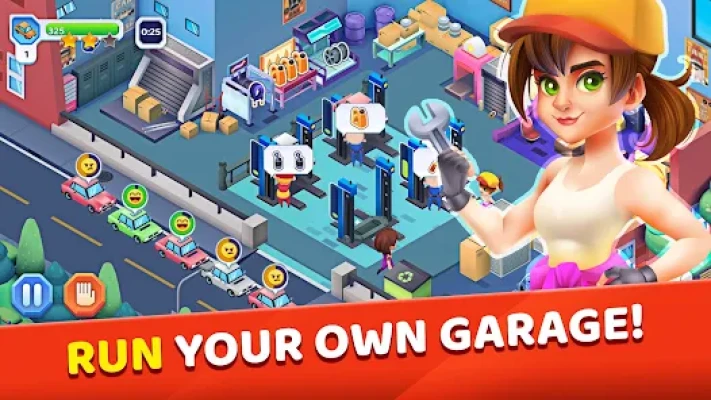
Run Your Own Car Mechanic Garage
The main objective is to build a successful automotive service business.
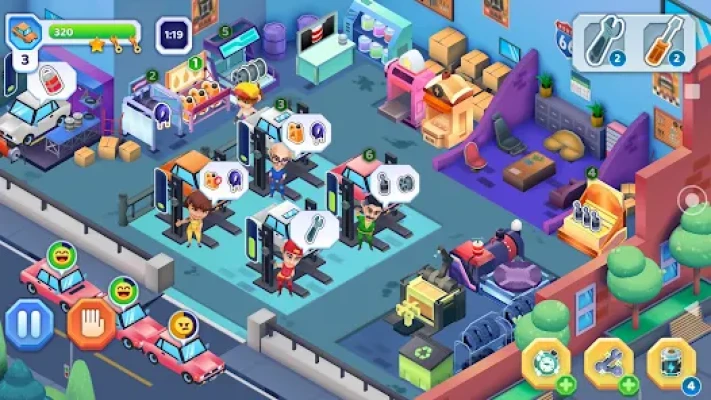
Customers arrive with different vehicles and expect their cars to receive the required services. You must understand their requests, send vehicles to the appropriate stations, and make sure every job is completed before the available time runs out.
Successful service helps your garage develop its reputation and progress through increasingly challenging levels.
Repair Different Types of Vehicles
One of the enjoyable aspects of the game is the variety of vehicles that visit your workshop.
You may work on everyday vehicles such as minivans as well as more luxurious sports cars.
Different customers have different requirements, so you need to pay attention to the requested services instead of treating every vehicle in exactly the same way.
Car Washing Services
Car washing is another important part of the garage business.
Customers expect clean vehicles alongside mechanical services. Managing the washing station efficiently helps you complete more customer orders and maintain a smooth workflow.
As your business expands, improving the car wash workstation becomes an important part of your development strategy.
Install and Replace Auto Parts
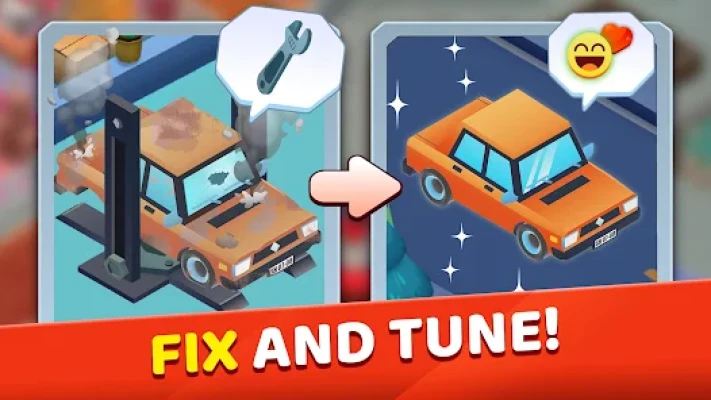
The game includes automotive parts and replacement services that allow you to handle different customer requirements.
You need to identify the parts requested by each vehicle and complete the appropriate workshop activities.
Learning the available service stations and their functions becomes increasingly important as new challenges are introduced.
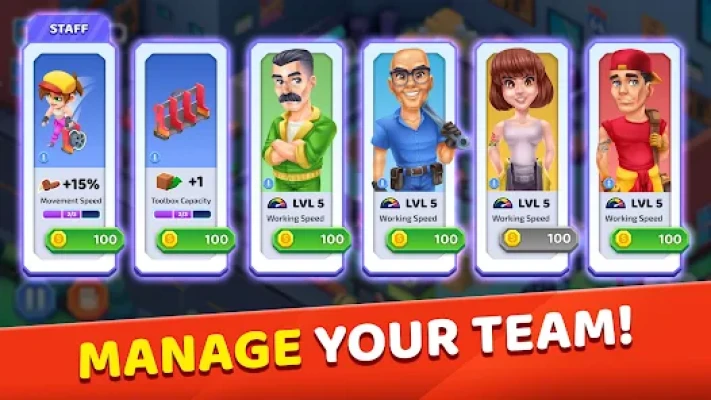
Manage a Team of Mechanics
Running a successful garage requires more than repairing vehicles yourself.
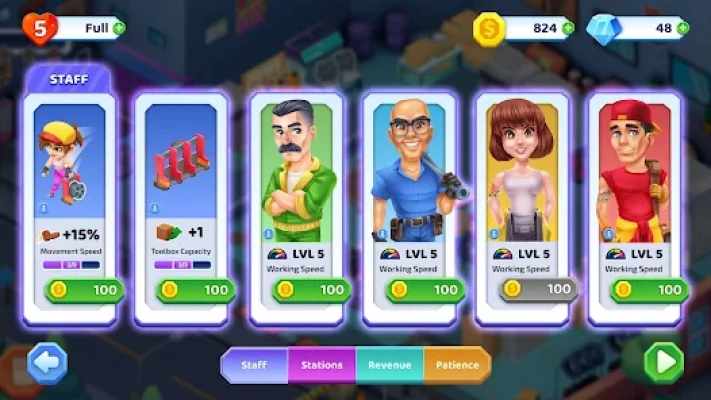
You also need to manage your mechanic team and make sure the available workers are being used effectively.
Good staff management helps reduce delays and allows your workshop to handle a larger number of customer requests.
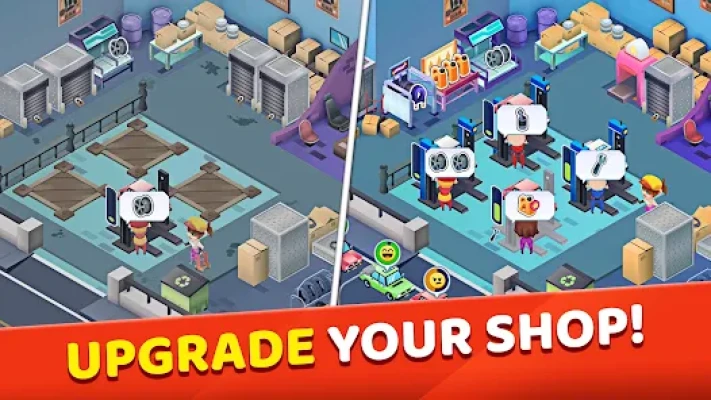
Upgrade Garage Workstations
Workstation upgrades are essential for improving the performance of your business.
As you earn rewards, you can invest in better equipment and improve the services your garage provides.
Developing your workstations helps you prepare for more demanding levels and increases the overall efficiency of your automotive business.
Idle Income and Business Progression
Tiny Auto Shop 2 also includes idle income mechanics.
These features provide additional progression opportunities and make the management experience more rewarding.
Instead of depending entirely on active gameplay, you can benefit from business development and available idle rewards.
Challenging Levels and New Workshops
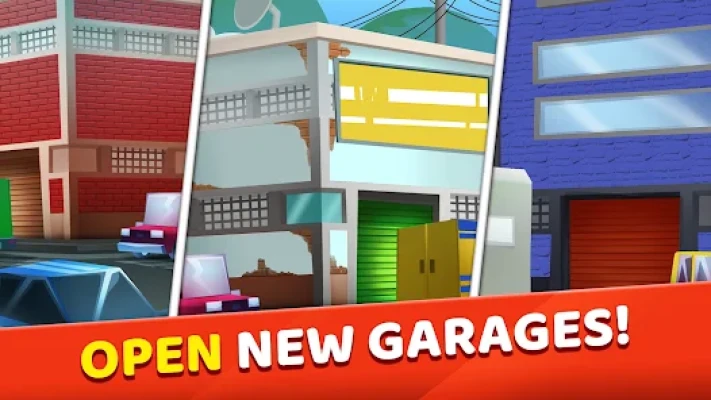
Progression introduces additional levels and workshop challenges.
As you advance, customer requests become more demanding, and you need to manage more activities simultaneously.
New content and workshop improvements provide additional goals for players who want to develop their automotive business.
Understanding the Gameplay Mechanics
Customer Management
Customers arrive at your garage with vehicles that require particular services.
Your responsibility is to identify their needs and make sure their vehicles receive the correct treatment.
A customer might request a car wash, mechanical repair, or a particular replacement part.
The most important rule is to check the requested service before assigning a vehicle to a workstation.
Time Management
Time management is one of the most important gameplay mechanics.
Every level challenges you to serve customers efficiently while keeping the workshop operating smoothly.
Allowing too many customers to wait can make it difficult to complete the objectives.
You should therefore organize your actions carefully and avoid unnecessary movements between workstations.
Staff Management
Your mechanics are an important part of the business.
Managing the available team effectively helps you complete more jobs and reduce operational pressure.
Pay attention to which stations require attention and avoid leaving important workers or facilities unused when customers are waiting.
Workshop Development
Your garage becomes more capable as you invest in workstation improvements.
These upgrades support the development of your business and help you prepare for more complicated customer requests.
A well-developed workshop is much easier to manage than one relying entirely on its initial equipment.
Complete Strategy Guide for Tiny Auto Shop 2
Learn Every Workstation Before Rushing
When starting the game, take some time to understand how each workstation operates.
Learn which stations provide washing services, which handle mechanical work, and which are responsible for particular replacement parts.
This knowledge will save valuable time during later levels.
Customers may request several different services, and knowing where to send each vehicle will make your decisions much faster.
Do not rush through the introductory stages without understanding the workshop layout.
Always Check Customer Requests First
One of the easiest mistakes is sending a vehicle to the wrong workstation.
Before taking action, look at the customer's requested service.
Make sure you understand what the vehicle needs and select the appropriate station.
This simple habit prevents unnecessary actions and helps you complete more orders within the available time.
Prioritize Customers With Urgent Needs
When several vehicles arrive simultaneously, you need to decide which customers should receive attention first.
Pay attention to waiting times and the remaining time available in the level.
Customers who have been waiting longer or whose orders are approaching their deadlines should receive priority.
Avoid spending too much time on a single vehicle when other customers are waiting for essential services.
Keep Your Mechanics Productive
Your employees are valuable resources.
Try to keep the available mechanics occupied with suitable tasks whenever possible.
An unused mechanic represents an opportunity to improve your workshop's overall efficiency.
At the same time, avoid creating unnecessary congestion by assigning too many tasks to the same area.
Good staff management is about maintaining a steady flow of work rather than simply making every mechanic move constantly.
Upgrade Important Workstations Early
Workstation upgrades should be among your main priorities.
Improved facilities can help your garage handle increasing customer demand.
Focus on the stations that are used frequently and those that become important during difficult levels.
For example, if your garage receives many washing requests, improving the car wash station can help you maintain a smoother service routine.
Likewise, improving mechanical service facilities can make more demanding repair stages easier to manage.
Balance Car Washing and Mechanical Repairs
Do not concentrate exclusively on one type of service.
Your customers may arrive with different requirements, and a successful garage must be capable of handling them all.
If you spend too much time completing car washes while ignoring mechanical requests, the waiting area can quickly become overcrowded.
Try to distribute your attention according to the needs of incoming vehicles.
Learn New Services as They Become Available
As you advance, the game introduces additional workshop activities and customer requirements.
Some later challenges involve services that are not part of the initial gameplay experience.
Whenever a new station or service appears, take time to understand its purpose.
Learn how the new activity works before trying to complete several customer orders simultaneously.
This is especially useful when dealing with additional automotive services such as battery-related work or window tinting.
Avoid Unnecessary Movement
Moving between different workshop areas without a clear objective wastes valuable time.
Before starting a sequence of actions, consider which customers need attention and which stations are available.
Try to complete related tasks in an organized order.
The fewer unnecessary movements you make, the easier it becomes to maintain control over a busy garage.
Monitor Customer Satisfaction
Customer satisfaction is an important part of successful garage management.
Completing requested services correctly and promptly helps you maintain a positive customer experience.
Do not focus only on the number of vehicles serviced.
A fast but incorrect service can create additional problems, while a well-organized approach helps you maintain consistent performance.
Use Rewards to Strengthen Your Business
Rewards earned through progression should contribute to meaningful business improvements.
Rather than spending everything immediately, consider which upgrades will make the biggest difference to your current workshop.
Investing in important facilities and improving operational efficiency can make later challenges more manageable.
Prepare for Difficult Levels
Later levels require better organization and faster decision-making.
Before entering a difficult stage, make sure you have upgraded important workstations and understand the services available in your garage.
Think about how you will manage incoming customers and which tasks are likely to require the most attention.
Preparation is much more effective than reacting randomly after the workshop becomes crowded.
Take Advantage of Idle Income
Remember to collect and use available idle income.
This additional progression system can support your garage development without requiring constant active management.
Use the resources to improve important areas of your business and unlock further opportunities.
Maintain a Consistent Playing Routine
A simple routine can make your progression more efficient.
Start by checking available upgrades and rewards. Review your workshop facilities and make improvements where necessary.
During each level, identify customer requests, assign the correct services, and keep your mechanics productive.
After completing a stage, review your progress and consider which workstation needs attention next.
Following this routine helps you develop a stronger garage while avoiding unnecessary mistakes.
Advanced Tips and Tricks
Understand the customer queue
Always pay attention to incoming vehicles. A crowded waiting area can make a level much harder, so organize your work before the situation becomes overwhelming.
Learn the workshop layout
Knowing where every service station is located makes it easier to react quickly to customer requests.
Focus on frequently used facilities
Upgrading stations that handle regular customer requests can provide more consistent benefits than spending resources without a clear objective.
Keep your team organized
Use your mechanics effectively and avoid leaving important workstations unattended.
Complete services accurately
Always check the customer's requirements before performing an action. Accuracy prevents wasted time and unnecessary mistakes.
Watch the level timer
Do not spend too long on one task when several customers are waiting. Maintain a steady workflow and prioritize urgent orders.
Adapt to new mechanics
When new services become available, learn how they work instead of assuming they operate like existing stations.
Invest in long-term improvements
Garage upgrades and idle income contribute to business development. Think beyond the current level and prepare your workshop for future challenges.
Common Mistakes to Avoid
Sending Vehicles to Incorrect Stations
Every customer has particular requirements. Sending vehicles to the wrong workstation wastes time and makes it harder to maintain an efficient workflow.
Ignoring Waiting Customers
Focusing entirely on one vehicle can cause other customers to wait too long. Keep an eye on the entire garage rather than concentrating on a single task.
Neglecting Workstation Upgrades
Trying to progress through increasingly difficult levels with basic equipment can make workshop management unnecessarily challenging.
Poor Staff Management
Leaving mechanics inactive or failing to organize their responsibilities reduces the efficiency of your business.
Forgetting New Services
Later stages can introduce additional activities. Ignoring newly available mechanics or services can prevent you from completing customer orders correctly.
Spending Rewards Without Priorities
Upgrades should support your current needs and future progression. Avoid spending resources without considering their practical benefits.
Rushing Without Understanding the Tasks
Speed is important, but completing the wrong service does not help your business. Always understand customer requests before acting.
Vehicles and Services in Tiny Auto Shop 2
The game focuses on a variety of vehicles and automotive services.
Sports Cars
Sports cars represent the more luxurious side of your customer base. They bring variety to the garage and contribute to the car tuning atmosphere.
Minivans
Everyday vehicles such as minivans demonstrate that your workshop must be prepared for ordinary automotive maintenance as well as more exciting cars.
Buses and Larger Vehicles
The game also references larger vehicles, adding variety to the types of machines your garage can service.
Car Washing
Cleaning vehicles is one of the main services available in the workshop.
Mechanical Repairs
Repair activities allow you to address different vehicle problems and customer requirements.
Replacement Auto Parts
Installing suitable parts is another important responsibility when completing automotive service requests.
Additional Workshop Services
As you progress, further service activities and workstation challenges can become part of the experience.
Is Tiny Auto Shop 2: Car Mechanic Worth Playing?
Tiny Auto Shop 2 is an entertaining choice for players who enjoy casual management games, automotive simulations, and time-management challenges.
Its biggest attraction is the combination of vehicle servicing and business management. You are not simply completing isolated repair tasks; you are responsible for keeping an entire garage operating efficiently.
The variety of customer vehicles and workshop activities creates a progression experience that rewards organization, quick decisions, and smart investments.
Players who enjoy games about building businesses, managing employees, upgrading facilities, and serving customers will find plenty of familiar elements here.
It is also suitable for people who enjoy short gameplay sessions because each level provides a specific management challenge.
However, players looking for a realistic mechanical simulator with detailed vehicle engineering or open-world driving may prefer a different type of car game.
Frequently Asked Questions
What is Tiny Auto Shop 2: Car Mechanic?
Tiny Auto Shop 2 is a casual garage management and car repair simulation game where players operate an automotive workshop, serve customers, wash vehicles, install auto parts, and manage mechanics.
Who developed Tiny Auto Shop 2?
The game was developed and published by By Aliens L.L.C-F.Z.
What is the main objective of the game?
The main objective is to operate a successful car mechanic business by completing customer requests, improving workshop facilities, managing employees, and progressing through challenging levels.
Can you repair different types of vehicles?
Yes. The game features different vehicle types, including sports cars and ordinary vehicles such as minivans.
Does Tiny Auto Shop 2 include car washing?
Yes. Car washing is one of the main workshop services, and players can improve their car wash facilities as their business develops.
Can you upgrade your garage?
Yes. Players can upgrade workstations and improve their facilities to make the garage more efficient and capable of handling additional challenges.
Does the game have idle income?
Yes. Idle income is among the game's progression features and provides additional opportunities to develop your automotive business.
Is Tiny Auto Shop 2 a multiplayer game?
No. The game is presented as a single-player experience focused on individual garage management and progression.
Is Tiny Auto Shop 2 suitable for casual players?
Yes. Its straightforward controls, accessible management mechanics, and level-based challenges make it suitable for casual gaming sessions.
What makes later levels more difficult?
Later levels introduce more demanding customer requests, additional workshop activities, and greater pressure to manage time and available resources efficiently.
Final Thoughts
Tiny Auto Shop 2: Car Mechanic delivers an enjoyable combination of car repair simulation, business management, and time-based challenges. Its central gameplay revolves around operating a busy garage, serving different customers, keeping mechanics productive, and upgrading workshop facilities.
The most effective strategy is to understand every service station, prioritize customer requests, invest in frequently used workstations, and maintain an organized team. As the business grows, adapting to new services and increasingly complicated customer requirements becomes essential.
Whether you enjoy washing sports cars, repairing minivans, managing mechanics, or developing your own automotive business, Tiny Auto Shop 2 offers an engaging garage management experience with plenty of progression goals.
Rate the Game
User Reviews















Popular Games



















 Android
 iOS
 Windows
 Xbox