





Latest Version
October 05, 2026
Gamehouse LLC
management
iOS
0
Report a Problem
More About :game
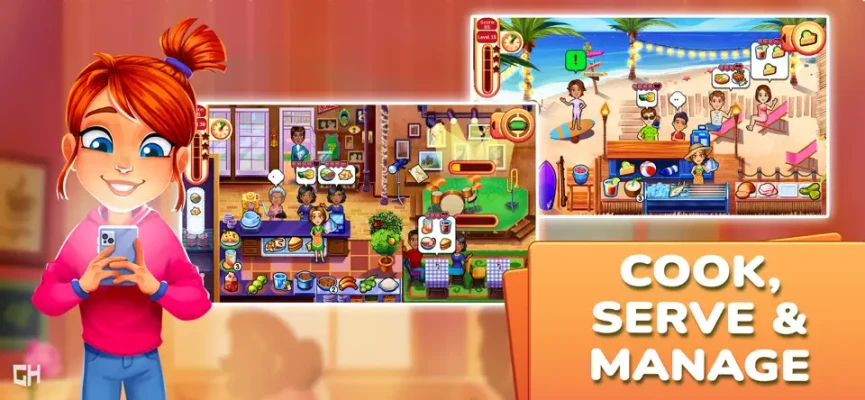
Players help Emily run six unique restaurants while serving customers, preparing dishes, completing objectives, upgrading kitchens, hiring helpers, and discovering clues connected to Patrick's estranged father and a long-buried family secret.
The game combines fast-paced restaurant management with a character-driven story, bonus challenges, mini-games, restaurant customization, and collectible memories. There are 60 story levels and 30 additional challenge levels, giving players plenty of opportunities to improve their serving skills and earn better results.
What Is Delicious: Taste of Truth?
Delicious: Taste of Truth is a cooking time-management game from GameHouse and part of the long-running Delicious series.
The adventure begins when Patrick's estranged father, Paddy, invites the family to Florida. What initially appears to be a pleasant family trip quickly turns into something much more complicated when an old secret comes to light.
Emily and her family then travel through America's South, visiting different restaurants while trying to uncover the truth.
At each restaurant, players must balance customer service, food preparation, orders, upgrades, and special objectives while the story continues in the background.
The result is a mixture of restaurant management, cooking challenges, family drama, exploration, and casual strategy.
Delicious: Taste of Truth Gameplay
The main gameplay revolves around managing a busy restaurant.
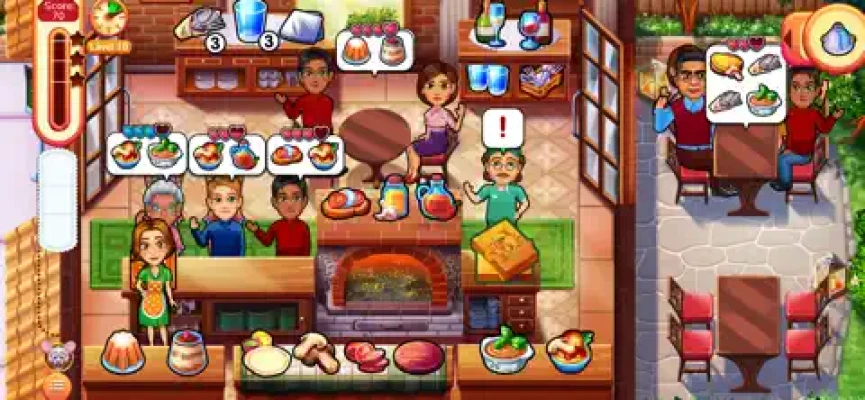
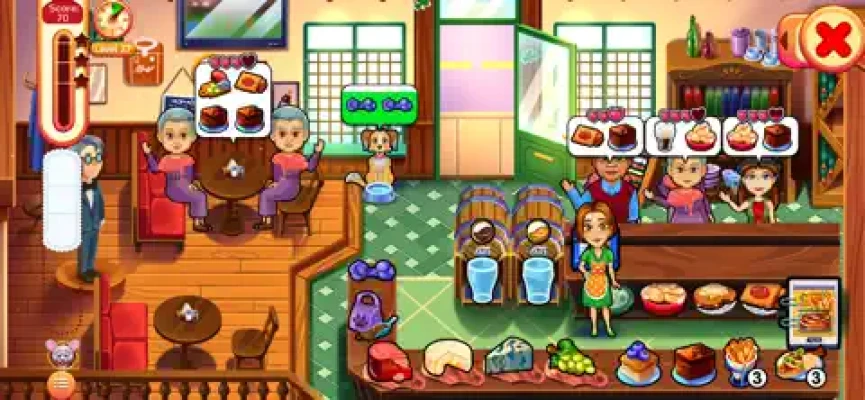
Customers arrive with different orders, and you must prepare and serve their requested food before they become impatient.
Success requires more than simply tapping orders as quickly as possible. You need to understand the restaurant layout, anticipate customer needs, combine actions efficiently, and keep the workflow moving.
As the levels progress, the restaurants become more demanding and introduce additional tasks and objectives.
The game therefore rewards both speed and organization.
Main Features
60 Story-Driven Levels
The main adventure contains 60 story levels.
These levels combine restaurant management with the continuing story of Emily, Patrick, Paige, and their family.
30 Challenge Levels
There are also 30 bonus challenge levels.
These provide additional objectives and give experienced players another reason to replay the game and improve their performance.
Six Unique Restaurants
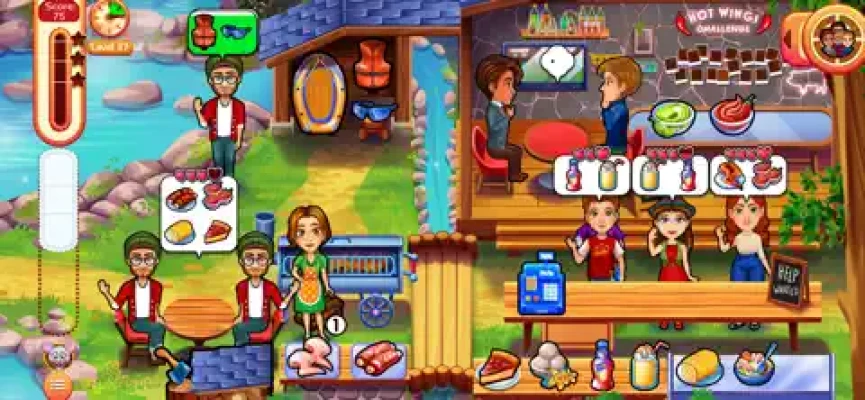
The adventure takes players through six different restaurants, each bringing its own atmosphere, food, customers, and management challenges.
Fast-Paced Cooking
Preparing dishes and serving customers quickly is at the heart of the experience.
You need to keep several tasks moving simultaneously rather than concentrating on one customer at a time.
Kitchen Upgrades
Coins and progression can be used to improve restaurant equipment and facilities.
Upgrades can make important parts of restaurant management easier and more efficient.
Helpers
You can hire helpers to assist with restaurant operations.
Choosing when and where to invest in assistance becomes increasingly important as the restaurant challenges become more demanding.
Restaurant Decoration
Players can customize and decorate their restaurants.
This gives progression a visual component beyond simply completing levels.
Mini-Games
The game includes interactive mini-games that break up the standard restaurant-management gameplay.
These activities provide additional variety as the story develops.
Family Story
The cooking challenges are connected to a larger story involving family relationships, secrets, forgiveness, and unexpected discoveries.
This narrative element is one of the biggest differences between Taste of Truth and a straightforward restaurant simulation.
The Story of Delicious: Taste of Truth
Emily and Patrick are trying to manage family life while dealing with their children's changing interests and everyday responsibilities.
Then an unexpected letter arrives.
Patrick's estranged father, Paddy, invites the family to Florida.
The trip initially appears to be an opportunity for the family to spend time together. However, an old secret soon changes everything.
The O'Malleys begin following a trail through America's South, with every destination revealing new information and reopening old wounds.
While Emily works in restaurants along the way, the family must confront difficult questions about the past.
The cooking gameplay and family story therefore move together: each restaurant is both a new management challenge and another step in the larger mystery.
How to Play Delicious: Taste of Truth
Step 1: Watch Customer Orders
Pay attention to every customer's order as soon as they arrive.
Don't wait until several customers are already impatient before starting their food.
Step 2: Prioritize Long Preparations
Some dishes take longer to prepare than others.
Start lengthy cooking tasks early while handling quick orders between them.
Step 3: Group Your Actions
Efficient players learn to combine actions.
For example, while one item is cooking, prepare another order or serve a completed dish.
Avoid standing idle while something is being prepared.
Step 4: Watch Customer Patience
Customer patience is one of the most important resources in the game.
A customer who waits too long can reduce your score or cause you to lose an objective.
Step 5: Keep Your Serving Area Organized
Avoid letting completed food pile up without a plan.
Knowing where finished dishes are and which customer needs them helps prevent mistakes during busy moments.
Step 6: Complete Special Objectives
Don't focus exclusively on serving customers.
Some levels include additional objectives, and completing them can be important when you're trying to achieve higher results.
Full Strategy Guide
1. Learn the Restaurant Layout
Before trying to maximize your score, learn where everything is.
Know the locations of:
Cooking equipment
Ingredients
Serving areas
Customers
Tables
Helpers
Upgrade-related facilities
Once the layout becomes familiar, you spend less time searching and more time completing actions.
2. Prepare Before the Restaurant Gets Busy
The beginning of a level can be deceptively quiet.
Use this period to establish a rhythm before multiple customers arrive.
If possible, start longer preparation tasks early so they are ready when demand increases.
3. Prioritize Impatient Customers
Not every customer has the same urgency.
If one customer has been waiting significantly longer than another, consider serving that customer first.
Keeping customers happy is often more valuable than following the exact order in which they arrived.
4. Don't Waste Empty Moments
If there are no customers immediately requiring service, use the opportunity productively.
Prepare food, check the restaurant, organize your next actions, or begin another preparation task.
Efficient play comes from reducing downtime.
5. Upgrade Efficiency, Not Just Appearance
Restaurant decoration is enjoyable, but functional improvements can have a bigger impact on difficult levels.
When choosing between cosmetic customization and an upgrade that improves efficiency, consider the upcoming challenge.
A stronger kitchen can save valuable seconds during busy sequences.
6. Use Helpers Strategically
Helpers can reduce the amount of work you have to perform manually.
Rather than thinking of them as optional decoration, consider which restaurant tasks consume the most attention.
Use assistance where it removes a major bottleneck.
7. Learn the Customer Flow
Each restaurant has its own rhythm.
Some stages may begin slowly and become extremely busy. Others may create several simultaneous orders.
After playing a level once, you should have a better understanding of what is coming.
Use that knowledge on the next attempt.
8. Protect Your Customer Hearts
Customer patience is extremely important.
Don't allow several customers to reach the point of leaving at the same time.
If you see multiple customers becoming impatient, stop focusing on secondary tasks and stabilize the dining area first.
9. Handle Multi-Item Orders Carefully
Large orders can become difficult when you have several customers waiting.
Break the order mentally into individual components.
Prepare the slowest or most complicated components first, then finish the quick items.
10. Replay Difficult Levels
If a level feels overwhelming, don't assume you need a completely different strategy.
Replay it and observe the sequence of customers and tasks.
Once you know what is coming, your second attempt can be much more efficient.
How to Earn Better Scores
High scores are generally about efficiency rather than pure speed.
A player who taps extremely quickly but makes mistakes can perform worse than someone who maintains a smooth workflow.
Focus on:
Fast customer service
Minimal mistakes
Efficient food preparation
Maintaining customer patience
Completing level objectives
Using upgrades intelligently
Taking advantage of helpers
Avoiding unnecessary movement
The best approach is to develop a rhythm.
Prepare → serve → prepare → serve → anticipate the next order.
Once that rhythm becomes automatic, difficult levels become much more manageable.
Three-Star Strategy
If you're trying to maximize your level rating, don't stop once you have completed the basic objective.
Replay the level with efficiency in mind.
First Attempt
Learn the restaurant layout and understand the objectives.
Second Attempt
Improve your order sequence and reduce wasted movements.
Third Attempt
Focus on maintaining customer happiness and completing every optional objective.
This approach is especially useful for players who want to earn the best possible results across the campaign.
Kitchen Upgrade Strategy
Upgrades can make a major difference in later levels.
Prioritize upgrades that address the biggest problem you're experiencing.
If customers are becoming impatient:
Look for improvements that help you serve them faster or increase their patience.
If food preparation is too slow:
Prioritize kitchen improvements that reduce preparation bottlenecks.
If orders are overwhelming:
Consider upgrades or helpers that increase your ability to handle multiple customers.
The App Store description specifically notes that interior upgrades can improve efficiency, including increasing tray space and customer patience.
Helper Strategy
Helpers are especially valuable when the restaurant becomes too busy for one character to manage comfortably.
Before hiring or relying heavily on a helper, identify what is slowing you down.
Is it:
Food preparation?
Carrying dishes?
Serving?
Customer management?
Too many simultaneous orders?
Use helpers to address your biggest weakness rather than simply selecting them without a plan.
Mini-Game Tips
Mini-games provide a change of pace from the main restaurant gameplay.
Don't approach them with the same strategy you use for serving customers.
Instead:
Read the instructions carefully.
Identify the timing or interaction pattern.
Avoid rushing the first attempt.
Learn the mechanic.
Improve your performance on subsequent attempts.
The mini-games are designed to add variety rather than simply repeat restaurant management.
Restaurant Decoration
Restaurant customization adds another layer to progression.
While decoration does not replace good time-management skills, it gives players an opportunity to personalize the locations they visit.
For completion-focused players, restaurant customization can also become part of the long-term progression alongside upgrades and story advancement.
Paige's Photo Journal and Mural
The game also includes collectible and creative elements outside the main restaurant workflow.
Players can unlock photos for Paige's photo journal and collect elements used to create a mural.
These features provide additional goals for players who want to experience more than simply completing the main cooking levels.
Beginner Tips
If you're new to the Delicious series, start with these simple habits:
Learn each restaurant layout.
Read every customer order carefully.
Start long cooking tasks early.
Keep an eye on customer patience.
Don't let finished food sit unnecessarily.
Avoid unnecessary movement.
Use helpers where they solve a real bottleneck.
Upgrade efficiency before purely cosmetic features.
Replay difficult stages.
Learn the customer sequence.
Complete bonus objectives after mastering the basic level.
Don't panic when several customers arrive simultaneously.
Advanced Time-Management Techniques
Queue Control
When several customers are waiting, think of the restaurant as a queue that needs constant movement.
The goal is not simply to serve one customer as fast as possible.
The goal is to keep the entire queue moving.
Task Chaining
Combine actions whenever possible.
While one dish is cooking:
Prepare another ingredient.
Pick up another completed order.
Serve another customer.
Start the next preparation step.
Avoid doing one task from beginning to end while ignoring everything else.
Bottleneck Detection
If you repeatedly lose on the same level, identify the bottleneck.
Perhaps one cooking station is too slow.
Perhaps customer patience is the issue.
Perhaps you're spending too much time walking between areas.
Once you identify the bottleneck, the correct upgrade or strategy becomes much easier to choose.
Predictive Serving
Experienced players don't only react to customers.
They anticipate them.
If you know a customer is likely to arrive soon, prepare for the order before the restaurant becomes crowded.
This is one of the biggest differences between simply completing a level and mastering it.
Difficulty
The game begins with accessible restaurant-management mechanics and gradually introduces more demanding situations.
The challenge comes from juggling multiple customers, food preparation, objectives, upgrades, and restaurant-specific mechanics at the same time.
The 30 bonus challenge levels add another layer for players who want to test their time-management skills beyond the main story.
Graphics and Atmosphere
Delicious: Taste of Truth uses the colorful, character-focused presentation associated with the Delicious franchise.
The restaurants provide visually distinct locations, while the story scenes give the cooking gameplay a stronger narrative context.
The result is a lighthearted visual style combined with more serious family themes.
Music and Sound
Music and sound effects help create the energetic restaurant atmosphere.
The combination of customer activity, cooking actions, serving sounds, and story sequences keeps the restaurants feeling active.
The App Store reviews also highlight the game's music as one of its enjoyable elements, with players specifically mentioning the effort put into the story, graphics, and music.
Story and Gameplay Balance
One of the game's strongest qualities is the way it connects its story and gameplay.
You aren't simply completing unrelated cooking levels.
Each restaurant contributes to the family's journey and the mystery surrounding Patrick's past.
That gives the player a reason to continue beyond simply earning a higher score.
The combination of family drama + restaurant management + mystery gives Taste of Truth a different feel from a standard cooking simulator.
Pros and Cons
Pros
60 story-driven levels
30 bonus challenge levels
Six unique restaurants
Fast-paced cooking gameplay
Strong family-focused story
Kitchen upgrades
Restaurant customization
Hireable helpers
Mini-games
Photo journal
Mural creation
Familiar Delicious characters
Multiple objectives and replay value
Available on iPhone and iPad
Cons
The time-management gameplay can become hectic on harder stages.
Players who prefer pure cooking simulation may find the story interruptions less appealing.
The free version includes advertising.
The game uses a GameHouse+ subscription model for ad-free access and additional benefits.
Some players may find the later customer-management challenges demanding.
The current App Store listing confirms advertising, in-app purchases, and GameHouse+ subscription options.
Game Information
| Feature | Details |
|---|---|
| Game | Delicious: Taste of Truth |
| Developer | GameHouse LLC |
| Genre | Simulation / Time Management |
| Main Gameplay | Cooking & restaurant management |
| Story Levels | 60 |
| Challenge Levels | 30 |
| Restaurants | 6 |
| Mini-Games | Yes |
| Kitchen Upgrades | Yes |
| Helpers | Yes |
| Restaurant Decoration | Yes |
| Photo Journal | Yes |
| Mural | Yes |
| Platforms | iPhone, iPad |
| iOS Requirement | iOS 15.0 or later |
| Size | About 388 MB |
| Languages | English + 6 more |
| Pricing | Free with ads / in-app purchases |
| GameHouse+ | Available |
| Developer | GameHouse LLC |
The current App Store listing gives the iPhone/iPad compatibility, iOS requirement, 388 MB size, language information, pricing model, and developer details.
Delicious: Taste of Truth Review
Delicious: Taste of Truth is more than a conventional cooking game.
The restaurant gameplay provides the fast-paced challenge, while the O'Malley family story gives the player a reason to keep progressing.
The combination works particularly well because the six restaurants provide changing environments while the central mystery continues to develop.
The 60 story levels provide a substantial campaign, while 30 challenge levels give completion-focused players additional content to master.
The upgrade and helper systems also make progression feel meaningful. Instead of simply repeating the same restaurant tasks, players can improve their kitchens and develop more efficient ways to manage increasingly busy restaurants.
For fans of cooking games, restaurant management games, time-management games, casual strategy, and story-driven games, Taste of Truth is one of the more substantial entries in the Delicious series.
Frequently Asked Questions
What is Delicious: Taste of Truth?
Delicious: Taste of Truth is a cooking and time-management game where players help Emily manage restaurants while following a family mystery involving Patrick and his estranged father.
How many levels are in Delicious: Taste of Truth?
The game includes 60 story levels and 30 bonus challenge levels, for a total of 90 levels.
How many restaurants are in the game?
There are six unique restaurants to manage during the main adventure.
Can you upgrade the restaurants?
Yes. Players can upgrade kitchens and menu-related elements to improve restaurant efficiency.
Can you hire helpers?
Yes. Helpers can assist with restaurant management and are particularly useful during demanding levels.
Does Delicious: Taste of Truth have mini-games?
Yes. The game includes interactive mini-games that add variety to the main restaurant gameplay.
Can you decorate restaurants?
Yes. Players can customize their restaurants as they progress through the game.
Is there a story in Delicious: Taste of Truth?
Yes. The story follows Emily, Patrick, and their family as they travel through America's South and uncover secrets connected to Patrick's estranged father.
Is Delicious: Taste of Truth free?
The iOS version is listed as free with advertising and in-app purchases. GameHouse+ provides subscription options including ad-free play.
Does the game support iPhone and iPad?
Yes. The current listing supports both iPhone and iPad and requires iOS 15.0 or later.
Is Delicious: Taste of Truth part of the Delicious series?
Yes. It is a GameHouse Delicious title featuring Emily and familiar characters from the series.
Final Verdict
Delicious: Taste of Truth successfully combines fast-paced restaurant management with a surprisingly emotional family story.
The cooking mechanics are easy to understand but become increasingly demanding as customers, objectives, and restaurant tasks pile up. Kitchen upgrades, helpers, mini-games, decoration, collectibles, and challenge levels provide additional reasons to keep playing.
Its biggest strength is the combination of time-management gameplay and story progression. You're not simply serving customers—you are helping Emily and her family uncover the truth behind a long-buried secret.
If you enjoy cooking games, restaurant management, time-management challenges, casual strategy games, and story-driven adventures, Delicious: Taste of Truth is a strong addition to the Delicious series.
Rate the Game
User Reviews















Popular Games



















 Android
 iOS
iOS Windows
 Xbox
Xbox