


Latest Version
October 22, 2026
Lion Studios
Puzzle
Android
0
com.tilegarden.match3
Report a Problem
More About :game
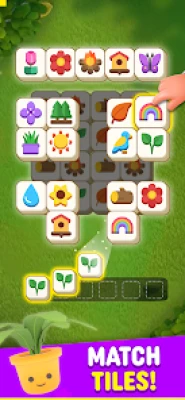
Tile Garden: Relaxing Puzzle is a match-three tile game inspired by mahjong-style puzzles. Its central objective is simple: select tiles from the board and collect three identical ones to remove them. However, every selected tile occupies space in the holding tray until a matching group is completed. If the tray fills before you can clear enough tiles, the level ends in failure.
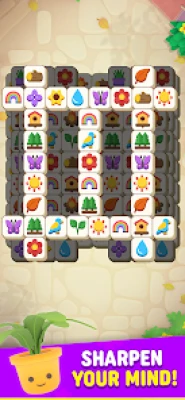
This combination of straightforward matching and limited storage creates the main strategic challenge. Players must look beyond the most obvious matches and consider which tiles they can access, which pieces may be hiding beneath others, and how each move affects the remaining board.
The game also offers a calming visual style, relaxing sound effects, and a variety of themed tiles. Daily challenges provide additional puzzles, while seasonal events introduce special themes and rewards. Players can collect jigsaw pieces to decorate an art gallery, adding a creative objective alongside the main matching gameplay.
Developed by Lion Studios, Tile Garden is designed for players who want an accessible puzzle experience that can be enjoyed in short sessions. Early levels introduce the basic mechanics, while later puzzles demand better planning, careful observation, and smarter use of boosters.
Main Features of Tile Garden: Relaxing Puzzle
Triple-Match Tile Gameplay
The main mechanic involves selecting three identical tiles to clear them from the board. Every completed trio frees up space in the holding tray and helps you move closer to finishing the level.
Thousands of Puzzle Levels
The Google Play description advertises more than 2,000 unique levels and puzzles. The variety provides ongoing challenges for players who enjoy learning new board patterns and improving their matching strategies.
Relaxing Garden Themes
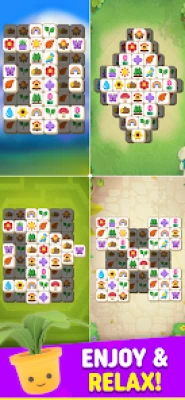
The game features colorful scenery and decorative themes that give each session a pleasant atmosphere. Mahjong-inspired tile designs make the pieces visually interesting while keeping the main gameplay easy to understand.
Daily Puzzle Challenges
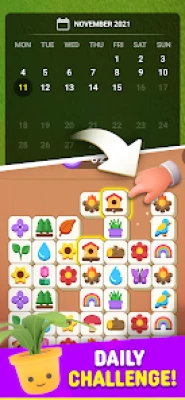
Daily challenges provide an additional way to test your matching skills. Some challenges introduce a timer, so they require a faster approach than the standard levels described as having no time pressure.
Special Events and Seasonal Rewards
Special events introduce festive themes, unique tiles, and opportunities to earn rewards. Saga events also provide themed challenges and progression goals for players who want more than the regular levels.
Helpful Boosters
The game includes power-ups such as magnet, shuffle, and undo. These tools can help when the board becomes difficult to manage, but choosing the right moment to use them is important.
Art Gallery Decoration
Players can collect jigsaw puzzle pieces and use them to design and decorate an art gallery. This adds a long-term collection goal that complements the main tile-matching experience.
Daily Bonuses and Rewards
Daily bonuses and a reward wheel offer incentives to return regularly. These rewards may provide coins or other useful items that support continued play.
Relaxing Sound Effects
ASMR-style sounds, colorful artwork, and gentle visual effects contribute to the game's relaxed atmosphere. Players can enjoy the standard puzzles at their own pace without the pressure of a countdown timer.
How to Play Tile Garden: Relaxing Puzzle
Understand the Board
Begin by examining the tiles on the board. Some pieces may be easy to select, while others may be partially covered or inaccessible until tiles above them are removed.
Look for identical symbols and consider which matches will reveal more of the board. Taking a moment to understand the layout can prevent unnecessary selections.
Tap Tiles to Fill the Tray
Select a tile to place it in the holding slots at the bottom of the screen. When you collect three identical tiles, the completed trio disappears and frees up space.
Remember that unmatched tiles remain in the tray. Every selection therefore affects how much room you have left for future moves.
Complete Matching Groups
Your goal is to remove all the tiles required to finish the level. Prioritize groups that you can complete safely and avoid filling the tray with too many different symbols.
A match is useful not only because it removes tiles but also because it creates space for additional selections.
Reveal Covered Tiles
When one tile blocks another, removing the upper piece may reveal new options. These newly accessible tiles can create matches that were previously impossible.
Pay attention to how each selection changes the board and use those changes to plan your next move.
Watch the Holding Slots
The holding tray is one of the most important parts of the game. If too many unmatched tiles accumulate, you may run out of space before completing the board.
Before tapping a tile, check whether you already have one or two copies of the same symbol in the tray. Completing an existing pair is often safer than introducing a completely new tile.
Use Boosters When Necessary
If you run into a difficult position, consider using a suitable booster. Undo can help reverse a mistaken selection, shuffle can change the arrangement of available tiles, and magnet can assist with matching according to the current version's mechanics.
Read the booster instructions and use each tool when it solves a specific problem rather than activating power-ups automatically.
Finish the Level and Collect Rewards
Continue making safe matches until the board is cleared. After completing a level, collect the available rewards and check whether you have earned puzzle pieces, coins, or progress toward an event.
Complete Strategy Guide for Tile Garden: Relaxing Puzzle
Look for Matches Before Making Your First Move
The first move can influence the rest of the level. Before tapping anything, scan the visible tiles and identify the easiest available trios.
Do not focus only on pieces that look similar. Consider how many copies are visible, whether they are accessible, and what other tiles may be revealed when you remove them.
A good opening move often clears a useful group while exposing more of the board.
Prioritize Completing Existing Pairs
One of the safest habits is to finish a pair already sitting in your holding tray. If two identical tiles are waiting for a third, finding that final copy clears three spaces at once.
By contrast, selecting several unrelated tiles can fill the tray quickly and leave you with fewer options.
Before every tap, ask yourself whether the tile completes an existing pair or starts another group that may be difficult to finish.
Avoid Collecting Too Many Different Symbols
A crowded tray is one of the most common reasons players lose. Each new symbol occupies a slot, and too many unfinished groups can leave no room for the tiles needed to complete them.
Try to keep the number of active tile groups as low as possible. Focus on finishing one or two promising groups before starting several more.
This strategy is especially important when the board contains many different symbols or when matching pieces are hidden beneath other tiles.
Study the Layers of the Board
Some puzzles require you to clear upper tiles to reach the pieces underneath. In these situations, the best move is not always the most immediate match.
Look for selections that reveal additional tiles while keeping your holding tray manageable. Removing a blocking tile can create access to several new pieces and may lead to a chain of useful matches.
However, avoid uncovering too many unrelated symbols at once if doing so would leave the tray nearly full.
Think About the Next Two or Three Moves
Try not to evaluate each tile in isolation. Before making a selection, consider what you will do afterward.
For example, if tapping a flower tile leaves two flowers in the tray, identify where the third flower might be found. If it is buried beneath several layers, choosing another readily completable group may be safer.
Planning a few moves ahead helps you recognize risky selections before they become problems.
Use the Holding Tray as a Planning Tool
The tray provides a visible record of your unfinished matches. Use it to decide which symbol deserves priority.
If you have two copies of one tile and one copy of another, the pair may offer the quickest route to freeing space. If several symbols each have only one copy, think carefully before adding another unmatched piece.
The aim is not simply to collect tiles. It is to complete groups in an order that keeps enough room available for future moves.
Make Space Before Exploring Risky Areas
When the tray is almost full, avoid revealing a large number of unfamiliar tiles unless you have a clear plan. A single safe trio can create the space needed to explore the board more freely.
If no easy match is visible, review the available pieces and consider whether undo, shuffle, or another suitable booster can help.
Keeping the tray under control gives you more flexibility when the puzzle becomes complicated.
Use Undo to Correct Mistakes
Undo is especially valuable when a selection creates an unexpected problem. If you accidentally choose a tile that does not contribute to a useful match, reversing the move may prevent the tray from becoming crowded.
Use this booster thoughtfully. Before activating it, identify the mistake you want to correct and consider whether the restored position gives you a better option.
If undo resources are limited, save them for selections that create a genuine risk rather than minor inconveniences.
Use Shuffle When the Board Feels Stuck
Shuffle can help when the current arrangement makes useful matches difficult to find. It may provide a fresh way to approach the remaining puzzle, depending on how the booster works in your version.
Before using it, check whether an obvious match is still available. Spending a booster when a simple trio is within reach wastes an opportunity to solve the puzzle naturally.
Shuffle is most useful when you have examined the board carefully and cannot identify a safe sequence of moves.
Save Magnet for Difficult Situations
The magnet booster is another tool highlighted in the game's description. Its precise behavior and availability can depend on the current version, so review the in-game explanation before using it.
Consider saving it for a situation where it can help complete a difficult match or relieve pressure on the tray. Using a valuable booster too early may leave you without help when the board becomes more complicated.
Treat Daily Challenges Differently
The standard game is designed around relaxed play, but daily challenges can introduce a timer. That changes the balance between careful planning and quick decisions.
For timed puzzles, scan the board rapidly and identify obvious trios first. Avoid spending too long evaluating low-risk choices, but continue monitoring the holding tray so that speed does not create unnecessary mistakes.
Practice with ordinary levels can help you recognize familiar symbols and patterns more quickly.
Collect Daily Rewards Consistently
Daily bonuses and the reward wheel can provide useful resources over time. Check the available rewards when you start a session and collect those that fit your routine.
You do not need to play for a long time every day to maintain a consistent habit. A short session can be enough to complete a daily activity or claim a reward when one is available.
Keep in mind that specific reward amounts and conditions may change with updates or events.
Approach Events With a Clear Goal
Special events and Saga events provide additional challenges, themed tiles, and rewards. Before entering an event, review its objectives so you know what progress is required.
If an event has a limited duration, focus on the tasks that contribute most directly to its rewards. Avoid spending resources on unrelated activities if your main goal is to complete the event.
Collect Jigsaw Pieces for the Art Gallery
The art gallery gives you a reason to keep collecting puzzle pieces beyond simply completing levels. Check your gallery progress and use available pieces when the game allows you to add or unlock decorative elements.
Treat gallery completion as a long-term objective. You can enjoy the standard puzzles while gradually building your collection rather than trying to finish everything immediately.
Recognize When to Take a Break
Tile-matching games can become more demanding as the board fills with different symbols and hidden layers. If you repeatedly make rushed selections, taking a short break can help you return with better focus.
Because standard levels are designed without a timer, there is usually no need to rush. Use the available time to examine the board and make deliberate decisions.
Beginner Tips for Tile Garden: Relaxing Puzzle
Scan the board first. Identify visible trios and look for tiles that block other pieces.
Complete pairs quickly. A pair in the tray is a useful priority because finding its third tile clears space.
Keep the tray open. Avoid collecting too many unrelated symbols at once.
Watch covered tiles. Removing a blocking piece may reveal new matches and create more options.
Plan ahead. Consider what a selection will leave in the tray and where the next matching tile may be found.
Use boosters with purpose. Undo, shuffle, and magnet are most valuable when they solve a specific problem.
Practice before timed challenges. Regular levels help you recognize tile patterns and improve your speed.
Collect daily rewards. Available bonuses can support your progress over time.
Check event requirements. Knowing the objective helps you focus on the right challenges.
Stay patient. A careful move is often better than a quick selection that fills the tray.
Common Mistakes to Avoid
Tapping Tiles Without a Plan
Selecting tiles simply because they are visible can fill the tray with unrelated symbols. Always consider whether a tile contributes to a match you can realistically complete.
Ignoring Existing Pairs
Leaving two matching tiles in the tray while collecting unrelated pieces can create unnecessary pressure. Look for the third copy before starting another group.
Filling Every Slot Too Quickly
The holding tray is a limited resource. Once it becomes crowded, you have fewer options and a greater chance of losing the level.
Overlooking Hidden Tiles
Focusing only on the top layer can make it harder to understand how the board will change. Consider which pieces may be revealed by removing blocking tiles.
Using Boosters Too Early
Power-ups can be valuable, especially in difficult levels. Spending them when a simple match is available may leave you without help later.
Ignoring Daily Challenge Rules
A timed challenge requires a different pace from a standard level. Check whether a countdown is active before deciding how carefully to evaluate each move.
Spending Rewards Without a Goal
If coins or other resources are available, consider which booster or feature will help you most. Avoid using resources simply because they are available.
Rushing Through Difficult Boards
Fast taps can create more problems than they solve. When the tray starts filling up, pause and identify the safest available match before continuing.
Is Tile Garden: Relaxing Puzzle Difficult?
Tile Garden begins with simple matching tasks that teach players how to select tiles and clear groups of three. The early stages are accessible to beginners, but the difficulty increases as puzzles introduce more complicated arrangements and hidden pieces.
The main challenge is not recognizing identical tiles. It is managing the holding tray, choosing a productive order, and revealing new pieces without creating too many unfinished groups.
Daily challenges can be more demanding because some include a timer. Players who practice regularly and learn to plan several moves ahead will generally find it easier to handle these faster puzzles.
Is Tile Garden: Relaxing Puzzle Worth Playing?
Tile Garden: Relaxing Puzzle is a good option for players who enjoy casual matching games with colorful artwork and a relaxed atmosphere. Its basic rules are easy to understand, while the limited holding tray creates enough strategic depth to make later levels more interesting.
The daily challenges, seasonal events, boosters, and art gallery add variety beyond the standard puzzles. Players can work toward collection goals while enjoying the simple satisfaction of clearing matching groups.
One consideration is advertising. The game is listed as containing ads and in-app purchases, and some player reviews mention frequent advertisements. How much this affects your enjoyment will depend on your preferences and the current version of the game.
Overall, it is worth trying if you want a tile-matching game that combines casual entertainment with thoughtful planning.
Game Information
Game title: Tile Garden: Relaxing Puzzle
Developer: Lion Studios
Genre: Casual puzzle, tile matching, and mahjong-inspired gameplay
Platform: Android
Gameplay style: Single-player tile matching
Main objective: Clear the board by matching three identical tiles while managing the holding tray
Level content: More than 2,000 levels and puzzles advertised in the Google Play description
Boosters: Magnet, shuffle, undo, and other available power-ups
Extra activities: Daily challenges, daily bonuses, reward wheel, seasonal events, and Saga events
Collection feature: Collect jigsaw pieces to decorate an art gallery
Visual style: Colorful tiles, decorative garden environments, and relaxing sound effects
Price: Free to download
Monetization: Ads and in-app purchases
Content rating: Everyone on Google Play
Specific features, booster availability, and event requirements may vary by version and update.
Frequently Asked Questions
What is Tile Garden: Relaxing Puzzle?
Tile Garden: Relaxing Puzzle is a casual game in which players select tiles and match three identical pieces to clear a board. The game also includes daily challenges, special events, boosters, and an art gallery decoration feature.
How do you win a level in Tile Garden?
Clear the required tiles by forming groups of three identical symbols. Manage the holding tray carefully because collecting too many unmatched tiles can fill the available slots and end the level.
What happens if the holding tray fills up?
If the tray fills before you can complete the puzzle, you lose the level. To avoid this, prioritize completing existing pairs and avoid selecting too many unrelated tiles.
Does Tile Garden have a timer?
The main puzzle experience is described as having no timer or pressure. However, Daily Challenge puzzles can include a countdown, so check the rules before starting a challenge.
Which boosters are available in Tile Garden?
The Google Play description highlights magnet, shuffle, and undo. These power-ups can help with difficult boards, but their exact behavior and availability should be checked in the current game version.
What is the best strategy for difficult levels?
Study the board before moving, complete existing pairs, reveal covered tiles carefully, and keep the holding tray as open as possible. Use boosters when they solve a specific problem rather than spending them automatically.
How do you get more rewards?
Check the daily bonus, reward wheel, and available events. Completing levels and participating in special challenges can provide additional opportunities to earn rewards.
What is the art gallery feature?
Players collect jigsaw puzzle pieces and use them to design and decorate an art gallery. It provides a longer-term collection goal alongside the main tile-matching levels.
Is Tile Garden free to play?
The game is free to download on Google Play, but it contains advertising and offers in-app purchases. Optional purchases may be available for certain resources or features.
Is Tile Garden suitable for beginners?
Yes. The basic rules are simple, and early levels help players understand how matching and the holding tray work. Later levels become more challenging as players need to plan their selections carefully.
Can you play Tile Garden offline?
Availability may depend on the current version and the feature you want to access. Some core gameplay may be accessible offline, but events, advertisements, and certain online features can require an internet connection.
How can you improve your matching speed?
Practice recognizing identical symbols, scan the board before selecting tiles, and learn to spot pairs already waiting in the tray. Once you are comfortable with the basic patterns, you can make faster decisions without sacrificing accuracy.
Final Thoughts
Tile Garden: Relaxing Puzzle combines easy-to-learn triple matching with the strategic challenge of managing a limited holding tray. Its garden themes, daily puzzles, events, boosters, and decorative gallery give players several reasons to keep returning.
The best approach is to think ahead rather than tap every visible tile. Complete existing pairs, make space before exploring risky areas, and use power-ups when they offer a clear advantage. With practice and a little patience, you can solve more difficult boards while enjoying the game's calm, colorful atmosphere.
Rate the Game
User Reviews














Popular Games



















 Android
 iOS
 Windows
 Xbox