


Latest Version
October 22, 2026
Lion Studios
Puzzle
0
com.onebutton.mrsuper
Report a Problem
More About :game
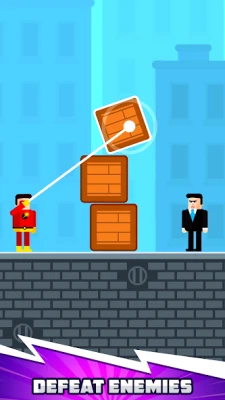
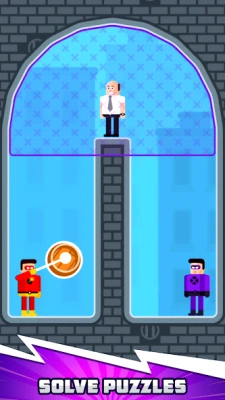
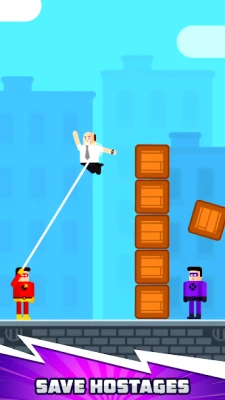
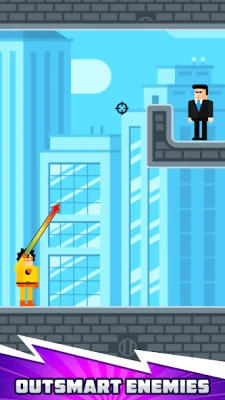
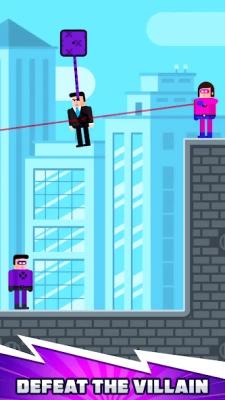
The Superhero League is a mobile puzzle game that puts players in control of powerful heroes on a mission to defeat villains and protect the world. Instead of relying on speed or traditional combat alone, you must study each level, understand your available abilities, and find the smartest way to eliminate every threat.
The game features a colorful superhero theme, physics-based interactions, and puzzles that reward accuracy and experimentation. Enemies may stand behind obstacles, occupy awkward positions, or appear in groups that require a carefully planned move. A successful solution often depends on using the environment as effectively as the hero's special powers.
As you progress, the challenges become more demanding, introducing new situations and opportunities to explore different approaches. Unlockable characters and additional missions provide further variety, making the game appealing to casual players and puzzle enthusiasts alike.
Main Features of The Superhero League
Superhero Powers and Special Abilities
One of the main attractions of The Superhero League is its selection of extraordinary powers. Different abilities create different ways to approach a puzzle, allowing players to experiment instead of relying on a single attack strategy.
Fire-based abilities can help deal with suitable targets or obstacles, while ice powers introduce freezing mechanics. Other powers may allow you to manipulate objects, influence movement, or control situations in ways that ordinary attacks cannot.
Learning what each ability does is essential for solving increasingly complicated levels. Pay attention to the available power, the position of your enemies, and the objects surrounding them before deciding how to proceed.
Physics-Based Puzzle Gameplay
The Superhero League combines action with environmental problem-solving. Objects, obstacles, and enemy positions can influence the outcome of your actions, so simply targeting the nearest opponent is not always the best solution.
A well-planned move may affect several enemies or create an unexpected chain reaction. Understanding how objects interact makes it easier to discover efficient solutions and avoid wasting attempts.
Challenging Levels and Missions
Every stage presents a puzzle that requires you to assess the situation and choose an appropriate strategy. Some challenges reward direct attacks, while others encourage you to use environmental objects, special abilities, or indirect approaches.
As the game progresses, you may encounter more complicated arrangements that require several steps to solve. Taking time to understand the entire level before acting can make these challenges much easier.
Unlockable Heroes and Characters
New characters add variety to the experience by introducing different abilities or ways to approach challenges. Exploring the available heroes helps you discover which play styles suit you best.
When a new character becomes available, familiarize yourself with its special power before tackling difficult stages. Understanding the strengths and limitations of each hero can help you select a more suitable approach for future puzzles.
Enemies and Superhero Battles
The game features a variety of opponents, including spies, agents, zombies, aliens, and other villains. Different enemy arrangements can require different solutions, especially when obstacles or multiple targets complicate a direct attack.
Instead of treating every encounter as the same battle, study the positions of all opponents and look for the simplest way to complete the objective.
Star Ratings and Level Completion
Performance can be an important part of progressing through puzzle stages. Where a level offers a star-based rating, consider both completing the objective and finding a more efficient solution.
If you finish a stage without earning the highest available rating, review your actions and look for unnecessary moves or missed opportunities. Replaying completed levels can help you improve your understanding of the mechanics.
How to Play The Superhero League
Understand the Level Objective
Start by identifying what you need to accomplish. Determine which enemies must be defeated, which obstacles matter, and whether the level includes additional conditions.
Avoid making an immediate move simply because a target is visible. A short inspection can reveal a better route to victory and prevent mistakes that could have been avoided.
Learn the Controls
The game uses straightforward mobile controls that let you interact with the puzzle and activate the available superhero abilities. Follow the on-screen instructions for the current stage, as the precise action may depend on the selected hero and level mechanics.
Practice the controls in easier stages until aiming, selecting targets, and activating powers feel natural.
Choose the Right Ability
Examine your available powers before committing to an attack. Some abilities are more useful against particular obstacles or enemy arrangements than others.
Consider how a power might affect the surrounding environment as well as its intended target. An indirect solution may be more effective than a direct attack.
Observe the Results
After making a move, watch how the environment responds. Notice which objects move, how enemies react, and whether the result opens a new opportunity.
These observations provide useful information for your next attempt. If a strategy fails, change one part of your approach rather than repeating the same action without a clear reason.
Complete the Stage and Improve
Once the objective is achieved, continue to the next challenge. If you want to improve your performance, revisit difficult or previously completed levels and experiment with alternative solutions.
The more familiar you become with the game's mechanics, the easier it will be to recognize useful patterns in later puzzles.
Complete Strategy Guide for The Superhero League
Study the Entire Scene Before Attacking
The strongest opening move is often observation. Examine enemy locations, obstacles, available powers, and the space between important objects.
Look for targets that can be reached directly and objects that might influence the outcome of an attack. Consider whether defeating one enemy first will make another target easier to reach.
Planning the sequence of actions before starting helps reduce unnecessary attempts and makes complex puzzles more manageable.
Prioritize the Most Important Targets
When a stage contains several enemies, decide which opponent presents the biggest obstacle to completing the objective. An enemy positioned behind cover or near a critical part of the environment may deserve attention before an exposed target.
However, do not automatically attack the hardest-to-reach opponent first. Compare the available options and choose the target that creates the greatest advantage for your next move.
Use Environmental Objects to Your Advantage
Environmental interaction is an important part of physics-based puzzles. Objects may block an attack, redirect movement, or influence how a sequence unfolds.
Look for opportunities to use the surroundings rather than relying entirely on direct attacks. A solution that initially seems complicated may become straightforward when you identify how the environment can help.
Test these interactions carefully and observe the results before committing to a more complicated sequence.
Understand Each Superpower
Avoid assuming that every ability works in the same way. Take time to learn what your selected hero can do and how the power interacts with the level.
When experimenting with a new ability, start with a simple situation where the result is easy to observe. Once you understand its behavior, apply that knowledge to more difficult arrangements.
This approach is especially useful when the game introduces a character or mechanic that changes how you solve puzzles.
Plan Multi-Enemy Solutions
Stages with several opponents can be easier when you consider the group as a whole instead of treating every enemy as a separate problem.
Look for positions where one well-planned action might affect multiple targets. Check whether an obstacle, object, or special ability could help you complete several parts of the objective in sequence.
Before making the move, consider what will happen afterward. A successful first action should ideally leave you in a better position to finish the level.
Make Accuracy More Important Than Speed
There is usually little benefit in rushing through a puzzle when a single mistake can waste an attempt. Take a moment to line up your action, confirm the intended target, and consider possible side effects.
If a level requires precise aiming, pay attention to the angle and the available space. Small adjustments may make the difference between a successful move and an ineffective one.
Build consistency in easier stages before attempting complicated challenges with several interacting elements.
Experiment Without Repeating Mistakes
Trial and error can help you understand a difficult level, but each attempt should teach you something useful.
When a strategy fails, identify the reason. Perhaps the target was incorrectly chosen, the ability was unsuitable, or the environmental interaction was different from what you expected.
Change your next attempt based on that observation. This turns failure into a practical learning process instead of a cycle of repeated mistakes.
Replay Difficult Levels With a New Plan
If you are stuck on a particular stage, take a break from your current approach and examine the puzzle again. Look for a target you overlooked, an object you did not use, or a more effective order for your actions.
Try a different ability or attack sequence if the game allows it. Comparing alternative approaches can reveal a solution that was not obvious during your first attempt.
Aim for Better Level Ratings
When star ratings or similar performance goals are available, focus on completing the stage efficiently. Review whether every action contributed to the objective and whether a simpler approach could achieve the same result.
Do not sacrifice a reliable solution merely to experiment with an unnecessarily complicated one. First understand how to complete the stage, then refine your strategy to improve the rating.
Advanced Tips for Difficult Levels
Think Beyond the Obvious Attack
The first visible target is not always the most important one. Examine the entire arrangement and consider whether an indirect action could produce a better result.
Try to identify opportunities that allow one action to solve multiple problems. This mindset becomes increasingly valuable when several enemies and obstacles appear together.
Recognize Repeating Puzzle Patterns
Some levels may share familiar arrangements, such as enemies protected by obstacles or targets positioned near interactive objects. Recognizing these patterns helps you develop solutions more quickly.
However, avoid assuming that a familiar-looking stage has exactly the same solution. Check the current level's details before applying a strategy you used earlier.
Manage Your Attempts Wisely
Treat each attempt as an opportunity to learn something about the puzzle. If you are unsure how an ability works, test it in a situation where the consequences are easy to understand.
When a level becomes frustrating, pause and reconsider your options instead of making random moves. A fresh perspective often helps you spot a simpler solution.
Adapt to New Characters
A new hero may require a different approach from the character you used previously. Explore the available abilities and understand how they affect the environment before relying on them in challenging stages.
Adapt your strategy to the character's strengths rather than forcing every puzzle into the same familiar pattern.
Common Mistakes to Avoid
Attacking Without a Plan
Making the first available move can lead to missed opportunities. Study the scene and identify your objective before acting.
Ignoring Obstacles
Objects that appear to block your path may be important parts of the puzzle. Examine the environment carefully to determine whether an obstacle can be avoided, used, or interacted with.
Using the Wrong Superpower
Not every ability suits every situation. Consider the type of target, the surrounding objects, and the outcome you want before choosing your action.
Repeating an Unsuccessful Strategy
Repeating the same failed move rarely helps unless you have identified something that needs correcting. Change your aim, target, timing, or approach according to what you learned.
Rushing Through Difficult Stages
Hasty decisions can make an otherwise simple puzzle harder. Take time to understand the mechanics and plan the sequence of actions, particularly when several targets are involved.
Overcomplicating the Solution
A difficult-looking level does not always require a complicated strategy. Look for a straightforward way to complete the objective before attempting elaborate combinations of actions.
Is The Superhero League Suitable for Casual Players?
The Superhero League is a good choice for players who enjoy short puzzle challenges, superhero themes, and experimenting with different abilities. Its combination of simple controls and increasingly demanding problem-solving makes it accessible to newcomers while still offering challenges for experienced puzzle fans.
Players who enjoy finding creative solutions rather than following a fixed combat routine may find its gameplay particularly appealing. The game also suits people who like replaying stages to discover more effective ways to complete them.
Some levels may require patience, especially when the correct sequence of actions is not immediately apparent. Players who enjoy learning from mistakes and trying alternative approaches are likely to get the most from the experience.
Frequently Asked Questions
What is The Superhero League?
The Superhero League is a mobile action-puzzle game developed by Lion Studios. Players use superhero abilities and environmental interactions to defeat villains and solve challenging levels.
How do you win in The Superhero League?
Study the level, identify the objective, select a suitable power, and plan your actions before attacking. Observe how the environment responds and adjust your strategy when necessary.
What is the best strategy for difficult levels?
The best general strategy is to examine every target and obstacle before making a move. Prioritize important enemies, consider indirect solutions, and use failed attempts to understand the puzzle's mechanics.
Which superpower should you use first?
The right ability depends on the level layout, the available hero, and the enemies you need to defeat. Learn what each power does and choose the one that best suits the situation.
Can you defeat multiple enemies with one move?
Some puzzle situations may allow a single action or environmental interaction to affect multiple enemies. Look for opportunities to use the surroundings and arrange your actions efficiently, but remember that the solution depends on the specific stage.
How can you improve your performance?
Practice accurate aiming, learn how your abilities work, and think through each action before committing to it. Replaying difficult levels with a different strategy can help you discover more effective solutions.
Does The Superhero League become harder as you progress?
The game introduces different puzzle situations and challenges as you advance. Later stages may require more careful planning, a better understanding of superhero abilities, and greater attention to environmental interactions.
Is The Superhero League good for puzzle fans?
Yes. Its combination of superhero powers, physics-based interactions, and creative problem-solving makes it appealing to players who enjoy casual action puzzles.
What should you do if you get stuck on a level?
Review the objective, examine obstacles you may have overlooked, and consider a different ability or sequence of actions. Use each attempt to learn something about the level rather than repeating an unsuccessful move.
Final Thoughts on The Superhero League
The Superhero League combines superhero action with thoughtful puzzle-solving, giving players a reason to examine each level carefully and experiment with different approaches. Its special abilities, varied enemy arrangements, and environmental challenges make creative thinking an important part of the experience.
To make steady progress, focus on understanding the objective, selecting the right ability, using the surroundings effectively, and learning from unsuccessful attempts. Whether you are starting your superhero adventure or working through more demanding stages, a patient and strategic approach will help you tackle puzzles with greater confidence.
Rate the Game
User Reviews














Popular Games



















 Android
 iOS
 Windows
 Xbox