




Latest Version
October 22, 2026
Lion Studios
Puzzle
0
com.arrow.tangle
Report a Problem
More About :game
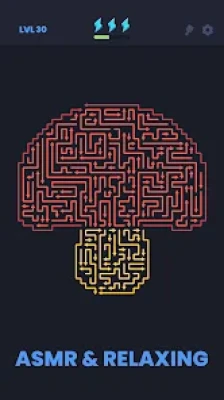
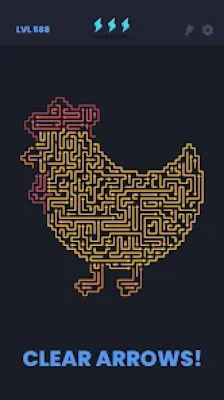
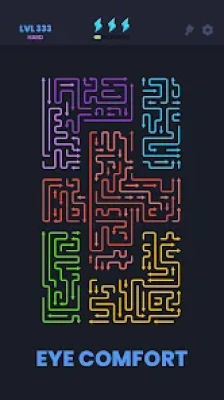
Tangle Out: Color Maze is a puzzle game published by Lion Studios for players who enjoy logical thinking, directional challenges, and problem-solving. The central objective is to guide arrows through tangled layouts and find a path that allows them to escape.
Although the concept is easy to understand, completing more complicated stages requires careful planning. Arrows may point in different directions, pathways can become difficult to read, and moving one element may affect the available options elsewhere on the board. You need to examine the layout, recognize possible routes, and determine which actions will help you progress.
The game combines straightforward touch controls with increasingly challenging puzzles. Its gradual difficulty progression makes it accessible to beginners while giving experienced puzzle fans reasons to improve their planning skills.
Tangle Out: Color Maze also includes boosters that can help when a puzzle becomes difficult. Features such as Zoom, Hint, and Grid Scale are designed to make complicated layouts easier to inspect and understand.
Main Features of Tangle Out: Color Maze
Directional Arrow Puzzles
The main attraction is the arrow-based puzzle system. Each stage presents a layout that requires you to understand directions, identify possible routes, and make decisions based on the available space.
Progressively Challenging Levels
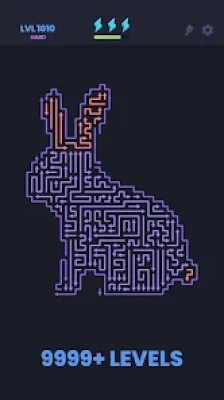
The game introduces increasingly complicated layouts as you advance. Early stages help you understand the mechanics, while later challenges require more careful observation and a better understanding of spatial relationships.
Rotate Arrows and Move Tiles
The game description highlights mechanics that involve rotating arrows and moving tiles. These interactions encourage players to examine the board from different angles and adjust their approach when a direct route is unavailable.
Helpful Puzzle Boosters
Tangle Out: Color Maze includes three useful assistance options:
Zoom: Helps you inspect complicated sections of the board more closely.
Hint: Offers assistance when you are unsure which move to make.
Grid Scale: Helps improve board visibility and makes it easier to plan around the layout.
Simple Touch Controls
The controls are designed to be easy to understand. You can concentrate on finding solutions rather than learning complicated combinations or memorizing a long list of commands.
Relaxing Brain Training
The game encourages logical reasoning, attention to detail, and spatial awareness. Its puzzle-focused format makes it suitable for short breaks or longer sessions devoted to solving increasingly challenging boards.
Offline-Friendly Gameplay
The Google Play description presents the game as suitable for offline play. This can make it convenient when you want a puzzle session without relying on a continuous internet connection. Some optional features or services may still require connectivity.
Dark Mode Support
Dark mode provides an alternative visual presentation for players who prefer a darker interface. It can be useful when playing in low-light environments, depending on the device and game settings.
How to Play Tangle Out: Color Maze
Learning the basic mechanics is the first step toward solving the game's more demanding puzzles.
Examine the Board
Start by looking at the entire maze. Identify the arrows, their directions, the available spaces, and any areas that appear difficult to navigate.
Avoid making your first move immediately. A few seconds of observation can help you understand how the pieces relate to one another.
Understand Each Arrow's Direction
Directional arrows provide important information about movement and possible routes. Check where each arrow points and consider whether its path is open or affected by another part of the puzzle.
The direction of an arrow should guide your decision rather than its color or position alone.
Look for an Available Route
Search for arrows that appear to have a clear path toward an exit or another valid destination. Clearing an accessible route may help you understand how the rest of the board can be solved.
Use Rotations and Tile Movement Carefully
When a level allows you to rotate arrows or move tiles, consider how the change will affect the surrounding layout. A useful adjustment may create a new route, while an unnecessary move could make the board harder to understand.
Use Boosters When Needed
If you cannot identify a useful move, consider using a Hint. If the board is too crowded to inspect comfortably, Zoom or Grid Scale may help you see the layout more clearly.
Learn From Every Level
After completing a stage, think about what made the solution work. Recognizing familiar patterns can help you solve later puzzles more efficiently.
Beginner's Guide: Tips for Getting Started
Take Your Time
Tangle Out: Color Maze is built around logical decisions, so rushing is rarely the best approach. Look at the board carefully before making a move.
Start With the Clearest Paths
Identify arrows or routes that seem easiest to understand. These provide a useful starting point for analyzing the rest of the puzzle.
Focus on One Section at a Time
A crowded board can appear overwhelming when you try to understand every arrow simultaneously. Divide it mentally into smaller sections and examine how the arrows in each area interact.
Check Directions Before Acting
Do not assume that an arrow can move freely just because it points toward an open-looking area. Consider the complete route and any obstacles that may interfere with the intended movement.
Avoid Unnecessary Moves
Every action should have a purpose. Before tapping or rotating an arrow, ask yourself what the move is expected to accomplish.
Use Assistance Strategically
Boosters are most useful when they help you overcome a specific obstacle. Try solving the puzzle independently first, then use assistance if you cannot identify a promising next step.
Best Strategies for Solving Difficult Levels
Plan Several Moves Ahead
Instead of choosing an arrow simply because it looks accessible, consider what the board might look like after that move.
Ask yourself whether the action will open another route, reduce congestion, or leave an important section blocked. Thinking ahead can prevent unnecessary trial and error.
Follow the Directional Logic
The arrows provide clues about how the puzzle is intended to work. Study their orientations and look for routes that make sense within the layout.
When several arrows appear equally important, compare their directions and determine which one offers the clearest opportunity to make progress.
Identify Dependencies Between Arrows
Some moves may depend on other parts of the puzzle being adjusted or cleared first. If one arrow appears unable to reach its destination, investigate whether another arrow or tile is affecting its route.
Understanding these relationships is more effective than treating every piece as an isolated problem.
Work From the Outside Toward the Center
For certain layouts, the outer sections may be easier to analyze because they have fewer surrounding pieces. Consider whether the edges contain accessible routes before focusing on the most crowded central area.
This is a planning technique rather than a universal rule. Some boards will require a different order, so always follow the actual layout.
Reconsider the Board After Every Important Move
A successful move can change how you interpret the remaining puzzle. Pause briefly after a significant action and inspect the new arrangement.
An arrow that previously seemed blocked may now offer a useful route, or a different section may become the best place to focus.
Change Your Approach When Necessary
If your plan repeatedly leads nowhere, return to the overall layout. Look for an overlooked direction, an alternative rotation, or a different sequence of actions.
Changing one decision at a time helps you understand what works and why.
How to Use Boosters Effectively
Boosters can make difficult puzzles easier to analyze, but using the right option for the right problem is important.
Zoom: Inspect Complicated Sections
Zoom is useful when several arrows overlap visually or when the board contains details that are difficult to distinguish at its normal size.
Use it to inspect the area that is causing the most confusion. Once you understand that section, return to the full layout and consider how it connects to the rest of the puzzle.
Hint: Find a Useful Next Step
A Hint is helpful when you have examined the board but cannot identify a promising move.
Before using one, try to narrow down the problem. Determine which section seems blocked and which arrows may be involved. This makes it easier to understand the guidance you receive.
Grid Scale: Improve Board Visibility
Grid Scale can help make a crowded layout easier to inspect and plan around.
Consider using it when the spacing between arrows makes it difficult to understand their relationships. A clearer view can help you compare possible routes and avoid confusing neighboring elements.
Avoid Depending on Boosters Too Early
Boosters are useful, but independent problem-solving helps you develop better puzzle skills. Give yourself an opportunity to analyze each stage before asking for assistance.
Save a booster for situations in which it provides meaningful help rather than using it automatically at the beginning of every level.
Common Mistakes to Avoid
Making Moves Without a Plan
Tapping arrows at random may create confusion without teaching you much about the puzzle. Think about the expected result before committing to an action.
Ignoring the Direction of an Arrow
An arrow's orientation is one of the most important clues in the game. Always consider where it points and how that direction affects the available route.
Focusing on Only One Part of the Board
A route that looks impossible in one section may become clearer when you examine the surrounding layout. Review the entire board if you cannot find a solution locally.
Overlooking the Available Mechanics
Some levels involve rotating arrows or moving tiles. If the obvious route does not work, consider whether one of these mechanics could change the arrangement.
Using Hints Before Understanding the Problem
A Hint may help, but first try to identify what is confusing you. Understanding the obstacle can make the assistance more useful and help you learn from the solution.
Repeating an Unsuccessful Strategy
If a sequence does not produce progress, avoid repeating it without reconsideration. Recheck the directions, inspect the surrounding pieces, and try a different approach.
Assuming Every Level Uses the Same Solution Pattern
The game gradually introduces more challenging layouts. A method that worked well on an earlier stage may not be appropriate for the next one. Adapt your strategy to the puzzle in front of you.
How to Improve Your Spatial Awareness
Spatial awareness is one of the most valuable skills for directional puzzle games. It helps you understand how objects are positioned, how their orientations relate to one another, and which routes may be possible.
Visualize Movement Before Acting
Imagine how an arrow or tile might behave after an interaction. Even a rough mental picture can help you avoid moves that are unlikely to work.
Compare Alternative Routes
When more than one route appears possible, compare them before choosing. Look for the option that seems to simplify the board or reveal more information about the remaining puzzle.
Recognize Repeated Patterns
As you play, you may notice familiar arrangements or recurring challenges. Remembering how you solved similar situations can help you approach new levels with greater confidence.
Practice Deliberate Decision-Making
After each move, briefly consider whether the board has become easier to understand. This habit encourages you to think about the consequences of your actions instead of relying entirely on instinct.
Is Tangle Out: Color Maze Suitable for Casual Players?
Yes. The game uses simple controls and focuses on puzzles rather than complex action mechanics. This makes it accessible to people who want a casual game that still provides a mental challenge.
Beginners can learn the basic concepts gradually, while experienced puzzle players can enjoy analyzing more complicated layouts. The ability to play in short sessions also makes the game suitable for breaks or everyday downtime.
Players who enjoy logic games, maze challenges, and directional puzzles are likely to appreciate its straightforward but increasingly demanding gameplay.
Can You Play Tangle Out: Color Maze Offline?
The Google Play listing describes Tangle Out: Color Maze as offline-friendly, so its core puzzle experience is intended to be accessible without a constant internet connection.
However, advertisements, purchases, or certain optional services may depend on connectivity. If you plan to play offline, open the game beforehand and check which features are available on your device.
Frequently Asked Questions
What Is Tangle Out: Color Maze?
Tangle Out: Color Maze is a casual directional puzzle game in which players solve intricate layouts by examining arrows, finding routes, and using the available mechanics to progress.
Who Developed Tangle Out: Color Maze?
The game is published by Lion Studios.
Is Tangle Out: Color Maze Free to Play?
The Google Play version is listed as free to download and includes advertisements and in-app purchases. Optional content and pricing may vary.
How Do You Solve Puzzles in Tangle Out: Color Maze?
Begin by examining the entire board, checking arrow directions, and identifying the clearest possible routes. Plan your moves carefully and reconsider the layout whenever an action changes the puzzle.
What Does the Hint Booster Do?
The Hint booster provides assistance when you are unsure how to proceed. It can be useful when careful inspection has not revealed an obvious next move.
Why Is Zoom Useful?
Zoom helps you inspect complicated sections of the board more closely. It is particularly helpful when the arrangement is crowded or difficult to read at its normal size.
What Is Grid Scale Used For?
Grid Scale is designed to improve board visibility and help you plan around the puzzle layout more comfortably.
Does the Game Become More Difficult?
Yes. The listing describes progressively challenging levels with evolving mechanics and increasingly complex layouts.
Can Tangle Out: Color Maze Be Played Without Wi-Fi?
The game is advertised as offline-friendly. Some optional features, advertisements, or purchase-related services may still require an internet connection.
How Can Beginners Improve Faster?
Take your time, examine every arrow, and think about the result of each action before making it. Focus on understanding why a move works instead of simply trying to finish the level quickly.
Final Thoughts
Tangle Out: Color Maze offers an enjoyable mix of simple controls and thoughtful directional puzzles. Its arrow-based mechanics encourage players to observe carefully, plan ahead, and develop a better understanding of spatial relationships as the levels become more challenging.
The best approach is to study the board before acting, look for clear routes, and reconsider your strategy whenever a move does not help. Zoom, Hint, and Grid Scale can provide additional support when a puzzle becomes difficult, but patience and careful reasoning remain your most useful tools.
Whether you enjoy quick brain teasers or prefer spending more time working through complicated layouts, Tangle Out: Color Maze provides a relaxed way to challenge your logic and problem-solving skills.
Rate the Game
User Reviews














Popular Games



















 Android
 iOS
 Windows
 Xbox