

Latest Version
October 21, 2026
SayGames Ltd
Puzzle
0
com.blocky.quest
Report a Problem
More About :game
About Blocky Quest – Classic Puzzle
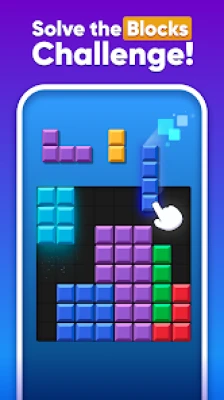
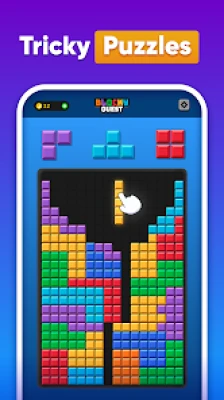
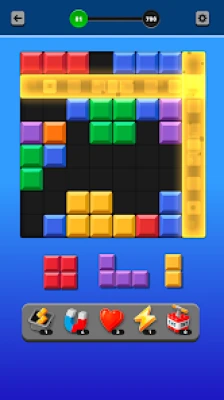
Blocky Quest – Classic Puzzle puts a fresh spin on the familiar block-placement puzzle formula. Developed by SayGames Ltd, the game asks you to place shaped blocks onto a grid, clear completed lines, and make the most of the space available. Its simple controls make it easy to learn, while the limited room on the board creates a challenge that rewards strategic thinking.
The key difference is that blocks do not automatically fall from the top of the screen. You can examine the available shapes and decide where each piece fits best. However, the blocks cannot normally be rotated, which means you must work with their original orientations. This restriction makes spatial awareness and forward planning especially important.
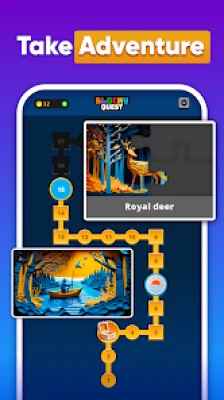
The game includes several ways to play. Classic mode focuses on keeping the board clear for as long as possible and achieving a high score. Quest mode introduces specific objectives that require you to solve puzzles with a particular goal in mind. Completing multiple levels can earn chests containing additional rewards.
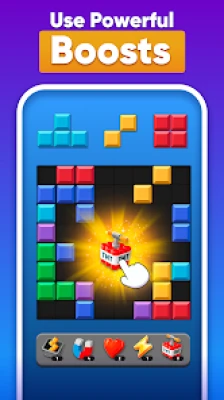
Boosters provide extra assistance when a difficult board limits your options. Depending on the available booster, you may be able to change a block's orientation, clear troublesome pieces, or create additional space. Using these tools at the right moment can help you avoid a dead end and continue your run.
Blocky Quest is suitable for players who want a casual puzzle game that combines relaxing gameplay with meaningful decisions. Each move affects the remaining space, so successful players learn to think beyond the immediate placement and consider how the entire board will look afterward.
How to Play Blocky Quest
Understand the Puzzle Board
The board is the central area where you place your blocks. Every piece occupies a specific number of grid cells, and your task is to position the available shapes without creating an arrangement that prevents future moves.
At the beginning of a round, examine the empty spaces and identify the areas where blocks can fit naturally. Look for nearly completed rows or columns, open corners, and spaces large enough to accommodate larger shapes.
A placement that looks convenient at first may create awkward gaps later. Before committing to a piece, consider how much useful space will remain and whether the other available blocks will still fit.
Place Blocks Strategically
Choose positions that help you complete rows or columns while keeping the board flexible. Clearing lines removes occupied cells and creates more room for future pieces.
Whenever possible, use a single placement to support several goals. A block might complete one line while also preparing another for a later move. These efficient placements help you maintain space without wasting opportunities.
Clear Lines to Create Space
Completed lines disappear, opening space for additional blocks. Line clearing is essential because the board becomes increasingly difficult to manage when occupied cells accumulate.
Do not focus exclusively on clearing a line immediately. Sometimes a placement that preserves a larger open area is more valuable than a quick clear that leaves behind awkward gaps.
The best move depends on the shapes available and the amount of room remaining.
Complete Quests and Level Objectives
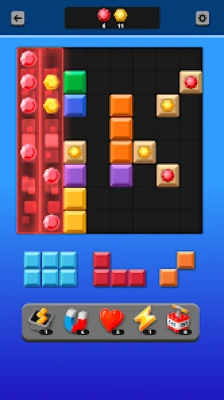
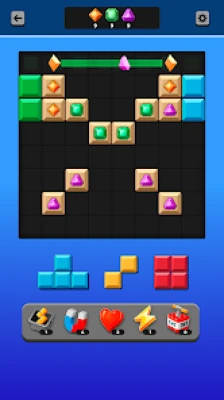
Quest mode challenges you to meet specific goals instead of simply surviving for as long as possible. Objectives may involve reaching a score, matching blocks with particular gems, or solving an existing board arrangement.
Read the objective before placing any pieces. A move that helps in Classic mode may not be ideal when a level requires a particular result.
Prioritize the actions that directly contribute to the current goal, and avoid unnecessary placements that make the board harder to manage.
Use Boosters When Necessary
Boosters can help when the available shapes do not fit your current arrangement. The game features several types of assistance, including tools associated with rotating, clearing, sweeping, or otherwise removing troublesome blocks.
Learn what each available booster does before using it. Some tools may be more valuable for difficult quest objectives, while others can help preserve a long Classic mode run.
Because boosters are limited resources, use them when they solve a meaningful problem rather than spending them on minor inconveniences.
Main Features of Blocky Quest
Classic Endless Puzzle Mode
Classic mode challenges you to continue placing blocks while keeping the board playable. The main objective is to avoid running out of valid moves and achieve the highest score you can.
Every placement matters because the board gradually fills with occupied cells. Strong spatial planning helps you extend your run and improve your personal record.
Quest Mode With Specific Goals
Quest mode introduces objectives that change the way you approach each puzzle. Instead of concentrating only on empty space, you must plan placements around the required score, gems, or other level conditions.
Winning multiple levels can unlock reward chests, providing another reason to continue progressing.
Helpful Puzzle Boosters
Boosters give you additional options when a difficult arrangement threatens your progress. Depending on the tool, you may be able to rotate a piece, remove obstacles, or clear space.
Learning when to use each booster is an important part of advanced play.
Block Placement Without Falling Pieces
Unlike traditional falling-block games, Blocky Quest gives you time to consider where the available pieces should go. This creates a more deliberate puzzle experience that emphasizes planning rather than reaction speed.
Fixed Block Orientations
Blocks normally retain the orientation in which they are presented. You must find a suitable position without freely turning every shape, unless you use an appropriate booster.
This restriction adds difficulty and encourages players to recognize useful spaces before placing a piece.
Reward Chests and Progression
Completing multiple quest levels can earn chests with additional rewards. These incentives encourage players to work through objectives and develop their puzzle-solving skills.
Relaxing Casual Gameplay
The controls are simple, and the lack of automatically falling pieces allows you to play at a comfortable pace. The game works well for short sessions or longer attempts to improve your score.
Full Strategy Guide for Blocky Quest
Best Beginner Strategy
The most important beginner skill is learning to preserve open space. New players often concentrate on fitting the current piece into any available gap without considering how that placement affects the next move.
Instead, examine the available shapes before placing anything. Identify the largest piece first, then make sure there is a suitable area for it. If you place several small blocks around the board without leaving enough room, a large piece may become impossible to fit.
Focus on completing rows and columns while maintaining broad, accessible areas. Avoid filling corners and narrow gaps unless the placement contributes to a useful line clear.
During your first games, pay attention to which shapes repeatedly cause problems. Learning their dimensions and identifying suitable positions will make later decisions much easier.
How to Get Higher Scores in Classic Mode
High scores come from maintaining a playable board for as long as possible. A large number of occupied cells is not automatically a problem if the remaining spaces can accommodate the available shapes, but scattered gaps can quickly make the board difficult to manage.
Prioritize line clears that create useful space. When a move completes several lines or prepares multiple lines for completion, it can provide more flexibility than a placement that clears only one line without improving the surrounding layout.
Try to keep the board organized rather than allowing blocks to accumulate randomly. Large open sections are easier to use than numerous small holes, especially when larger pieces appear.
Think about the next few placements whenever possible. You cannot predict every future shape, but you can avoid arrangements that depend on one very specific piece appearing.
How to Handle Large Blocks
Large blocks are among the most important shapes to plan for because they require several connected empty cells. If you allow the board to become fragmented, finding enough room for them can become difficult.
Identify open areas that can accommodate larger shapes and avoid breaking them apart unnecessarily. When a large piece is available, consider placing it before filling smaller spaces, particularly if its possible positions are limited.
However, do not automatically place every large block immediately. If moving it would prevent an important line clear or create a more dangerous layout, compare the alternatives first.
The goal is to maintain enough flexibility for both large and small shapes.
How to Avoid Trapped Empty Spaces
Small empty pockets surrounded by occupied cells can be difficult to use. These gaps may remain on the board even when you have enough total empty cells to accommodate a piece elsewhere.
Before placing a block, examine the shape of the remaining empty areas. A compact, connected area usually provides more options than the same number of cells scattered into separate pockets.
Avoid creating narrow holes that match no available piece. When a gap cannot be filled directly, consider whether it can become part of a completed row or column.
Clearing lines is often the most reliable way to remove awkward arrangements and restore a more useful board layout.
Best Line-Clearing Strategy
Completing lines should be a regular part of your plan, but the timing matters. A quick line clear may be less useful than a placement that prepares multiple lines for the next move.
Look for opportunities where one block contributes to several nearly completed rows or columns. Such placements can improve the board more efficiently than clearing lines without considering the surrounding spaces.
Do not leave every potential clear for later. If the board is already crowded, delaying an easy line clear can reduce your available options and make future pieces harder to place.
A balanced strategy combines immediate space management with preparation for stronger future clears.
How to Complete Quest Levels More Efficiently
Quest levels require a different approach from endless Classic mode because each stage has a defined objective.
Read the target carefully before making your first move. Determine whether the level emphasizes scoring, matching gems, clearing specific areas, or solving an existing arrangement.
Once you understand the objective, prioritize placements that directly contribute to it. Avoid moves that create unnecessary clutter or make the required target harder to reach.
If the level begins with blocks already occupying the board, study the arrangement before adding anything. Identify the most constrained areas and look for moves that clear space or advance the objective without blocking essential positions.
When a level becomes difficult, take a moment to reconsider the entire layout rather than repeating the same approach. A different placement order may reveal a more effective solution.
How to Use Boosters Effectively
Boosters are most valuable when they solve a problem that ordinary placement cannot easily address.
A rotation-style booster can help when a piece's fixed orientation prevents it from fitting into an otherwise useful space. A clearing or removal booster may be more effective when an obstacle is disrupting the board. Other available tools can help reshape the playing area or eliminate troublesome blocks.
Before using a booster, identify the exact problem you want to solve. If rotating a piece will create a large open area or allow a difficult quest objective to be completed, the resource may be well spent.
Avoid using powerful boosters merely to improve a minor placement. You may encounter a much more difficult situation later, when the board has fewer open spaces and ordinary moves offer limited solutions.
Save boosters for moments when their impact is substantial, especially during challenging quests or valuable Classic mode runs.
How to Manage Fixed Block Orientations
Because blocks cannot normally be rotated freely, recognizing their original shapes is essential. Learn to assess each piece by its footprint and identify the spaces where it fits without rearranging its orientation.
When you see a long piece, look for a matching horizontal or vertical area according to its presented shape. For square and rectangular pieces, preserve sufficiently large open sections before the board becomes crowded.
For irregular shapes, pay close attention to the position of their occupied cells. A gap may appear large enough but still fail to match the block's exact outline.
If a booster allows rotation, treat that ability as a strategic advantage rather than a standard step for every piece.
How to Keep the Board Flexible
Flexibility is more valuable than making every move look neat. A board with several different placement options is usually safer than one that has been arranged around a single expected shape.
Preserve open areas of different sizes and avoid filling the entire board with isolated gaps. Whenever you can clear a line without creating a difficult new arrangement, consider doing so.
Before placing a piece, ask yourself whether the remaining space can accommodate the other available shapes. This simple habit helps prevent many avoidable dead ends.
Best Strategy for Difficult Boards
When the board becomes crowded, stop thinking only about the next line clear. Your immediate goal should be to recover enough space to make future placements possible.
Look for lines that are close to completion and determine whether one of the available pieces can finish them. Check whether a difficult shape can fit into an existing open area without destroying other useful spaces.
If a booster can remove a major obstacle, compare that option with the available ordinary moves. The best solution is the one that restores flexibility and keeps the objective achievable.
If no immediate move seems ideal, choose the placement that preserves the largest number of future options.
How to Improve Spatial Awareness
Spatial awareness is one of the most useful skills in Blocky Quest. It helps you recognize which shapes fit together and anticipate the consequences of filling particular spaces.
Practice identifying the dimensions of each block before moving it. Compare its footprint with the available gaps and consider whether the placement will create a useful line clear.
Over time, you will begin to recognize recurring patterns, such as gaps that can accommodate long pieces or arrangements that can clear multiple lines.
Rather than relying on instinct alone, explain each move to yourself: identify the space it fills, the line it helps complete, and the options it leaves behind. This encourages more consistent decisions.
How to Improve Your Personal Best
Improving your personal record requires consistency more than one lucky sequence of blocks.
Focus on avoiding unnecessary gaps, clearing lines efficiently, and keeping the board flexible. When a run ends, consider what caused the final dead end. You may have placed a large piece too late, filled an important open area, or delayed a line clear for too long.
Use each attempt to recognize a specific mistake and improve your next game. Over time, this approach helps you make stronger decisions without needing to analyze every placement in detail.
Common Mistakes to Avoid in Blocky Quest
Filling the Board Without a Plan
Placing pieces wherever they fit can create a layout with no useful options remaining. Consider the other available shapes before committing to a move.
Ignoring Large Pieces
Large pieces often require substantial connected areas. Preserve enough space for them instead of filling every open section with smaller blocks.
Creating Too Many Small Gaps
Scattered empty cells may be difficult to use. Favor placements that maintain connected areas and create opportunities to complete lines.
Clearing Lines Without Considering the Result
A line clear is useful, but the remaining board matters too. Consider whether the placement improves future flexibility rather than focusing only on the immediate reward.
Using Boosters Too Early
Boosters can rescue difficult situations, but using them on minor problems may leave you without assistance when it is truly needed.
Forgetting the Quest Objective
Quest mode requires you to complete a specific goal. Always consider the target before deciding which placement is best.
Assuming Blocks Can Be Rotated
Most blocks retain their original orientation unless an appropriate booster is used. Check the available shape carefully before choosing a position.
Waiting Too Long to Clear Lines
Delaying easy line clears can cause the board to become crowded. Balance preparation for future moves with the need to maintain usable space now.
Advanced Tips for Experienced Players
Plan Around the Most Restrictive Piece
Identify which available shape has the fewest possible positions. Protect a suitable area for that piece before placing shapes that have more flexibility.
Create Multiple Clearing Opportunities
Whenever possible, arrange the board so a single future placement can complete more than one line. This can free substantial space and keep your options open.
Preserve Connected Empty Areas
Connected spaces are generally easier to use than scattered gaps. Prioritize placements that maintain useful open regions across the board.
Use Boosters to Solve Structural Problems
The best booster use often fixes a problem that affects several future moves. Removing an obstacle or changing a piece's orientation can be more valuable than making one small improvement.
Adjust Your Strategy to the Mode
Classic mode rewards long-term survival and high scores, while Quest mode rewards completing specific objectives. Choose placements according to the mode you are playing.
Learn From Failed Attempts
A failed round can reveal which parts of your board management need improvement. Identify the placement that caused the biggest restriction and try a different approach next time.
Is Blocky Quest Free to Play?
Blocky Quest – Classic Puzzle is available as a free-to-download mobile game with advertisements and optional in-app purchases. Players can enjoy its core block-placement gameplay and quest challenges without purchasing the game itself.
Optional purchases may offer additional benefits or convenience, depending on the items available in the store. Check the current in-game information for pricing and purchase details.
Is Blocky Quest an Offline Game?
The Google Play listing identifies Blocky Quest as an offline-capable puzzle game. This makes it a suitable option for playing during travel, waiting periods, or other situations when an internet connection may not be available. Certain advertising, purchase, or other online-dependent features may still require connectivity.
Is Blocky Quest Worth Playing?
Blocky Quest is a strong choice for players who enjoy classic block puzzles, spatial reasoning challenges, and casual brain games. Its main appeal comes from the freedom to think through placements without pieces falling automatically.
The fixed block orientations create an additional challenge, while quest objectives and boosters offer variety beyond endless score chasing. Players can enjoy short sessions or spend longer trying to improve their performance.
Those who prefer fast-paced action or complex story-driven gameplay may find the experience simple, but fans of thoughtful puzzle games should appreciate its accessible controls and strategic depth.
Final Verdict
Blocky Quest – Classic Puzzle combines familiar block-placement mechanics with quest objectives, boosters, and endless high-score challenges. Its most important lesson is that every placement affects the future shape of the board.
To succeed, preserve open space, prioritize difficult pieces, clear lines when doing so improves your position, and save boosters for situations where they make a meaningful difference. In Quest mode, keep the specific objective at the center of every decision.
With practice and careful planning, you can solve increasingly difficult layouts, complete more quests, earn rewards, and achieve higher scores in Blocky Quest.
Rate the Game
User Reviews







Popular Games



















 Android
 iOS
 Windows
 Xbox