


Latest Version
October 21, 2026
SayGames Ltd
Puzzle
Android
0
com.sequel.packjam
Report a Problem
More About :game
Players must organize different goods efficiently and decide which items to handle first. Each move matters because poor planning can make the remaining items more difficult to manage. By recognizing patterns, organizing goods carefully, and thinking ahead, you can complete levels more efficiently and enjoy the satisfaction of solving each packing puzzle.
Whether you enjoy sorting games, logistics puzzles, or casual brain-training challenges, Jam Packed! offers an accessible experience that rewards patience, observation, and smart planning.
What Is Jam Packed!?
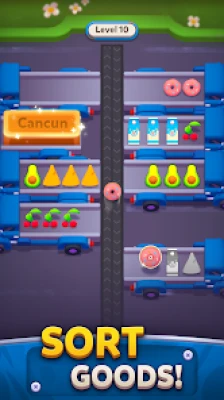
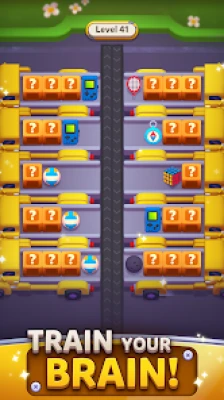
Jam Packed! is a goods-sorting puzzle game built around a straightforward objective: organize the available products, pack them into trucks, and clear each stage by making effective decisions.
At first, the task may appear simple. You identify the goods, sort them into suitable groups, and prepare the trucks for departure. However, as you progress, the arrangements can become more demanding, requiring you to think carefully about the order in which you handle items.
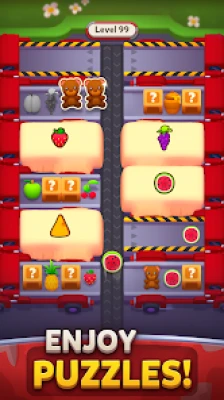
The challenge is not just to move goods from one place to another. You must also understand how each decision affects the remaining puzzle. A useful move can clear space and make the next step easier, while a poorly timed choice may leave you with fewer convenient options.
Jam Packed! is particularly appealing to players who enjoy organizing objects, solving visual puzzles, and finding efficient ways to complete tasks. It combines a relaxing presentation with gameplay that encourages concentration and strategic thinking.
Main Features of Jam Packed!
Goods-Sorting Gameplay
The central mechanic involves sorting different goods into suitable groups. You must recognize which items belong together and organize them in a way that supports the completion of the level.
The more carefully you inspect the available goods, the easier it becomes to identify useful moves.
Truck-Packing Challenges
Packing trucks is an important part of the gameplay. You need to organize the goods so that completed loads can be sent away, allowing you to make progress through the stage.
Efficient packing requires more than selecting items at random. Thinking about the order of operations can help you avoid unnecessary complications.
Relaxing Puzzle Experience
Jam Packed! uses simple, approachable gameplay rather than complicated controls. This makes it suitable for short gaming sessions when you want a light mental challenge.
The satisfying process of sorting goods and completing loads provides a clear sense of progress.
Increasingly Challenging Levels
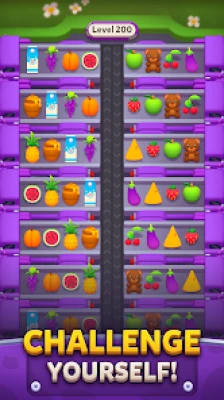
As you advance, the puzzles require more careful planning. Familiar actions may become harder when the arrangement of goods changes or when several decisions must be coordinated.
Learning to adapt your strategy is essential for maintaining steady progress.
Strategic Problem-Solving
Every stage offers an opportunity to improve your approach. You must observe the board, identify useful sorting opportunities, and decide which actions will make the remaining puzzle easier.
This combination of organization and forward planning gives Jam Packed! more depth than its simple premise might suggest.
Casual Gameplay for Different Skill Levels
The basic objective is easy to understand, making the game approachable for new players. At the same time, more demanding arrangements can challenge people who enjoy logic puzzles and optimization games.
How to Play Jam Packed!
Understanding the basic gameplay loop is the first step toward becoming a more efficient player.
Step 1: Examine the Available Goods
Start by looking over the items presented in the current level. Identify the different types of goods and notice which items appear to belong together.
Avoid making your first move immediately. A brief inspection can reveal a useful sequence that would be easy to overlook if you act too quickly.
Step 2: Identify the Sorting Requirements
Determine which goods need to be grouped together and how the available packing system works in the current stage.
Pay attention to the items that are easiest to organize and those that may require additional steps. Understanding the objective helps you distinguish useful moves from actions that merely rearrange the board.
Step 3: Plan Your First Moves
Choose a starting action that creates progress without unnecessarily complicating the remaining puzzle.
If a group of goods can be organized efficiently, consider handling it early. Clearing a straightforward group may make it easier to focus on more difficult items afterward.
Step 4: Pack the Trucks Efficiently
As goods are organized, use the available packing mechanics to complete the required loads.
Think about which items should be handled first and how each completed truck affects the remaining arrangement. Avoid focusing only on the next immediate action; consider what will happen after the load is finished.
Step 5: Monitor the Remaining Space
Keep track of the space available for sorting and moving goods. If your actions leave the remaining items difficult to handle, you may need to rethink the order in which you approach the puzzle.
Good space management is especially important when a stage contains several different groups of goods.
Step 6: Complete the Loads and Clear the Level
Continue sorting and packing until the required goods have been handled and the stage is complete.
Use each successful load as an opportunity to reassess the remaining puzzle and determine the best next action.
Complete Jam Packed! Strategy Guide
1. Plan Before Moving Goods
One of the most important Jam Packed! tips is to examine the entire puzzle before committing to your first move.
Random sorting can create unnecessary work. You may move an item into a convenient position only to discover that another group needs that space later.
Instead, identify the available goods, look for obvious groups, and consider which actions will make the next few moves easier.
You do not need to predict every step from the beginning. A simple plan covering the next two or three actions can already improve your efficiency.
Before moving an item, ask yourself three questions:
Does this action help organize a useful group?
Will it make the remaining goods easier to manage?
Could it create a problem for a later packing step?
This habit encourages deliberate decisions and helps you avoid unnecessary rearranging.
2. Prioritize Easy Groups First
When a level contains several types of goods, start by identifying the groups that appear easiest to complete.
Clearing an obvious group can reduce the amount of clutter on the board and make other items easier to evaluate.
However, the easiest group is not always the best first choice. If completing it would occupy space needed for a more important action, consider dealing with another group first.
The goal is to choose a starting point that creates useful progress without limiting your future options.
3. Think About the Order of Operations
The order in which you sort and pack goods can influence how difficult the rest of the level becomes.
A move that seems helpful in isolation may create a problem if it prevents you from accessing another group or arranging a later load efficiently.
Before committing to a sequence, consider how the board will look after each action. Imagine the immediate result and then think about what options will remain.
This forward-thinking approach is one of the most useful skills in logistics and sorting puzzle games.
4. Keep the Sorting Area Organized
A disorganized board can make even a simple level feel complicated. When similar goods are scattered across different areas, it becomes harder to identify the next useful move.
Whenever the game's mechanics allow it, organize related items in a way that makes them easier to track.
Avoid unnecessary movements that leave goods spread out without improving your position. A clean arrangement helps you recognize groups more quickly and reduces the chance of overlooking a useful opportunity.
5. Avoid Creating Bottlenecks
A bottleneck occurs when the arrangement of goods makes it difficult to proceed with the remaining tasks.
For example, an early action may occupy a useful position or leave a less convenient group of items to handle later. The resulting puzzle may still be solvable, but it can become much harder.
To avoid this, look beyond the immediate benefit of a move. Consider whether it will restrict access to other goods or make the next packing stage more complicated.
If two actions appear equally useful, prefer the one that leaves more flexibility for later decisions.
6. Pack Complete Loads Efficiently
Sending away a completed load is a major source of progress. Whenever possible, organize goods in a way that helps you finish useful loads without unnecessary steps.
Before focusing on a particular group, check whether the items required for another load are already easy to organize. Completing that load may simplify the rest of the board.
At the same time, avoid forcing a load prematurely if doing so creates a more difficult situation elsewhere.
The best packing sequence is the one that improves the overall state of the puzzle, not necessarily the one that completes the first available group.
7. Look for Patterns in the Goods
Visual recognition can make sorting much faster. As you inspect the board, look for repeated item types and groups that naturally belong together.
Once you recognize a pattern, use it to identify other items that may be part of the same group.
This becomes especially useful when a level contains many different goods. Rather than evaluating every object independently, you can compare items against the patterns you have already identified.
8. Preserve Flexibility
Good puzzle solving is not only about making progress. It is also about keeping enough options available to handle unexpected complications.
A move that clears one group but makes several other groups difficult to manage may not be as useful as it first appears.
Whenever possible, choose actions that leave the board in a flexible state. Keep an eye on the goods that remain and avoid unnecessarily restricting your next choices.
Flexibility is particularly valuable in challenging stages where the correct sequence may not be immediately obvious.
9. Reassess After Every Completed Truck
Once a load is finished and removed from the active puzzle, review the remaining goods before continuing.
The board may now offer different opportunities. A group that was difficult to organize earlier may become easier to handle, while another group may become the new priority.
Do not continue following an old plan if the situation has changed. A quick reassessment helps you respond to the current board rather than making decisions based on outdated assumptions.
10. Learn From Unsuccessful Attempts
If a level becomes difficult, consider which decision created the problem.
Perhaps you handled a less important group too early, overlooked an easier load, or used available space inefficiently. Identifying the cause can help you choose a better sequence the next time.
Rather than repeating the same moves automatically, change one part of your strategy and observe the result.
This method helps you develop a more reliable understanding of how the puzzle works.
11. Stay Focused on the Main Objective
It is easy to become distracted by individual items and lose sight of the overall task.
Remember that sorting goods is only part of the process. The larger objective is to pack the required loads and complete the stage.
When deciding between two possible moves, consider which one brings you closer to clearing a load or improving the remaining arrangement.
This keeps your decisions focused and reduces unnecessary actions.
12. Adapt Your Strategy to Each Level
Not every stage should be approached in exactly the same way. The types of goods, their arrangement, and the available packing opportunities can change.
A strategy that works well in one level may be less effective in another. Some puzzles may reward clearing obvious groups early, while others may require you to preserve certain positions for later.
Observe the specific conditions of the current stage and adapt accordingly.
The more you practice this kind of flexible planning, the easier it becomes to recognize which approach is most suitable for a particular puzzle.
Best Beginner Tips for Jam Packed!
New players can improve their performance by building a few simple habits from the beginning.
Observe the board first. Take a moment to identify the different goods before making your first move.
Sort with a purpose. Every action should help organize items or make a future step easier.
Think ahead. Consider the consequences of a move instead of focusing only on its immediate result.
Avoid unnecessary rearranging. Moving items without a clear reason can complicate the puzzle.
Complete useful loads. Look for opportunities to pack and send away groups that can be finished efficiently.
Keep your options open. Avoid choices that unnecessarily restrict your ability to handle the remaining goods.
Review the board regularly. Reassess your plan whenever a completed load changes the arrangement.
Learn from mistakes. If a sequence creates a problem, identify the decision that caused it and try a different approach.
Be patient with difficult levels. A short pause to consider the available choices can be more effective than several rushed moves.
Advanced Packing and Sorting Techniques
Think Several Moves Ahead
Experienced puzzle players often consider more than the immediate result of an action. They also evaluate how that action affects the next stage of the process.
Before moving goods, try to imagine what the board will look like after the move and which options will remain.
You do not need to plan the entire level in advance. Even considering the next two or three decisions can help you avoid common problems.
Compare Multiple Possible Sequences
When several moves appear reasonable, compare their likely outcomes before choosing one.
One sequence may complete a load quickly but leave awkward items behind. Another may take an additional step while creating a much cleaner arrangement for the rest of the puzzle.
Think about the overall benefit of each sequence rather than judging it only by immediate progress.
Identify the Most Restrictive Items
Some goods may be more difficult to handle than others because of their positions or the way they interact with the available packing options.
Pay attention to these items early. If a particular group could become difficult to access later, consider whether it should be handled before completing easier groups.
This does not mean always choosing the hardest group first. Instead, recognize which items may require special planning and avoid leaving them until you have no convenient options.
Reduce Unnecessary Actions
Efficient puzzle solving usually involves making fewer unproductive moves.
Before taking an action, identify its purpose. If it does not help organize goods, complete a load, or improve future options, consider whether it is necessary.
This simple check can prevent wasted movements and make your overall approach more consistent.
Balance Immediate Progress With Future Flexibility
Completing a truck is satisfying, but the best decision may sometimes be to prepare another group first.
Evaluate whether an immediate completion will simplify the remaining board or make it more complicated. If another action creates a better arrangement, it may be worth taking that step before finishing the load.
The objective is to complete the entire level efficiently, not just to maximize immediate progress.
Common Jam Packed! Mistakes to Avoid
Sorting Goods Randomly
Moving items without a plan can create a cluttered arrangement and make later decisions harder.
Better approach: Identify useful groups and choose moves that contribute to a clear objective.
Ignoring the Remaining Goods
A move may appear beneficial until you consider the items that will remain afterward.
Better approach: Check how each action affects the rest of the puzzle before committing.
Completing the Wrong Group First
An easy group may not always be the most useful starting point if it restricts access to other items.
Better approach: Compare the available groups and consider their effect on future packing opportunities.
Creating Unnecessary Bottlenecks
Poorly timed actions can leave difficult goods in awkward positions or reduce the flexibility of the board.
Better approach: Preserve useful options and avoid moves that make later stages unnecessarily complicated.
Repeating the Same Failed Sequence
If a particular sequence repeatedly creates problems, using it again without changes is unlikely to improve the result.
Better approach: Identify the source of the difficulty and test a different order of operations.
Rushing Through a Difficult Level
Quick decisions can cause you to overlook a more efficient solution.
Better approach: Pause, inspect the board, and compare possible moves before proceeding.
Losing Sight of the Main Objective
Focusing on individual goods can distract you from the overall task of completing the required loads.
Better approach: Keep the final objective in mind and prioritize moves that support it.
How to Progress More Efficiently in Jam Packed!
Improving in Jam Packed! is largely about learning to recognize patterns and make better decisions.
Start by mastering the basic sorting process. Learn how goods are grouped, how loads are completed, and how your actions affect the remaining board.
Next, focus on planning. Before each move, consider whether it will help you complete a load or create a better arrangement for future actions.
As levels become more challenging, pay greater attention to restrictive items and potential bottlenecks. Some groups may be easy to handle at first but become difficult if left until the end.
Finally, use each completed level as an opportunity to improve. Consider which decisions helped you progress and which ones made the puzzle more complicated. Over time, you can develop a more consistent approach to organizing goods and packing trucks.
Is Jam Packed! Good for Casual Players?
Jam Packed! is a good option for players who enjoy simple controls, visual organization, and puzzles that reward thoughtful decisions.
Its basic objective is easy to understand: sort goods, pack trucks, and send completed loads away. However, the need to consider item order and future options gives the gameplay a strategic element.
The game can be enjoyed in short sessions, making it suitable for people who want a quick mental challenge during a break. Players who prefer logic puzzles and organizing games may also appreciate the gradual increase in difficulty.
Although the presentation is casual, the more demanding levels encourage concentration and planning. This combination makes Jam Packed! accessible to beginners while still providing challenges for players who enjoy optimizing their decisions.
Is Jam Packed! Free to Play?
Jam Packed! is listed on Google Play as a free-to-download puzzle game with in-app purchases. The available purchase options and other features may vary depending on the version and region.
Players can focus on learning the core sorting and packing mechanics while deciding for themselves whether any optional purchases are worthwhile. Careful planning and efficient organization remain central to the puzzle-solving experience.
For the most accurate information about current pricing, purchases, and available features, check the game's listing and in-game options.
Frequently Asked Questions About Jam Packed!
What is Jam Packed!?
Jam Packed! is a casual goods-sorting puzzle game developed by SayGames Ltd. Players organize products, pack trucks, and complete increasingly challenging stages through careful planning.
How do you play Jam Packed!?
You examine the available goods, sort them into suitable groups, and use the game's packing mechanics to complete loads. The objective is to organize the items efficiently and finish the level.
What is the main goal of Jam Packed!?
The main goal is to sort the goods, pack the required trucks, and send completed loads away. Efficient decisions help you progress through the puzzle.
What is the best strategy for Jam Packed!?
Start by studying the board, identify useful groups, and plan the order in which you handle them. Think about how each move affects the remaining goods and avoid unnecessary rearranging.
How can beginners improve at Jam Packed!?
Beginners should focus on recognizing item groups, making deliberate moves, and learning from mistakes. Reviewing the board before acting can help prevent avoidable problems.
Why is planning important in Jam Packed!?
The order of your actions can influence how easy or difficult the remaining puzzle becomes. Planning helps you avoid bottlenecks, organize goods efficiently, and preserve useful options.
How do you avoid getting stuck?
Inspect the remaining goods and identify the move that caused the difficulty. Consider whether another group should have been handled earlier or whether a different sequence would leave the board in a better state.
Does Jam Packed! become more difficult as you progress?
The game is designed to present increasingly challenging sorting puzzles. As you advance, more careful planning and stronger decision-making may be needed to complete the stages efficiently.
Is Jam Packed! a relaxing game?
Yes. Its simple controls and sorting-based gameplay offer a casual experience. The puzzles still require attention and planning, but players can focus on solving them rather than mastering complicated controls.
Who should play Jam Packed!?
Jam Packed! may appeal to fans of sorting games, organization puzzles, casual brain teasers, and logistics-inspired challenges. It is especially suitable for players who enjoy finding efficient ways to complete structured tasks.
Does Jam Packed! require fast reactions?
The main challenge is strategic organization rather than fast reflexes. Observing the board, choosing a useful sequence, and managing the remaining goods are central to the experience.
Is Jam Packed! suitable for short gaming sessions?
Its straightforward puzzle format makes it suitable for casual sessions. Players can focus on completing stages and improving their sorting strategies whenever they have time to play.
Final Verdict
Jam Packed! combines goods sorting, truck packing, and casual puzzle-solving into an accessible mobile game that rewards careful planning. Its simple premise makes it easy to understand, while the need to organize items efficiently gives each stage a strategic challenge.
The best way to improve is to study the board before moving goods, prioritize useful groups, think ahead, and preserve flexibility for later decisions. Completing a load is important, but understanding how that action affects the remaining puzzle is what helps you become a more efficient player.
Whether you enjoy relaxing sorting games or more demanding logic puzzles, Jam Packed! offers a satisfying way to test your observation and decision-making skills. Plan your moves, keep the goods organized, and work toward completing each truck with as few unnecessary actions as possible.
Rate the Game
User Reviews















Popular Games



















 Android
 iOS
 Windows
 Xbox