
Latest Version
October 21, 2026
SayGames Ltd
Puzzle
Android
0
com.jigmerge.solitaire
Report a Problem
More About :game
The main challenge is to understand how the cards fit together and make moves that help complete the picture. Careful observation, spatial awareness, and planning can make each level easier to solve. Whether you want a quick mental break or a longer puzzle session, Jigmerge Solitaire provides an enjoyable way to test your concentration and problem-solving skills.
What Is Jigmerge Solitaire?
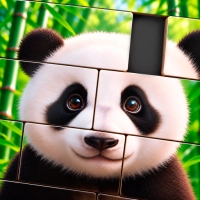
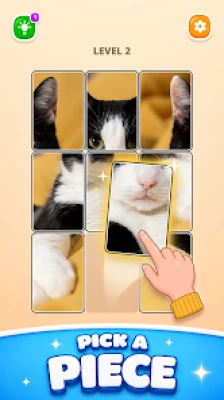
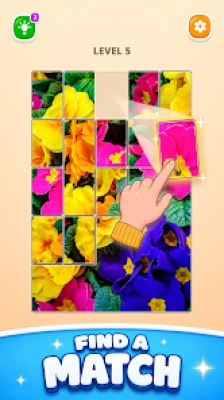
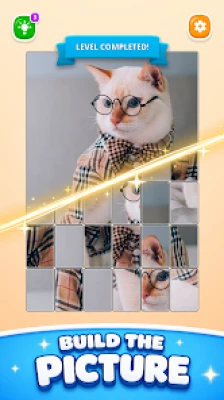
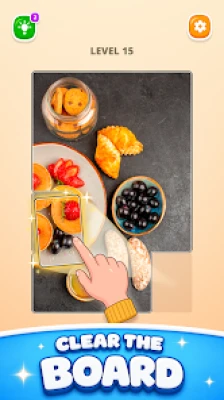
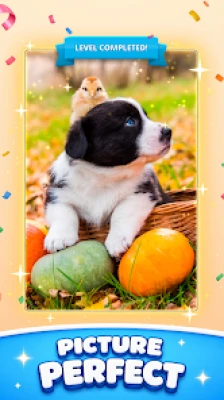
Jigmerge Solitaire is a casual card puzzle game that gives the familiar idea of solitaire a creative twist. Instead of focusing only on traditional card suits or numerical sequences, the gameplay revolves around picture fragments displayed on cards. By moving and combining these cards, you gradually assemble a complete image.
At first, the board may look like a collection of unrelated cards. As you inspect the images and experiment with their positions, however, you can begin to recognize which pieces belong together. Correct placements bring the picture closer to completion, turning each successful move into a small reward.
The game is suitable for players who enjoy jigsaw puzzles, solitaire games, image-matching challenges, and relaxing logic games. Its simple controls make it approachable for beginners, while the need to recognize image patterns and plan moves gives experienced puzzle fans something to think about.
Main Features of Jigmerge Solitaire
Solitaire-Inspired Card Movement
The game uses card movement as the foundation of its puzzle mechanics. Rather than assembling a traditional jigsaw with loose pieces, you work with image cards and move them into useful positions.
Understanding how the cards interact is essential. Every move should help you identify a match, connect picture fragments, or improve the arrangement of the board.
Jigsaw Picture Completion
Each puzzle revolves around revealing a complete image from separate fragments. These pictures provide the visual clues you need to identify relationships between cards.
Pay attention to colors, shapes, backgrounds, and recognizable objects. Even small details can help you work out where a fragment belongs.
Satisfying Merge Mechanics
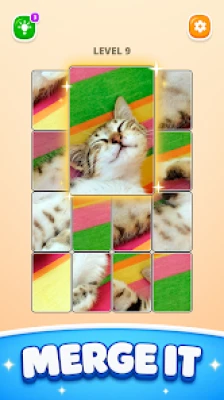
When picture cards fit together correctly, they can connect into larger groups. These merged sections help you make progress toward completing the image.
Learning to recognize useful combinations is one of the most important skills in Jigmerge Solitaire.
Relaxing Puzzle Gameplay
The game is designed around observation and thoughtful decisions rather than fast reactions. You can take time to study the cards and consider your next move.
This makes it a good choice for short breaks or longer sessions when you want an engaging activity without the intensity of a fast-paced action game.
Visual Variety
Picture-based puzzles can feature different subjects and visual details. New images keep the experience interesting by giving you different patterns to recognize and different arrangements to solve.
Easy-to-Learn Controls
The basic idea is simple: move cards, look for matching image fragments, and bring the pieces together. The challenge comes from choosing useful moves and understanding how the cards fit into the larger picture.
How to Play Jigmerge Solitaire
The easiest way to learn Jigmerge Solitaire is to focus on the relationship between individual cards and the complete image you are trying to assemble.
Step 1: Examine the Puzzle Board
Before moving anything, take a moment to look over the available cards. Identify recognizable colors, objects, edges, and background patterns.
You do not need to understand every fragment immediately. Finding even two cards that clearly belong together can give you a useful starting point.
Step 2: Identify Related Picture Fragments
Look for visual details that continue from one card to another. A line, leaf, building, animal, or section of sky may provide a clue about how two fragments connect.
Compare both the main subject and the surrounding background. Two cards may look similar at first but belong to different parts of the image.
Step 3: Move Cards Carefully
Use the game's card movement controls to place related fragments near one another or into a position where they can connect.
Avoid moving cards randomly. A deliberate move based on visual evidence is more useful than repeatedly shifting cards without a clear plan.
Step 4: Connect Correctly Matched Cards
When the required fragments are positioned correctly, the game can merge or connect them. This creates a larger section of the picture and helps reveal more of the overall image.
Once cards form a connected group, consider how that group relates to the remaining fragments.
Step 5: Reassess the Board
After making progress, look at the board again. A successful connection may make other matches easier to recognize.
Newly visible image details can provide clues about where remaining cards belong. Use those clues instead of continuing with your previous assumptions.
Step 6: Continue Until the Picture Is Complete
Repeat the process of observing, moving, matching, and merging until the image is assembled and the level is completed.
If you become stuck, pause and look for a different visual clue rather than repeating the same unsuccessful move.
Complete Jigmerge Solitaire Strategy Guide
1. Study the Entire Picture Before Moving Cards
One of the most effective Jigmerge Solitaire tips is to observe before acting. Players often focus on one card and immediately try to find a match, but this can cause them to overlook relationships elsewhere on the board.
Start by scanning the available fragments. Look for distinctive objects, large areas of color, recognizable outlines, and repeating patterns.
For example, a fragment containing a flower petal may fit another card with a matching color gradient or a continuation of the flower's outline. A landscape fragment might connect through a horizon, a mountain edge, or a consistent section of sky.
You do not have to map the entire image in your mind. Simply collecting a few reliable clues can help you make better decisions.
2. Prioritize Obvious Matches
When several possible moves are available, start with the connections supported by the clearest visual evidence.
Look for fragments with matching edges, continuing lines, or objects that visibly extend from one card to another. These matches are easier to recognize and can help reveal more of the picture.
Avoid forcing a connection simply because two cards share similar colors. A blue fragment might belong to the sky, water, or another part of the image. Examine the finer details before deciding.
The more confidently you can identify a match, the less likely you are to waste moves on an incorrect assumption.
3. Use Color as a Clue, Not the Only Answer
Color is one of the quickest ways to sort picture fragments mentally. Green cards may belong to vegetation, blue cards may show sky or water, and brown cards may contain wood, soil, or buildings.
However, colors alone are not enough to establish a correct match.
Compare texture, outlines, lighting, and the direction of visible objects. A green patch with leaf-shaped details is more likely to connect with similar foliage than with an unrelated green background.
Combining color recognition with object recognition gives you a more reliable way to solve difficult picture puzzles.
4. Look for Lines and Shapes That Continue
Edges and outlines often provide stronger evidence than general color.
Pay attention to details such as:
The outline of an animal or person.
A branch continuing across two fragments.
A roofline or building edge.
A road that runs through several cards.
A horizon that stays at the same height.
A decorative border or repeated pattern.
When a line appears to continue naturally from one fragment to another, those cards deserve closer attention.
This method is particularly helpful when the image contains large areas of similar colors.
5. Build Larger Connected Sections
Whenever the game allows connected cards to move together, take advantage of the progress you have already made.
A larger connected section can preserve several correct relationships at once. It also gives you a clearer reference for identifying the remaining fragments.
Instead of repeatedly reconsidering each individual card, focus on how a completed section fits into the overall image.
Keep in mind that the best next move depends on the board layout and the game's placement rules. Do not assume that every connected group should be moved immediately; first consider whether moving it will improve your available options.
6. Avoid Random Card Movement
Random movement may occasionally reveal a useful match, but it is not a dependable long-term strategy.
Each time you move a card, try to have a reason. You might be testing a suspected connection, bringing related fragments together, or improving the visibility of a section.
If a move does not work, use the result as information. Eliminate the incorrect possibility and inspect the card for another clue.
This approach turns mistakes into useful feedback rather than repeating the same unproductive actions.
7. Work From Distinctive Objects to Simple Backgrounds
Images often contain a mixture of recognizable objects and less distinctive background areas. A face, flower, animal, or building may provide more reliable clues than a large patch of sky or grass.
When possible, begin with distinctive visual features. Once you have connected several recognizable objects, the surrounding background may become easier to place.
For example, identifying the correct arrangement of a tree trunk and its branches can help you determine where nearby leaves belong. Similarly, recognizing a building's outline may clarify the position of adjacent sky or landscape fragments.
This is a useful general strategy for picture-based puzzle games because clear features provide reference points for less obvious sections.
8. Recheck the Board After Every Merge
A successful merge can change how the rest of the puzzle looks. Larger picture sections reveal more context and may help you identify cards that were previously difficult to interpret.
After a connection, pause briefly and review the available fragments again.
Ask yourself whether the completed section reveals a new object, extends an existing line, or establishes a clearer color pattern. These observations may reveal your next move.
A short review after each important merge can prevent you from overlooking easy matches.
9. Do Not Confuse Similar-Looking Fragments
Picture puzzles sometimes include multiple cards with similar colors or textures. Two fragments may both contain green leaves, blue sky, or a brown surface without being adjacent.
Before connecting them, compare their fine details. Look at the direction of the lines, the shape of objects, and the way the lighting changes across the image.
If the game does not confirm the connection, reassess your assumption rather than continuing to force it.
The goal is to identify a natural continuation of the picture, not merely to group visually similar cards.
10. Use a Systematic Search Pattern
When you cannot find an obvious move, examine the board systematically instead of scanning it repeatedly at random.
Start with the most distinctive card and compare it with the remaining fragments. Then move to another recognizable card and repeat the process.
You can also divide the picture mentally into broad regions, such as the top, bottom, left, and right sections. This can make it easier to remember which areas you have already examined.
A consistent search pattern reduces missed opportunities and helps you maintain concentration during difficult levels.
11. Recognize When to Change Your Approach
If several moves fail to produce progress, the problem may be your interpretation of the image rather than the lack of a possible match.
Step back and consider the larger scene. A fragment that appears to belong to one object might actually show a nearby object with similar colors. A line that looks like a border could be part of a different shape.
Try examining the cards from another perspective. Look at texture and outlines rather than color, or focus on the overall composition instead of individual details.
Changing your approach can help you notice clues that were easy to miss during your first attempts.
12. Stay Patient With Difficult Levels
The most challenging puzzles may contain fragments that look almost identical or have few distinctive details.
Do not rush to move every card. Take a moment to study the image, compare possible connections, and wait until you have a reasonable explanation for your next move.
If you feel stuck, briefly shift your attention to another part of the board. Finding a clear match elsewhere may reveal more of the picture and make the difficult section easier to understand.
Patience is particularly useful in relaxing puzzle games, where careful observation is often more effective than speed.
Best Beginner Tips for Jigmerge Solitaire
New players can improve their puzzle-solving skills by following a few simple habits.
Start with the clearest visual clues. Distinctive objects and obvious matching lines are easier to work with than vague background colors.
Inspect cards before moving them. A brief look at the whole board can reveal connections you might otherwise miss.
Compare details carefully. Similar colors do not always mean that two fragments belong together.
Think about the complete picture. Try to understand how individual fragments contribute to the larger scene.
Make deliberate moves. Have a clear reason for each action instead of moving cards randomly.
Review the board after connections. Newly assembled sections may provide useful information about other cards.
Learn from unsuccessful moves. If a suspected connection does not work, use the result to refine your understanding.
Take breaks when necessary. Returning with fresh attention can make difficult visual patterns easier to recognize.
Advanced Picture Puzzle Techniques
Identify Anchor Points
An anchor point is a distinctive section of an image that helps you orient the surrounding fragments. It might be an animal's face, a bright flower, a recognizable building, or another object with a clear outline.
Once you identify an anchor point, use it as a reference for nearby cards. This can help you determine which fragments belong around the object and which ones are probably unrelated.
Follow Continuous Visual Features
Some of the strongest clues are features that cross multiple fragments. Examples include branches, fences, roads, horizons, architectural lines, and patterns on clothing.
Follow these features across the cards and look for fragments that continue them naturally.
This technique can be more reliable than matching large blocks of color because the direction and shape of a line provide additional information.
Separate Recognition From Placement
It is useful to distinguish between recognizing that two cards belong to the same general area and knowing exactly where they should connect.
Two fragments may clearly show the same object without being adjacent. Before making a move, examine whether the visible details form a continuous picture.
This distinction helps reduce incorrect assumptions and encourages more precise placement decisions.
Use Completed Sections as Visual References
Once a group of cards has been connected, treat it as a reference point for the rest of the puzzle.
Compare other fragments with the group's colors, textures, and outlines. Look for details that extend beyond its edges or appear to belong nearby.
A completed section can provide context that was missing when the cards were isolated.
Avoid Repeatedly Testing the Same Possibility
When a connection fails, remember what you learned from it. Repeating the same unsuccessful attempt without new evidence is unlikely to help.
Instead, identify what was wrong with the original assumption. Perhaps the colors matched but the object outlines did not, or perhaps the fragments showed different parts of the same scene.
Use that information to narrow your next search.
Common Jigmerge Solitaire Mistakes to Avoid
Moving Cards Without a Plan
Frequent random movement can make it harder to keep track of the board and recognize meaningful patterns.
Better approach: Decide what you want to accomplish before moving a card.
Matching Only by Color
Two fragments can share the same dominant color while showing completely different objects.
Better approach: Compare shapes, lines, textures, and the continuation of visible features.
Ignoring the Bigger Picture
Focusing on isolated fragments can prevent you from seeing how they fit into the complete image.
Better approach: Regularly step back and consider the overall scene.
Overlooking Connected Groups
When the game lets connected cards move together, treating every card as an independent piece can make the board harder to manage.
Better approach: Remember the progress represented by each merged group and consider how it can help you solve the remaining puzzle.
Repeating Failed Moves
Trying the same connection repeatedly does not provide new information unless something on the board has changed.
Better approach: Reassess the visual evidence and test a different possibility.
Rushing Through Difficult Sections
Quick decisions can cause you to miss subtle differences between similar fragments.
Better approach: Slow down when the picture becomes difficult to interpret.
Forgetting to Reassess After a Merge
Newly connected pieces can reveal details that were previously hidden or difficult to understand.
Better approach: Review the board after meaningful progress and look for newly visible connections.
How to Improve Your Puzzle-Solving Skills
Improving at Jigmerge Solitaire comes from developing better observation habits rather than memorizing a single solution.
Start by practicing visual recognition. Look for distinctive objects, repeated patterns, and lines that continue across different cards. Over time, you may find it easier to identify promising matches at a glance.
Next, improve your decision-making. Before moving a card, identify the clue that supports your choice. After the move, check whether the result confirms your assumption. This creates a simple cycle of observation, testing, and learning.
You can also improve your spatial awareness by imagining how the completed picture should look. Think about where the main objects belong and how their surrounding details fit together.
Finally, develop patience. Some fragments will be obvious, while others may require several rounds of careful comparison. Staying methodical helps you avoid unnecessary mistakes and makes difficult puzzles feel more manageable.
Is Jigmerge Solitaire Good for Relaxing?
Jigmerge Solitaire can be a good choice for players who enjoy quiet, visually focused games. Its combination of card movement and picture completion creates a steady rhythm of small challenges and satisfying progress.
Rather than relying on complex controls, the game encourages players to observe, compare, and experiment. Each successful connection brings the image closer to completion, providing a clear sense of achievement.
It can suit short breaks, casual play sessions, or longer periods of puzzle solving. Players who enjoy jigsaw puzzles but want a different approach to arranging picture fragments may find the solitaire-inspired mechanics particularly appealing.
The experience still requires concentration, especially when cards contain similar colors or unclear details. However, this mental challenge is part of the appeal for people who enjoy solving visual puzzles at their own pace.
Frequently Asked Questions About Jigmerge Solitaire
What is Jigmerge Solitaire?
Jigmerge Solitaire is a mobile puzzle game that combines solitaire-style card movement with jigsaw picture completion. Players arrange picture cards, identify matching fragments, and connect them to reveal complete images.
How do you play Jigmerge Solitaire?
Begin by examining the cards and identifying related picture fragments. Move cards using the game's controls, connect pieces when they fit, and continue assembling the image until the puzzle is complete.
What is the main objective of Jigmerge Solitaire?
The main objective is to arrange and combine picture cards to complete the image. Careful observation and strategic movement help you identify the correct relationships between fragments.
What is the best strategy for Jigmerge Solitaire?
Start with obvious matches, compare shapes and visual details, and avoid moving cards randomly. Reassess the board after every important connection so you can use newly revealed clues.
How can beginners solve puzzles more easily?
Beginners should focus on recognizable objects, distinctive colors, and lines that continue across fragments. Making deliberate moves and learning from unsuccessful attempts can also improve results.
Why are some card matches difficult to identify?
Some fragments may contain similar colors or repeated textures, making it difficult to determine their exact positions. Compare object outlines, background details, and continuous visual features to distinguish them.
Should you focus on individual cards or the whole image?
Both approaches are useful. Individual cards provide small visual clues, while the larger image helps you understand where each fragment belongs. Combining these perspectives usually makes solving easier.
What should you do if you get stuck?
Pause and examine the board from a different perspective. Look for distinctive objects, compare fragments you have not considered, and revisit connected sections for new clues.
Is Jigmerge Solitaire suitable for casual players?
Yes. Its basic mechanics are approachable, and the focus on picture recognition makes it suitable for people who enjoy casual puzzle games. More challenging arrangements can still provide a mental workout.
Does Jigmerge Solitaire combine jigsaw puzzles and solitaire?
Yes. The game brings together picture-fragment matching and solitaire-inspired card movement, creating a different way to assemble images compared with a traditional jigsaw puzzle.
Can you improve at Jigmerge Solitaire with practice?
Yes. Practice can help you recognize patterns more quickly, compare similar fragments more accurately, and make better decisions about card movement.
Final Verdict
Jigmerge Solitaire offers a refreshing combination of solitaire-style movement, jigsaw picture assembly, and merge-based puzzle solving. Its appeal comes from turning a collection of separate cards into a complete image through observation and thoughtful decisions.
The best way to improve is to study the board before moving cards, prioritize clear matches, compare visual details instead of relying on color alone, and use connected sections as references for the remaining puzzle.
Whether you are new to picture puzzles or already enjoy card-based brain games, Jigmerge Solitaire provides a relaxing way to practice concentration, visual recognition, and logical thinking. Take your time, learn from every move, and enjoy the satisfaction of seeing each picture come together piece by piece.
Rate the Game
User Reviews






Popular Games



















 Android
 iOS
 Windows
 Xbox