

Latest Version
Visit PageMore About :game
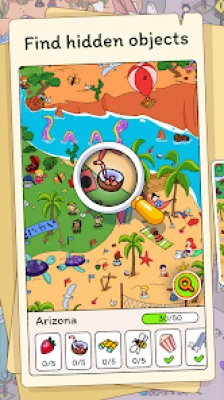
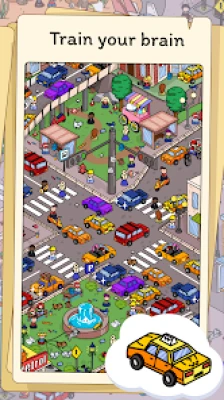
The game features a variety of environments, including seasonal settings and camping scenes, with objects that blend naturally into their surroundings. Players examine each picture, locate the items displayed on the search list, and complete objectives to progress through the game. Completing levels also earns coins that can be used to unlock additional scenes and hidden levels.
With regular, timed, and free play modes, Hidden Objects: The Journey offers different ways to enjoy the same core experience. Whether you want a peaceful puzzle session or a challenge that tests your speed, the game gives you plenty of opportunities to improve your searching skills.
How to Play Hidden Objects: The Journey
The main objective in Hidden Objects: The Journey is to find every item shown on the level's search list. Each scene contains a collection of objects placed among decorations, scenery, and other visual details. Some items are easy to recognize, while others can be difficult to notice because their colors and shapes blend into the background.
Start by studying the objects displayed on the screen. Identify each item's shape, color, and distinctive features before searching the scene. When you spot a matching object, tap it to mark it as found. Continue until you have completed the list and satisfied the level's requirements.
As you progress, the scenes introduce different themes and arrangements, so you cannot rely on memorizing a single location for every item. Developing a consistent search routine is the best way to become more efficient.
Main Features of the Game
Colorful Themed Scenes
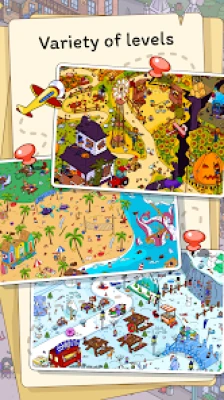
The game includes illustrated environments with different visual themes, such as the four seasons and camping. Each setting contains objects that suit its surroundings, creating a natural but challenging search experience. Pay attention to the relationship between an item and its environment, but remember that familiar objects can still be placed in unexpected positions.
Multiple Game Modes
Hidden Objects: The Journey offers regular, timed, and free modes to suit different play styles.
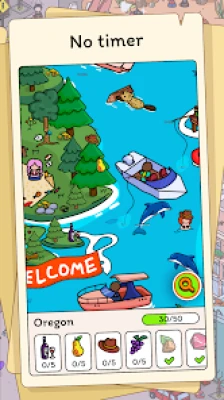
Regular mode provides a balanced way to enjoy the hidden object puzzles and progress through the game. Timed mode challenges you to locate objects quickly, making efficient scanning and fast recognition especially important. Free mode offers a more relaxed approach for players who prefer exploring scenes without the same time pressure.
Choose the mode that matches your current goal. Practicing in a relaxed setting can help you develop the skills needed to perform better when time matters.
Coins and Unlockable Content
Completing levels rewards you with coins. These coins can be spent on hidden levels and additional scenes, giving you more puzzles to explore as you advance.
Coins are an important part of long-term progression, so make the most of the levels you can complete confidently. Avoid spending rewards without considering which unlockable content you want to access next.
Hints and Bonuses
Hints and bonus buttons can help when an object proves particularly difficult to find. These tools are useful when you have searched carefully but cannot identify the remaining item.
Rather than using hints immediately, give yourself time to inspect the scene first. Saving assistance for genuinely difficult searches helps you develop your observation skills and makes your available resources more valuable.
Daily Puzzles and Extra Challenges
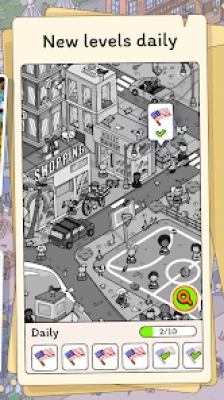
The game also features additional content, including daily puzzles and quizzes. These activities provide variety beyond the regular levels and give you more opportunities to practice visual recognition.
Check the available extra content regularly to discover new challenges and make your play sessions more varied.
The Best Strategy for Finding Hidden Objects
Scan the Scene Systematically
One of the most effective strategies is to search the picture in a consistent pattern instead of tapping randomly. Begin in the upper-left corner and move across the scene from left to right. Once you reach the edge, continue through the next section until you have covered the entire picture.
This method reduces the chance of overlooking objects and prevents you from repeatedly searching the same areas. It is especially useful in crowded scenes containing numerous small details.
Search for Shapes Before Colors
Colors can be misleading because an object may blend into a similarly colored background. Its outline, proportions, and distinctive parts are often easier to recognize.
For example, when searching for a key, focus on its long shaft and recognizable head rather than looking only for a metallic color. When looking for a cup, concentrate on its general shape and handle.
Training yourself to recognize silhouettes makes it easier to identify objects that are partially concealed or surrounded by similar colors.
Use the Theme as a Clue
Every scene has a particular theme, and this can help you narrow down possible locations. A camping scene may contain outdoor equipment, while a seasonal environment may feature objects associated with a particular time of year.
Use these associations as clues rather than strict rules. The game can place items among unrelated decorations, so do not ignore an area simply because the target does not seem to belong there.
Examine Crowded Areas Carefully
Objects can be difficult to spot when they overlap with decorations or sit close to other items of similar shape. Pay special attention to shelves, corners, patterned surfaces, and groups of small objects.
When an item seems missing, slow down and inspect these crowded areas individually. Look for small differences in outline, texture, or orientation that separate the target from the surrounding artwork.
Avoid Repeated Random Tapping
Tapping randomly is rarely an effective strategy. It can distract you from the search list and waste valuable time in timed mode.
Instead, identify the object you want to find, examine the most promising sections, and move systematically through the scene. If you cannot find it after a thorough search, change your scanning direction or inspect areas you initially dismissed.
Use Hints at the Right Time
Hints are most valuable when you have already searched the scene carefully. Before using one, check the entire picture, reconsider the item's shape, and look for locations where its outline might blend into the background.
If you are playing against a timer, establish a reasonable limit for searching independently. When repeated scanning fails, a hint may be more useful than spending the remaining time on a single object.
How to Win Timed Mode
Timed mode rewards quick recognition and efficient movement across the picture. The best approach is to combine a planned search pattern with sensible prioritization.
Identify Easy Objects First
Start with objects that have distinctive shapes or stand out clearly from the background. Finding these items quickly reduces the remaining search list and allows you to focus on the more difficult targets.
Do not spend too much time searching for one obscure object while several obvious items remain.
Keep Your Eyes Moving
Avoid concentrating on one small section for too long. Scan the scene in manageable areas, maintaining a steady rhythm from one section to the next.
If you reach the end of the picture without finding a target, switch to a different scanning direction. A fresh visual approach can help reveal an object that was overlooked during your first pass.
Recognize When to Move On
Some objects are harder to locate than others. If you have checked the likely areas and still cannot find a target, continue with other visible items before returning to it.
This strategy keeps your progress moving and reduces the risk of wasting the entire timer on a single difficult search.
Practice Before Attempting Difficult Challenges
Use regular or free mode to improve your familiarity with the game's illustrations and searching mechanics. The more comfortable you become with identifying silhouettes and scanning scenes, the easier it will be to maintain a steady pace in timed challenges.
Tips for Regular and Free Modes
Regular and free modes are useful for developing a more accurate search technique without placing all your attention on speed.
Take a moment to understand each target before looking for it. If the list contains several visually similar objects, separate them mentally by their defining features. For example, distinguish between objects with similar colors by comparing their outlines and proportions.
Move through the picture in a deliberate pattern and avoid rushing through areas containing many small details. If an object remains hidden, return to the scene with a different perspective rather than repeating the same search.
These modes are also ideal for enjoying the artwork and exploring the environments. A slower approach can make the game more relaxing while helping you prepare for harder puzzles.
How to Earn Coins Efficiently
Coins allow you to access additional scenes and hidden levels, so completing available puzzles is an important part of progression.
Focus on finishing levels rather than abandoning them when an item becomes difficult to locate. Improve your searching method, use hints when necessary, and collect the rewards available through successful completion.
Consider which unlockable scenes interest you most before spending your coins. If your goal is to access hidden levels, save enough currency for those unlocks instead of spending everything as soon as it becomes available.
You can also explore daily puzzles and other extra activities when they are available. These provide additional variety and opportunities to engage with the game's content.
Common Mistakes to Avoid
Searching Without a Plan
Moving your eyes randomly around the picture makes it easy to overlook objects and revisit the same areas. A consistent scanning pattern creates a more organized search and helps you cover the scene thoroughly.
Focusing Only on Familiar Colors
An object may be hidden against a background with a similar color. Looking for the correct silhouette and proportions is often more effective than searching for color alone.
Ignoring the Search List
Always refer to the remaining targets. Concentrating on an object that has already been found wastes time and can make the scene seem more confusing than it actually is.
Using Hints Too Early
Hints can be helpful, but using them before making a serious attempt limits your opportunity to develop better searching skills. Search methodically first, then use assistance when necessary.
Spending Too Long on One Item
This mistake is particularly costly in timed mode. If a target remains elusive, continue searching for other objects and return to it later whenever the mode allows.
Overlooking Small Details
Tiny objects, unusual orientations, and items partially obscured by decorations can be easy to miss. Examine complicated sections more closely and avoid assuming that every target will be immediately visible.
Is Hidden Objects: The Journey Difficult?
Hidden Objects: The Journey is easy to understand because its central mechanic involves identifying and tapping objects in illustrated scenes. However, the challenge increases when targets blend into their surroundings or when timed mode demands faster decisions.
Beginners can learn the basics quickly by starting with regular or free mode and developing a consistent scanning routine. Experienced hidden object players can challenge themselves by improving their speed, limiting unnecessary hints, and tackling more demanding scenes.
The difficulty depends on your observation skills, the complexity of the current picture, and the game mode you choose. Patience and consistency are more useful than random tapping.
Graphics, Sound, and Overall Experience
The game uses colorful, stylized illustrations to create inviting environments filled with visual details. Its varied themes help keep the searching experience fresh, while the hidden objects encourage players to pay attention to small differences in the artwork.
The combination of relaxed searching and faster challenges makes the game suitable for different moods. Players can take their time exploring a scene or focus on improving their speed when they want a more demanding puzzle experience.
As a casual single-player game, Hidden Objects: The Journey works well for short breaks and longer puzzle sessions. It also includes advertisements and optional in-app purchases, which players may want to consider when deciding how they prefer to play.
Frequently Asked Questions
What is Hidden Objects: The Journey?
Hidden Objects: The Journey is a casual puzzle game developed by SayGames. Players search illustrated scenes for concealed items, complete levels, earn coins, and unlock additional content.
How do you find objects faster?
Scan each scene systematically, focus on shapes as well as colors, and prioritize easy-to-recognize objects. Avoid random tapping and revisit difficult areas from a different direction.
Does Hidden Objects: The Journey have different game modes?
Yes. The game offers regular, timed, and free modes, allowing players to choose between a balanced search, a speed-based challenge, and a more relaxed experience.
How do you unlock hidden levels?
Complete levels to earn coins, then use those coins to unlock hidden levels and additional scenes when available.
Are hints available in the game?
Yes. Hints and bonus options can assist you when an object is difficult to locate. Use them strategically after searching the scene carefully.
Does the game include daily challenges?
The game includes extra content such as daily puzzles and quizzes, providing additional activities beyond the standard levels.
Can beginners enjoy Hidden Objects: The Journey?
Yes. Its straightforward controls make it accessible to new players. Beginners can start with a relaxed mode, practice recognizing object shapes, and gradually improve their searching speed.
What is the best strategy for difficult levels?
Study the remaining item list, divide the scene into smaller sections, and inspect crowded areas carefully. Focus on silhouettes and distinctive details instead of relying only on color. If you still cannot find an item, consider using a hint.
Is Hidden Objects: The Journey free to play?
The game is available on Google Play with advertisements and optional in-app purchases. Some additional content and purchase options may depend on the game's current version.
Final Thoughts on Hidden Objects: The Journey
Hidden Objects: The Journey offers an enjoyable combination of visual puzzles, themed environments, unlockable scenes, and different game modes. Its simple controls make it approachable, while cleverly concealed objects provide a reason to keep improving your observation skills.
The best way to progress is to search systematically, learn to recognize shapes, use hints wisely, and save coins for content you want to unlock. Whether you prefer relaxed puzzle solving or the pressure of timed challenges, a careful approach can make every level more satisfying.
For fans of hidden object games, picture puzzles, and casual brain-training challenges, Hidden Objects: The Journey is a rewarding way to test attention to detail while enjoying colorful illustrated scenes.
Rate the Game
User Reviews















Popular Games



















 Android
 iOS
 Windows
 Xbox