



Latest Version
October 04, 2025
Dream play games Inc.
Strategy
iOS
0
Report a Problem
More About :game
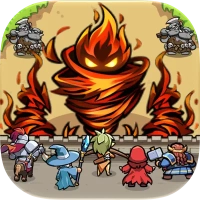
SushiMon Defense is a strategy game developed by Dreamplay Games Inc. that combines the tactical elements of tower defense with the action of survival-style games. Instead of relying entirely on a fixed lineup, players summon Sushi Monsters, merge units, select random upgrades, and adapt their tactics as enemies become stronger.
The story follows a witch stranded in a dangerous dungeon after being left behind by an unknown force. To survive, she must depend on her equipment and a growing team of Sushi Monsters. Together, they fight waves of enemies, including slimes, zombies, and vampires.
The defining feature of SushiMon Defense is its unpredictable progression. Summons, merges, level-ups, and skill choices can change the direction of a run. Players must therefore learn how to make useful decisions even when the available options are not ideal.
Rather than depending on luck alone, successful players develop a flexible strategy, prioritize effective monster combinations, and improve their equipment over time.
Main Features of SushiMon Defense
Random Monster Summoning
Summoning is the foundation of the game's defense system. Players call upon Sushi Monsters with different magical abilities, including projectile attacks, chain lightning, and meteor-based damage.
Each summon can influence the team's overall strength. Since the available monsters are not always predictable, players should evaluate every new unit according to the current needs of the battlefield.
Monster Merging System
Merging combines units to develop stronger monsters and improve the team's overall capabilities. However, merging can also change the composition of the defense, so players should consider the consequences before combining their units.
A carefully timed merge may improve combat performance, while an unnecessary merge can remove useful coverage or leave the team without a particular type of attack.
Random Skills and Level-Ups
During a run, players encounter random skill choices and upgrade opportunities. These decisions help determine how the team develops as the enemy waves become more challenging.
The best choice depends on the current lineup. A damage upgrade may be valuable when the team already has reliable coverage, while a different improvement may be more useful when the defense struggles to survive.
More Than 30 Unique Sushi Monsters
SushiMon Defense features over 30 distinct Sushi Monsters, each with its own magical abilities and potential role in combat.
Some specialize in direct attacks, while others can contribute through effects such as chain lightning or powerful area damage. Exploring these differences is important for discovering combinations that suit different encounters.
Witch Equipment and Ultimate Skills
The witch's equipment complements the Sushi Monsters and provides another layer of progression. Combining equipment improvements with monster abilities can strengthen the overall defense.
Players should treat equipment and monster development as connected parts of one strategy rather than improving only one side of the system.
Roguelike Survival Challenges
Enemy waves and upgrade opportunities can change between runs. This creates a roguelike experience in which players must adapt to changing conditions instead of following exactly the same plan every time.
Learning from unsuccessful attempts is an important part of progression.
How to Play SushiMon Defense
Step 1: Start Summoning Sushi Monsters
Begin by summoning available monsters to establish your defense. Your initial lineup may not contain your preferred units, so focus on creating a functional team with the options provided.
Avoid assuming that a run is lost simply because the first summons are not ideal. Additional choices and upgrades may improve the lineup later.
Step 2: Study Each Monster's Ability
Pay attention to how each Sushi Monster attacks and what it contributes to the battlefield. Direct damage, chain attacks, and area attacks can serve different purposes.
Understanding these differences makes it easier to decide which monsters to keep, which units to merge, and which upgrades will provide the greatest benefit.
Step 3: Merge Units Carefully
Use the merging system to strengthen your team, but do not merge automatically whenever the option appears.
First, consider whether the units being combined are currently providing valuable damage or coverage. If merging would leave an important area of the defense vulnerable, waiting may be the safer choice.
Step 4: Choose Skills That Support Your Lineup
When a random skill or level-up choice appears, compare the available options with your current needs.
A strong skill is most useful when it complements the monsters and equipment you already have. Select upgrades that address weaknesses or reinforce your best existing advantages.
Step 5: Upgrade Equipment and Improve Long-Term Progression
Equipment provides an additional way to strengthen the witch and improve future runs. Use the resources earned during gameplay to develop upgrades that help you overcome increasingly difficult encounters.
If progress slows, review your equipment and monster development before repeatedly attempting the same stage without changing your approach.
Complete Strategy Guide for SushiMon Defense
1. Build a Balanced Defense
A successful defense should not depend entirely on one monster or one type of attack. Although a powerful damage dealer can be extremely useful, relying on a single unit may leave the team vulnerable when enemies become more numerous or difficult to defeat.
Try to develop a lineup that can deal with enemies consistently throughout a run. Consider how the available monsters complement one another and whether the team can maintain sufficient damage as the waves progress.
The exact lineup will vary because summons are random. The goal is not to force the same ideal team every time, but to make the strongest possible defense from the monsters available.
2. Understand the Risks of Random Merging
Merging is one of the most important decisions in SushiMon Defense because it can change both the strength and composition of your team.
Before merging, evaluate three things:
Current damage: Will the merge remove attacks that are helping defeat enemies?
Team coverage: Will the remaining monsters still be able to handle the current wave?
Future options: Is merging necessary now, or could waiting preserve a more useful defense?
Do not treat every merge as an automatic improvement. The value of a stronger unit depends on what the team loses and gains during the process.
When your defense is already performing well, preserving a useful lineup may be more important than making an immediate merge. When your team is struggling, however, merging may be the best way to improve its effectiveness.
3. Make Random Skill Choices Work for You
Random skill selection creates uncertainty, but it also gives players opportunities to adapt.
When choosing an upgrade, think about the problem your team needs to solve. If enemies are surviving too long, stronger offensive capabilities may be valuable. If the defense is struggling to keep pace with incoming waves, look for upgrades that improve the team's overall performance.
Avoid choosing an option only because it sounds powerful. Its practical value depends on the current lineup, equipment, and stage difficulty.
A useful habit is to identify your team's main weakness before each selection. This makes it easier to compare available skills and choose an upgrade with a clear purpose.
4. Use Chain Lightning and Area Damage Effectively
SushiMon Defense includes monsters with different attack styles, including chain lightning and meteor attacks. These abilities can contribute to dealing with groups of enemies rather than relying exclusively on individual attacks.
When a run offers these types of monsters, consider how their damage complements the rest of the team. Multiple attack styles can help create a more adaptable defense.
However, do not assume that a particular ability will always be the best choice. Its effectiveness depends on the monsters available, the current wave, and the other upgrades you have selected.
5. Improve Equipment for Long-Term Success
Equipment upgrades can help make later runs more manageable. If you repeatedly struggle with the same stage, evaluate whether your long-term progression is keeping pace with the difficulty.
Focus on understanding which equipment improvements meaningfully support your preferred approach. Strengthening your overall capabilities can be more reliable than expecting every run to produce perfect summons.
If you are deciding between equipment progression and a new monster-related investment, consider which option addresses your most persistent weakness.
6. Adapt to Slimes, Zombies, and Vampires
Different enemy waves can put different pressures on your defense. Slimes, zombies, and vampires are among the enemy types featured in the game, and the changing waves require players to remain flexible.
Instead of relying on a fixed strategy, watch how quickly your team handles the enemies currently appearing. If your damage falls behind, consider stronger offensive options or more suitable monster combinations.
When a wave overwhelms your defense, use the result to identify what went wrong. This helps you make better choices in future attempts.
7. Treat Every Run as a Learning Opportunity
Because SushiMon Defense includes random summons and upgrade choices, not every run will develop in the same way.
A useful approach is to review each attempt and identify the decision that had the greatest effect on its outcome. You might discover that merging too early weakened your lineup, that a skill choice did not support your monsters, or that your equipment needs further improvement.
Change your strategy based on what you learn. Over time, understanding how to respond to different situations becomes just as important as obtaining powerful monsters.
Best Beginner Tips for SushiMon Defense
Learn the Monster Roles
Explore the different Sushi Monsters and their magical abilities. Knowing what each unit contributes makes summoning and merging decisions easier.
Avoid Merging Without a Plan
A merge can strengthen a unit, but it can also remove useful attacks from the battlefield. Consider your current defense before combining monsters.
Choose Skills Based on Your Current Needs
Do not automatically select the option that appears strongest. Think about whether your team needs additional damage, better coverage, or a different type of support.
Develop Equipment Alongside Your Monsters
Monster strength is only one part of progression. Equipment improvements can support future runs and help you deal with more difficult stages.
Do Not Depend on Perfect Random Summons
A useful strategy should remain flexible when the game provides unexpected monsters. Learn to make the best of available options instead of waiting for an ideal lineup.
Review Difficult Stages
If you repeatedly fail at a particular point, identify the problem before trying again. Consider your monster lineup, merging decisions, skill choices, and equipment progression.
Use Resources With a Long-Term Plan
Avoid spending every available resource immediately without considering your progression goals. Prioritize improvements that address recurring weaknesses and help you advance consistently.
Common Mistakes to Avoid
Merging too quickly: Combining monsters without considering the current battlefield can leave the defense weaker than before.
Depending on one powerful monster: A single strong unit may not provide enough coverage as enemy waves become more difficult.
Ignoring skill synergy: A skill can be powerful on its own but less useful when it does not complement the rest of the team.
Choosing upgrades without a clear goal: Random choices become easier to manage when you understand what your defense needs most.
Neglecting equipment: Focusing entirely on summons may slow long-term progression if equipment improvements are also needed.
Expecting every run to follow the same pattern: Randomness is central to the game. A strategy that works in one attempt may require adjustments in another.
Repeating failed attempts without changes: If the same stage keeps defeating you, review your decisions and progression rather than relying only on better luck.
Is SushiMon Defense Free to Play?
SushiMon Defense is listed as a free-to-download game with optional in-app purchases and advertising. Purchases include items such as gems, beginner packages, growth funds, and monster-related packages.
Players who prefer not to spend money should focus on understanding the summon and merge systems, making careful upgrade choices, and improving their equipment over time. Optional purchases may provide additional progression opportunities, but they do not replace the need to make effective decisions during a run.
Frequently Asked Questions
What is SushiMon Defense?
SushiMon Defense is a roguelike tower defense and survival game in which players summon and merge Sushi Monsters to protect a witch from waves of dungeon enemies.
How many Sushi Monsters are available?
The game's description advertises more than 30 unique Sushi Monsters with different magical abilities.
How does the merging system work?
Merging combines units to develop stronger monsters. Because merging can change the composition of your defense, players should consider the current battlefield before making a decision.
What is the best strategy for beginners?
Start by learning the available monster abilities, maintaining a functional defense, and selecting upgrades that support your current lineup. Avoid merging automatically and improve equipment as your progression continues.
Which Sushi Monsters are the strongest?
There is no single monster that is guaranteed to be the best in every situation. The most useful choice depends on its abilities, your existing lineup, the available upgrades, and the enemies you need to defeat.
How can I survive difficult enemy waves?
Build a defense that can maintain consistent damage, make careful merging decisions, and select skills that address your team's weaknesses. If a wave repeatedly defeats you, review your equipment and the decisions made during the run.
Why does luck matter in SushiMon Defense?
Summoning, merging, level-ups, and skill choices introduce random elements. Players cannot completely control every outcome, so flexibility and decision-making are essential.
Can I improve without making in-app purchases?
The game is free to download, with optional purchases available. Players can focus on learning the mechanics, improving equipment, and making better strategic choices to support their progression without assuming that every challenge requires a purchase.
Which devices support SushiMon Defense?
The App Store listing specifies support for compatible iPhone and iPad devices running iOS 15.0 or later and iPadOS 15.0 or later, respectively. Check the current listing for the latest compatibility information.
Final Verdict
SushiMon Defense combines random tower defense, monster merging, equipment progression, and survival gameplay into a challenging strategy experience. Its distinctive Sushi Monsters and unpredictable upgrade choices make each run an opportunity to experiment with different combinations.
The most effective approach is to balance offense with a reliable defense, merge units thoughtfully, choose skills that support the current lineup, and improve equipment over time. Luck influences the options you receive, but careful decisions determine how effectively you use them.
For players who enjoy monster collection, incremental upgrades, and roguelike strategy, SushiMon Defense offers a compact gameplay loop built around adapting to uncertainty and improving with every attempt.
Rate the Game
User Reviews














Popular Games



















 Android
 iOS
 Windows
 Xbox