
Latest Version
October 22, 2026
Lion Studios
Simulation
0
com.hyperdivestudio.papersgradeplease
Report a Problem
More About :game
Papers Grade Please offers a simple concept that becomes increasingly challenging as you progress. Instead of relying on fast reactions or complicated controls, the game tests your concentration, patience, and ability to recognize mistakes. Each visitor presents information that must be reviewed before you decide what to do next.
At first, the process may seem straightforward. However, small differences in names, dates, photographs, identification numbers, and other details can make decisions more difficult. Missing an important inconsistency or approving someone without checking the available information may lead to an incorrect result.
The key to enjoying and mastering Papers Grade Please is to develop a consistent inspection routine. By checking the most important details in the same order, you can reduce mistakes, improve your efficiency, and handle increasingly demanding situations with greater confidence.
What Makes Papers Grade Please Interesting?
Document Inspection and Attention to Detail
The main attraction is the need to examine information carefully. Documents may look convincing at first glance, but a closer inspection can reveal details that do not match. Players must learn to look beyond the overall appearance and focus on the information that determines whether a decision is correct.
Decision-Based Gameplay
Every visitor presents a small decision-making challenge. You must evaluate the information available, identify possible problems, and choose the appropriate response. The game rewards thoughtful decisions rather than careless guessing.
Increasing Difficulty
As you become familiar with the basic mechanics, the game can introduce more demanding situations, additional details, or rules that require greater attention. What initially feels easy can become a test of concentration when several pieces of information must be considered together.
A Mix of Simulation and Puzzle Solving
Papers Grade Please combines the routine of managing a checkpoint with the reasoning involved in solving visual and logical puzzles. Finding discrepancies becomes a skill that improves through practice, making each successful inspection feel rewarding.
Core Gameplay Mechanics
Reviewing Visitors
Each round typically revolves around examining a visitor and the information presented to you. Your first task is to understand what is being requested and determine which details matter for the decision.
Avoid making assumptions based on appearance alone. Follow the information and rules provided by the game, and take enough time to understand the situation before selecting an action.
Checking Documents
Document inspection is central to the experience. Depending on the scenario, relevant information may include a person's name, date of birth, identification details, photograph, expiration date, or other required fields.
Not every stage necessarily uses the same checks. Pay attention to the specific requirements presented in the current situation rather than relying entirely on what worked in an earlier round.
Identifying Inconsistencies
A discrepancy is a difference between two pieces of information that should agree or a detail that violates a stated requirement. Learning to spot these inconsistencies is one of the most important skills in the game.
Compare information directly whenever possible. Looking at one document and then another without checking the matching fields can make it easy to overlook a small but important difference.
Making the Final Decision
After completing the inspection, select the action that best matches the evidence and the rules. A correct decision should be based on the information available, not on a guess about what the game might expect.
When a situation is unclear, review the relevant details again if the game allows it. A few extra moments of inspection are often more valuable than making a rushed decision.
Complete Papers Grade Please Strategy Guide
Start Every Inspection with a Routine
The most reliable strategy is to use the same basic inspection sequence whenever the situation permits. Consistency makes the process easier to remember and reduces the chance of skipping an important field.
Begin by identifying the visitor and understanding the purpose of the interaction. Next, review the required documents, compare the relevant details, check any applicable rules, and make your decision only after the inspection is complete.
As you become more familiar with the process, this routine will feel more natural and require less conscious effort.
Check Names Carefully
Names can be easy to overlook because players often focus on larger or more noticeable document details. However, a small spelling difference may be significant when the game expects an exact match.
Compare the name on each relevant document rather than assuming that similar-looking words are identical. Pay particular attention to missing letters, extra characters, and differences in the order or spelling of names.
Verify Dates and Expiration Information
Dates can contain subtle errors that are difficult to notice when you are moving quickly. Check the day, month, and year carefully, and confirm that the information satisfies the requirements for the current stage.
When expiration dates are relevant, make sure the document remains valid under the rules presented by the game. Do not assume that a document is acceptable simply because it looks official.
Compare Identification Numbers
Numbers are especially easy to misread because a single digit can change the meaning of an entire field. Review identification numbers one character at a time when necessary.
If two documents should contain matching numbers, compare them directly. Avoid relying on a quick visual impression, particularly when several digits look similar.
Examine Photographs and Personal Details
When the game includes photographs or physical descriptions, compare the available details instead of focusing exclusively on written information.
Look for obvious inconsistencies between the person and the identification presented. Follow the specific visual clues and rules used in the current scenario, and avoid inventing requirements that the game has not established.
Learn the Rules Before Trying to Move Faster
Speed becomes useful only when you understand what must be checked. Rushing through an unfamiliar stage can create repeated mistakes that cost more time than a careful inspection would have taken.
Read new instructions thoroughly. If a stage introduces a new requirement, add it to your inspection routine before attempting to increase your pace.
Use a Second Check for Suspicious Cases
When something does not seem right, pause and review the relevant information. Recheck the fields that triggered your concern and determine whether the discrepancy is real.
This extra review is particularly useful when a document looks convincing overall but contains one questionable detail. A systematic second check can prevent both incorrect approvals and unnecessary rejections.
Avoid Decisions Based on Guesswork
A visitor's appearance or the general impression of a document should not replace evidence. Make decisions according to the requirements established by the game.
If the information supports a clear conclusion, act confidently. If an important detail is uncertain, inspect the available evidence again before proceeding whenever possible.
Adapt to New Requirements
Do not assume that every stage follows exactly the same rules. New instructions can change which details deserve the most attention.
At the beginning of a new situation, identify what has changed and adjust your inspection routine accordingly. Keeping the current rules in mind is more effective than blindly repeating an old strategy.
Maintain a Comfortable Pace
There is a difference between being efficient and being hurried. Efficient play means completing the necessary checks without wasting movements or repeatedly examining information that is already clear.
A comfortable pace helps you remain attentive for longer periods. Once you can identify common discrepancies reliably, you can gradually shorten the time spent on straightforward cases while giving more attention to unusual ones.
Learn from Incorrect Decisions
Mistakes can reveal which part of your process needs improvement. If the game provides feedback after a decision, use it to understand what you overlooked or misunderstood.
Rather than repeating the same stage without changing your approach, identify the source of the error. It might be a missed date, a mismatched name, an overlooked instruction, or a decision made before all the evidence was reviewed.
Over time, these small adjustments can make your performance more consistent.
Understanding the School Subjects
Mathematics Questions
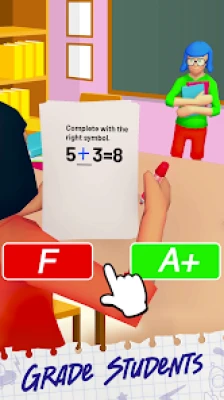
Mathematics challenges require you to recognize correct calculations and distinguish genuine answers from incorrect ones. Read the question carefully before judging the student's response.
For arithmetic problems, work through the calculation yourself instead of relying on whether the answer looks familiar. Pay attention to basic operations, number relationships, and common calculation errors.
If a question seems unusually simple, still verify the answer. The game may include humorous or unexpected responses designed to catch players who grade too quickly.
English Questions
English challenges test your ability to recognize correct words, spelling, grammar, and language-related answers. Read the complete response before deciding whether it deserves a passing or failing grade.
Do not let a confident or funny answer influence your judgment. Focus on whether the response actually answers the question and whether its wording is correct.
Geography Questions
Geography challenges require you to distinguish accurate information about places, countries, landmarks, and other geographical facts from incorrect answers.
Use your existing knowledge, but double-check the relationship between the question and the answer. A response can mention a real location and still be incorrect if it does not address what was asked.
How to Grade Student Answers Correctly
Give the Correct Grade
Your main responsibility is to decide whether each student's answer is right or wrong. Correct answers should receive the appropriate passing grade, while incorrect answers should receive the appropriate failing grade according to the game's instructions.
Do not mark an answer as correct simply because it sounds plausible. Check whether it matches the actual question.
Watch Out for Funny Answers
Humor is part of the game's appeal. Some students provide silly, unexpected, or deliberately misleading responses that may make you laugh.
Enjoy the jokes, but separate entertainment from accuracy. A clever punchline does not automatically make an answer academically correct.
Read the Entire Response
Avoid judging an answer from its first few words. The rest of the response may change its meaning or reveal a mistake.
Take a moment to understand what the student is actually saying before assigning a grade. This is especially useful when an answer contains a mixture of correct information and an amusing explanation.
Do Not Overthink Easy Questions
Not every answer hides a trick. If a response clearly answers the question correctly, give it the appropriate grade and move on.
The goal is to combine careful judgment with a reasonable pace, not to spend excessive time searching for mistakes that are not there.
Recess, Detention, and Other School Activities
Papers Grade Please is more than a collection of classroom questions. Its school-themed gameplay also includes situations involving student behavior and activities outside ordinary grading.
Handling Recess Situations
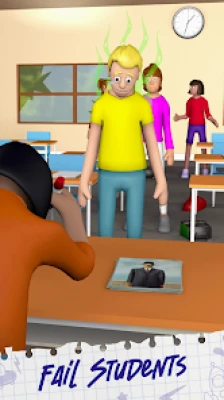
Some scenarios ask you to respond to events involving students during recess. Observe the situation and follow the action requested by the game.
These moments may rely more on visual judgment and choosing the appropriate response than on answering academic questions. Read the situation carefully before interacting with the available options.
Managing Detention
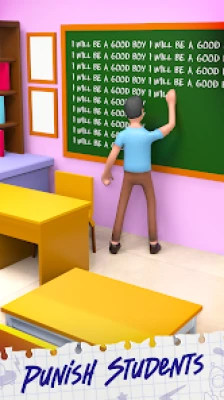
Detention-related situations add variety to the teaching simulation. Your task is to understand what is happening and respond according to the scenario.
Avoid tapping randomly just to finish a scene. Pay attention to the students, the instructions, and any visible choices that determine the outcome.
Enjoying the Variety of Mini-Games
The game includes different school-themed interactions that break up the repeated process of grading answers. These activities help keep the experience lighthearted and introduce new situations to handle.
Approach each mini-game on its own terms. Skills that help with mathematics or English questions may not be enough for a scene that requires visual observation or a different type of decision.
Beginner Tips for Papers Grade Please
Read Each Question Before Looking at the Answer
Start by understanding what the question asks. Once you know the correct information being requested, it becomes easier to evaluate the student's response objectively.
This simple habit reduces the risk of accepting an answer that sounds reasonable but addresses a different question.
Trust Verified Knowledge Rather Than Appearances
A long explanation does not necessarily make an answer correct, and a short response is not automatically wrong. Judge the actual information provided.
If you know the answer, compare it with the student's response. If you are uncertain, take a moment to reason through the question before choosing a grade.
Learn from Repeated Question Types
As you play more levels, you may notice familiar subjects, recurring question styles, and common types of incorrect answers.
Use these patterns to improve your judgment, but avoid memorizing grades without understanding why they are correct. Similar-looking questions can have different answers.
Stay Focused During Longer Sessions
Concentration can slip when you encounter many similar questions in a row. If you begin making careless mistakes, take a short break before continuing.
A fresh mind makes it easier to distinguish genuine answers from misleading ones and helps you enjoy the humorous situations without losing focus.
Advanced Strategies for Better Performance
Establish a Quick Answer-Checking Method
For each question, identify the subject, determine the expected answer, and compare it with the student's response. Then assign the appropriate grade.
This three-part method keeps your thinking organized and makes routine questions easier to handle.
Use Elimination When You Are Unsure
If a response seems questionable, identify which part of it does not match the question. Eliminating obviously incorrect possibilities can help you reach the right conclusion.
For mathematics, calculate the result. For English, examine the wording. For geography, check the relevant fact or location.
Balance Accuracy with Speed
Although fast decisions can make a session feel smoother, speed should never replace understanding. Aim to answer straightforward questions efficiently while spending more time on unfamiliar or misleading responses.
As your knowledge improves, you will naturally become quicker at recognizing common mistakes.
Pay Attention to Visual Instructions
Not every challenge is based entirely on written questions. In scenes involving student behavior or other classroom activities, visual details and instructions can be just as important.
Before acting, make sure you understand what the game expects you to do. This prevents unnecessary taps and avoidable mistakes.
Treat Feedback as a Learning Tool
When the game indicates that your decision was incorrect, consider why your choice did not work. You may have misunderstood the question, overlooked a detail, or relied on an incorrect assumption.
Correcting that misunderstanding is more valuable than simply trying to move past the level.
Common Mistakes to Avoid
Marking Answers Without Reading Them
The most obvious mistake is assigning grades too quickly. Even familiar questions deserve a brief check because a student may provide an unexpected response.
Confusing Humor with Correctness
A funny answer can be entertaining without being factually accurate. Always evaluate the answer itself rather than how clever or amusing it sounds.
Ignoring the Question's Exact Wording
A response may contain true information but still fail to answer the question. Identify the specific information being requested before judging the answer.
Guessing When You Can Reason It Out
Guesswork can lead to inconsistent results. Apply basic calculations, language knowledge, or geographical reasoning whenever possible.
Treating Every Mini-Game Like a Quiz
Different school scenarios may require different actions. Follow the instructions for each activity instead of assuming that every challenge involves grading a paper.
Rushing Through Unfamiliar Levels
New situations may introduce different interactions or more challenging questions. Take time to understand the requirements before returning to a faster pace.
Is Papers Grade Please Suitable for Casual Players?
Papers Grade Please is designed around simple interactions that are easy to understand. You do not need complicated controls or extensive gaming experience to begin playing.
Its combination of academic questions, humorous student responses, and school-themed mini-games makes it suitable for short play sessions. Players who enjoy trivia, casual simulations, puzzles, and lighthearted decision-making may find the experience particularly appealing.
The game can also encourage players to think about everyday academic knowledge, although its primary purpose is entertainment rather than serving as a complete educational course.
Is Papers Grade Please Difficult?
The basic controls are straightforward, but some questions can be challenging when the answer is unfamiliar or deliberately misleading.
Difficulty often comes from recognizing incorrect information, resisting humorous distractions, and making sensible decisions across different scenarios. Players who read carefully and apply basic reasoning can usually develop a more consistent approach as they progress.
You do not need to answer every question instantly. Building confidence through practice is more useful than trying to rush from the beginning.
Can You Play Papers Grade Please Offline?
Availability can depend on the version and platform. Check the game's current device requirements and behavior if you plan to play without an internet connection. Advertising and certain optional features may work differently when offline.
Frequently Asked Questions
What is Papers Grade Please?
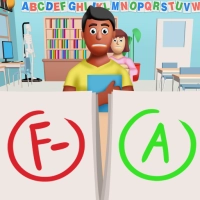
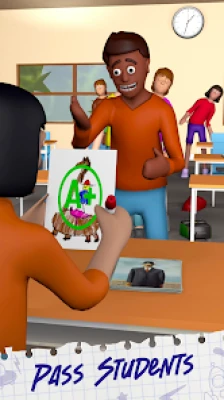
Papers Grade Please is a casual school simulation game in which you act as a teacher, evaluate students' answers, assign grades, and participate in other school-themed activities.
How do you play Papers Grade Please?
Read each student's question and answer, determine whether the response is correct, and assign the appropriate grade. Follow the instructions in other scenarios, including activities involving recess and detention.
How do you get better at Papers Grade Please?
Improve by reading questions carefully, checking answers instead of guessing, recognizing humorous but incorrect responses, and learning from mistakes.
What subjects appear in Papers Grade Please?
The game features questions involving subjects such as mathematics, English, and geography. It also includes additional school-related situations and mini-games.
Does Papers Grade Please have multiple levels?
Yes. The game offers many levels with different questions and situations, giving players opportunities to continue playing and encounter new challenges.
Is Papers Grade Please suitable for children?
The game is listed with an Everyone content rating on Google Play. Parents should still review its content, advertising, and in-app purchase options to determine whether it suits their children.
Is Papers Grade Please free to play?
The game is available as a free download on Google Play and contains advertisements and in-app purchases. Optional purchases may be available depending on the version.
What should you do when a student's answer looks funny?
Read the response carefully and determine whether it is actually correct. The game's humor is part of the experience, but an amusing answer should not receive a passing grade unless it answers the question correctly.
What is the best strategy for difficult questions?
Break the question down, identify the information being requested, and use the relevant knowledge to check the answer. Avoid making a decision based solely on appearance or confidence.
Final Verdict
Papers Grade Please offers a playful take on classroom life by combining answer grading, general knowledge, humorous student responses, and school-themed mini-games. Its simple controls make it easy to pick up, while its unexpected answers and varied situations encourage players to stay attentive.
The best strategy is to understand each question, judge answers on their accuracy, and follow the instructions provided in every activity. With a little patience and consistent reasoning, you can make better grading decisions, enjoy the funny moments, and progress through the game's many challenges.
Whether you enjoy casual simulation games, trivia challenges, or amusing everyday scenarios, Papers Grade Please provides a lighthearted way to put your knowledge and judgment to the test.
Rate the Game
User Reviews














Popular Games



















 Android
 iOS
 Windows
 Xbox