


Latest Version
October 24, 2026
Supercent, Inc.
Simulation
iOS
0
Report a Problem
More About :game
The game combines resource gathering, crafting, workshop management, and business expansion in a casual experience. Its central challenge is to turn raw materials into valuable products while making sensible decisions about upgrades and production. Whether you enjoy building a business gradually or managing a workshop and watching it develop, Forge & Fortune offers a hands-on blacksmithing experience with plenty of room to improve your operation.
What Is Forge & Fortune?
Forge & Fortune is a simulation game developed by Supercent, Inc. for iPhone and iPad. It puts you in charge of a growing blacksmith business, beginning with basic resource gathering and gradually expanding into a more developed production operation.
Your main objective is to collect ores, transform them into useful crafting materials, produce weapons, and sell your finished goods for profit. The money you earn can be invested back into the workshop to improve production, unlock additional facilities, and increase your ability to gather and process resources.
Rather than focusing on combat or traditional role-playing quests, Forge & Fortune emphasizes the business side of fantasy blacksmithing. Progress comes from improving your equipment, managing materials, and building an efficient workflow from the mine to the sales area.
The game also features idle-style progression and worker management. Additional mining equipment, dynamite, a special merchant, a crafting table, and mine carts with a rail system have been introduced in updates, adding more ways to gather and handle resources.
Main Features of Forge & Fortune
Mining and Resource Collection
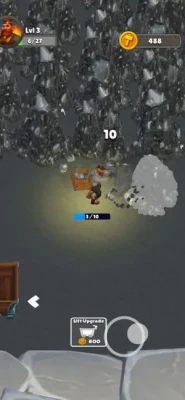
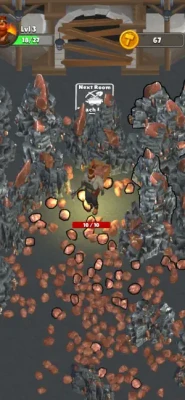
Mining is the foundation of your blacksmith business. The game features resources such as copper, iron, and gold, which serve as important materials for crafting and workshop development.
Collecting ores regularly helps keep production moving. Better mining equipment can increase the speed of gathering, while additional tools can make resource collection more convenient. As your operation expands, maintaining a steady supply of materials becomes increasingly important.
Weapon Crafting and Production
Crafting transforms collected resources into products that can generate income. Swords, axes, and hammers are among the weapons you can produce and display for sale.
The crafting process connects mining directly to your business profits. Without sufficient materials, production may slow down. For this reason, gathering resources and improving your workshop should go hand in hand.
Workshop Expansion
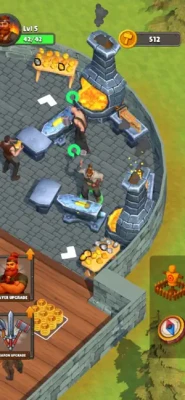
Forge & Fortune lets you unlock additional forges, storage areas, display racks, and weapon types. These improvements help you develop your business beyond its starting setup.
Expansion is more than simply making the workshop larger. It is an opportunity to improve how materials move through your operation, increase production capacity, and prepare for more demanding stages of progression.
Worker Management
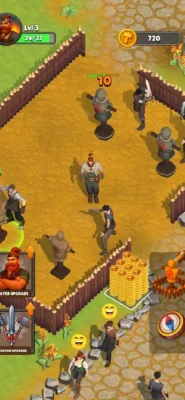
Hiring workers helps automate parts of your operation and improve efficiency. As more tasks become available, workers can reduce the amount of manual attention needed to keep your business running.
A well-developed workshop depends on balancing worker management with equipment upgrades and resource availability.
Equipment Upgrades
Mining equipment and other available improvements help you make better use of your time and resources. Stronger or faster equipment can make gathering more efficient, while workshop upgrades support the next stage of business growth.
Choosing upgrades carefully is important because spending all your money immediately can leave you without enough funds for other essential improvements.
Special Mining Tools and Crafting Features
The game has introduced several additional systems, including dynamite for collecting ores in bulk, improved mining equipment, mine carts and railway infrastructure, and a crafting table for combining collected resources into new items.
A special merchant has also been introduced to provide bulk purchasing opportunities. These features can add flexibility to resource management and create new ways to support your workshop.
The exact availability and behavior of individual features may depend on the version you are playing.
How to Play Forge & Fortune
Start by Learning the Basic Production Cycle
When beginning the game, concentrate on understanding how mining, crafting, and selling connect. Gather the available resources, use them to produce weapons, and make sure finished products reach the selling area.
This cycle is the foundation of your business. The more consistently you can maintain it, the easier it becomes to earn money for upgrades.
Avoid spending too much time on expansion before you understand which resources your workshop needs most. A small operation with a reliable production cycle is a better starting point than a larger workshop that frequently runs short of materials.
Collect Resources Regularly
Pay attention to the ores available in your mine and collect the materials required for your next crafting tasks. Copper, iron, and gold should be treated as resources with different potential uses rather than items to gather without a plan.
When you are short of a particular material, prioritize collecting it instead of continuing to gather resources that are already plentiful.
Craft and Sell Finished Weapons
Once you have the necessary materials, move into production. Craft the available weapons and ensure that they can be displayed for sale.
Selling finished products converts your gathered resources into the money needed to expand the workshop. If crafting slows down, check whether the problem comes from insufficient materials, limited equipment, or an incomplete production process.
Reinvest Your Earnings
After making sales, use part of your earnings to improve the business. Focus on upgrades that remove your current bottleneck, such as slow mining, insufficient storage, or limited production capacity.
Keep enough money available to continue operating rather than spending every coin on a single improvement.
Expand When Your Current Setup Is Stable
Unlock additional facilities when your existing operation can support them. More forges, storage space, and display racks are useful, but they deliver the greatest benefit when you have the resources and production capacity to make effective use of them.
Gradual expansion helps you maintain a manageable workshop while building toward a larger blacksmith empire.
Complete Forge & Fortune Strategy Guide
Best Strategy for Beginners
The strongest starting strategy is to focus on a simple, reliable income cycle before attempting to build a large workshop.
Begin by collecting the ores you need for basic crafting. Produce the available weapons, sell them, and use the resulting income to improve the parts of your operation that slow you down most.
Early in the game, avoid spreading your resources across too many upgrades. Concentrating on one useful improvement at a time makes it easier to see how each purchase affects your progress.
A practical early-game priority is to establish reliable mining, maintain consistent crafting, and improve sales capacity when needed. Once these fundamentals are working smoothly, start investing in broader workshop expansion.
How to Earn Money More Efficiently
Earning money depends on maintaining an effective relationship between resource gathering and weapon production.
A mine that produces plenty of ore is not especially useful if your workshop cannot process the materials efficiently. Likewise, a well-equipped forge may remain underused if you cannot supply it with enough resources.
To improve your earnings, identify the slowest part of your operation. If mining is the main limitation, invest in mining improvements. If resources are available but production is slow, consider workshop-related upgrades. If finished weapons accumulate without being sold, examine your display and sales capacity.
This approach helps you spend money where it can have the greatest practical effect.
How to Manage Copper, Iron, and Gold
Treat your materials as part of a shared production budget. Before committing resources to a new task, consider whether you will still have enough to continue your regular crafting activities.
Copper can contribute to your early resource needs, while iron and gold are also important materials featured in the game's mining system. Their precise uses and value depend on the recipes and mechanics available in your current version.
Avoid collecting large quantities of a resource without considering how you will use it. A useful resource reserve is one that supports your next production goals while leaving enough flexibility for upgrades.
When the crafting table is available, explore its resource-combination options and check which items are most helpful for your current stage of progression.
Best Approach to Mining Upgrades
Mining upgrades deserve careful consideration because resource gathering supports almost every part of the business.
When comparing improvements, think about how frequently you collect materials and whether mining is delaying crafting. If you repeatedly wait for ore, a mining upgrade may be more valuable than expanding a different part of the workshop.
The introduction of improved mining equipment gives players another way to increase collection efficiency. Dynamite can also help gather ores in bulk, making it worth considering when the feature is available and its cost fits your budget.
Do not assume that every upgrade is equally valuable at every stage. An improvement that is helpful early on may become less important once your main mining bottleneck has been resolved.
How to Use Dynamite Effectively
Dynamite provides a way to blast and collect ores in bulk. This can be useful when you need a larger quantity of resources without relying entirely on ordinary collection.
Use it with a clear purpose. If you need additional materials for a particular crafting goal, bulk collection may help you prepare more quickly.
Before spending resources on special mining tools, consider whether the resulting materials will support production or whether your current stock is already sufficient. The goal is to make gathering more productive, not simply to accumulate the largest possible pile of ore.
Making the Most of Mine Carts and Railways
Mine carts and a rail system have been added to the game as part of its mining-related development. These features provide another element to consider as your operation grows.
When using the mine, pay attention to the available railway and equipment upgrades. Consider how they fit into your resource collection routine and whether improving the mining setup would help address a bottleneck.
Do not neglect basic equipment improvements in favor of a more elaborate system. The most effective setup is the one that supports consistent resource collection at a reasonable cost.
How to Improve Crafting Efficiency
Efficient crafting begins with preparation. Gather the necessary resources before concentrating on production, and pay attention to which weapons you can make with the materials currently available.
Swords, axes, and hammers provide different crafting options. Rather than producing items without a plan, use the available recipes and workshop capacity to guide your decisions.
If you unlock a new weapon type, consider how it fits into your existing operation. New content can expand your options, but it is still important to maintain a reliable supply of materials and enough money for other improvements.
The crafting table can provide additional ways to combine resources into new items. Check its available recipes as your game progresses and use the feature when it supports a clear production objective.
How to Expand Your Workshop Wisely
Workshop expansion should follow a clear order of priorities.
Improve mining if you cannot gather enough materials. Improve production if your forges cannot keep up with available resources. Add storage when limited space interferes with resource handling, and consider display racks when your sales setup needs additional capacity.
Unlocking more forges can increase your production options, but additional facilities are most useful when you can supply them consistently.
A good expansion decision should solve a current problem or prepare you for a specific next step. Avoid purchasing upgrades simply because they are available.
Worker Management Tips
Workers can help automate parts of your operation, so their value increases as you have more activities to manage.
Consider worker-related improvements when manual tasks are consuming too much of your attention or when your workshop has grown beyond what you can comfortably manage yourself.
However, automation does not remove the need for good resource management. Workers cannot make a resource shortage disappear, and a larger operation still requires appropriate mining, production, and storage capacity.
For the best results, combine worker management with upgrades that support the tasks your business needs most.
How to Use the Special Merchant
The special merchant feature has been introduced with bulk purchasing opportunities. When available, it can offer another way to obtain items or support your resource strategy.
Before making a purchase, check what is being offered and compare it with your immediate needs. Bulk buying is most useful when you have a clear reason to obtain the items and enough money remaining to keep your operation running.
Avoid treating every merchant offer as an automatic bargain. The value of a purchase depends on your current inventory, production goals, and available funds.
Is Offline Progress Reliable?
Forge & Fortune is described as an idle-style game, but that does not guarantee that every activity continues while the app is closed.
The game's actual behavior can depend on the version and the specific mechanic involved. If you want to know whether resources or money accumulate while you are away, test it by noting your current progress, closing the game for a short period, and checking the results when you return.
For important resource management, it is sensible to confirm that your progress has been saved before leaving the game. Do not base your entire income strategy on assumed offline earnings.
Common Beginner Mistakes to Avoid
One frequent mistake is upgrading too many things at once. This can leave you with several partially improved systems but insufficient money to solve the main problem holding back your business.
Another mistake is neglecting mining while expanding production. More forges and crafting options are of limited use if you cannot provide the materials they require.
It is also easy to overlook storage and sales capacity. Resource collection and crafting must connect smoothly to the selling process for the workshop to operate effectively.
Finally, avoid making expensive purchases without considering your remaining budget. Keep enough money and resources available to continue basic production after each major upgrade.
Advanced Strategy for a Growing Blacksmith Empire
Once the basic operation is stable, focus on improving the complete production chain rather than optimizing isolated activities.
Start with mining, where ores enter your business. Continue through resource handling and crafting, then consider how finished weapons move to the display racks and generate income.
Look for recurring delays. If the workshop regularly runs out of iron, improve the relevant collection process. If materials accumulate faster than they can be processed, focus on crafting capacity. If production runs smoothly but money comes in slowly, review the sales side of the operation.
Use each upgrade to address a measurable problem. This method is more reliable than following a fixed purchase order because the best choice depends on your current resources and unlocked features.
As your workshop becomes more developed, maintain a reserve of money for necessary upgrades and unexpected needs. A growing business benefits from flexibility, especially when new facilities and crafting options become available.
Recommended Upgrade Priorities
Your ideal upgrade order will depend on the current state of your workshop, but the following approach provides a useful general framework.
Early game: Prioritize basic mining efficiency, a reliable supply of crafting materials, and a steady flow of weapon sales.
Developing workshop: Invest in upgrades that resolve production bottlenecks. Consider additional forges, storage, display racks, and worker management as your business expands.
Growing operation: Explore improved mining equipment, dynamite, mine carts, railway upgrades, and crafting-table recipes when they are available and useful.
Advanced progression: Focus on balancing the complete production chain, maintaining sufficient reserves, and choosing upgrades that deliver practical benefits rather than spending money on every available option.
These are strategic recommendations rather than a mandatory in-game upgrade sequence. The best order can change depending on your unlocked facilities, current stock, and the version you are playing.
Is Forge & Fortune Worth Playing?
Forge & Fortune is worth considering if you enjoy casual simulation games built around collecting resources, crafting products, upgrading facilities, and managing a growing business.
Its main appeal is the connection between mining and manufacturing. Gathering ores creates the foundation for crafting, while weapon sales provide the income needed to improve the workshop. Players who enjoy gradual development and making small management decisions may appreciate this structure.
The game also offers additional mining and crafting features that extend beyond its basic production cycle. These include special tools, mine carts, a railway system, and a crafting table.
However, players should keep their expectations realistic. The game's advertised idle-style elements do not necessarily mean every system operates continuously in the background, and the precise pace of progression may vary with updates.
If you prefer strategic resource management and workshop development over combat-focused gameplay, Forge & Fortune may be a good fit.
Frequently Asked Questions
What is the main goal in Forge & Fortune?
The main goal is to build a successful blacksmith business by collecting ores, crafting weapons, selling finished products, and reinvesting the earnings into your workshop.
What resources can you collect?
The game features copper, iron, and gold as mining resources. These materials support crafting and the broader development of your blacksmith operation.
Which weapons can you craft?
The game's advertised crafting options include swords, axes, and hammers. Additional weapon types can become available as you unlock more content.
Can you hire workers?
Yes. Worker management is one of the game's features, allowing you to automate parts of the operation and improve efficiency.
Can you upgrade the mine?
Yes. The game includes mining equipment upgrades, and additional mining-related features such as dynamite, mine carts, and a railway system have been introduced.
What does the crafting table do?
The crafting table allows you to combine collected resources into new items. Available combinations depend on the crafting options in your current version.
Does Forge & Fortune support idle progression?
The game is presented as an idle-style simulation. However, you should verify whether particular activities continue while the app is closed rather than assuming that all resources and earnings accumulate offline.
Is Forge & Fortune free to play?
The iOS App Store listing identifies Forge & Fortune as free to download and indicates that the app contains advertising. Check the current in-game store for any optional purchases or other monetization details.
Is Forge & Fortune available on iPhone and iPad?
Yes. The App Store listing identifies support for both iPhone and iPad, with iOS 15.0 or later and iPadOS 15.0 or later listed as the minimum requirements.
What is the best tip for new players?
Build a dependable production cycle before expanding too quickly. Keep mining, crafting, and selling balanced, then spend your earnings on upgrades that address the biggest limitation in your workshop.
Final Thoughts
Forge & Fortune turns the familiar idea of a blacksmith workshop into a resource-management simulation centered on mining, crafting, sales, and expansion. Its progression encourages players to improve their equipment, manage workers, and develop a more efficient business over time.
The most effective strategy is to build steadily rather than spend recklessly. Maintain a reliable supply of ores, craft weapons consistently, invest in useful upgrades, and expand your facilities when your current operation can support them. By paying attention to the entire production process, you can make better use of your resources and develop a stronger blacksmith business as you progress.
Rate the Game
User Reviews














Popular Games



















 Android
 iOS
 Windows
 Xbox