

Latest Version
Visit PageMore About :game
What Is OTR: Offroad Car Driving?
OTR, short for Off The Road, is an open-world vehicle simulation game that lets players explore a large environment without being restricted to ordinary roads. Instead of following a single racing track, you can drive across hills, cross muddy fields, explore coastlines, and search for routes through challenging terrain.
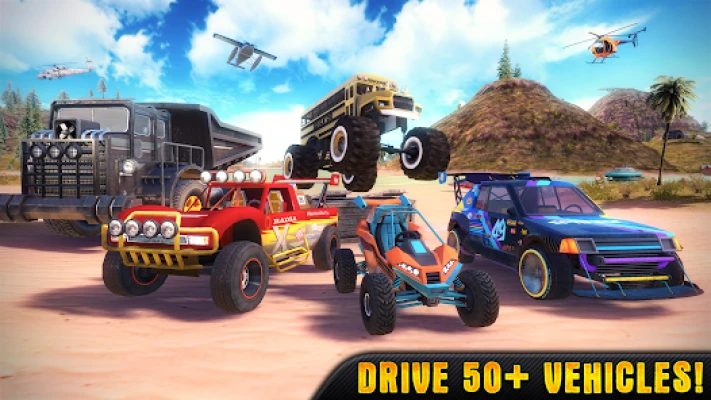
The game features a range of vehicles, including off-road cars, trucks, and larger utility vehicles. You can also use boats and aircraft to explore areas that are difficult to reach by road. In addition, the ability to leave your vehicle and walk around creates more freedom when searching for collectibles or exploring the surroundings.
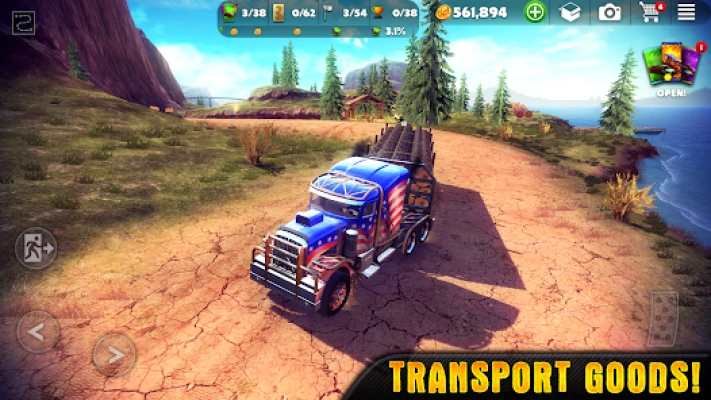
A major part of the experience involves completing challenges to earn money and experience points. These rewards help you unlock vehicles, improve performance, and progress through more demanding activities. You can also transport materials, tow objects with a winch, and deliver cargo to designated locations.
OTR is designed for players who enjoy experimenting with vehicles and finding their own routes. You can approach many areas cautiously, attempt difficult climbs, or simply explore the landscape at your own pace.
Main Features of OTR: Offroad Car Driving
Open-World Exploration
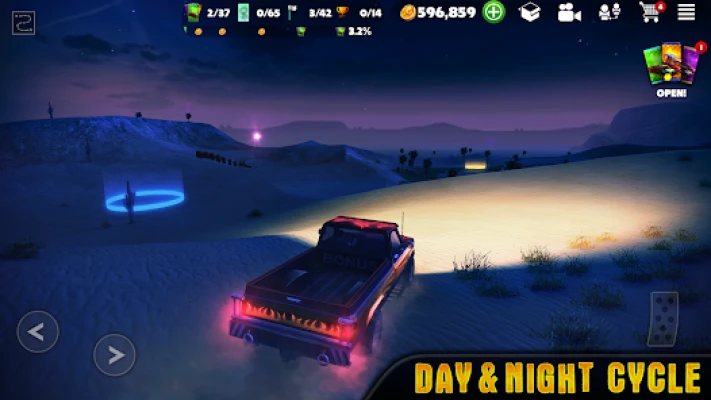
The game provides a large environment filled with hills, valleys, islands, dirt tracks, water, and other natural obstacles. You can choose your own routes and discover different areas while completing objectives or exploring freely.
A Wide Selection of Vehicles
OTR features numerous vehicles to unlock and drive. Different vehicles offer different advantages, so selecting the right one for a particular challenge is an important part of the game.
Realistic Off-Road Physics
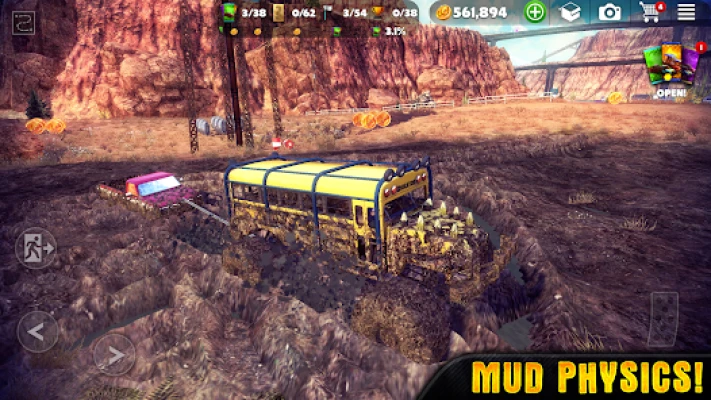
Vehicle handling responds to the terrain, while mud, water, steep slopes, and collisions can affect your driving experience. Vehicles can sustain visible damage after hard impacts, encouraging more careful driving.
Winch System
The winch is one of the most useful tools in the game. It allows you to attach a cable to suitable objects and pull yourself or other objects toward a target. This can help you climb difficult slopes, recover from obstacles, and move objects during certain activities.
Boats and Aircraft
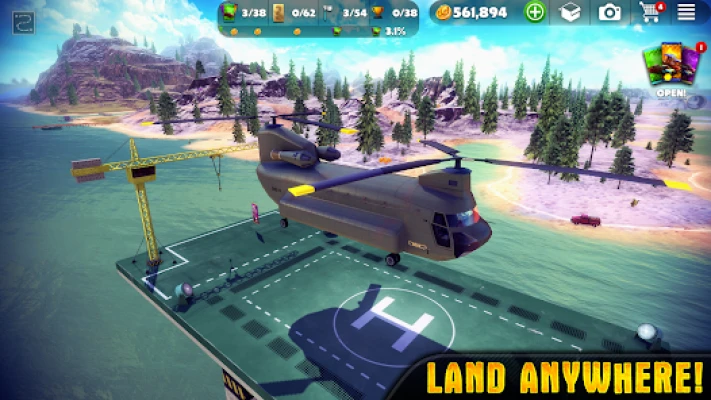
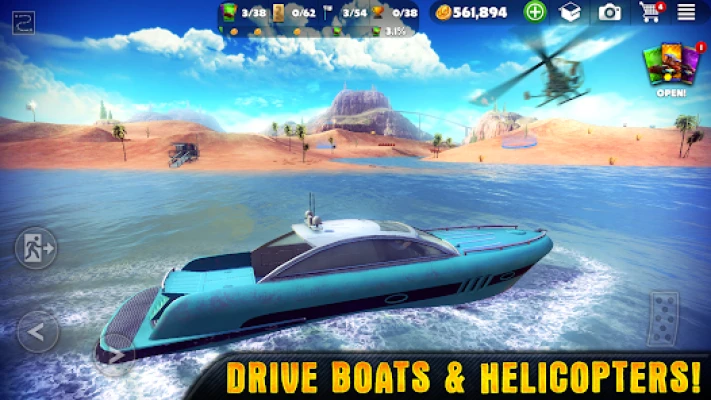
Driving is not limited to cars and trucks. Boats allow you to travel across water, while helicopters and other aircraft provide alternative ways to explore the environment.
Challenges and Missions
Players can complete checkpoint races, pathfinding challenges, transportation tasks, and other objectives. Each activity tests different skills, from driving precision to route selection and cargo handling.
Construction and Transportation
Some objectives require you to deliver materials to specific locations. These supplies can be used in construction activities involving structures such as houses, bridges, roads, or other projects supported by the game.
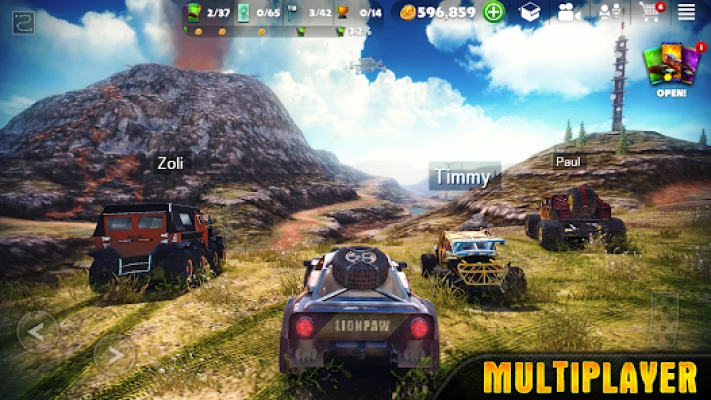
Online Multiplayer
Multiplayer modes allow players to interact with others, explore together, or compete in available challenges. Competitive events, including weekly ranked races, add another goal for players who want to improve their driving skills.
Collectibles and Progression
Collectibles and card packs provide additional reasons to explore the world. Progression rewards encourage players to complete missions, gain experience, and gradually expand their vehicle collection.
How to Get Started in OTR
Learn the Driving Controls
Begin by getting comfortable with acceleration, braking, steering, and reversing. Test the controls in an open area before attempting difficult mountain trails or timed challenges.
Smooth inputs are usually more effective than constantly accelerating or turning sharply. This is particularly important on narrow paths, where a small steering mistake can send your vehicle down a slope.
Take time to understand how your chosen vehicle responds to different surfaces. A lightweight off-road car may handle tight turns differently from a large truck, and you will need to adapt your driving style accordingly.
Explore Before Taking on Difficult Missions
Do not rush into the hardest challenges as soon as you start playing. Spend some time exploring the terrain and learning where steep climbs, water crossings, and narrow paths are located.
Exploration helps you identify useful routes and recognize obstacles before they become a problem. You may also discover collectibles and other activities along the way.
Complete Accessible Challenges First
Start with objectives that match your current vehicle and driving ability. Easier challenges provide opportunities to earn money and experience while learning the game's mechanics.
Once you become comfortable with the controls, try activities that require more precise navigation, cargo delivery, or challenging terrain.
Upgrade Your Main Vehicle
Choose a dependable vehicle and improve it before investing heavily in several alternatives. A stronger, better-prepared vehicle can make many early challenges easier.
Pay attention to the type of activity you want to complete. A vehicle suited to rough mountain trails may not be the most convenient option for fast checkpoint races or transporting heavy materials.
Learn to Use the Winch Early
The winch can help you recover from situations that ordinary driving cannot solve. Practice attaching it to suitable anchor points and using the cable to pull your vehicle toward safer ground.
Learning this tool early will save time when you encounter steep slopes, deep terrain, or awkward positions.
Understanding Vehicles and Their Uses
Choosing the right vehicle is one of the most important decisions in OTR. The fastest vehicle is not always the most useful, especially when the route contains obstacles that require traction, stability, or towing ability.
Off-Road Cars
Off-road cars are useful for general exploration and navigating trails. Depending on their design and upgrades, they can provide a balance of speed, handling, and climbing ability.
They are often a sensible starting point because they allow you to practice steering and learn how the environment affects vehicle movement.
Use off-road cars for exploring accessible routes, completing suitable challenges, and traveling between nearby objectives.
Trucks
Trucks are useful for transportation tasks and activities involving cargo. Their size and handling can make tight paths more difficult, so it is important to consider the width of the route before committing to a delivery.
Drive carefully around steep turns and avoid sudden steering movements when carrying materials. A controlled approach reduces the risk of losing cargo or getting stuck.
Heavy-Duty Off-Road Vehicles
Larger off-road vehicles can be useful when tackling demanding terrain. Their strength and size may help with particular obstacles, although performance still depends on the terrain and the vehicle's configuration.
Do not assume that a heavy vehicle can climb every slope. Choose a route with manageable gradients and use the winch when necessary.
Boats
Boats provide a practical way to travel across water and reach islands or coastal areas. When planning a water crossing, consider where you want to land and whether the destination offers a suitable route inland.
Avoid choosing a landing location simply because it is nearby. A slightly longer crossing may be easier if it leads to a broad, accessible shoreline.
Helicopters and Aircraft
Aircraft can help you reach locations that would be difficult or time-consuming to access by road. Helicopters are particularly useful for exploring mountainous areas and approaching elevated locations.
Practice controlling altitude and direction before attempting precision landings. Rushing an approach can lead to collisions or an awkward landing that makes it difficult to continue exploring.
Choosing the Right Vehicle for Each Challenge
Before starting an activity, think about what the objective requires. A timed race favors efficient driving and good handling, while a cargo mission rewards stability and careful route planning.
For mountain exploration, prioritize climbing ability and a useful winch. For water-based travel, choose a suitable boat. For difficult transportation jobs, select a vehicle that can handle both the cargo and the terrain.
Best Driving Techniques for Off-Road Terrain
Control Your Speed on Rough Ground
Driving at maximum speed is rarely the best approach when the ground is uneven. Rocks, sudden drops, narrow paths, and steep inclines can cause your vehicle to lose control.
Reduce speed before reaching a difficult section rather than braking sharply once you are already in trouble. A slower approach gives you more time to steer around obstacles.
Choose Your Route Carefully
Look ahead and identify the safest path before entering a difficult area. A direct route may be shorter but could involve a slope that your vehicle cannot climb reliably.
Search for gradual inclines, wider turns, and firm ground whenever possible. A longer route can save time if it prevents repeated recoveries.
Approach Steep Hills With Momentum
When climbing a hill, maintain steady acceleration and try to approach from a direction that provides good traction. Sudden steering changes or unnecessary braking can interrupt your climb.
Avoid charging blindly toward the steepest section. Look for a manageable route and use the winch if the vehicle begins to lose progress.
Avoid Sharp Turns on Slopes
Turning sharply while driving across a steep hillside can destabilize your vehicle. Keep steering inputs controlled and avoid sudden direction changes.
If the slope becomes too difficult, consider reversing to safer ground or using the winch to improve your position. Continuing to accelerate without a clear plan may make recovery harder.
Use Water Crossings Carefully
Water can be an obstacle or a useful route between areas, depending on the vehicle and location. Approach crossings cautiously and avoid assuming that every vehicle can pass through deep water safely.
If a crossing looks risky, search for another route or choose an appropriate water vehicle. Planning ahead is more effective than attempting to force your way through an unsuitable crossing.
Recover From Difficult Situations
If your vehicle becomes stuck, stop and assess the problem. Determine whether the issue is a steep incline, poor positioning, mud, or an obstacle blocking your route.
Try reversing along the path you used to enter the area. If that fails, look for a suitable winch anchor point and pull yourself toward firmer ground.
Avoid repeated full-throttle attempts that leave the vehicle in the same position. Small adjustments are often more effective than aggressive acceleration.
How to Use the Winch Effectively
Understand the Purpose of the Winch
The winch gives you another way to move when normal driving is not enough. It can help pull a vehicle up a difficult slope, recover from an awkward position, or drag suitable objects.
It is especially valuable during exploration because unexpected terrain can make a previously simple route difficult.
Select a Useful Anchor Point
Look for a suitable object in a direction that helps your vehicle move toward safer ground. The anchor should support the movement you need rather than pulling you sideways into another obstacle.
Think about the direction of the cable before applying tension. A poor angle can make recovery more difficult.
Pull in Short, Controlled Movements
When possible, use the winch to make gradual progress rather than forcing the vehicle forward at an awkward angle.
Check your position after each movement. Once the vehicle reaches a more stable area, release the cable if appropriate and continue driving normally.
Use the Winch During Mountain Climbs
If a slope becomes too steep, attach the cable to a suitable point ahead and use it to help pull the vehicle upward.
Choose a stable route and avoid relying on the winch as a substitute for every driving technique. Combining careful steering, controlled acceleration, and winch use is generally more effective.
Use the Winch for Object Transportation
Certain tasks involve moving objects or delivering materials. The winch can help position suitable objects when the game allows it.
Move objects carefully and check their direction as you pull. Avoid dragging cargo through unnecessary obstacles that could make the delivery more difficult.
How to Complete Challenges Successfully
OTR includes several challenge types, and each one requires a different approach. Learning what the objective rewards will help you choose the right vehicle and avoid wasted attempts.
Checkpoint Hunt Challenges
Checkpoint Hunt activities focus on reaching checkpoints within the available time. Efficient route selection and controlled speed are important.
Study the direction of the route before accelerating. Anticipate sharp turns and slow down before entering difficult sections.
Avoid unnecessary detours unless they offer a safer or faster way around a major obstacle. A direct line is not always the quickest route if it leads to a crash or a difficult recovery.
Pathfinder Challenges
Pathfinder challenges emphasize navigation across demanding terrain. Instead of focusing only on speed, concentrate on finding a route that your vehicle can handle.
Look for gradual climbs, accessible gaps, and stable ground. If the direct path is too steep, move sideways to find a better approach.
Use the winch when necessary, but make sure each pull moves you closer to the objective.
Transportation Challenges
Transportation missions require you to move materials or cargo to designated destinations. These tasks reward planning, careful driving, and attention to the route.
Before leaving the starting point, examine the likely path and identify difficult turns or slopes. Drive at a speed that keeps the cargo secure and the vehicle under control.
Avoid unnecessary collisions, especially when maneuvering through narrow spaces. If the route becomes difficult, stop and reassess instead of forcing the vehicle forward.
Construction Tasks
Construction activities involve transporting required materials to a designated site. They combine exploration with delivery objectives and may require several trips or careful movement through challenging terrain.
Check which materials are needed before starting. Plan your route and make sure your chosen vehicle can reach the site.
Complete the required deliveries methodically. Trying to rush the process can lead to avoidable mistakes and extra travel.
Multiplayer Races
Competitive racing rewards a combination of speed, route knowledge, and vehicle control. Learn the course before attempting to drive at full speed.
Brake before sharp turns, avoid unnecessary collisions, and maintain momentum through manageable sections. If you repeatedly lose control at the same obstacle, adjust your approach instead of relying on more acceleration.
Weekly Ranked Events
Weekly ranked races provide an additional competitive goal. Check the available event and its requirements, then practice with a vehicle suited to the route.
Consistency is more useful than taking a risky shortcut on every turn. Clean driving and fewer mistakes can help you achieve better results over the course of an event.
Earning Money and Experience Faster
Complete Challenges Regularly
Challenges are a central source of progression. Choose activities you can complete reliably and use their rewards to improve your vehicle collection.
Rather than repeatedly attempting a difficult mission that you cannot finish, complete other suitable objectives and return when your vehicle is better prepared.
Focus on Efficient Progression
Try to choose activities that match your current abilities and equipment. An objective that you can complete consistently may provide better practical progress than a much harder task that requires several failed attempts.
As your vehicle improves, revisit more demanding activities.
Collect Available Rewards
Check the game's available rewards and progression systems regularly. Experience points help you level up, while money can support vehicle improvements and other purchases.
Take advantage of accessible objectives and collectibles during exploration rather than treating every journey as a trip from one mission marker to another.
Search for Collectibles
Exploring away from main routes can reveal hidden collectibles and card packs. Look around unusual terrain, elevated areas, and places that are easy to overlook while driving quickly.
If a location seems difficult to reach, consider whether a different vehicle or the winch could help. Aircraft may also provide a useful alternative for exploring certain areas.
Spend Money With a Plan
Before purchasing or upgrading a vehicle, consider which activities you want to complete next. Improving a vehicle you already use can be more useful than acquiring another vehicle that does not solve your current problems.
Prioritize upgrades that make your chosen challenges easier or help you reach new areas.
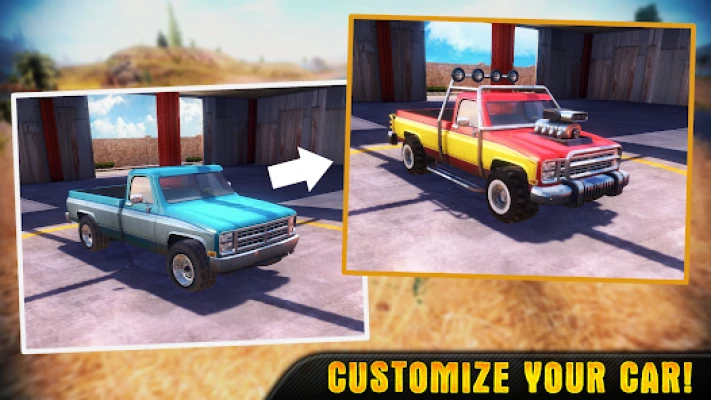
Vehicle Upgrades and Customization
Improve Performance Before Appearance
Customization can make your vehicle look more distinctive, but performance improvements should generally come first when you are trying to progress.
Choose upgrades that address your most common difficulties. If you struggle on steep hills, prioritize improvements that help your vehicle handle demanding terrain. If timed races are your main goal, focus on changes that support better performance on the relevant routes.
Match Upgrades to Your Driving Style
Different players prefer different approaches. Some enjoy exploring difficult terrain, while others focus on racing or transportation.
Choose upgrades based on how you actually use the vehicle. A setup designed for one activity may not be ideal for another.
Upgrade Your Favorite Vehicles Gradually
It is tempting to spend resources on every vehicle you unlock, but concentrating on a small number of reliable options can make progression easier.
Develop one general-purpose off-road vehicle first, then expand your collection as your needs change.
Experiment With Different Vehicles
A vehicle that struggles on one route may perform well somewhere else. Test your options across different surfaces and challenges to understand their strengths.
This also helps you decide whether you need another vehicle or simply a different approach to the obstacle.
Exploring the Open World
Search Beyond the Main Roads
OTR rewards curiosity. Many of the most interesting routes involve hills, valleys, coastlines, and areas away from ordinary tracks.
Drive slowly when entering unfamiliar territory and look for paths that lead to elevated locations or secluded areas.
Explore Mountains Safely
Mountain exploration can be challenging because steep slopes and narrow paths leave little room for mistakes. Approach difficult climbs from manageable angles and avoid unnecessary speed.
If a direct route seems impossible, search for a gentler approach or use the winch to assist your progress.
Explore Islands and Coastlines
Water separates some areas of the world, making boats and aircraft useful alternatives to road travel.
When approaching an island, consider where you will land and how you will travel inland. A suitable landing area can make exploration easier than arriving at a steep or obstructed shoreline.
Leave Your Vehicle When Useful
The ability to walk around lets you inspect the environment from a different perspective. This can help when searching for collectibles or deciding how to approach an obstacle.
If your vehicle cannot reach a location easily, explore the surroundings on foot when the game allows it.
Use Different Vehicles to Discover More
A car may be suitable for trails, but a boat or aircraft can open up other parts of the map. Changing vehicles can make exploration more convenient and provide a different perspective on the environment.
Multiplayer Tips and Strategies
Learn the Route Before Racing
When possible, become familiar with the course before entering a competitive event. Knowing where the sharp turns, steep sections, and difficult obstacles are located helps you make better decisions at speed.
Keep Your Driving Controlled
Aggressive driving can lead to collisions and lost momentum. Use smooth steering, brake early, and avoid taking shortcuts that are difficult to navigate reliably.
Choose a Suitable Vehicle
Select a vehicle that matches the event's terrain and objectives. Speed alone is not enough if the route includes rough ground or difficult turns.
Practice Difficult Sections
If you repeatedly lose time at the same obstacle, practice approaching it from different angles. Small changes in steering or speed can produce a better result.
Check Your Connection
Online play depends on a stable connection. If multiplayer feels inconsistent, check your network before assuming that your driving technique or vehicle is responsible.
Common Mistakes to Avoid
Driving Too Fast Everywhere
High speed can be useful on open terrain, but it becomes a liability on steep hills, muddy ground, and narrow paths. Adjust your speed to the conditions.
Ignoring the Terrain
A route that appears short may contain an obstacle that is difficult to cross. Look ahead and choose a path that suits your vehicle.
Using the Wrong Vehicle
A lightweight car may not be ideal for every cargo mission, and a large truck may struggle on a narrow trail. Consider the objective before selecting your vehicle.
Forgetting the Winch
Trying to solve every obstacle through acceleration can waste time. The winch is a practical recovery tool that can help you escape difficult positions and climb challenging terrain.
Spending Resources Too Widely
Upgrading too many vehicles at once can slow down your progress. Focus on the vehicles that help you complete the activities you enjoy most.
Rushing Transportation Missions
Cargo deliveries require control and route planning. Sudden turns, unnecessary collisions, and poor positioning can make a simple trip much harder.
Ignoring Collectibles
Exploration can provide useful rewards beyond the main challenges. Look around while traveling instead of always heading directly toward the next objective.
Repeating Failed Attempts Without Adjustments
If a route consistently causes problems, change your approach. Try another vehicle, select a different path, improve the relevant upgrade, or use the winch more effectively.
Advanced Tips for Experienced Players
Study the Terrain Before Committing
Experienced drivers do not simply accelerate toward an obstacle. They assess the slope, identify possible anchor points, and choose a route that allows them to maintain control.
This approach is especially helpful in narrow mountain passages and areas with deep mud.
Use Momentum Carefully
Momentum can help when climbing slopes or crossing uneven terrain, but too much speed can cause a crash. Learn when to maintain steady acceleration and when to slow down for better control.
Plan Transportation Routes in Advance
Before moving cargo, think about the entire journey rather than only the first section. A route that is easy at the beginning may become difficult near the destination.
Planning the full trip reduces the likelihood of getting stuck with cargo in an awkward location.
Use the Winch as a Strategic Tool
The winch is most effective when you understand where you want the vehicle to move. Choose anchor points that help you progress in the right direction, and avoid pulling yourself into another obstacle.
Develop More Than One Vehicle
A reliable general-purpose vehicle is useful, but additional vehicles can make specialized activities easier. Expand your collection as your progression allows and learn when each option is most effective.
Combine Exploration With Progression
Instead of exploring without a goal every time, combine journeys with nearby challenges and collectibles. This lets you discover the map while also earning rewards and experience.
Learn From Every Failed Challenge
A failed attempt can reveal whether you need more speed, better positioning, a different vehicle, or a safer route. Identify the problem and make a deliberate adjustment before trying again.
Is OTR: Offroad Car Driving Worth Playing?
OTR: Offroad Car Driving is a good option for players who enjoy off-road vehicles, open-world exploration, and realistic driving challenges. Its combination of cars, trucks, boats, aircraft, transportation missions, collectibles, and multiplayer activities provides plenty of variety.
The game is particularly appealing to players who prefer freedom over strictly linear racing. You can pursue objectives, explore unfamiliar terrain, experiment with different vehicles, or simply drive around the environment.
Its vehicle physics and challenging landscapes reward patience and careful driving. The winch adds another layer of strategy, while progression systems give you reasons to complete missions and improve your collection.
The experience does include advertisements and optional in-app purchases. Some challenges may also require repeated attempts or better vehicle upgrades. Players who enjoy learning difficult routes and gradually improving their equipment may find these systems rewarding.
Overall, OTR offers a varied off-road simulation experience for anyone who enjoys exploring, driving, and overcoming terrain-based challenges.
Frequently Asked Questions
What is OTR: Offroad Car Driving?
OTR is an open-world driving simulator from DogByte Games. It lets players explore rugged landscapes, drive a variety of vehicles, complete challenges, transport materials, collect rewards, and participate in multiplayer activities.
Is OTR free to play?
The game is available as a free download with advertisements and optional in-app purchases. Certain additional benefits may be offered through paid options.
Can you explore freely in OTR?
Yes. Free exploration is one of the game's main features. You can travel across the environment, discover different routes, search for collectibles, and use different vehicles to reach various locations.
Which vehicles can you drive?
The game includes off-road cars, trucks, and larger vehicles, as well as boats, helicopters, airplanes, and a train. Availability depends on the game's progression and vehicle access systems.
What is the winch used for?
The winch lets you attach a cable to suitable objects and pull yourself or objects toward a target. It can help with mountain climbs, recovery situations, and certain transportation tasks.
How do you earn money in OTR?
You can earn money by completing challenges and other available objectives. Exploring the world, collecting rewards, and progressing through activities can also support your overall development.
How do you unlock more vehicles?
Vehicles can be unlocked through the game's progression and collection systems. Completing challenges, collecting card packs, and earning rewards can help you expand your available options.
Can you play OTR with friends?
The game includes online multiplayer features, allowing players to participate in available multiplayer modes and compete in races. The exact options depend on the current version and game mode.
Does OTR have realistic vehicle damage?
Yes. The game includes a vehicle damage system in which collisions and falls can visibly deform vehicle components. Terrain and vehicle handling also contribute to the driving simulation.
How can I climb steep mountains?
Approach the slope carefully, maintain controlled acceleration, and choose a route with manageable gradients. If the vehicle struggles, use the winch with a suitable anchor point to help pull it upward.
What should I upgrade first?
Start with a vehicle you use regularly and focus on improvements that address your main challenges. If you enjoy off-road exploration, prioritize upgrades that help with difficult terrain. If you prefer racing, focus on the performance characteristics that matter for your chosen events.
Is OTR suitable for beginners?
Yes. Beginners can learn the driving controls, explore at their own pace, and start with easier challenges. Gradually improving your vehicles and learning to use the winch will make more demanding activities easier.
What makes OTR different from ordinary racing games?
OTR emphasizes open-world freedom, off-road terrain, vehicle variety, exploration, and transportation tasks rather than focusing exclusively on racing circuits. Players can drive, sail, fly, explore on foot, and complete a range of objectives.
Final Thoughts
OTR: Offroad Car Driving combines open-world exploration with vehicle simulation, challenging missions, and a varied collection of transportation options. The best way to progress is to learn the terrain, select suitable vehicles, upgrade strategically, and use the winch whenever it offers a safer or more effective route.
Take your time with difficult climbs, plan cargo deliveries before setting off, and explore beyond the main paths to discover additional rewards. With practice and thoughtful vehicle selection, you can tackle tougher challenges, improve your driving skills, and make the most of the freedom that OTR provides.
Rate the Game
User Reviews












Popular Games



















 Android
 iOS
 Windows
 Xbox