

Latest Version
October 24, 2026
Supercent, Inc.
Simulation
iOS
0
Report a Problem
More About :game
The game combines hands-on farming with idle progression and resource management. Whether you prefer actively managing your fields or improving your operation through automation, Daily Farm: Harvest Empire offers a steady progression system built around production, investment, and expansion.
Game Overview and Main Features
Build and Expand Your Farm
Your journey begins with a modest farming operation. As you earn money and unlock new opportunities, you can develop additional fields, improve your production facilities, and turn a simple farm into a much larger business.
Expansion is an important part of the experience. New areas introduce additional opportunities for production and development, giving you more ways to improve your farm and increase its earning potential.
Plant, Grow, and Harvest Crops
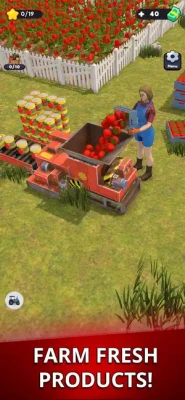
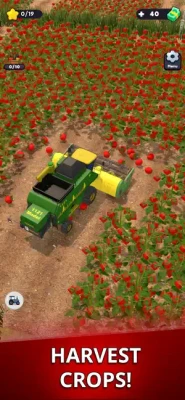
Crop production is the foundation of your farming business. Early gameplay focuses on harvesting familiar crops such as wheat and potatoes. As your farm develops, you can unlock other plants, including sunflowers, sugarcane, and special varieties.
Each new crop provides another opportunity to diversify your production. Improving the speed and efficiency of harvesting helps you process more produce and maintain a steady flow of income.
Upgrade Farming Machinery
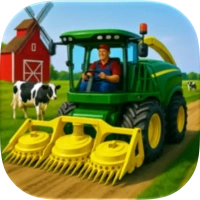
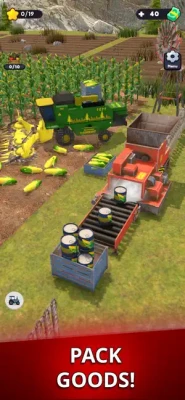
Machines make a major difference as your operation grows. Tractors, planters, harvesters, and silos help you handle larger workloads and reduce the amount of manual effort required.
Investing in machinery upgrades can improve production speed, streamline harvesting, and help your farm operate more efficiently. Automation becomes increasingly valuable as your fields and production requirements expand.
Hire and Manage Workers
Workers help handle essential farming activities, including planting, harvesting, and processing. Building a capable workforce allows you to manage more tasks at once and maintain a smoother production cycle.
As your operation develops, pay attention to how workers contribute to your overall workflow. Efficient staffing can help reduce bottlenecks and make better use of your available resources.
Sell Produce and Develop Your Business
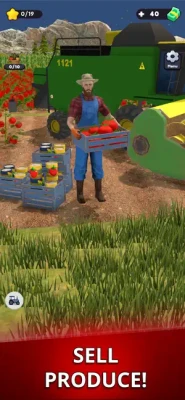
Harvesting crops is only part of the process. Selling your produce converts agricultural work into the money needed for further investment.
As you progress, additional facilities such as markets, bakeries, and factories can expand your business beyond basic crop production. Processing agricultural goods into higher-value products gives you more ways to develop your farm's economy.
Unlock New Farming Regions
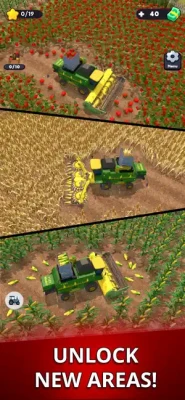
Daily Farm: Harvest Empire features additional farming areas that become available as you progress. These include fertile plains, tropical fields, and greenhouse environments.
New regions can introduce different crops, upgrades, and production opportunities. Expanding into them gives you fresh objectives and helps your agricultural business become more diverse.
Enjoy Idle Farming Progression
The game supports an idle-style approach in which automation and offline progression help your operation continue developing when you are not actively playing.
This makes it possible to enjoy the game in short sessions while still working toward long-term improvements. Returning regularly to collect earnings, review upgrades, and expand your facilities can help maintain a consistent growth cycle.
Complete Gameplay Guide
Understanding the Main Gameplay Loop
Daily Farm: Harvest Empire follows a straightforward progression cycle. You produce crops, harvest them, sell your goods, collect earnings, and reinvest those earnings into your operation.
At the beginning, most of your attention should go toward learning the basic controls and understanding how crops move through the production process. As your farm expands, the challenge shifts toward managing multiple systems efficiently.
A productive routine involves checking your fields, improving the machines responsible for your busiest tasks, reviewing worker assignments, and ensuring that your storage and sales systems can handle the amount of produce you generate.
The goal is not simply to own more land. It is to build a farm where each part of the operation supports the others.
Starting Strong as a Beginner
The opening stages are the best time to learn which activities generate income and which upgrades make the greatest difference.
Begin by following the in-game tutorial and completing the available introductory objectives. These tasks help explain the basic farming process and introduce the systems you will rely on throughout the game.
Concentrate on your starting fields before spending heavily on expansion. Learn how planting, harvesting, storage, and selling work together, then use your first earnings to improve the parts of the operation that limit your progress.
Avoid spreading your resources across too many upgrades at once. A few useful improvements to your main production system can be more valuable than several upgrades that do not immediately increase output.
How to Earn Money More Efficiently
Consistent production is the key to growing your farm's finances. Every stage of the production chain should support the next one, from planting crops to collecting revenue.
Start by identifying the activity that most often slows your progress. If harvesting takes too long, prioritize relevant machinery improvements. If crops accumulate faster than they can be stored or sold, focus on the systems responsible for moving produce through the business.
When new processing facilities become available, consider how they fit into your existing production chain. A bakery or factory can provide additional value, but it is most useful when you can supply it with enough raw materials and keep production moving.
Reinvest your earnings regularly, but leave enough flexibility to purchase essential upgrades or unlock the next important feature. Avoid spending everything on cosmetic or low-priority improvements when your main production system still needs attention.
Choosing the Right Upgrades
Not all upgrades have equal value at every stage of the game. The best choice depends on your current bottleneck and the resources available to you.
Machine improvements are particularly useful when they increase the amount of work your farm can complete over time. Faster harvesting, more efficient planting, and better handling of stored crops can all contribute to a stronger production cycle.
Worker improvements become more valuable as the number of tasks increases. A larger farm needs reliable support across planting, harvesting, packaging, and processing.
Storage upgrades are worth considering when limited capacity interrupts production. There is little benefit in generating more produce if your farm cannot store or move it efficiently.
Before purchasing an upgrade, consider whether it will help you earn more, save time, prevent interruptions, or unlock a meaningful new feature. Prioritizing improvements with a clear purpose helps you avoid wasting money.
Managing Workers Effectively
Workers help turn a growing farm into a more organized business. Their value increases when they support tasks that would otherwise slow production.
Pay attention to the stages where work tends to accumulate. If planting cannot keep up with harvesting, your fields may not remain productive. If processing falls behind, harvested goods may not reach the market quickly enough.
Assign workers with these problems in mind, using the available management options to strengthen the weakest part of your operation. Review your staffing choices after unlocking new fields or facilities because an arrangement that works for a small farm may become less effective later.
The aim is to maintain a balanced workflow rather than maximizing one activity while neglecting the others.
Making the Most of Automation
Automation is one of the most useful tools for long-term progression. Upgraded machines and automated systems can reduce repetitive work and allow your farm to handle larger production volumes.
Focus first on automating tasks that require frequent attention or create delays. Once your main farming cycle runs smoothly, you can use additional improvements to increase capacity and support expansion.
Idle progression also makes regular check-ins worthwhile. When you return to the game, review the money and resources available, collect any accessible rewards, and identify the next useful improvement.
Do not assume that every system produces unlimited resources while you are away. Check the game's current storage, production, and offline-reward rules to understand any limits that may affect your earnings.
Expanding Into New Areas
Unlocking a new farming region can introduce fresh crops, facilities, and progression opportunities. However, expansion should be supported by a stable financial foundation.
Before opening another area, make sure your current farm can generate income reliably. Consider whether you have enough money for the initial development costs and the machinery or workers needed to make the new region productive.
After unlocking a zone, explore its available crops and upgrades. Identify which resources it requires and how its output can support your overall business.
Expand at a manageable pace. A smaller, well-developed farm can be more productive than a large operation with insufficient equipment, storage, or staffing.
Using Processing Buildings Wisely
Markets, bakeries, and factories can help you develop a more advanced agricultural business. Instead of relying entirely on raw crops, you gain additional production steps that may create higher-value goods.
To benefit from these facilities, make sure your farm can supply their required materials consistently. Consider the time and resources needed to produce processed goods, as well as the benefits they offer compared with selling crops directly.
Avoid opening too many production chains before you can support them. A facility that lacks materials or cannot process goods efficiently may slow down your overall progress rather than improve it.
As your business becomes more established, build a production chain that connects your fields, storage, processing facilities, and sales systems.
Unlocking Rare Crops and New Products
New crops give you additional ways to diversify your farm. Rare seeds and special vegetables can become useful goals as you progress beyond the starting fields.
When a new crop becomes available, examine the associated requirements and determine whether you can produce it efficiently. Compare its role in your overall operation with the crops you already manage.
New products may also introduce additional production opportunities. Keep track of the facilities and resources needed to support them, and avoid investing in an unfamiliar production chain until you understand how it fits into your business.
The most effective approach is to expand your crop selection gradually while keeping your established production systems reliable.
Daily Rewards and Regular Progress
Daily Farm: Harvest Empire includes daily attendance rewards, according to its listed game information. Logging in regularly can therefore provide additional resources or useful progression opportunities.
Make a habit of checking available rewards when you open the game. Combine them with your normal farming routine by collecting earnings, reviewing production, and deciding which upgrade will make the biggest difference next.
If the game presents limited-time offers or optional purchases, evaluate them carefully. You can focus on ordinary progression and use the resources earned through gameplay without treating every offer as necessary.
Common Mistakes to Avoid
One common mistake is expanding too quickly. Additional fields and facilities can look attractive, but they also create more work and may require substantial investment.
Another mistake is upgrading machines without considering the full production chain. Faster harvesting will not solve a problem caused by insufficient storage or slow processing.
Neglecting workers can also create delays. A productive field still needs an effective system for handling the crops it produces.
It is equally important to avoid spending all available money on one large upgrade when smaller improvements could solve several problems at once.
Finally, do not ignore the tutorial, daily rewards, or newly unlocked features. These systems can explain important mechanics and provide opportunities to strengthen your farm without unnecessary detours.
Advanced Strategy Guide
Build a Balanced Production Chain
Once your farm becomes larger, think of it as a connected business rather than a collection of separate fields and machines.
Planting supplies harvesting. Harvesting supplies storage. Storage supports processing and sales. Each stage depends on the previous one, so the weakest stage can limit the entire operation.
Review your production regularly and determine where resources or completed tasks are accumulating. Strengthen that stage before investing heavily in areas that are already working efficiently.
A balanced production chain makes expansion easier because each new field or facility can be integrated into a system that already works.
Prioritize Improvements That Save Time
Time-saving upgrades become especially valuable when your farm has many active tasks. Improvements that reduce delays can allow workers and machinery to complete more useful work during the same period.
Consider the practical effect of each purchase rather than focusing only on its displayed level. A modest upgrade that removes a recurring production delay may be more useful than a larger upgrade to a system that rarely limits progress.
Reassess your priorities whenever you unlock a new region or production building, because the biggest bottleneck may change as your business grows.
Maintain Financial Flexibility
A strong farming business needs enough money to keep developing without interrupting normal operations.
Avoid investing every available coin in immediate expansion. Keep some resources available for essential machinery improvements, worker management, and new opportunities that may appear during progression.
When choosing between two purchases, consider which one will improve your earning potential sooner and which one supports your longer-term goals. The right decision depends on your current farm, but investments that remove major production delays are often worth prioritizing.
Prepare for Long-Term Growth
As you unlock more crops, machines, and regions, your farm will require increasingly careful management. Develop a habit of checking the entire production cycle instead of concentrating on a single activity.
Review the output of your fields, the condition of your storage system, the workload of your workers, and the efficiency of your processing facilities. Use this information to choose the next improvement.
Long-term success comes from making steady, purposeful investments. Each improvement should help the farm produce more efficiently, earn more reliably, or support the next stage of expansion.
Is Daily Farm: Harvest Empire Worth Playing?
Daily Farm: Harvest Empire is a good option for players who enjoy casual farming games, idle progression, and business-management mechanics. Its combination of crop harvesting, machinery upgrades, worker management, processing facilities, and regional expansion offers several ways to develop a growing agricultural operation.
Players who enjoy watching a small business become more efficient may find its progression particularly satisfying. The game also suits shorter play sessions because automation and idle mechanics reduce the need to manage every task continuously.
Those looking for a highly detailed agricultural simulator with complex real-world farming systems may find the experience more focused on accessible progression and incremental upgrades.
Final Thoughts
Daily Farm: Harvest Empire turns the familiar farming cycle into a gradual business-building challenge. Starting with a small plot, players can develop productive fields, improve machinery, hire workers, automate routine tasks, and unlock new regions.
The best strategy is to build a reliable foundation before expanding too quickly. Prioritize useful upgrades, keep production balanced, make smart use of daily rewards, and invest in new facilities when your farm can support them.
With steady planning and efficient resource management, you can transform a modest farming operation into a thriving agricultural empire.
Rate the Game
User Reviews














Popular Games



















 Android
 iOS
 Windows
 Xbox