

Latest Version
January 18, 2026
ABI GLOBAL LTD.
Simulation
iOS
0
Report a Problem
More About :game
The game combines idle restaurant management with hands-on gameplay and a Match-3 mini-game that helps improve menu options and dish quality. Daily challenges, special events, decorations, equipment upgrades, and multiple restaurant facilities give you plenty of ways to develop your business.
What Is Little Restaurant?
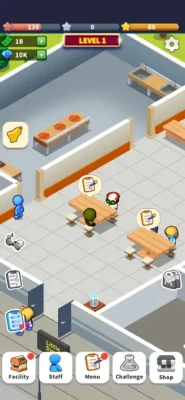
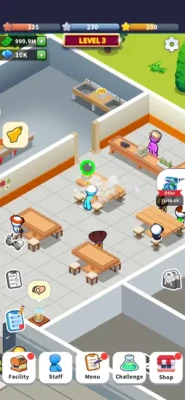
Little Restaurant puts you in the role of a restaurant manager. Your starting business may be small, but your goal is to gradually expand it by earning resources, improving food, upgrading facilities, and keeping customers satisfied.
The game mixes several familiar mobile genres into one experience:
- Restaurant simulation
- Idle management
- Cooking and food service
- Match-3 puzzles
- Staff management
- Facility upgrades
- Restaurant expansion
- Daily challenges
- Special events
The central gameplay loop is simple: serve customers, earn resources, upgrade your restaurant, improve your menu, and unlock new possibilities.
Little Restaurant Gameplay Features
Idle Restaurant Management
Little Restaurant includes idle mechanics that allow your restaurant to continue generating progress while you are not actively managing every task.
However, active participation can still be useful. You can step in to help with restaurant operations while employees handle different responsibilities.
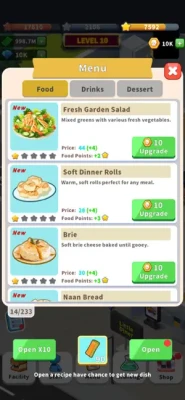
Upgrade Your Menu
Food is one of the most important parts of your restaurant.
Improving dishes can increase the quality of your menu and help you satisfy customers more effectively.
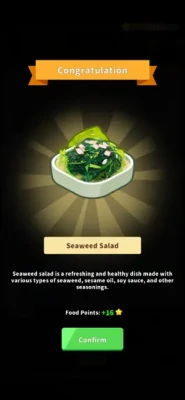
The game uses a Match-3 system to help unlock and enhance menu options.
Match-3 Mini-Game
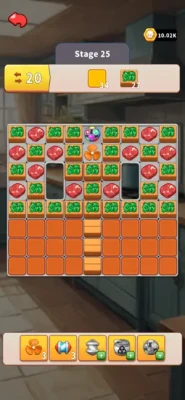
The Match-3 feature adds a puzzle element to the restaurant simulation.
Rather than spending all of your time managing tables and staff, you can play the mini-game to obtain resources that can be used toward improving recipes and dishes.
Hire and Train Staff
As your restaurant grows, you need more than good food.
Employees help keep the restaurant operating efficiently. Training your staff is therefore an important part of long-term progression.
The App Store specifically lists hiring and training staff as one of the game's core features.
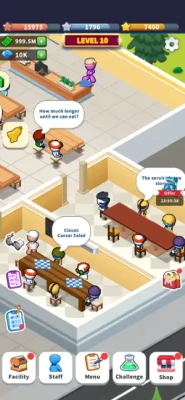
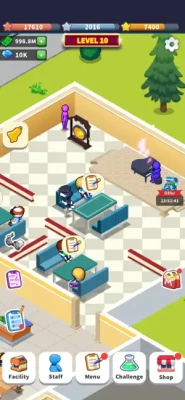
Expand the Restaurant
A successful restaurant needs room to grow.
Little Restaurant lets you unlock new areas and add additional facilities as you progress. The App Store description also mentions expanding the restaurant's space and improving its decoration.
Daily Challenges
Daily challenges provide additional objectives and rewards.
Instead of focusing exclusively on your normal restaurant progression, check available challenges regularly so you do not miss opportunities to collect extra resources.
Special Events
The game has received multiple event and feature updates. Its App Store history lists events such as Food Stall, Connect Dishes, and Juicy Cutter, along with challenge stages and other additions.
Complete Little Restaurant Strategy Guide
1. Upgrade the Parts of Your Restaurant That Generate Progress
When you receive enough resources for an upgrade, think about which improvement will help your restaurant continue developing.
Avoid spending everything on cosmetic improvements when an operational upgrade could help your restaurant progress more efficiently.
A good early priority is to strengthen the systems that directly affect:
- Food production
- Customer service
- Staff efficiency
- Restaurant capacity
- Menu quality
- Resource generation
2. Improve Your Menu Regularly
Your dishes are at the heart of the restaurant.
Do not completely ignore the Match-3 feature. Improving your menu gives you another way to strengthen the restaurant rather than relying only on physical expansion.
Whenever you have enough resources to improve a useful dish, consider making the upgrade instead of allowing those resources to sit unused.
3. Play the Match-3 Game Strategically
Do not simply make the first available Match-3 combination.
Look for opportunities to create larger combinations and useful chain reactions.
Before making a move, check:
- Which tiles can be combined?
- Can one move create multiple matches?
- Can a move open several new tiles?
- Is there an opportunity to create a stronger combination?
- What will the board look like after the move?
The goal is to get more value from each turn.
4. Keep Your Staff Trained
Hiring employees solves part of the problem, but trained employees are more useful as your restaurant becomes busier.
If your restaurant begins feeling slower or customers are waiting too long, staff development should be part of your upgrade plan.
Think of staff upgrades as an investment in the restaurant's long-term efficiency.
5. Do Not Ignore Customer Feedback
Customer satisfaction gives you clues about what needs improvement.
If customers are unhappy, investigate the possible cause:
- Is the restaurant too small?
- Are dishes underdeveloped?
- Is service too slow?
- Does the staff need improvement?
- Are you lacking facilities?
- Does the menu need attention?
The game's description specifically encourages players to monitor customer feedback and make adjustments.
6. Expand at the Right Time
Expansion is exciting, but opening new areas should fit your overall progression.
Before spending heavily on expansion, make sure your existing restaurant can support the additional activity.
A larger restaurant with weak staff and underdeveloped dishes may not perform as well as a smaller restaurant that is properly upgraded.
7. Balance Restaurant Upgrades
Do not put all of your resources into one category.
For example, upgrading the kitchen repeatedly while completely ignoring staff development can create an imbalance.
A balanced restaurant should gradually improve:
Food → Staff → Facilities → Capacity → Menu → Expansion
The exact order can change depending on your current bottleneck.
8. Use Idle Progress Wisely
Idle mechanics are useful when you are away from the game.
Before leaving, make sure your restaurant is in a productive state and that you have completed any obvious upgrades or objectives.
When you return, collect your accumulated resources and immediately check whether they can be invested into a useful improvement.
9. Complete Daily Challenges
Daily challenges should become part of your regular routine.
Check them when you start playing and identify which objectives can be completed naturally during your normal restaurant session.
This prevents you from spending extra resources simply to complete a challenge.
10. Participate in Events
Special events can introduce different objectives and rewards.
The game has previously added events and event facilities, including Food Stall and Connect Dishes.
When an event is available, check its requirements before spending resources so you can focus on objectives that provide useful progression.
How to Earn More Money in Little Restaurant
Building a successful restaurant requires a steady flow of resources.
Here are some useful habits:
Keep the Restaurant Active
Regularly check your restaurant rather than relying entirely on idle income.
Upgrade Revenue-Producing Systems
When deciding between upgrades, consider which one can help your restaurant generate more resources over time.
Improve Your Menu
Better dishes can contribute to stronger restaurant progression.
Develop Staff
Efficient employees help keep operations moving as the restaurant becomes busier.
Collect Idle Rewards
Do not allow accumulated resources to remain uncollected for long periods.
Complete Challenges
Additional objectives can provide useful rewards and resources.
Best Upgrade Strategy
A common mistake in restaurant simulation games is upgrading whatever button is currently available.
Instead, ask:
“What is currently slowing my restaurant down?”
If customers are waiting, improve service.
If food preparation is slow, improve the relevant kitchen or equipment system.
If income is weak, prioritize upgrades that improve your earning potential.
If progression requires better dishes, focus on the menu and Match-3 system.
This approach is more effective than following one rigid upgrade order for every player.
Little Restaurant Match-3 Tips
The Match-3 system deserves special attention because it contributes to menu progression.
Look for Larger Matches
Whenever possible, search the board for combinations that create more than a basic three-tile match.
Think Before You Tap
A move can change the entire board. Check what will fall into place after your match.
Create Chain Reactions
Some moves can cause additional matches automatically.
These sequences can give you significantly more value from a single turn.
Do Not Rush
Match-3 puzzles reward observation.
Look across the entire board before committing to a move.
Use Matches That Open the Board
When the board is crowded, prioritize moves that expose new possibilities.
Staff Management Guide
Your employees are an important part of your restaurant's development.
A good management approach is to think about staff in three stages:
Stage 1: Hire
Bring in additional employees when your restaurant's workload begins to exceed what your current team can comfortably handle.
Stage 2: Train
Improve employee performance as the restaurant becomes more demanding.
Stage 3: Balance
Do not focus exclusively on hiring more people. Existing staff development can also improve your restaurant's efficiency.
Facility and Decoration Strategy
Little Restaurant allows you to unlock additional areas and improve the restaurant's appearance.
Facilities can have a practical role in progression, while decoration helps create the restaurant atmosphere.
When resources are limited, consider your current goal before spending heavily on appearance.
If you are trying to pass a progression requirement, functional upgrades may deserve attention first.
Once your core systems are strong, you can invest more freely in the restaurant's visual development.
How to Deal With Difficult Levels
If progression suddenly becomes difficult, do not immediately assume that you need to spend money.
First check:
- Your available upgrades.
- Your menu development.
- Staff training.
- Restaurant capacity.
- Current challenges.
- Available Match-3 resources.
- Event rewards.
- Equipment improvements.
The game has added challenge levels and equipment systems in previous updates, so progression can involve more than simply earning basic restaurant currency.
Equipment Upgrade Tips
The version history shows that an equipment system was added in version 1.5.
When equipment upgrades are available, consider them part of your overall restaurant efficiency rather than treating them as optional extras.
Before investing, determine which equipment is connected to your current bottleneck.
If customers are waiting for a particular service, improving the relevant equipment may provide more practical value than upgrading something that is already performing well.
Little Restaurant Daily Routine
A simple daily routine can keep your progression organized.
Step 1
Collect your idle resources.
Step 2
Check customer satisfaction.
Step 3
Look for available restaurant upgrades.
Step 4
Play the Match-3 mini-game.
Step 5
Improve your menu where appropriate.
Step 6
Check staff training.
Step 7
Complete available daily challenges.
Step 8
Check active events.
Step 9
Expand the restaurant when your economy supports it.
Step 10
Leave the restaurant in a productive state for your next session.
Little Restaurant Tips for Beginners
If you are just starting, remember these rules:
- Do not spend every resource immediately.
- Upgrade the systems that are holding you back.
- Keep improving your menu.
- Use the Match-3 game to support recipe progression.
- Train staff as your restaurant grows.
- Check daily challenges.
- Take advantage of event rewards.
- Expand gradually.
- Watch customer behavior.
- Keep your restaurant productive between sessions.
Common Mistakes to Avoid
Spending Everything on Decoration
A beautiful restaurant is great, but functional upgrades can be more important during early progression.
Ignoring the Match-3 Game
The Match-3 system is directly connected to menu development, so skipping it can slow certain aspects of progression.
Hiring Without Training
Adding employees without developing them can leave your restaurant less efficient than expected.
Ignoring Customer Feedback
Unhappy customers can indicate a problem with your current restaurant setup.
Forgetting Events
Limited-time events can provide additional objectives and rewards.
Upgrading Randomly
Always ask which system is currently limiting your progress before spending resources.
Little Restaurant Game Information
| Feature | Details |
|---|---|
| Game | Little Restaurant |
| Genre | Simulation |
| Developer | ABI GLOBAL LTD. |
| Seller | ABI GLOBAL LTD. |
| Platform | iPhone, iPad |
| Age Rating | 4+ |
| Price | Free with In-App Purchases |
| Size | 260.7 MB |
| iPhone Requirement | iOS 15.0 or later |
| iPad Requirement | iPadOS 15.0 or later |
| Languages | English, French, German, Japanese, Korean, Simplified Chinese, Spanish, Traditional Chinese |
| Gameplay | Restaurant management and simulation |
| Special Feature | Match-3 menu system |
| Progression | Staff, dishes, equipment, facilities and expansion |
These details are taken from the current App Store listing.
Little Restaurant Updates
The App Store version history shows a series of feature additions after launch.
Notable updates include:
- Version 1.8: Lucky Wheel
- Version 1.7: Minor bug fixes
- Version 1.6: Juicy Cutter event and equipment enhancement fix
- Version 1.5: New equipment system and challenge levels
- Version 1.4: Food Stall event and event facility
- Version 1.3: Challenge stages and Buffet Room
- Version 1.2: Mini-game event
- Version 1.1: Earlier update
- Version 1.0: Initial release
The listed version history dates from March through November 2025.
Little Restaurant Player Experience
The App Store currently shows a 4.7/5 rating from more than 450 ratings.
Player reviews highlight the combination of active restaurant management and idle progression. Some players particularly mention being able to help with tasks such as cooking, cleaning, handling money, and delivering orders while employees assist with the workload.
Reviews also mention the Match-3 recipe system and the ability to upgrade different restaurant areas.
As with any player review, individual experiences can vary, particularly regarding progression, advertising, and difficulty.
Is Little Restaurant Worth Playing?
Little Restaurant is designed for players who enjoy combining restaurant management with casual idle gameplay and Match-3 puzzles.
Its strongest gameplay idea is the combination of several systems: you are not simply waiting for money to accumulate. You can actively participate in restaurant tasks, improve recipes through Match-3 gameplay, train staff, expand facilities, and complete challenges.
That combination gives the game more variety than a restaurant simulator built entirely around idle income.
Frequently Asked Questions
What is Little Restaurant?
Little Restaurant is a restaurant simulation game where you manage a growing restaurant, serve customers, upgrade dishes, train staff, unlock facilities, and expand your business.
Is Little Restaurant an idle game?
Yes. The game includes idle mechanics, while also allowing active interaction with restaurant operations.
Does Little Restaurant have a Match-3 game?
Yes. Match-3 gameplay is used to increase menu options and improve food quality.
Can you hire employees in Little Restaurant?
Yes. Players can hire and train staff to help provide better restaurant service.
Can you expand the restaurant?
Yes. New areas and additional facilities can be unlocked as you progress.
Does Little Restaurant have special events?
Yes. The game's update history includes several events and challenge additions, including Food Stall, Connect Dishes, and Juicy Cutter.
What devices support Little Restaurant?
The App Store lists Little Restaurant for iPhone and iPad. It requires iOS 15.0 or later on iPhone and iPadOS 15.0 or later on iPad.
Is Little Restaurant free?
Yes. It is listed as a free game with optional in-app purchases.
Who developed Little Restaurant?
Little Restaurant is developed and sold by ABI GLOBAL LTD.
Final Thoughts
Little Restaurant combines restaurant management, idle progression, Match-3 puzzles, staff development, facility upgrades, and expansion into one casual simulation experience.
The best way to progress is to avoid focusing on a single system. Build a balanced restaurant by improving the menu, developing staff, upgrading important facilities, completing challenges, and using Match-3 rewards to strengthen your dishes.
Most importantly, watch what is slowing your restaurant down and upgrade that area first. That simple habit can make your progression much smoother as the restaurant becomes larger and busier.
Rate the Game
User Reviews













Popular Games



















 Android
 iOS
 Windows
 Xbox