
Latest Version
August 05, 2025
Taihe Interactive
Strategy
iOS
0
Report a Problem
More About :game
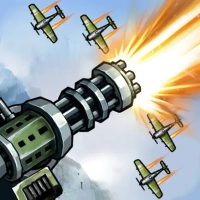
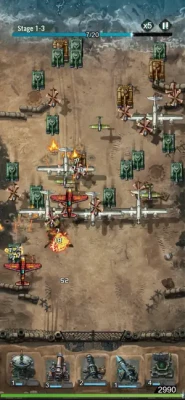
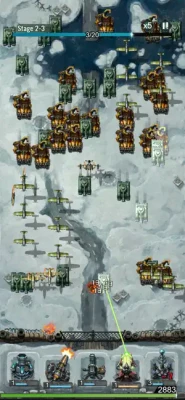
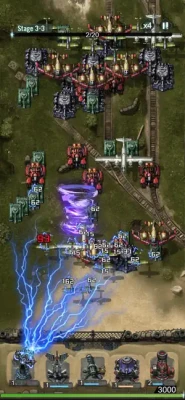
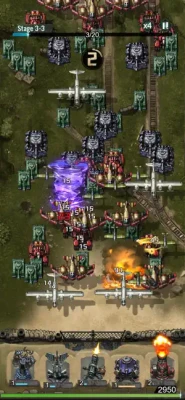
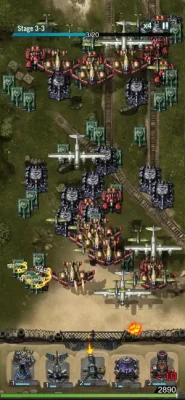
Instead of simply placing defenses and watching them fire, the game combines turret development with randomly offered upgrades, making each battle an opportunity to adapt your defensive setup. Enemy forces include tanks and aircraft, while battlefields draw inspiration from major WWII theaters including the African, Pacific, Western, and Eastern Fronts.
The game is available as a free download with optional in-app purchases. The current iPhone listing requires iOS 15 or later.
Game Information
| Feature | Details |
|---|---|
| Game | Last Bunker: 1945 |
| Developer | Taihe Interactive |
| Genre | Strategy / Tower Defense |
| Style | WWII / Historical / Rogue TD |
| Platform | iPhone; also available on Android and Windows |
| Game Mode | Single-player |
| Business Model | Free with in-app purchases |
| Age Rating | 13+ on the US App Store |
| iPhone Requirement | iOS 15.0 or later |
| Languages | English, Korean, Russian, Simplified Chinese, Traditional Chinese |
| Main Objective | Defend the bunker against enemy waves |
| Enemies | WWII-inspired tanks, aircraft and other attacking forces |
The platform and feature information above is based on the current store listings.
What Makes Last Bunker: 1945 Different?
The core appeal of Last Bunker: 1945 comes from combining familiar tower-defense mechanics with a roguelike-style upgrade system.
During combat, you strengthen different types of turrets while choosing from upgrade options that appear during the battle. Because the available upgrades can change from one run to another, successful play requires more than simply repeating the same build.
The game also puts its battles in a WWII setting, with campaigns and battlefields inspired by several fronts of the war. This gives the defensive gameplay a military atmosphere while keeping the focus on surviving enemy waves.
Gameplay and Combat
The basic gameplay loop is straightforward:
- Enter a battlefield.
- Establish and strengthen your defensive firepower.
- Fight successive enemy waves.
- Select useful upgrades when they become available.
- Adapt your setup to the enemies appearing on the battlefield.
- Continue improving your defenses as the battle becomes more demanding.
- Protect the bunker until the stage objective is completed.
The challenge increases as enemy forces become harder to eliminate. You therefore need to think about damage, upgrade choices, enemy composition and defensive balance rather than concentrating on one statistic.
Turret Upgrade Strategy
One of the biggest mistakes new players can make is treating every upgrade as equally valuable.
A better approach is to consider what your current defense is missing.
Prioritize consistent damage early
Early in a stage, reliable damage is often more useful than an upgrade that only becomes powerful in a very specific situation.
Your first goal should be creating a defense capable of comfortably handling ordinary waves.
Build for the enemies you actually face
Do not choose upgrades simply because they look powerful.
Look at the enemies currently causing problems. If armored targets are surviving too long, improve the part of your defense that deals with those targets. If large groups are overwhelming your bunker, prioritize improvements that help against multiple enemies.
Avoid creating a one-dimensional defense
A defense built around one type of strength can perform extremely well against one enemy type while struggling badly against another.
Try to maintain a balanced setup that can handle:
- Regular enemy waves
- Tougher targets
- Groups of enemies
- Armored threats
- Airborne attacks
- Later-stage pressure
Best Upgrade Selection Tips
Because upgrades are offered during battle, you will not always receive your preferred option. This makes decision-making particularly important.
Use this priority system:
1. Fix an immediate weakness
If enemies are already reaching your bunker, select an upgrade that directly improves your ability to stop them.
2. Strengthen your most useful turret
If one defensive weapon is consistently contributing to your survival, improving it can provide better value than spreading resources too thinly.
3. Improve scalability
When your defenses are already comfortable, choose upgrades that should continue providing value as enemy strength increases.
4. Avoid unnecessary specialization
Do not sacrifice your entire defensive balance for a single impressive damage number.
How to Survive Difficult Waves
When a wave becomes difficult, resist the temptation to make random changes.
Instead, identify why the defense is failing.
Enemies reach the bunker too quickly
Your defense may lack sufficient sustained damage or the right type of coverage.
Look for upgrades that increase effective damage output and improve your ability to deal with the enemies causing the problem.
Strong enemies survive for too long
Concentrate on improving the damage against tougher targets rather than simply adding more general upgrades.
Large groups overwhelm your defenses
Single-target strength may not be enough. Look for ways to increase your ability to handle groups efficiently.
Aircraft become a problem
Do not ignore air threats simply because ground units appear more numerous. A defense that performs well against tanks can still struggle if it lacks adequate coverage against aircraft.
Last Bunker: 1945 Beginner Tips
1. Don't spend upgrades randomly
Every upgrade should have a purpose. Ask yourself whether it improves your current weakness or strengthens a defense that is already working.
2. Watch the battlefield
Do not focus exclusively on the upgrade screen. Pay attention to which enemies are getting through and which defenses are actually doing the work.
3. Build around your available options
The game uses randomly offered upgrades, so flexibility is important. A good player needs to make the best possible build from the choices provided rather than waiting for a perfect combination.
4. Upgrade with the next wave in mind
A defense that barely survives the current wave may not be ready for what follows. When you have a comfortable advantage, use the opportunity to prepare for increasing enemy pressure.
5. Don't ignore progression
If a stage becomes too difficult, repeatedly forcing the same attempt may not be the most productive approach. Improving your available upgrades, equipment and overall progression can make later attempts considerably more manageable.
6. Learn from failed runs
A failed run is useful if you identify what caused it.
Ask:
- Which enemy reached the bunker?
- Was your damage too low?
- Did you choose upgrades that did not complement each other?
- Did you neglect a particular enemy type?
- Did you invest too heavily in one defensive area?
This turns each attempt into useful information.
Advanced Battle Strategy
For more difficult stages, think of your build in three layers.
Layer One: Survival
Your defenses must be capable of stopping normal waves without consuming every possible resource.
Layer Two: Threat Response
Your build should have answers for stronger enemies, large groups and different attack types.
Layer Three: Scaling
Once your immediate survival needs are covered, prioritize improvements that continue to matter as the battlefield becomes more difficult.
This approach is generally more reliable than chasing the biggest-looking upgrade every time it appears.
How to Deal With Random Upgrades
The random upgrade system is one of the defining mechanics of Last Bunker: 1945. The game's store description specifically emphasizes choosing from randomly dropped upgrades to respond to different battlefield situations.
A useful rule is:
Choose the upgrade that solves your biggest current problem, not necessarily the upgrade with the highest advertised value.
For example, a moderate improvement that fixes a major weakness can be more useful than a large bonus to a defense that is already performing adequately.
Progression and Grinding
Progression can become more demanding as you advance. Player reviews on the App Store have specifically mentioned grinding and the difficulty of upgrading, while other reviews describe the game's difficulty as manageable. These are player opinions rather than universal characteristics of the game.
If progression starts slowing down, focus on making each repeat attempt productive:
- Improve your core defenses.
- Experiment with different upgrade combinations.
- Complete available activities and events.
- Avoid wasting resources on upgrades that provide little immediate benefit.
- Revisit earlier content when it helps strengthen your overall progression.
Heroes, Weapons and Updates
The game continues to receive new content. The current App Store version history lists recent additions including new heroes and remodeled weapons, while earlier updates introduced additional heroes, weapons and event-related content.
That means older guides can become outdated, particularly when discussing exact hero or weapon rankings. For a long-term guide, it is better to focus on build principles, upgrade selection and battlefield decision-making rather than claiming that one particular weapon is permanently the strongest.
Events and Extra Activities
The current Android listing shows additional activities and limited-time events, including Wheel and Raid Mission events.
When these activities are available, consider them part of your overall progression rather than treating the main stages as the only source of rewards.
Check the event objectives before spending resources so that your actions contribute toward the rewards you actually want.
Common Mistakes to Avoid
Over-investing in one turret
A highly upgraded defense is not enough if another enemy type can bypass your strategy.
Ignoring aircraft
Air threats can create problems if your defensive setup does not adequately address them.
Taking every damage upgrade
Raw damage is useful, but it does not automatically solve every battlefield problem.
Ignoring the next wave
Barely surviving one wave does not guarantee that your setup can survive the next.
Using resources without a plan
Save important resources for upgrades that meaningfully improve your progression.
Blaming every failed run on bad luck
Random upgrade choices matter, but analyzing why the build failed can help you make better decisions on the next attempt.
Is Last Bunker: 1945 Difficult?
The difficulty depends heavily on progression and upgrade choices. Some player reviews describe the game as becoming grind-heavy at later points, while others have found the challenge reasonable.
The important thing to understand is that Last Bunker: 1945 is not simply about having the biggest numbers. The randomly offered upgrades mean that adapting your build to the available choices is an important part of the experience.
Last Bunker: 1945 Atmosphere
The game's atmosphere is built around a fictionalized WWII defensive scenario. The African, Pacific, Western and Eastern Front settings give the battles a broad wartime backdrop, while tanks, aircraft, defensive turrets and bunker combat reinforce the military theme.
It is best suited to players who enjoy tower defense games, military strategy, wave-based combat, upgrade systems and WWII-inspired settings.
Last Bunker: 1945 Pros and Cons
Pros
- WWII-inspired tower defense gameplay
- Multiple battlefield settings
- Turret-focused defensive strategy
- Randomized upgrade choices
- Enemy waves that require adaptation
- Ongoing heroes, weapons and event content
- Free-to-play entry
Cons
- Progression can become grind-heavy for some players
- Random upgrade choices can limit control over a preferred build
- In-app purchases are present
- Difficulty can increase significantly as progression continues
The comments about grinding and upgrade randomness reflect themes raised by some players in store reviews rather than an objective judgment about every player's experience.
Frequently Asked Questions
What is Last Bunker: 1945?
Last Bunker: 1945 is a WWII-themed strategy tower defense game in which players upgrade defensive turrets and survive waves of enemy forces.
Is Last Bunker: 1945 free?
Yes. The game is free to download, with optional in-app purchases.
Is Last Bunker: 1945 available on iPhone?
Yes. The App Store lists the game for iPhone and requires iOS 15.0 or later.
Is Last Bunker: 1945 available on Android?
Yes. A Google Play version is available from HK Taihe Interactive Limited.
Does Last Bunker: 1945 have tower defense gameplay?
Yes. Tower defense is the central gameplay system, with players building and upgrading different defensive turrets to stop enemy waves.
What enemies appear in Last Bunker: 1945?
The game features WWII-inspired enemy forces including tanks and aircraft, with different enemy characteristics requiring different defensive responses.
Does Last Bunker: 1945 use random upgrades?
Yes. The game specifically uses randomly offered upgrades during battles, requiring players to adapt their defensive strategy to the choices available.
Does Last Bunker: 1945 receive updates?
Yes. The current App Store version history lists recent hero, weapon and event-related updates.
Final Strategy Summary
The most useful mindset for Last Bunker: 1945 is to build a defense that can adapt.
Don't automatically choose the biggest damage increase. Watch the battlefield, identify the threat that is causing your defense to fail, and select upgrades that directly address it. Maintain coverage against different enemy types, strengthen defenses that consistently contribute to survival, and use difficult runs to identify weaknesses in your build.
Because the game continues to add heroes, weapons and events, flexible strategy is more valuable than relying on a single supposedly permanent build.
Rate the Game
User Reviews















Popular Games



















 Android
 iOS
 Windows
 Xbox