
Latest Version
October 02, 2026
TINYSOFT
Puzzle
iOS
0
Report a Problem
More About :game
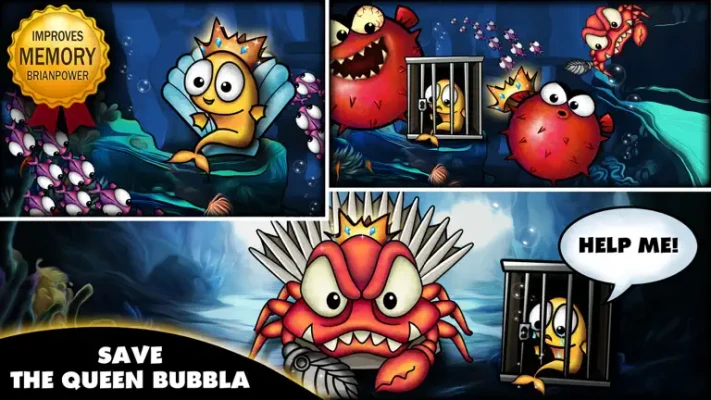
Your mission is to rescue BUBBLA, the goldfish queen of the Aqueous Kingdom, after she is kidnapped by the evil crab Braxadaros and his supporters.
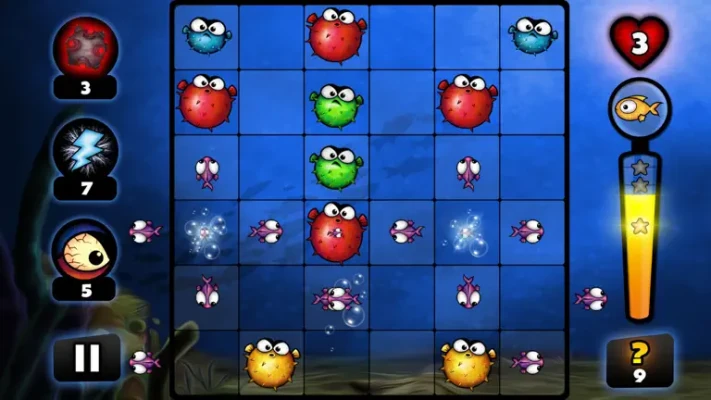
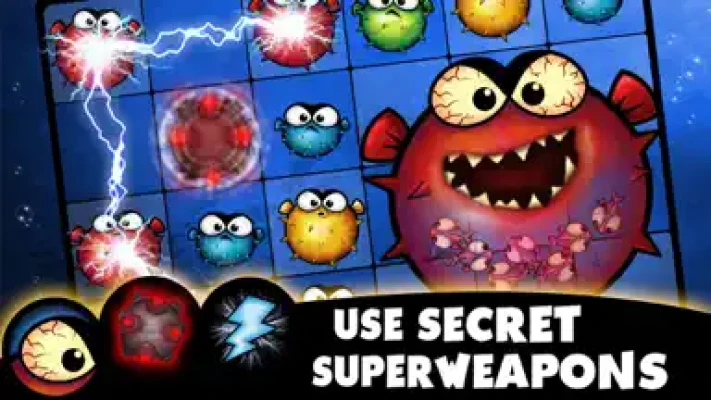
Instead of directly controlling a character through an action stage, you solve puzzle boards by destroying the evil fish through chain reactions. Every move matters because levels limit the number of strokes available. Superweapons provide additional options when a puzzle becomes particularly difficult.
The result is a simple-to-learn puzzle game that gradually becomes more challenging as you learn how to predict reactions and use your limited moves efficiently.
What Makes GoldFish in Trouble Different?
The central idea is easy to understand:
Make one move → trigger a reaction → affect nearby fish → create a chain reaction → clear the board.
The challenge comes from doing this with as few strokes as possible.
The game combines:
Chain-reaction puzzles
Limited strokes
Superweapons
Multiple worlds
Hundreds of levels
Different visual skins
A color-blind-friendly skin
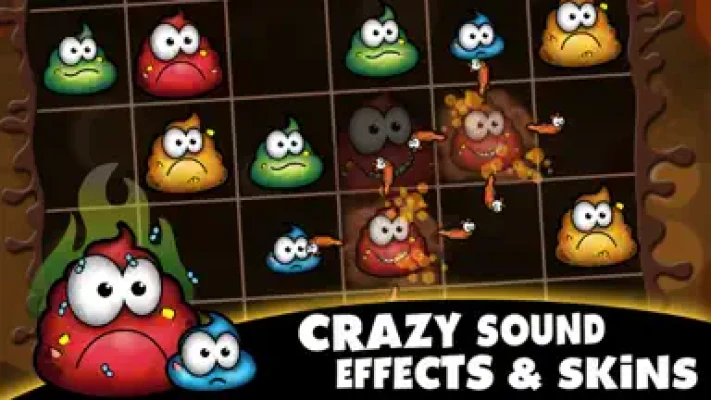
Original music and sound effects
Puzzle-focused progression
Score optimization
The App Store description also emphasizes an easy-to-learn design with progressively challenging handcrafted levels.
GoldFish in Trouble Game Information
| Feature | Details |
|---|---|
| Game | GoldFish in Trouble |
| Also Known As | BUBBLA |
| Developer | TINYSOFT |
| Genre | Puzzle |
| Platform | iPhone, iPad |
| Price | Free with in-app purchases |
| Age Rating | 9+ |
| App Size | 63.6 MB |
| Main Mechanic | Chain reactions |
| Moves | Limited strokes |
| Superweapons | Yes |
| Worlds | Multiple |
| Second World | 500 additional levels added in an update |
| Skins | Multiple |
| Accessibility | Free color-blind skin |
| Sound | Original soundtrack and SFX |
| Languages | English + 15 more |
| Latest Listed Version | 1.1.7 |
The current App Store page lists GoldFish in Trouble as a free Puzzle game with in-app purchases for iPhone and iPad.
The Story of BUBBLA
The game takes place in the Aqueous Kingdom, where BUBBLA, the goldfish queen, has been kidnapped.
The villain is Braxadaros, an evil crab supported by other hostile fish.
Your objective is to fight through the puzzle levels and restore peace to BUBBLA's kingdom.
Although the story is deliberately light, it gives the otherwise abstract puzzle boards a simple adventure structure.
Instead of merely clearing random objects, you are working toward a specific goal: save the queen and defeat the evil fish.
How the Chain-Reaction Gameplay Works
Chain reactions are the heart of GoldFish in Trouble.
The goal isn't necessarily to attack every fish individually.
Instead, you want to find a position where one action causes multiple enemies to be destroyed.
This makes each board a small planning problem.
Before making a move, look at:
Fish positions
Nearby targets
Possible reaction paths
The number of strokes available
Potential chain length
Whether your first reaction can trigger another
Whether a superweapon is necessary
A successful chain can turn one carefully planned stroke into a much larger board-clearing reaction.
The Most Important Beginner Skill: Look Before You Move
The biggest mistake new players can make is tapping immediately.
Don't.
Take a moment to inspect the entire board.
Look for the group of fish that appears most likely to produce a chain reaction.
Then ask:
"If I destroy this fish first, what happens next?"
Follow the reaction mentally before committing your stroke.
This simple habit can save moves and make later levels much easier.
GoldFish in Trouble Strategy Guide
1. Find the Best Starting Point
The first move often determines whether the rest of the puzzle will be easy or difficult.
Look for a fish positioned near several others.
A central target can sometimes produce a larger reaction than a fish sitting at the edge of the formation.
2. Think in Chains
Don't focus only on the fish you are directly attacking.
Think about the next reaction.
Then the reaction after that.
The ideal sequence is:
First target → nearby fish → secondary reaction → larger chain.
3. Protect Your Remaining Moves
Because levels use a limited number of strokes, unnecessary actions can leave you without enough moves to finish.
Don't make experimental taps unless you're willing to restart the level.
4. Look for Multiple Solutions
A puzzle may have more than one way to clear it.
The first successful solution isn't necessarily the most efficient.
If you're trying to improve your score, look for a solution that uses fewer strokes.
5. Save Superweapons
Superweapons can help with problematic levels, but don't use them automatically.
Try to understand the puzzle first.
A superweapon is most valuable when the normal chain-reaction solution is genuinely difficult to execute.
How to Get Better Scores
The game specifically promotes the possibility of achieving the maximum score without using superweapons.
That makes efficient play more important than simply completing a level.
To improve your score:
Use fewer strokes
Create longer chain reactions
Avoid unnecessary moves
Study the board before acting
Find the most efficient starting point
Avoid wasting superweapons
Replay completed levels to search for better solutions
A level you have already completed can become a score-optimization challenge.
Limited-Stroke Strategy
The limited number of strokes is one of the mechanics that transforms GoldFish in Trouble from a simple tap game into a puzzle.
Every stroke should have a purpose.
Before using one, ask:
Does this move destroy an enemy?
Can it trigger a chain?
Does it open another reaction?
Does it move me closer to clearing the board?
Is there a better position?
If the answer to all five is no, don't make the move.
How to Solve Difficult Levels
When a level repeatedly defeats you, avoid randomly trying different moves.
Use a structured approach.
Step 1: Observe
Study the complete board without touching anything.
Step 2: Identify Clusters
Find groups where one reaction could affect several fish.
Step 3: Predict
Follow the likely chain reaction in your head.
Step 4: Test the Best Candidate
Use your first stroke on the most promising target.
Step 5: Analyze the Result
If the reaction doesn't develop as expected, identify exactly where the chain stopped.
Step 6: Restart and Adjust
Change only the problematic part of your strategy.
This method is much more efficient than making random attempts.
When to Use Superweapons
Superweapons are designed to help overcome difficult levels. The official description specifically presents them as powerful tools for problematic stages.
However, they shouldn't automatically be your first solution.
Use a Superweapon When:
A normal chain is extremely difficult to create
You're stuck on the same level
The remaining board cannot be cleared efficiently
You have already identified the normal solution but need assistance
Avoid Using One When:
You're still learning the board
A simple chain reaction is available
You're trying to achieve the maximum score without special weapons
You're experimenting with a new strategy
World 2 and the Extra Levels
The game's version history records a major update that added 500 levels to the second world.
That significantly expanded the puzzle content beyond the original stages.
If you're moving into later content, expect the importance of planning to increase.
Early levels can teach the basic chain-reaction concept, while later puzzles are better approached as problems requiring deliberate sequencing.
GoldFish in Trouble Level Strategy
As you progress, categorize levels mentally according to their structure.
Cluster Levels
Several fish are grouped together.
Strategy: Look for the central trigger that can affect the largest number of targets.
Separated Levels
Fish are positioned farther apart.
Strategy: Look for a sequence that connects separate groups rather than wasting moves on isolated targets.
Chain Levels
The board is designed around one reaction triggering another.
Strategy: Find the first link in the chain.
Difficult Formation Levels
Targets are arranged in a way that makes direct reactions less obvious.
Strategy: Slow down and work backward from the desired final reaction.
Work Backward From the Goal
One of the strongest puzzle-solving techniques is reverse planning.
Instead of asking:
"What should I do first?"
ask:
"What needs to happen last?"
Then determine what needs to happen immediately before that.
Continue working backward until you find the first move.
This is especially useful when the board appears to require a specific chain sequence.
Replay Strategy
Completing a level isn't necessarily the end.
Because the game emphasizes efficient play and maximum scores without superweapons, replaying completed levels can be worthwhile.
On a replay, try to:
Reduce the number of strokes
Create a larger chain
Avoid superweapons
Find a cleaner opening move
Discover an alternative solution
Think of the first successful completion as learning the puzzle and the second attempt as optimizing it.
Skins and Visual Customization
GoldFish in Trouble includes different skins, including a free skin designed for color-blind players.
The skins add variety without changing the core chain-reaction puzzle concept.
For players who spend a lot of time solving levels, changing the visual appearance can also make the game feel less repetitive.
Sound and Atmosphere
The game includes an original soundtrack and sound effects designed to create its own atmosphere.
The underwater theme, colorful fish, and lighthearted story give the game a much more playful presentation than its limited-move puzzle mechanics might initially suggest.
The combination of short puzzle sessions and relatively simple controls also makes it suitable for quick gameplay.
Memory and Brain Training
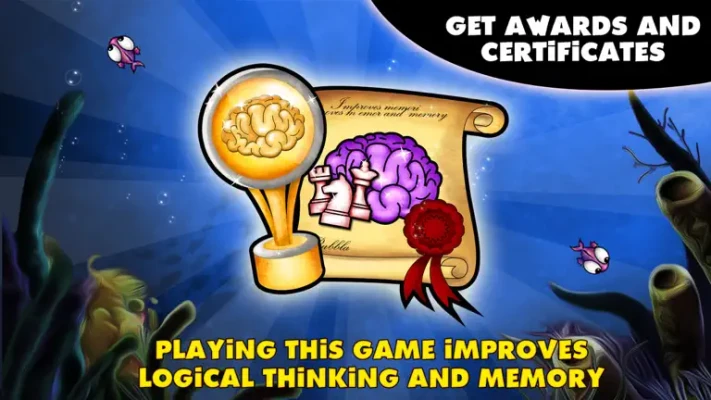
The App Store description presents the game as something intended to exercise memory and brainpower, and its update history mentions "Certificates" associated with memory and brainpower training.
It's best to treat this as part of the game's positioning rather than as a medical or scientifically established benefit.
The actual gameplay does require players to remember board patterns, predict reactions, and plan sequences, which naturally gives the puzzles a mental-challenge component.
Beginner Tips
Tip 1: Don't Rush
Look at the entire board before making your first move.
Tip 2: Search for the Biggest Chain
A single large reaction is generally more efficient than many small attacks.
Tip 3: Count Your Strokes
Keep track of how many moves you have remaining.
Tip 4: Think Ahead
Predict at least the next one or two stages of the reaction.
Tip 5: Restart Intelligently
If your first move clearly destroys the intended chain, restart instead of wasting additional strokes.
Tip 6: Save Superweapons
Use them when a puzzle genuinely calls for extra help.
Tip 7: Replay Good Levels
Try to improve your previous solution rather than simply moving on.
Advanced Puzzle Techniques
Find the Reaction Center
When several fish are close together, identify the position that can affect the largest cluster.
Avoid Edge Traps
A target at the edge may destroy fewer neighboring fish than one positioned in the middle of a group.
Use Delayed Thinking
Don't just calculate the first reaction.
Calculate:
Move → Reaction → Secondary Reaction → Final Board
Optimize After Completion
Once you know the solution, try to reduce the number of strokes.
Separate Solving From Scoring
Your first objective is to understand how the level works.
Your second objective is to solve it efficiently.
Your third objective is to optimize the score.
Keeping those goals separate makes difficult puzzles easier to learn.
Ads and In-App Purchases
The App Store lists GoldFish in Trouble as free with in-app purchases. Available purchases include different quantities of gold coins, ranging from smaller packs to larger bundles.
The game's version history also mentions an update that reduced advertisements.
Players who prefer free progression can focus on learning the puzzle mechanics and using superweapons selectively rather than relying on purchases.
Compatibility and Age Rating
The current App Store listing reports a 9+ age rating and lists the game for iPhone and iPad. It also shows compatibility information for older iOS versions, although actual availability can depend on the device and Apple's current compatibility rules.
The listed game size is approximately 63.6 MB, making it relatively small compared with many modern mobile games.
Update History
The game's version history is relatively old compared with many actively updated mobile games.
Version 1.1.7
The July 2015 update included:
Reduced advertisements
Bug fixes
Improved sharing screens
Visual goldfish rewards
Faster launch performance
Smoother frame rate
Memory and brainpower training certificates
A special offer for paid users
Version 1.1.3
The June 2015 update added 500 levels to the second world, along with fixes for missing game progress, continued-game issues, sharing screens, performance, and other improvements.
The currently displayed version history therefore indicates that the game's major content expansion occurred years ago rather than through recent large feature updates.
Honest Gameplay Assessment
GoldFish in Trouble is a straightforward puzzle game built around one strong idea: finding the right move to create a chain reaction.
Its strengths are its simple controls, short puzzle format, handcrafted-level approach, limited-stroke system, and the satisfaction of discovering an efficient solution. The App Store description specifically emphasizes that the levels are easy to learn but challenging to master.
The main consideration for modern players is that the displayed version history is quite old. The App Store currently shows version 1.1.7 from 2015, despite the app still being listed.
That makes the game more interesting as a compact classic puzzle experience than as a continuously evolving modern mobile title.
Pros and Cons
Pros
Simple chain-reaction gameplay
Easy controls
Challenging puzzle design
Limited-stroke mechanics
Superweapons for difficult stages
Maximum-score challenges
Multiple worlds
500 additional levels added to World 2
Different skins
Color-blind-friendly skin
Original music and sound effects
Small app size
Cons
Displayed version history is from 2015
Limited evidence of recent content updates
In-app purchases are available
Advertising has been part of the game's monetization
Some players may find later puzzles difficult
Modern players looking for multiplayer or constantly updated content may find the format limited
Frequently Asked Questions
What is GoldFish in Trouble?
GoldFish in Trouble is a puzzle game, also known as BUBBLA, where players rescue the goldfish queen by destroying evil fish through chain reactions.
How does GoldFish in Trouble work?
You make moves on a puzzle board to trigger chain reactions that destroy enemy fish. Each level gives you a limited number of strokes.
Who is BUBBLA?
BUBBLA is the goldfish queen of the Aqueous Kingdom and the character you are trying to rescue from the evil crab Braxadaros.
Who is Braxadaros?
Braxadaros is the evil crab responsible for kidnapping BUBBLA in the game's story.
Does GoldFish in Trouble have superweapons?
Yes. Superweapons can be used to help overcome difficult levels.
How many levels does GoldFish in Trouble have?
The game's update history states that 500 levels were added to the second world in version 1.1.3.
Can you complete levels without superweapons?
Yes. The official description specifically states that the maximum score can be achieved without using superweapons.
Is GoldFish in Trouble free?
Yes. The App Store lists the game as free with optional in-app purchases.
Is GoldFish in Trouble still updated?
The current App Store page displays version 1.1.7 as the latest listed version, dated July 11, 2015.
What is the best strategy for difficult levels?
Study the entire board first, identify the most promising reaction point, predict the chain before moving, and use as few strokes as possible. Save superweapons for situations where the normal solution is particularly difficult.
Final Thoughts
GoldFish in Trouble is a compact puzzle experience built around chain reactions, limited moves, and careful planning.
Its gameplay is simple enough to understand quickly, but the limited-stroke system gives each board a strategic element. The best solutions come from studying the arrangement of fish, predicting how a reaction will spread, and choosing the starting point that produces the largest chain.
The addition of 500 levels to the second world significantly expanded the original puzzle collection, while superweapons provide an alternative when a particular stage becomes difficult.
For players who enjoy classic mobile puzzles, brain-teasing challenges, and short sessions built around finding the perfect move, GoldFish in Trouble offers a distinctive underwater chain-reaction experience.
Rate the Game
User Reviews







Popular Games
















 Android
 iOS
iOS Windows
 Xbox
Xbox